Growing
- During initial growth, water occasionally; once fully developed (within one year), water moderately.
- In the spring and summer months, keep the soil moist to encourage growth. Do not let the soil dry out too much.
- Maintain average room temperature and humidity. Spider plants prefer temperatures between 55° and 80°F (13° to 27°C), which makes them a great indoor houseplant.
- Fertilize twice a month in the spring and summer; however, avoid overfertilization.
- See more Houseplant Growing Tips.
Types
- The most common varieties are the variegated forms:
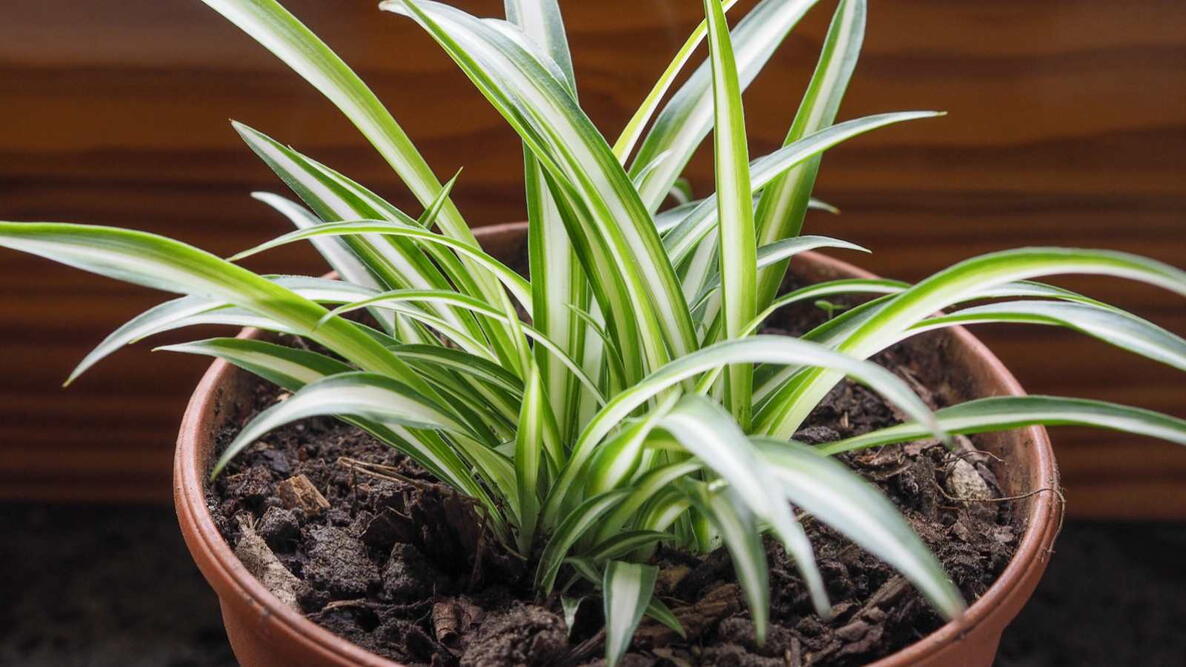
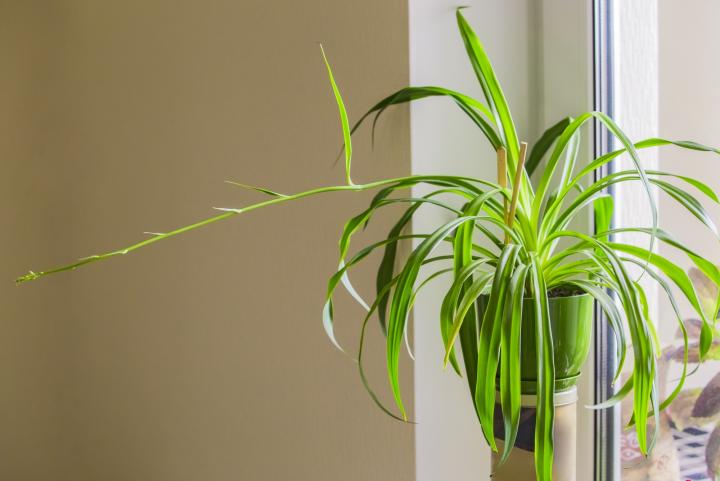
- ‘Vittatum’ has green foliage with a single off-white stripe down the center of each leaf.
- ‘Variegatum’ is the inverse of ‘Vittatum’, with an off-white stripe running along the edge of each green leaf.
- Solid green varieties are also available.

More Like This


If it's already been uprooted, the likelihood of it recovering is not great. If the plant is particularly dear to you, you could try to nurse it back to health, but otherwise, it's probably better to just start over with a new one.
Variegated plants are often the result of natural mutations that have been selectively bred for and enhanced over generations by doting horticulturalists. Because of this, variegated plants may occasionally produce non-variegated offspring. (You'll have to consult a botanist or Wikipedia for an explanation on the genetic level, I'm afraid!) Your non-variegated babies' slow growth and slim leaves could be due to their de-mutation, or even the result of a new mutation. As for the super-thick stalk, it sounds like your mama plant is just very happy with its care and is producing all the babies it can! (Also, the loss of variegation in a variegated plant can also be due to insufficient lighting, but since yours is producing both variegated and non-variegated pups, this is unlikely the cause.)
In conclusion, your spider plants are exhibiting a normal, yet interesting side effect of plant cultivation—no radioactive spiders necessary! (Though we would very much like to see an Amazing Spider-Plant movie now...) Thanks for your question!
Hi Lynne,
In winter, most house plants will require less sunlight and less water. There's no need to mist the plant, and doing so may make it more susceptible to disease. Avoid fertilizing during the winter months, and water the plant less than normal until after the shortest day of the year (and sunlight begins to return).
- « Previous
- 1
- 2
- …
- 10
- Next »

Comments