
Celebrate “National Sneak Some Zucchini onto Your Neighbor’s Porch Day” (August 8) the right way by mastering the art of growing zucchini, crookneck, and other summer squashes that boast perfectly tender skin and luscious summertime flavor. In this guide, you’ll learn everything you need to know to grow zucchini and summer squash from seed, how to keep these plants in containers or your garden, and how and when to harvest zucchini to maximize yields!
Note: All types of summer squash require very similar care and the tips in this guide can be applied to zucchini, yellow summer squash, crookneck squash, pattypan squash, and more.

Harvesting
When to Harvest
Most varieties of zucchini and summer squash take about 60 days after planting to start bearing fruit and those fruits are usually ready to be picked about a week after flowering. That said, there is some variabiliy in harvesting times, so always check seed packets for more exact information.
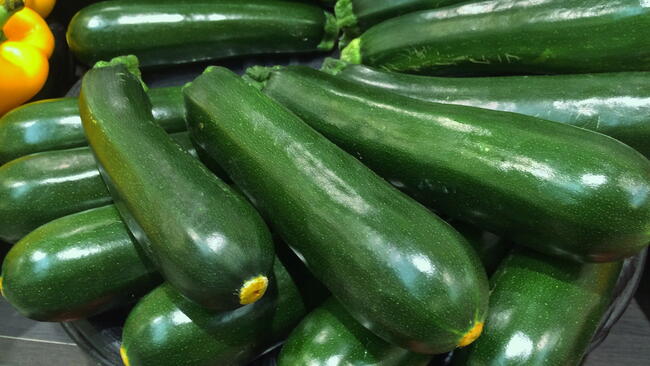
For best flavor and texture, harvest zucchini and squash when the fruits are about 6 to 8-inches long. Larger fruit can look impressive, but it has little flavor and the skins get quite tough. Once fruiting begins, check zucchini plants regularly and often as it’s easy to overlook a hidden zucchini and wind up with massive, but tasteless, fruit!
How to Harvest
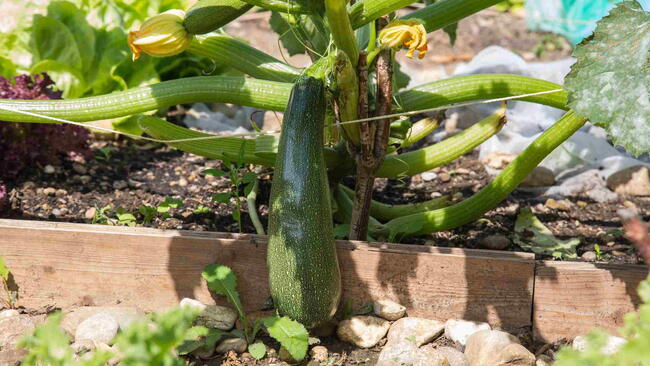
When harvesting, cut zucchinis off the vine with a sharp knife and leave about 1-inch of stem attached to each fruit. Resist the temptation to harvest zucchini by pulling on the fruit as this can damage your plant.
If your zucchini are producing too well, you can slow down production by harvesting the fruit when it’s still small or removing all the male flowers. Zucchini flowers are perfectly edible and can be used as salad toppers or stuffed, battered, and fried. Towards the end of the season, harvest all remaining zucchini before frost hits as the plants and fruit won’t survive a cold spell.
Storage
Fresh zucchini and summer squash has a relatively short shelf life and can be stored, unwashed, in a plastic or paper bag in your fridge’s crisper drawer for about 10 days. If you end up with more zucchini than you can use straight way, you can also pickle it or blanch and freeze it for up to 3 months.

Types
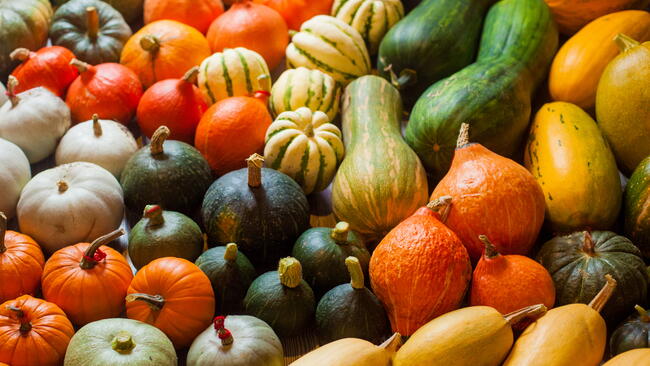
Zucchini come in bush-type forms, which are best for containers and growing in rows, or vining-type plants that can be grown on trellises. Here are popular picks and what makes each stand out.
- ‘Cocozella (di Napoli)’: A heirloom zucchini with dark green, slender fruits and excellent flavor.
- ‘Goldbar’: A yellow summer squash variety with a sweet and nutty flavor.
- ‘Ronde de Nice’: A funky, French heirloom, this plant produces globular fruits — and lots of them!

More Like This
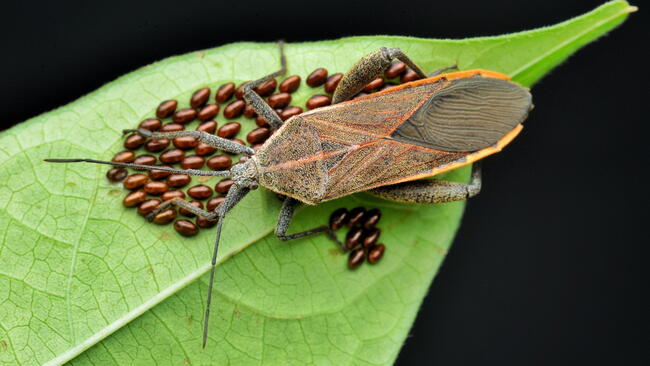


Squash vine borers make holes in the stems to feed. You can cut the vine open and remove the caterpillar and then bury the vine to re-root. But that is a lot of work. Ants are usually harmless and may be looking for aphids. Plant resistant varieties and place floating row covers over young squash plants to discourage adult moths to lay eggs close to the plants.
Please do not share my email address with advertisers. Thank you My comment is PLEASE mention resistant varieties when you suggest using them. I would love to know some zuchinni varieties resistant to vine borers and squash bugs. I have never seen either mentioned in seed ads. Thank you.
Hi Joel, Vining summer squashes are more resistant to the squash bugs but the seeds are hard to find.
In terms of resistance to squash vine borers, there is a round heirloom zucchini called 'Ronde de Nice' -- it is not foolproof, but is somewhat tolerant, due to its growth habit that compensates the borer damage. See www.westcoastseeds.com
There's another round zucchini called Tatume’ or Tatuma orMexican zucchini that we've read is resistant.
As for other squashes, butternut and others of C. moschata are more resistant. Hubbard is more susceptible.
Truly, the only way to prevent these pests from getting in is growing the plant under row cover.
Don't worry about your email address. You are not registered on our Web site so it was not kept.
Best, the OFA Editors.
The soil needs to be warm (at least 60º at a two-inch depth) so we plant summer squash after our spring crops of peas, lettuce, and spinach—about one week after the last spring frost.
Shriveled and/or brown leaf edges can be caused by many things, including a period of cold temperatures (below 50 F) and too much moisture. If there are no signs of spots on the leaves, or wilting, and the plant is doing fine in production, then it's probably not something to worry about.
- « Previous
- 1
- 2
- …
- 10
- Next »

Comments