
Celebrate “National Sneak Some Zucchini onto Your Neighbor’s Porch Day” (August 8) the right way by mastering the art of growing zucchini, crookneck, and other summer squashes that boast perfectly tender skin and luscious summertime flavor. In this guide, you’ll learn everything you need to know to grow zucchini and summer squash from seed, how to keep these plants in containers or your garden, and how and when to harvest zucchini to maximize yields!
Note: All types of summer squash require very similar care and the tips in this guide can be applied to zucchini, yellow summer squash, crookneck squash, pattypan squash, and more.

Harvesting
When to Harvest
Most varieties of zucchini and summer squash take about 60 days after planting to start bearing fruit and those fruits are usually ready to be picked about a week after flowering. That said, there is some variabiliy in harvesting times, so always check seed packets for more exact information.
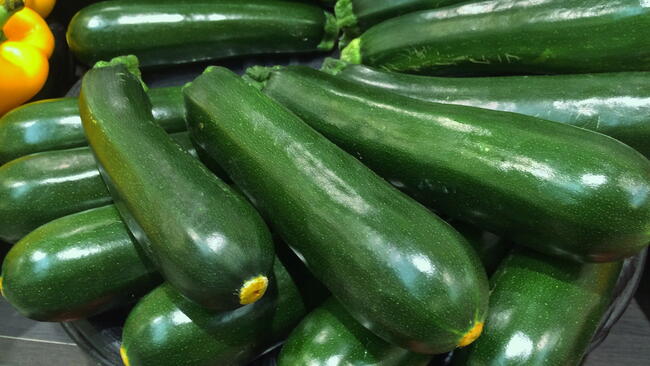
For best flavor and texture, harvest zucchini and squash when the fruits are about 6 to 8-inches long. Larger fruit can look impressive, but it has little flavor and the skins get quite tough. Once fruiting begins, check zucchini plants regularly and often as it’s easy to overlook a hidden zucchini and wind up with massive, but tasteless, fruit!
How to Harvest
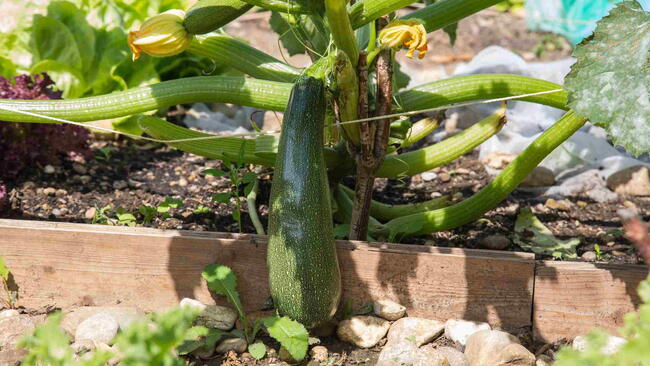
When harvesting, cut zucchinis off the vine with a sharp knife and leave about 1-inch of stem attached to each fruit. Resist the temptation to harvest zucchini by pulling on the fruit as this can damage your plant.
If your zucchini are producing too well, you can slow down production by harvesting the fruit when it’s still small or removing all the male flowers. Zucchini flowers are perfectly edible and can be used as salad toppers or stuffed, battered, and fried. Towards the end of the season, harvest all remaining zucchini before frost hits as the plants and fruit won’t survive a cold spell.
Storage
Fresh zucchini and summer squash has a relatively short shelf life and can be stored, unwashed, in a plastic or paper bag in your fridge’s crisper drawer for about 10 days. If you end up with more zucchini than you can use straight way, you can also pickle it or blanch and freeze it for up to 3 months.

Types
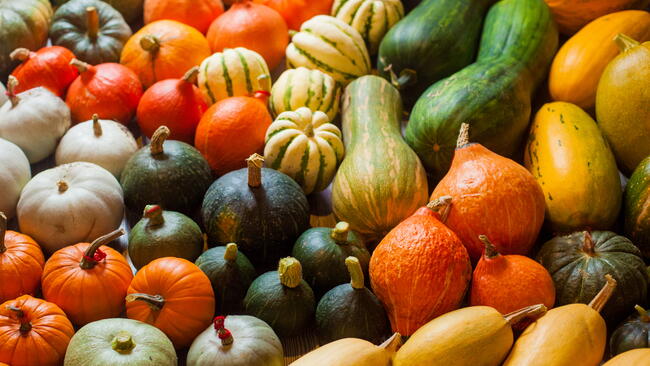
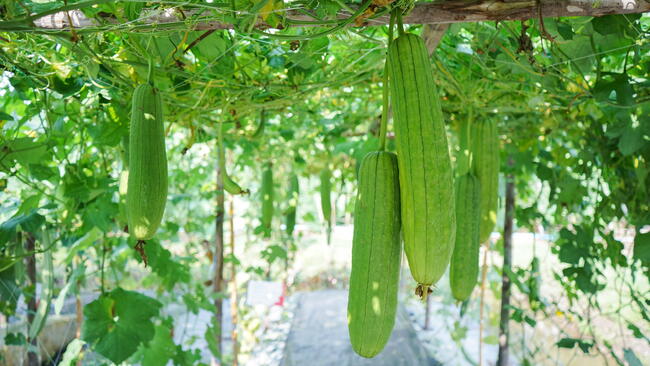
Zucchini come in bush-type forms, which are best for containers and growing in rows, or vining-type plants that can be grown on trellises. Here are popular picks and what makes each stand out.
- ‘Cocozella (di Napoli)’: A heirloom zucchini with dark green, slender fruits and excellent flavor.
- ‘Goldbar’: A yellow summer squash variety with a sweet and nutty flavor.
- ‘Ronde de Nice’: A funky, French heirloom, this plant produces globular fruits — and lots of them!

More Like This


This squash problem is probably blossom end rot. It won't spread but indicates a lack of calcium in the developing fruit.
You may have soil that is too acidic. The pH of acidic soils can be raised by adding lime, but this should only be done if soil test results indicate it is needed. To change pH, lime should be tilled into the soil 6” to 8” deep 2 to 3 months before planting (or as much lead time as possible) to change the nature of your soil. A little sprinkling of lime won't do much once they have the rot.
Based purely on your description, this does not sound like blossom end rot—which affects the lower ends of the squash (on the blossom end side) not the flower itself. It is possible that you have pollination issues? You can always self-pollinate between the male and female flowers to ensure pollination happens. See this page for more detail.
All are summer squash. The yellow squash that looks similar to the green zucchini is called straightneck squash. They're both quick-growing. I think my yellow summer squash variety was 50 to 60 days to maturity and the zucchini was 50 to 60 days, but it completely depends on your seed variety so just check the back of the seed packet or look at the seed retailers online to get a sense of the "days to maturity."
- « Previous
- 1
- 2
- …
- 10
- Next »

Comments