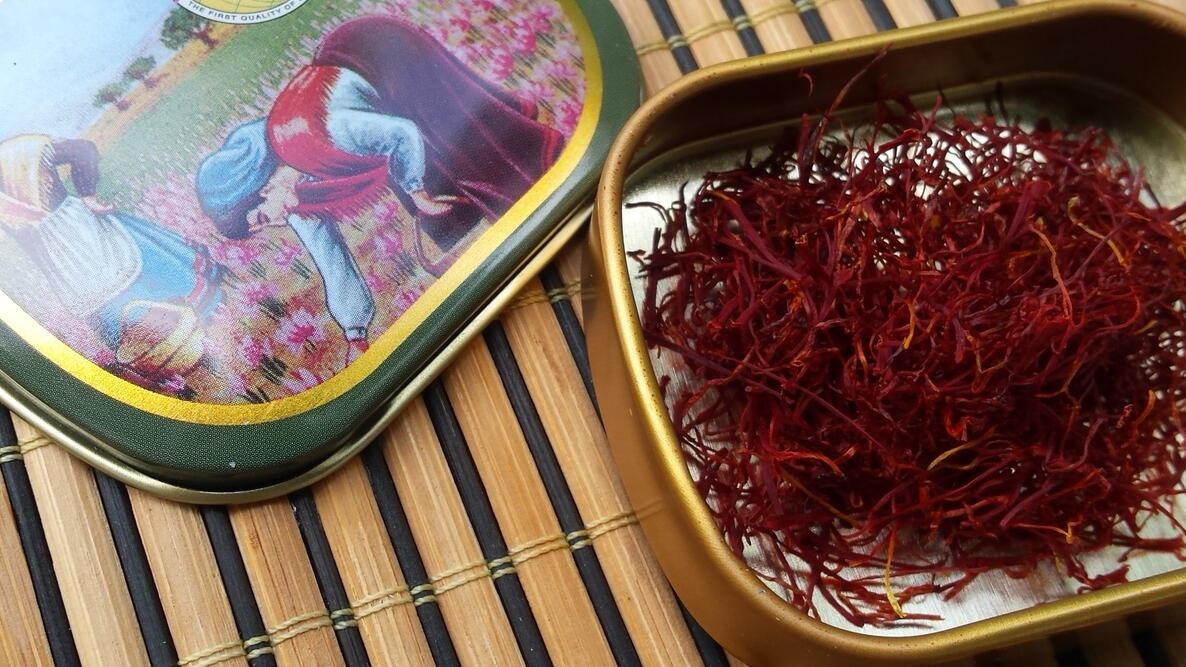
Caption
Saffron is the most expensive spice in the world—and one of the most intriguing. It has a long history of being both highly coveted and highly adulterated. Given its labor-intensive cultivation and harvest, it’s no surprise that this precious spice has earned the nickname “Red Gold.”
Thankfully, a little goes a long way. Here’s what makes saffron special, what to look for when buying it, and how to bring its golden color and distinctive aroma into your kitchen.
What Exactly Is Saffron?
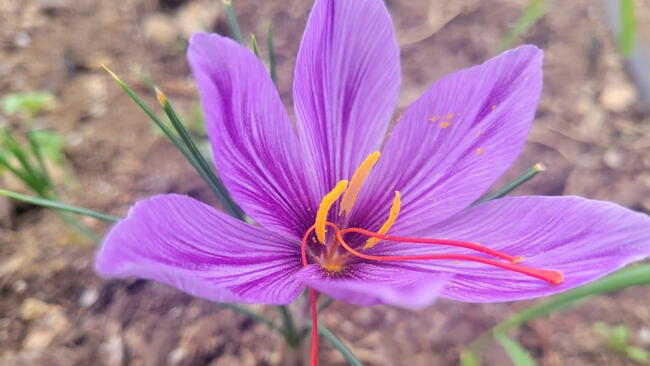
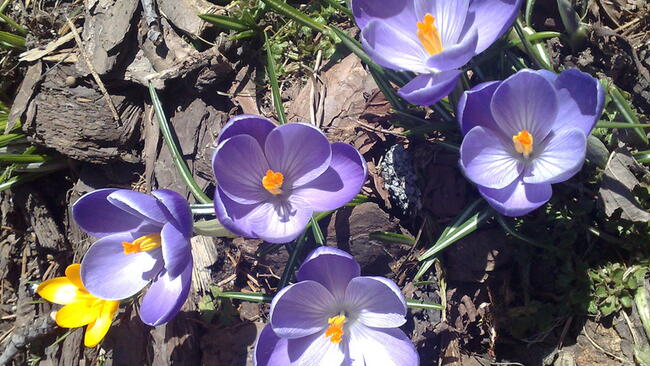
Saffron threads come from the autumn-flowering crocus, Crocus sativus. Its beautiful violet blooms reveal three delicate, red-orange stigmas—the parts of the flower that become the spice.
These stigmas are carefully hand-picked, dried, and sold as saffron. Each flower supplies only three threads, so producing even a small amount takes a remarkable number of blooms. It takes roughly 150 to 170 flowers to produce just one gram of dried saffron!

Why Is Saffron So Expensive?
The answer lies largely in the harvest. Each flower must be picked, and its three delicate stigmas separated by hand. The flowers bloom in autumn, making harvest a busy—and painstaking—time.
With so much work going into such a small amount of spice, it’s easy to see why saffron commands a high price. Those little threads represent quite a bit of effort.
Origins of Saffron
Saffron has a long history stretching across the Mediterranean and Middle East. Although it is often associated with Persia, modern botanical evidence points to Greece as the origin of the cultivated saffron crocus.
Over the centuries, this treasured spice traveled far beyond its early growing regions. Iran is now the world’s largest producer, but saffron is also grown in Afghanistan, Spain, and other countries.
It has even found a home in Pennsylvania, where it has been cultivated for more than 200 years, mostly for personal use. While Pennsylvania is not a major production source, it is noteworthy that saffron can be grown successfully here.
Finding Genuine Saffron
The high cost of this special spice has long made it a tempting target for adulteration. Cheaper plant material, including safflower, may be sold as saffron or mixed into it.
Whole threads are a good place to start when shopping. Look for a clearly labeled product from a reputable seller rather than relying on color alone. Genuine saffron cannot be reliably identified just by how it looks.
Ground saffron can be convenient, but its powdered form makes it harder to see what you’re buying. Whole threads also let you measure out a small pinch and enjoy the ritual of watching them release their golden color.

What Does Saffron Taste Like?
Saffron is appreciated for its earthy, hay-like aroma, delicate floral notes, and beautiful golden hue. Its flavor is distinctive, so use a light hand: The idea is to round out a dish rather than overwhelm it.
These days, the love affair with this precious spice is mainly in the kitchen. It appears in classic dishes such as French bouillabaisse, risotto alla Milanese, and Spanish paella. A modest pinch can also bring something special to a simple pot of rice.
Saffron in the Kitchen
Thankfully, a little of this spice goes a long way, however you choose to use it.
To help release its color and flavor, gently crumble a small amount of threads and soak them in a little warm water or broth before adding them to a recipe. Let them steep for about 15 to 20 minutes, then add both the threads and their fragrant, golden liquid to the dish.
Soaking the threads before cooking helps distribute saffron throughout the food. In rice dishes or other recipes with ample liquid, follow the recipe’s instructions for when to add it.
Start with a small pinch and adjust according to your recipe. You don’t need a generous handful to appreciate what saffron brings to the table!
How to Store Saffron
Keep saffron in a tightly sealed container in a cool, dark cupboard, away from heat and moisture. A spot beside the stove may be convenient, but it won’t do this precious spice any favors.
Buy an amount you expect to use rather than saving a large supply indefinitely. Like other spices, saffron gradually loses its aroma and flavor during storage.
Can You Grow Saffron at Home?
Yes—and that may be the most delightful part of the story.
The saffron crocus grows from a corm, an underground storage structure often sold alongside bulbs. Plant the corms in late summer or early fall, choosing a sunny spot with well-drained soil. Excess moisture can cause them to rot.
When the violet flowers appear in autumn, carefully harvest their red stigmas and dry them for kitchen use. Growing conditions and flowering times vary by location, so check local guidance before planting. Learn more about how to grown saffron!
Imagine adding a pinch of homegrown saffron to a favorite dish. Its ability to impart a beautiful golden hue and a delicate aroma has made it prized for centuries—and harvesting those tiny threads yourself gives “Red Gold” a whole new meaning.


Comments