When is the first day of winter? In the Northern Hemisphere, winter begins on Monday, December 21, 2026, at 3:50 P.M. EST—the winter solstice and shortest day of the year. Learn why it happens, how daylight changes afterward, and what this seasonal turning point means to you!
When Is the Winter Solstice in 2026?
The first day of winter in the Northern Hemisphere is marked by the winter solstice, which occurs on Monday, December 21, 2026, at 3:50 P.M. (EST). Use our Time Zone Converter to calculate what time that is where you live.
For the Northern Hemisphere, the winter solstice occurs every year between December 20 and 23, most often on December 20 or 21. (The Southern Hemisphere’s winter solstice occurs in June.)
The winter solstice is the day with the fewest hours of sunlight throughout the year, making it the shortest day of the year. Thankfully, after we reach the winter solstice, the days begin to grow longer and longer again until we reach the summer solstice—the first day of summer and the longest day of the year.
Think of it this way: Although the winter solstice means the start of winter, it also means the return of more sunlight. It only gets brighter from here!
| Year | Winter Solstice (Northern Hemisphere) | Winter Solstice (Southern Hemisphere) |
|---|---|---|
| 2026 | Monday, December 21, at 3:50 P.M. EST | Sunday, June 21 |
| 2027 | Tuesday, December 21, at 9:42 P.M. EST | Monday, June 21 |
| 2028 | Thursday, December 21, at 3:19 A.M. EST | Tuesday, June 20 |
| 2029 | Friday, December 21, at 9:13 A.M. EST | Wednesday, June 20 |
Due to time zone differences, the solstice may technically occur +/- one day in some regions.
What Is the Winter Solstice?
The winter solstice marks the official beginning of astronomical winter (as opposed to meteorological winter, which starts about 3 weeks before the solstice). It occurs once a year in each hemisphere: once in the Northern Hemisphere (in December) and once in the Southern Hemisphere (in June). It marks the start of each hemisphere’s winter season. When one hemisphere is experiencing its winter solstice, the other is simultaneously experiencing its summer solstice!
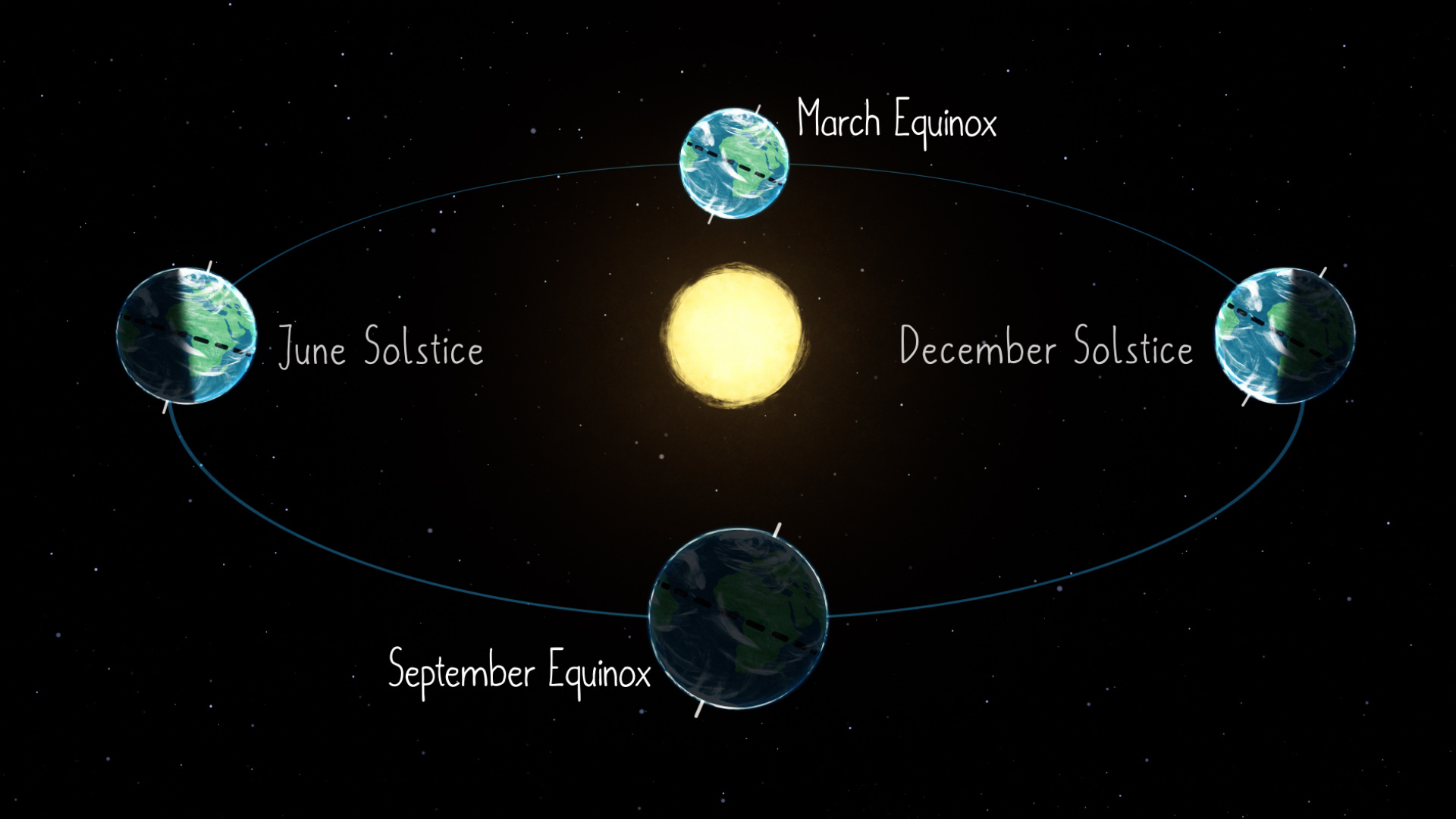
This is all thanks to Earth’s tilted axis, which means that at the solstices, half of Earth is pointed away from the Sun, and the other half is pointed towards it.
We often think of the winter solstice as an event that spans an entire calendar day, but the solstice actually lasts only a moment. Specifically, it’s the exact moment when a hemisphere is tilted as far away from the Sun as possible. This is shown in the diagram below.
The winter solstice is significant across cultures, signaling the changing of the seasons. Some ancient peoples marked the solstice using huge stone structures, like Newgrange in Ireland.
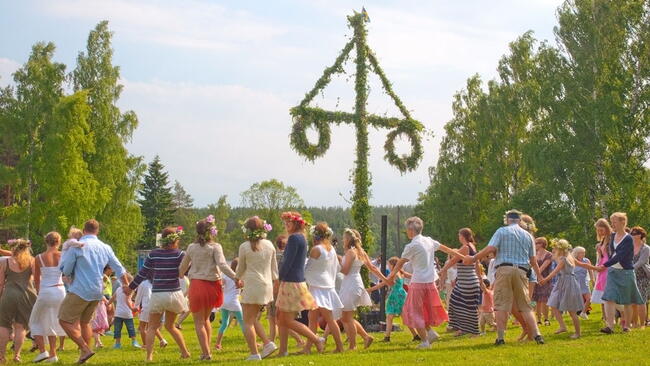
In some cultures, the solstice traditionally marked the midway point of the season rather than the start of it, which explains why holidays such as Midsummer Day are celebrated around the first day of summer.
What Happens on the Winter Solstice?
On the day of the winter solstice, we are tilted as far away from the Sun as possible, which means that the Sun’s path across the sky is as low in the sky as it can be. Think about the daily path of the Sun: It rises in the east and sets in the west, arcing across the sky overhead. During the summer, the Sun arcs high in the sky, but during the winter, it arcs lower, closer to the horizon.
How can we observe the effects of solstice ourselves? On the solstice day, stand outside at noon and look at your shadow. It’s the longest shadow that you’ll cast all year! Do this again on the day of the summer solstice, and you’ll see almost no shadow.

Why Does the Sun Seem to Stand Still?
Another way to think of this is that on the day of the solstice, the Sun’s path reaches its most southerly point in the sky. For those of us in the Northern Hemisphere, this means that the Sun’s path is as low in the sky as it can get—even at high noon. In the Southern Hemisphere, it’s the opposite: The Sun’s path will be high in the sky on the winter solstice—directly overhead at noon at the latitude called the Tropic of Capricorn, which is an imaginary line that circles the Earth, running through parts of South America, southern Africa, and Australia.

The word solstice comes from the Latin sol, meaning Sun, and sistere meaning to stand still. Loosely translated, solstice means “Sun stands still.” Why? The Sun’s path across the sky appears to freeze for a few days before and after the solstice. The change in its noontime elevation is so slight that the Sun’s path seems to stay the same or stand still.
The day after the winter solstice, the Sun’s path begins to advance northward again, eventually reaching its most northerly point on the day of the summer solstice.
Then, as summer advances toward winter, the points on the horizon where the Sun rises and sets advance southward each day; the high point in the Sun’s daily path across the sky, which occurs at local noon, also moves southward each day. It’s a never-ending cycle!
→ Observe the changing day length in your area with our Sunrise and Sunset Times Calculator.
See our SEASONS page for a diagram and the dates for all seasons.
Did you know? For the ancient Celts, the calendar was based around the solstices and equinoxes, marking the Quarter Days, with the midpoints called Cross-Quarter Days. Learn more about the Celtic calendar.
Winter Folklore and Verse
Here at The Old Farmer’s Almanac, we love our weather folklore. Here are just a few of the many proverbs that we have collected in our archives:
- Deep snow in winter; tall grain in summer.
—Estonian proverb - Visits should be short, like a winter’s day.
- A fair day in winter is the mother of a storm.
—English proverb - Summer comes with a bound; winter comes yawning.
- Onion skins very thin, mild winter coming in.
Read more winter weather folklore.

What Does Winter Mean to You?
Winter inspires both joy and woe—from skiing, ice skating, and curling up by a fire to shoveling snow and navigating icy roads. In warmer regions, it brings a welcome break from the heat.
What does winter mean to you? Let us know in the comments!
→ Check out our Winter Weather Forecast to find out what sort of weather is in store for your area this season!
We wish our entire Almanac community a beautiful, cozy, magical, and safe winter season!
Frequently Asked Questions
-
Is the winter solstice also the coldest day of the year?
Usually not. Although the winter solstice has the fewest daylight hours, land and water take time to cool, so the coldest weather generally comes later. Local temperatures also depend on snow cover, altitude, and weather patterns.
In the United States, the coldest days of the year tend to occur between mid-December and late January, so while it’s certainly possible that the coldest day of the year could also be the day of the winter solstice, that’s not usually the case!
-
Is the Winter Solstice really the start of winter?
There is not a black-and-white answer to this question—it depends on which definition of winter you follow:
- Astronomical winter begins at the winter solstice and ends at the spring equinox. Astronomical seasons are based on the position of Earth in relation to the Sun.
- Meteorological winter (in the Northern Hemisphere) starts on December 1 and ends on February 28 (or 29). Meteorological seasons are based on the annual temperature cycle and climatological patterns observed on Earth.
Because an almanac is traditionally defined as a calendar of the heavens, we at The Old Farmer’s Almanac follow the astronomical definition of the seasons, which states that each of the four seasons starts on a solstice or equinox.
-
Was Stonehenge Built to Celebrate the Winter Solstice?
One famous ancient marker is Stonehenge in England. Due to the alignment of the stones, experts acknowledge that the design appears to correspond with the solstices. One theory is that the area was used as a temple to worship the Sun and/or as a type of astronomical observatory.
Read more about Ancient Sites Aligned with the Solstice and Equinox.
-
How Do We Celebrate the Solstice?
Cultures around the world have celebrated the solstice since ancient times. From the Roman feast of Saturnalia to the pre-Christian festival of Norse jól or Juul observed in Scandinavia, our ancestors honored the first day of winter in many ways. Learn more about Winter Solstice: Our Ancestors’ Customs and Traditions.
-
Does winter start on December 1 or the winter solstice?
Both dates are used. Meteorological winter begins December 1 in the Northern Hemisphere, while astronomical winter begins at the winter solstice. Here at The Old Farmer’s Almanac, we follow the astronomical definition of the seasons.
-
Do the days get longer after the winter solstice?
Yes! In the Northern Hemisphere, daylight begins increasing after the winter solstice and continues increasing until the summer solstice. The change is small at first, becoming more noticeable as winter progresses.
Sources
- National Weather Service — The Seasons (Equinoxes and Solstices) Page
- NASA — Winter and Summer Solstice

More Like This



- « Previous
- 1
- 2
- …
- 10
- Next »

Comments