


Mint is an easy herb to grow in your garden and can add flavor to every meal.
Sign up for our daily newsletter to get gardening tips and advice.
Planting, Growing, and Harvesting Mint

- Minimal care is needed for mint. For outdoor plants, use a light mulch. This will help keep the soil moist and keep the leaves clean.
- Indoor plants should be watered regularly to keep the soil evenly moist.
- At first, mints develop into well-behaved-looking, bushy, upright clumps, but they soon set out to conquer new territory with horizontal runners and underground rhizomes. Unless you block the advance, a peppermint plant can become a sprawling 4-foot giant in just 1 year. It’s not the stuff of horror movies, however. Mints benefit from picking and pruning. They are shallow-rooted and easy to pull out, so there’s no reason to worry as long as you provide physical barriers such as walls, walkways, or containers.
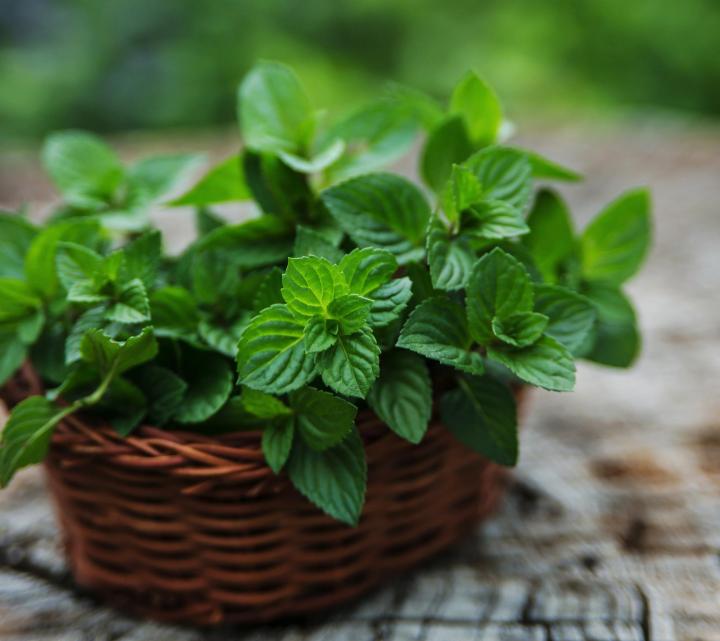
- Frequent harvesting is the key to keeping mint plants at their best. Young leaves have more flavor than old ones, and mint can be harvested as soon as it comes up in spring. Although fresh is best, and sprigs should be kept in water for a few days, mint leaves can be frozen or air-dried in bunches.
- Right before flowering, cut the stems 1 inch from the ground. You can harvest one mint plant two or three times in one growing season.
- You can also pick the leaves as you need them.
- You can grow the plants indoors for fresh leaves throughout the winter. If you want to dry them, it’s best to cut the leaves right before flowering. Store the dried leaves in an airtight container.
Propagating Mint
The best way to propagate mints is by taking cuttings from those that you like best. It’s easy—take 6-inch cuttings of rooted stems and plant them horizontally in the soil. Mint stems will also root in a glass of water. Start with a small cutting from an established plant. Any gardening friend will give you a cutting of a favorite mint.

- Powdery mildew
- Rust
- Leaf spot
- Anthracnose
- Stem canker
- Mice dislike the smell of peppermint. Spread it liberally where you suspect the critters. Mint is also considered a deer-resistant plant.

Serious cooks generally prefer spearmint for savory dishes and peppermint for desserts. Try apple or orange mint for a delicate mint taste in fruit salads, yogurt, or tea. Mint lurks in the background in Middle Eastern salads, such as tabouli, and does well with lamb. It also goes with peas, zucchini, fresh beans, marinades for summer vegetables, cold soups, fruit salads, and cheese.

Tip! Make flavored ice cubes by freezing trays of strong mint tea, then use the ice cubes for your drinks!
Catherine Boeckmann




ADVERTISEMENT
I am growing mint cuttings indoors in small 3" pots under a growing lamp so that I can have a regular supply throughout the winter. My query is that the leaves never get that large. Would I be better to move them to larger pots to achieve this?
I know mint well. My mother always used when i was young, and used to make Cheese from goat milk. Mint leaves used to add “ Burcad” to make good sense. Personally, now i used mint just tea and rice. I like mint
how do I use chocolate mint ,,,I have
it in large pot and it smells wonderful but I don't know what to use it in or how to use it
Chop it fine and put in your salad, along with shredded coconut, just be sparing with both.
I loved my chocolate peppermint! It hid well in brownies! (Moving meant giving the planter of it away, but what a treat!) Hopefully we can find a new one...
Please add spider mites to your list of peppermint pests. They all but destroyed my once-bushy plants. I had to clip and root some healthy tops just to save them. I also must spray a rosemary oil-detergent-water mixture on the reviving stems still outside. <:-(
Years ago a golf ball sized hole popped up overnight in my parking area. I assumed it was a mole/vole or some such critter. I kicked some gravel into the hole and tamped it down. That worked for a day or two and then it reappeared. Since it was right near where I got out when I parked, I didn't want to turn my ankle or provide an open invitation for additional holes so I decided to pour some used kitty litter (no poops included) down the hole and covered it over again. It seemed to work but a similar hole appeared about six feet away. More litter and the critters got the idea until this year. This time instead of litter I crushed a few stalks of mint and shoved them down their doorway. It was never removed and I haven't seen any more holes anywhere. This wasn't a scientific survey by any means, but if you're having problems with diggers in your lawn or garden and have a supply of mint it's worth a try before using chemicals or nasty traps. This might make them move to a different area on your property, but if you have a supply of mint like I do it shouldn't be a problem driving the little monsters out of the back forty.
Mice hate mint. I put mint tea bags around the garage and spray with a mint detergent that I got on amazon. very effective, freshens the areas and I love peppermint tea.
Elia- Thanks for the great tip!
Pineapple mint - Grow it for the Hummingbirds! They LOVE it!
I love my mints. I have them everywhere. Don't forget to add some Catmint to your variety. Pollinators are highly attracted to it as well as the fact that it provides an attractive flower most of the summer. Spearmint was one of the first plants, if not the first, that I planted almost 40 years ago when we moved into this house & I still have it growing (although I suspect that it is not the exact same plant but an offshoot thereof). I have a couple of areas where I have not been able to grow anything so mint will be the last resort.
As for the Catmint, Our cat said, "Thank you," to which I answered, "Don't Mint-tion it!"
