
You could throw away that old wheelbarrow that’s starting to rust and develop a hole in the bottom…or you could turn it into a DIY flower garden. Repurposing items that have fulfilled their original purpose can breathe new life into something that otherwise has no further use.
Making a wheelbarrow planter is an easy afternoon project: drill drainage holes in the bottom, fill it with potting soil, and plant your flowers. Here’s how to do it.
Project at a Glance
Project time: 1 to 2 hours
Skill level: Beginner
Cost: Low—if you use an old wheelbarrow you already have, the only cost is potting soil and plants
Best for: Anywhere in the yard or garden, depending on your plants’ sunlight needs
Lifespan: Several years
Materials & Tools Needed
- Old wheelbarrow
- Cordless drill
- ½” metal drill bit (hardware stores sell them individually)
- Safety glasses
- Potting soil (about 2 to 3 large, 2-cubic-foot bags for a standard wheelbarrow; less for smaller ones)
- Hand rake or hoe
- Garden trowel
- Flowers (or vegetables or herbs)!
Safety Note: Always use caution when working with hand or power tools and follow the manufacturer’s instructions.
Making a Wheelbarrow Planter: 6 Easy Steps
Step 1: Check Your Wheelbarrow
Have an old wheelbarrow that’s seen better days? Before turning it into a planter, make sure it’s sturdy and stable, without sharp edges. If you’re growing vegetables or herbs, avoid wheelbarrows previously used for pesticides or other hazardous chemicals.
An old-fashioned metal wheelbarrow with a little rusty patina can be especially charming. But plastic wheelbarrows work, too! The fun is giving something you already own a second life.
Step 2: Choose Your Plants
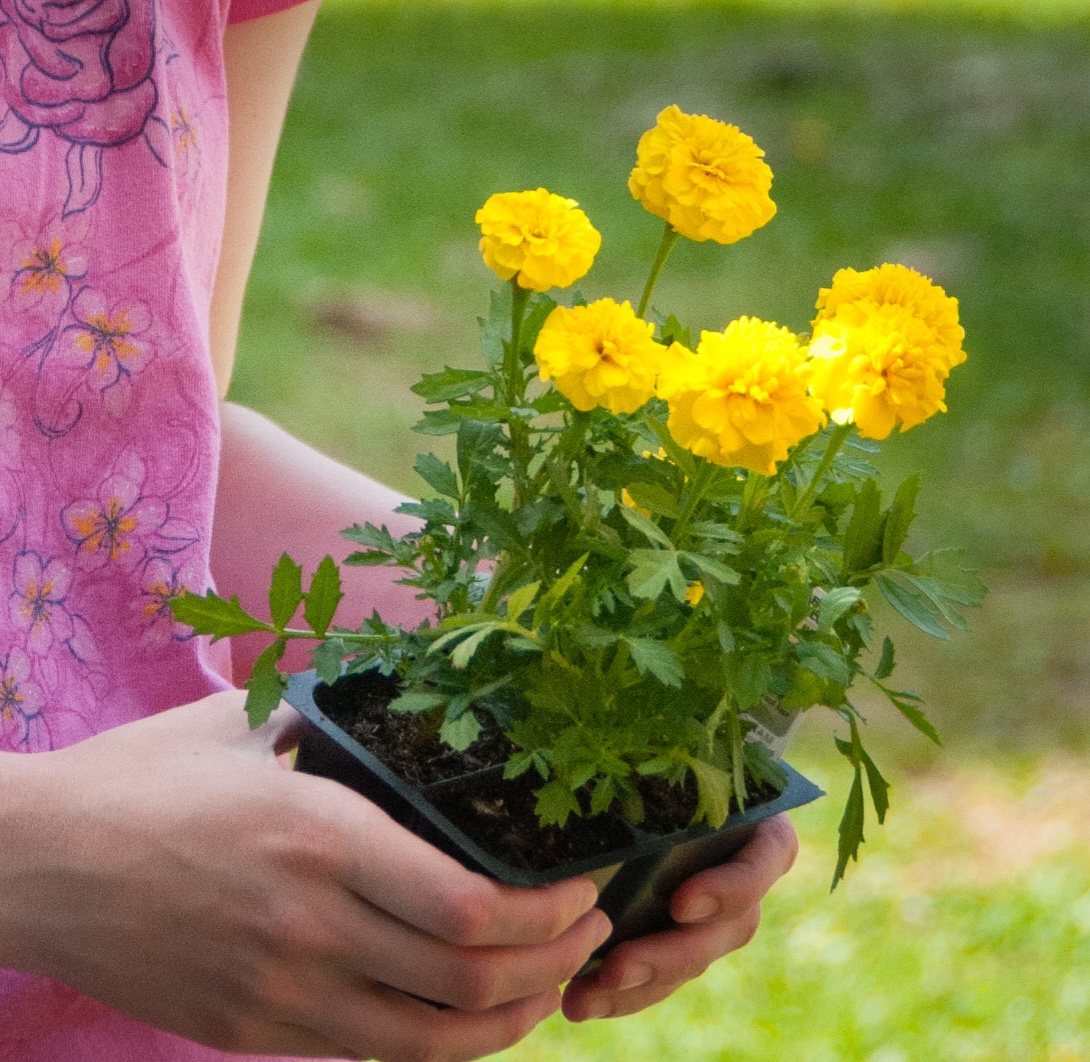
Try to pick plants that don’t need much soil depth and won’t grow so big they overwhelm the container visually. While sunflowers are out, small annual flowers—typically grown for one season—are a great place to start.
You could even get creative and use your old wheelbarrow for growing herbs, which is a great way to combine beauty with kitchen practicality. Even container-friendly vegetables aren’t off the table.
Read the plant tags for mature size and sunlight needs. Then have fun choosing your colors!
Need ideas? See Best Plants for a Wheelbarrow Garden below.
Credit: Daniel Johnson
Step 3: Choose Your Location
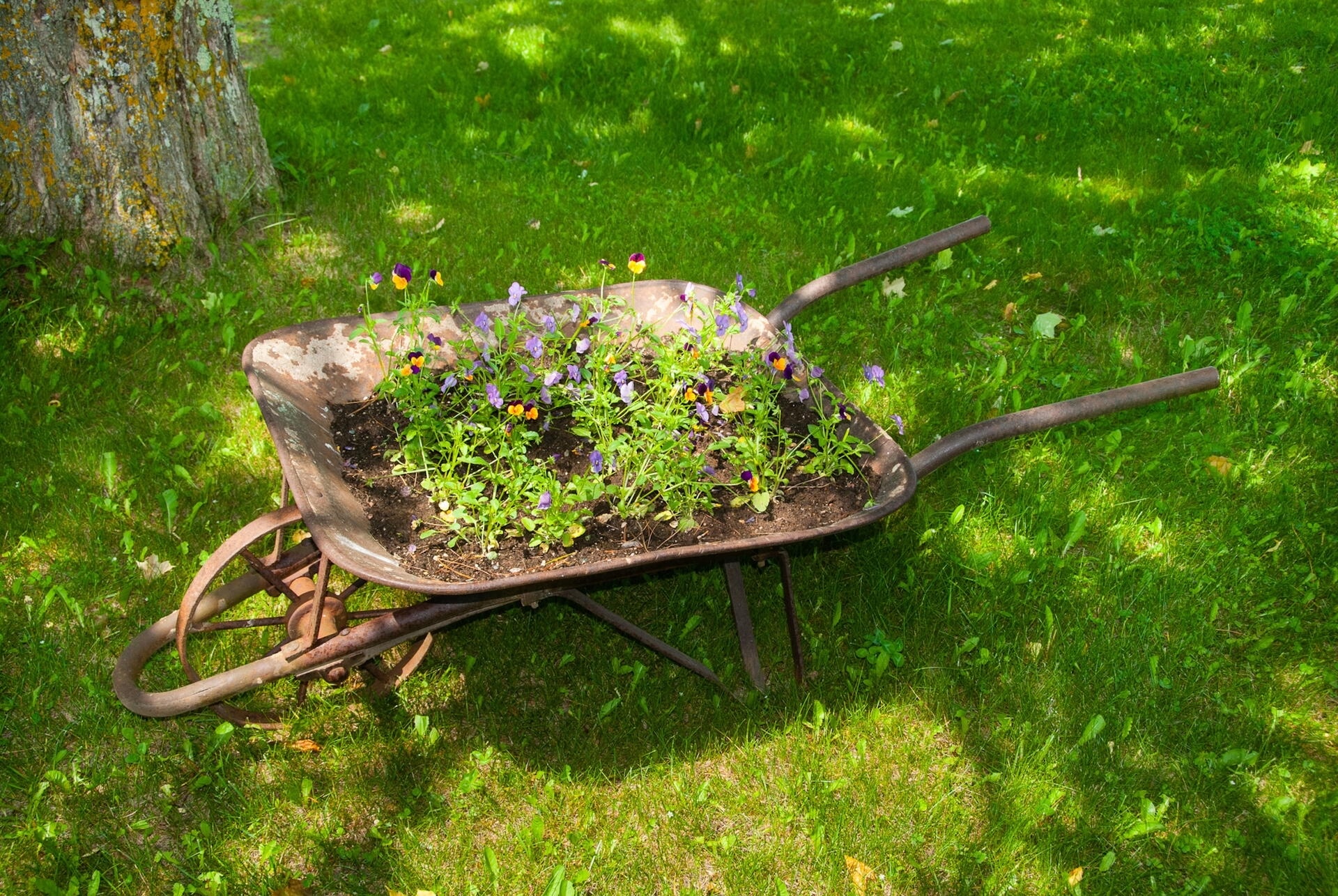
Before picking your plants, think about where your wheelbarrow will go. Is it sunny, partly shaded, or mostly shady? Choose a level, stable spot that gets the right amount of sunlight for your plants.
If you’re growing vegetables or sun-loving annual flowers, an open spot is perfect. For shade-loving plants, the wheelbarrow garden can liven up the north side of a building or a shady spot under trees.
Credit: Daniel Johnson
Position your wheelbarrow before filling it with soil and plants. A small, lightweight wheelbarrow may still be movable, but larger planted ones can be surprisingly heavy.
If yours is easy to move, consider placing it by the front walk to welcome guests with a little garden color!
Step 4: Drill Drainage Holes
The main modification your wheelbarrow needs is drainage holes. They let excess water escape, so roots don’t rot.
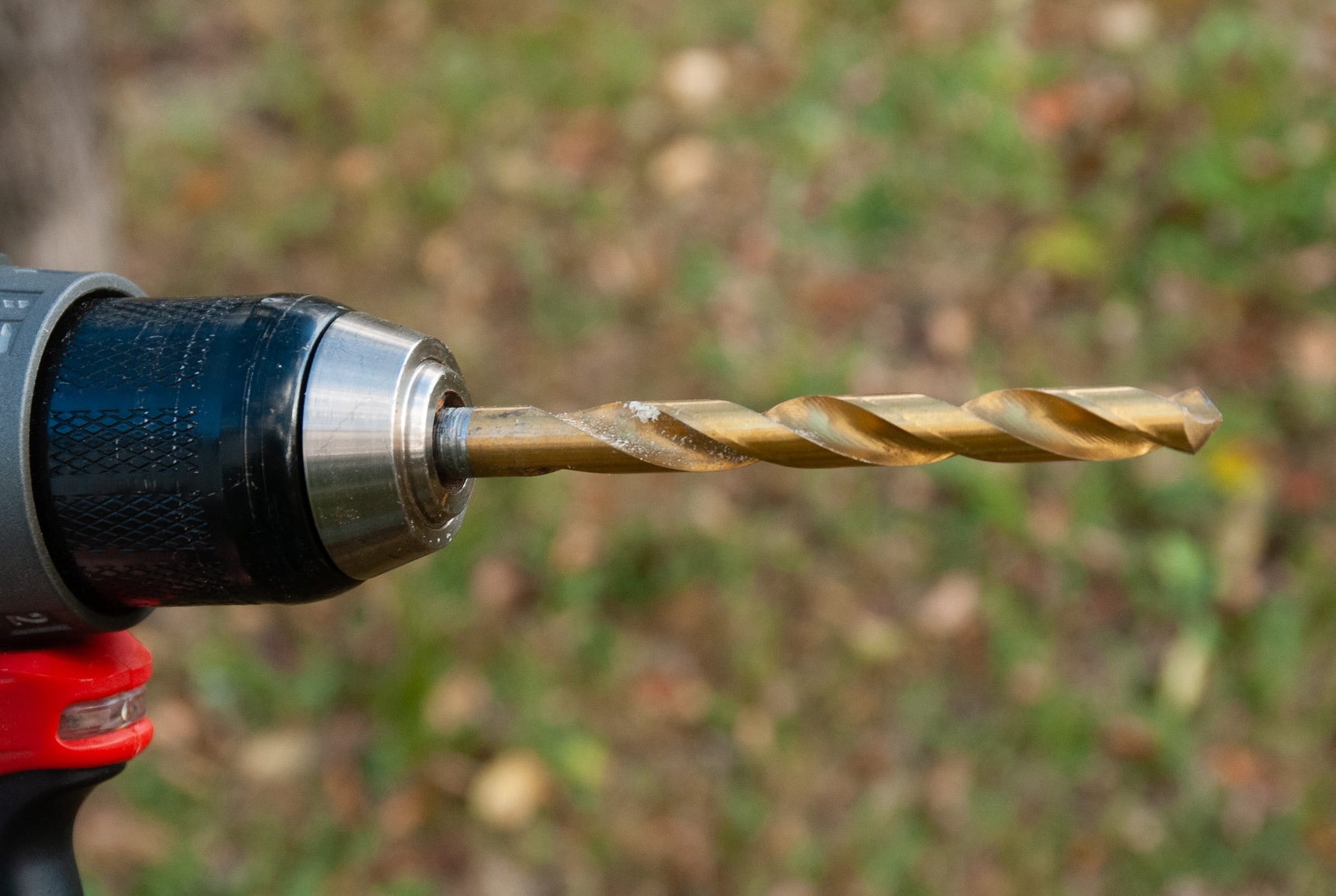
Choose a fairly large drill bit, about ½ inch wide (or whatever size you have that’s similar). Wear safety glasses for protection and make sure the wheelbarrow is stable.
Then, drill 10 or more evenly spaced drainage holes in the bottom of the wheelbarrow’s bucket.
Credit: Daniel Johnson
The drill bit will work effortlessly through the bottom of a plastic wheelbarrow. But if you have an antique metal version, you’ll need to apply pressure carefully while you’re drilling.
After drilling, brush away any metal shavings and rinse out the wheelbarrow. If you have a metal file, smooth any sharp edges around the holes.
Step 5: Add Potting Soil
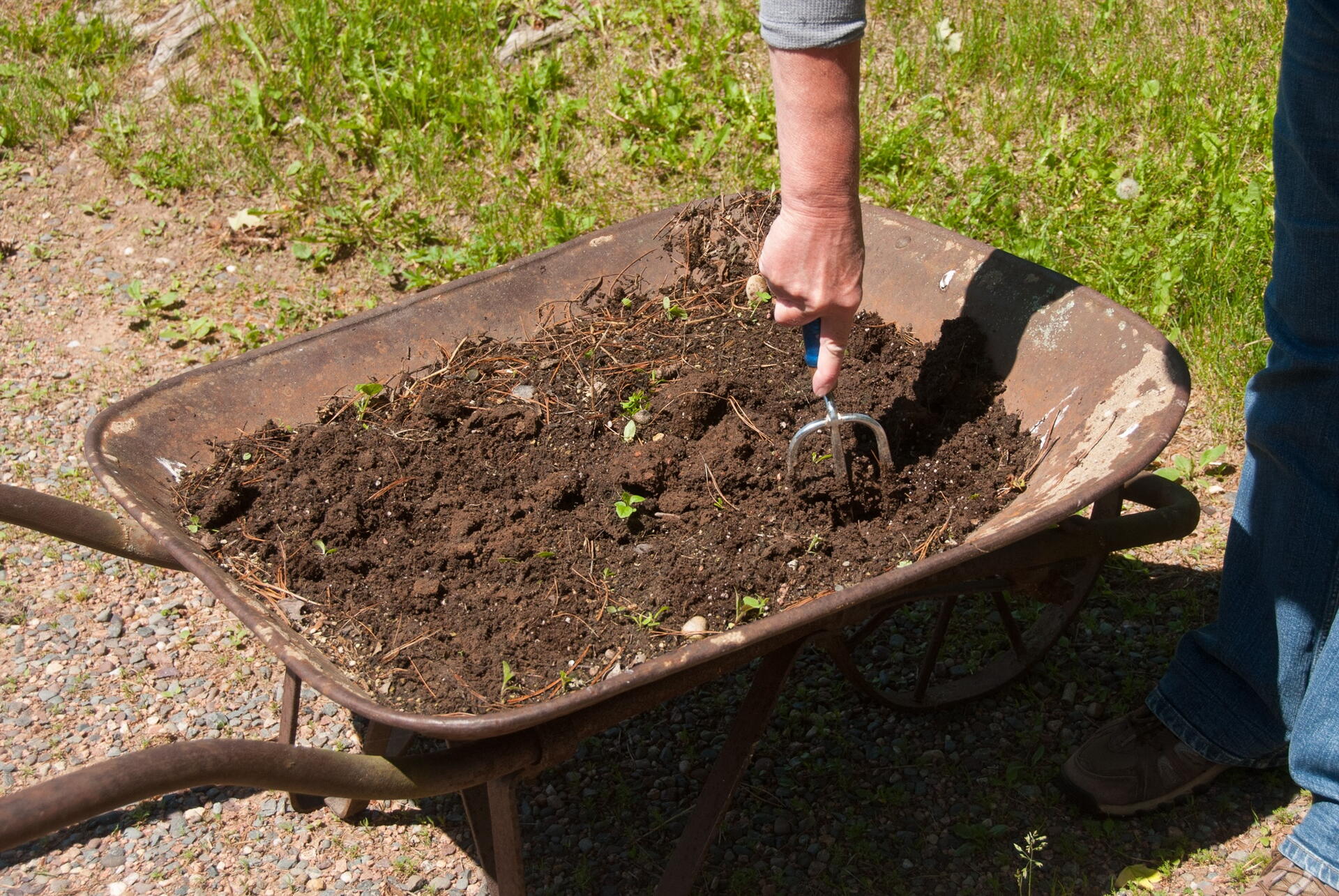
Fill your wheelbarrow with good potting soil. Potting soil is best, not soil. Despite its name, most potting soil is a lightweight, soilless mix. It helps water drain and gives roots room to grow.
Learn more about potting soil versus garden soil.
Check your wheelbarrow’s capacity against the bag size; most wheelbarrows take 2 or more large bags.
Leave about 2 inches of space below the rim so there’s room for watering. Level out the soil nicely with your hand rake.
Credit: Daniel Johnson
Step 6: Arrange, Plant, and Water
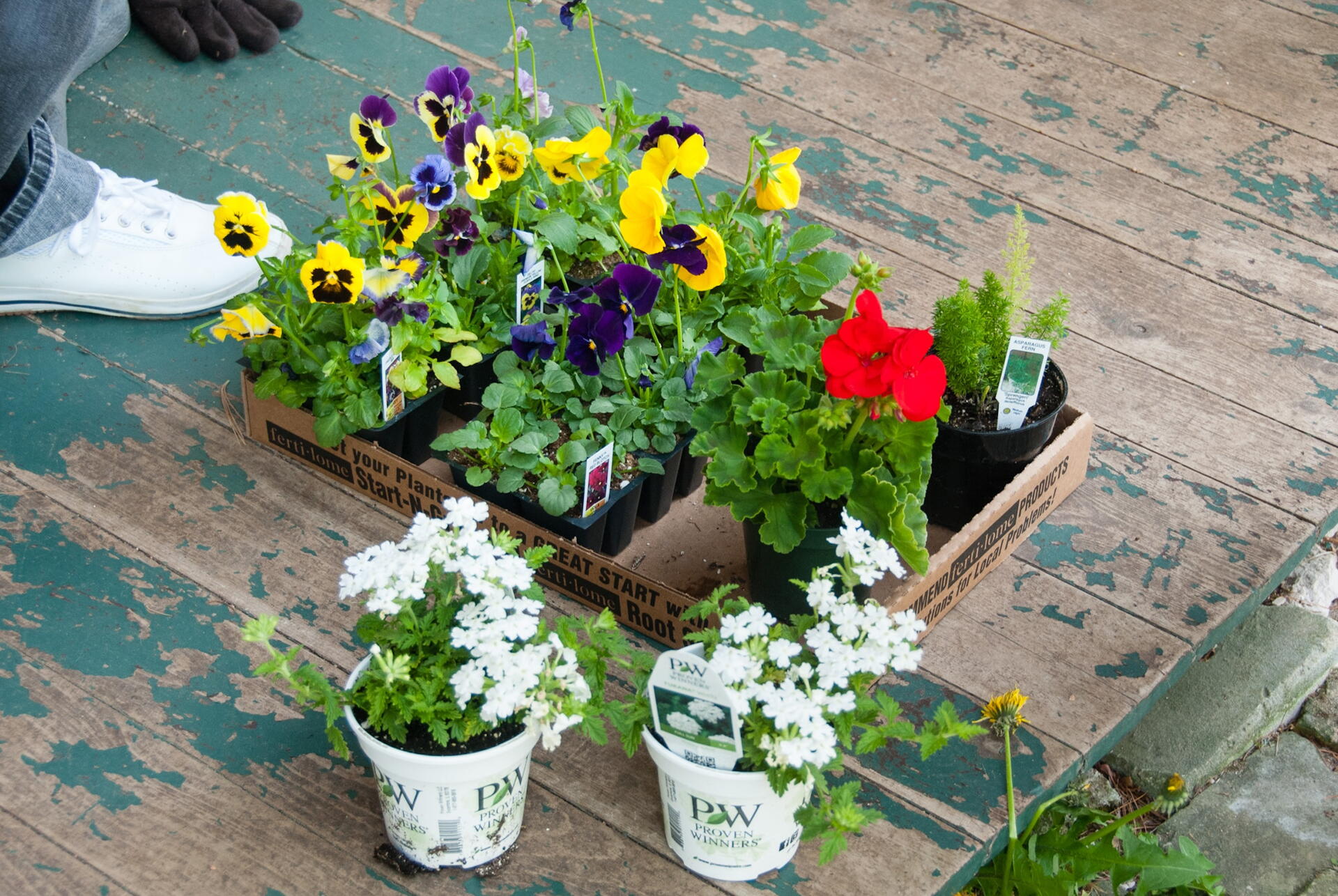
Before planting, arrange your flowers in and around the wheelbarrow to see how they’ll look together. Move them around until you’re happy with the colors and layout.
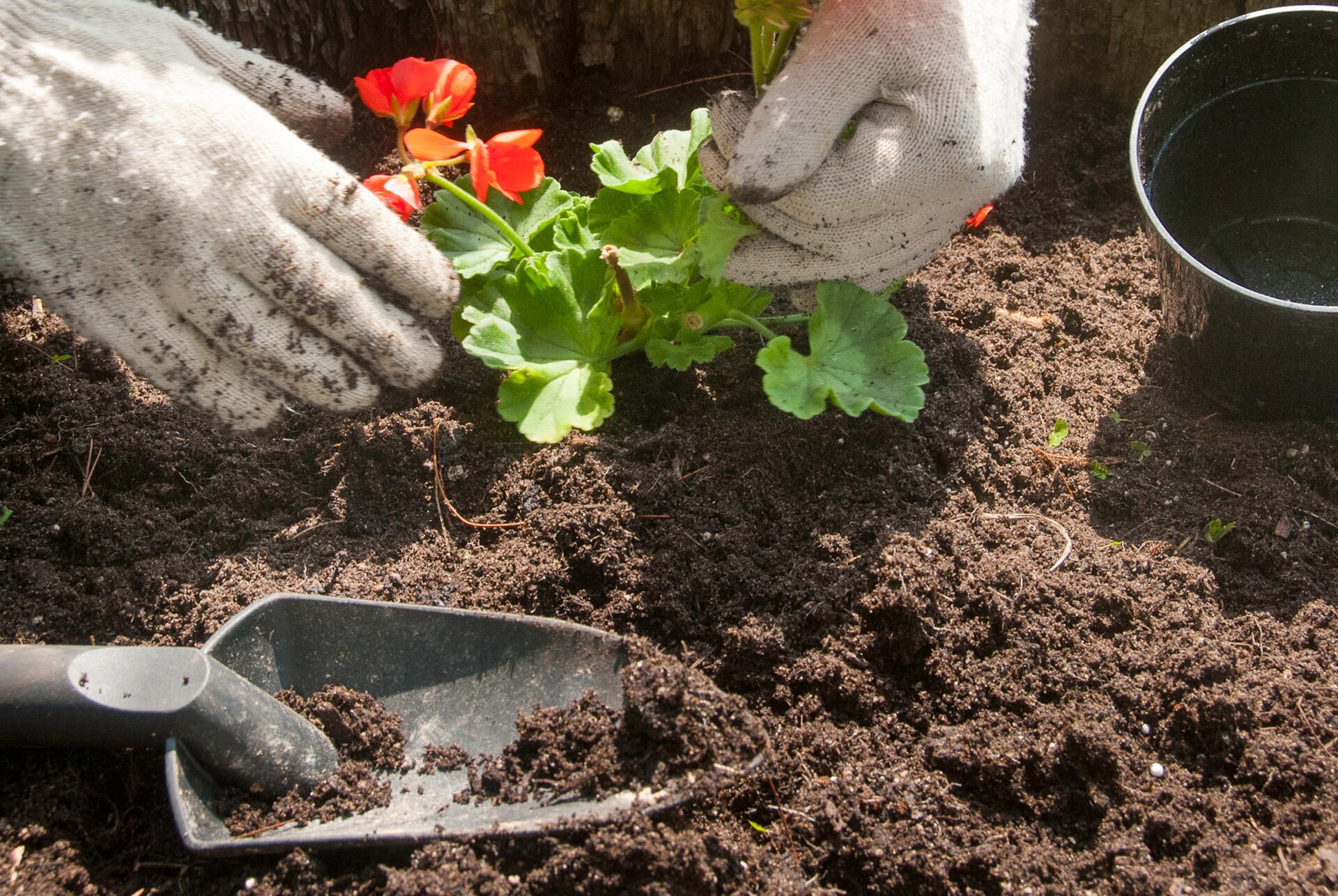
Use a garden trowel to dig a hole for each plant, digging a little wider than the plant’s root ball.
Credit: Daniel Johnson
Gently remove the plant from its pot and loosen any tangled roots with your fingers. Set it into the hole at the same depth it was growing in its pot. Fill in around the roots with potting soil, pressing gently to hold the plant in place.
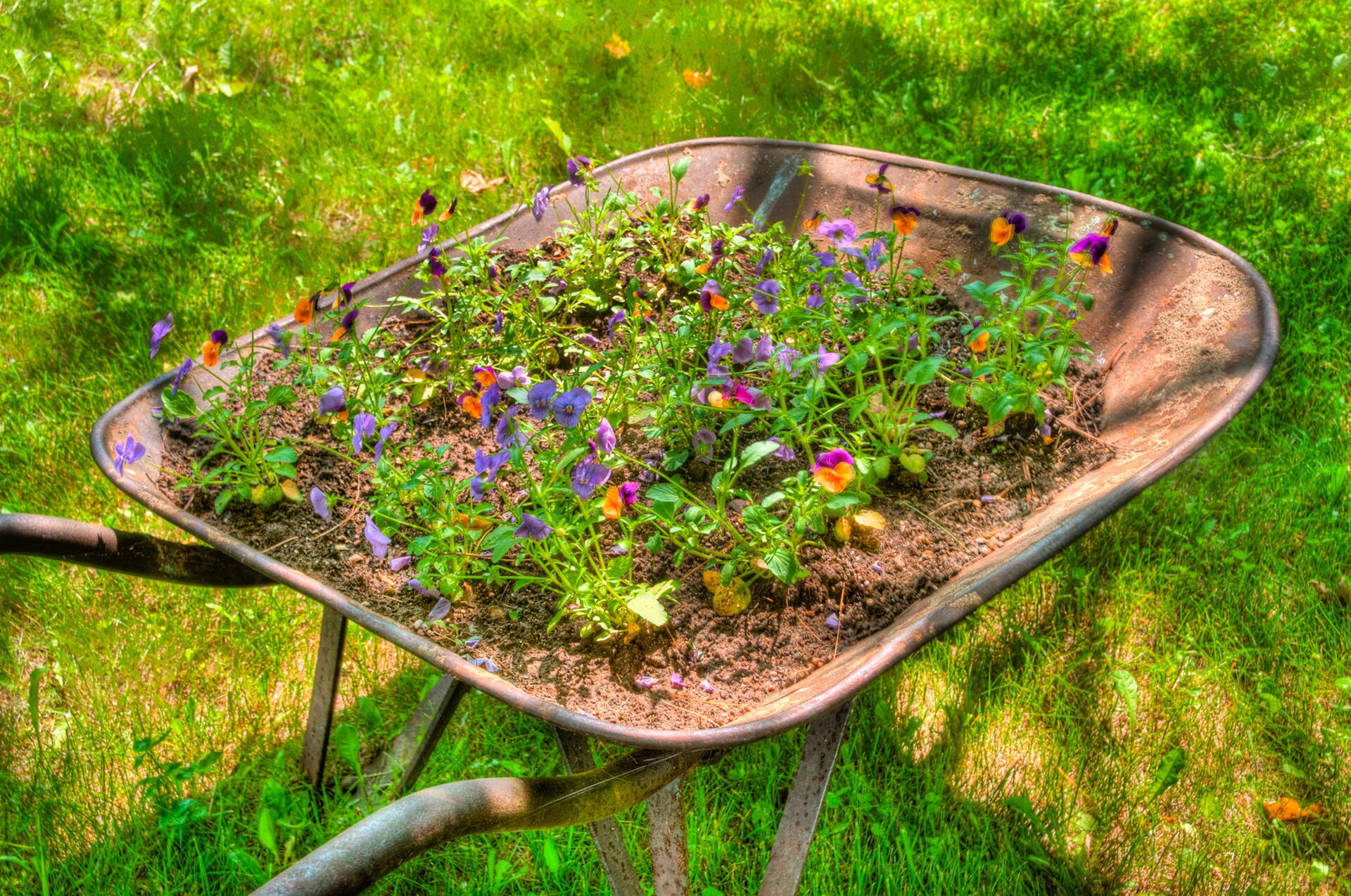
Repeat with the remaining plants, then water thoroughly.
Credit: Daniel Johnson
Best Plants for a Wheelbarrow Garden
You can grow flowers, herbs, or even vegetables in your wheelbarrow planter. Since most wheelbarrows are shallow, choose plants with shallow roots that won’t outgrow the space.
- Flowers: Small annuals like pansies, violas, and dwarf marigolds are great. Avoid tall varieties that could overwhelm the planter.
- Herbs: Try basil, cilantro, chives, or thyme. You’ll have fresh herbs for cooking, too!
- Vegetables: Leaf lettuce, radishes, and spinach are great choices for shallow wheelbarrows. If yours is deeper, you could try compact tomatoes, bush cucumbers, or peppers, as long as there’s enough room for their roots.
Credit: Daniel Johnson
Starting from seed? You don’t have to buy plants from a nursery! Seeds are inexpensive, offer more varieties to choose from, and let you enjoy watching your garden grow from the very beginning.
Radishes, leaf lettuce, and dwarf nasturtiums are good choices for beginners. Sow seeds directly into the potting soil, following the packet’s directions for depth and spacing. Keep the soil moist until they sprout. Learn more about starting from seed in our Beginner’s Guide to Direct Sowing.

Credit: Daniel Johnson
Wheelbarrow Planter Ideas and Tips
- Embrace the rustic look. An old, weathered wheelbarrow can make a charming garden planter. No need to make it look brand-new! Just make sure it’s sturdy and has no sharp edges.
- Keep your plants happy. Wheelbarrow gardens can dry out faster than garden beds, especially in hot weather. Check the soil regularly and water when needed, letting excess water drain away.
Frequently Asked Questions
-
Can I plant seeds in my wheelbarrow garden?
Definitely! While certain seeds benefit from an early start indoors under grow lights, many quick-growing plants can be successfully planted from seed directly in your wheelbarrow.
-
Will deer eat plants in my wheelbarrow garden?
It depends on what you plant and where you place your wheelbarrow garden, but the answer is probably yes. If you plant deer-friendly plants and park your wheelbarrow in an area deer can access, you may discover your plants have disappeared overnight.
You could try planting a deer-resistant plant like marigolds if you want to leave your wheelbarrow in an open area; otherwise, park it in an enclosed area that’s off-limits to deer.
-
How often should I water my wheelbarrow garden?
Check your wheelbarrow garden daily at first and, for most flowers and vegetables, water when the top 1 to 2 inches of potting soil feels dry.
All container-grown plants are prone to drying out quickly, and a wheelbarrow garden is no exception. The specifics of your watering routine will depend on the types of plants you select and whether the wheelbarrow is placed in full sun. In general, plan to water regularly, as you would with any container plant.
-
Should I put gravel at the bottom of my wheelbarrow garden?
The University of California recommends not adding gravel to the bottom of containers. Gravel doesn’t help water drain and can leave roots sitting in wet soil. Use potting soil and make sure your wheelbarrow has drainage holes so water can flow out.
Sources
- The University of Maryland Extension — Growing Vegetables in Containers
- The University of California — Drainage in Containers



Comments