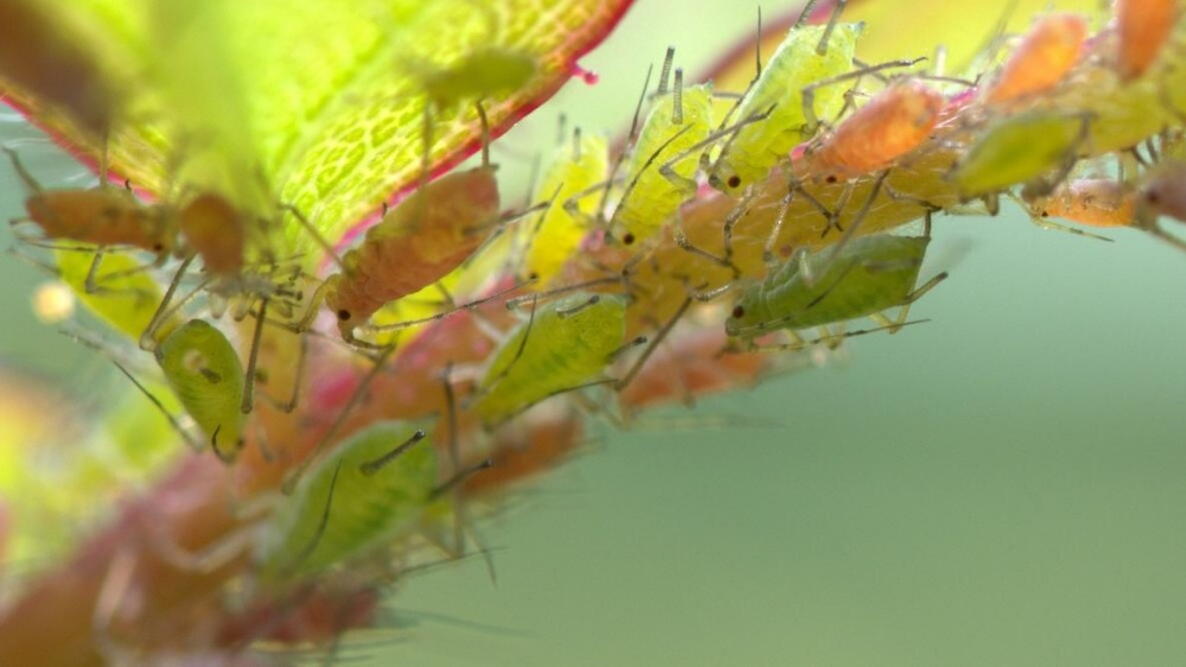
Caption
Aphids are pesky green bugs that can wreak havoc on your garden.
Identification
Identifying Aphids
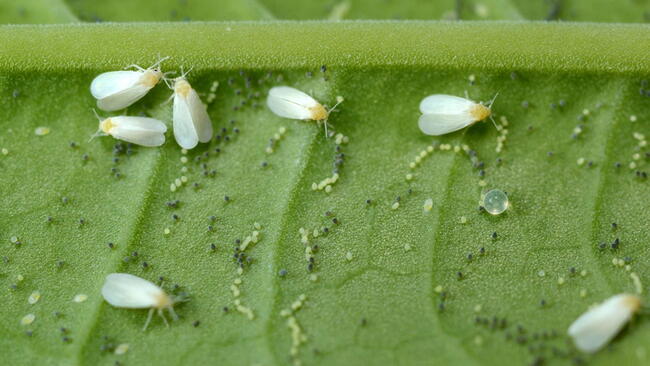
Aphids are tiny (adults are under 1/4 inch), and often nearly invisible to the naked eye. Various species can appear white, black, brown, gray, yellow, light green, or even pink. Some may have a waxy or woolly coating. They have pear-shaped bodies with long antennae; the nymphs (young aphids) look similar to the adults. Most species have two short tubes (called cornicles) projecting from their hind end.
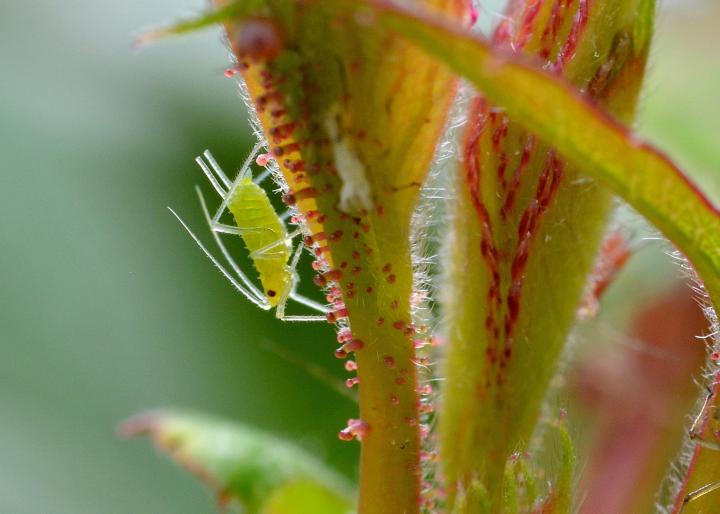
Adults are usually wingless, but most species can develop a winged form when populations become crowded, so that when food quality suffers, the insects can travel to other plants, reproduce, and start a new colony. Aphids usually feed in large groups, although you might occasionally see them singly or in small numbers.
While aphids in general feed on a wide variety of plants, some species of aphids can be specific to certain plants—for example: bean aphids, cabbage aphids, potato aphids, green peach aphids, melon aphids, and woolly apple aphids.
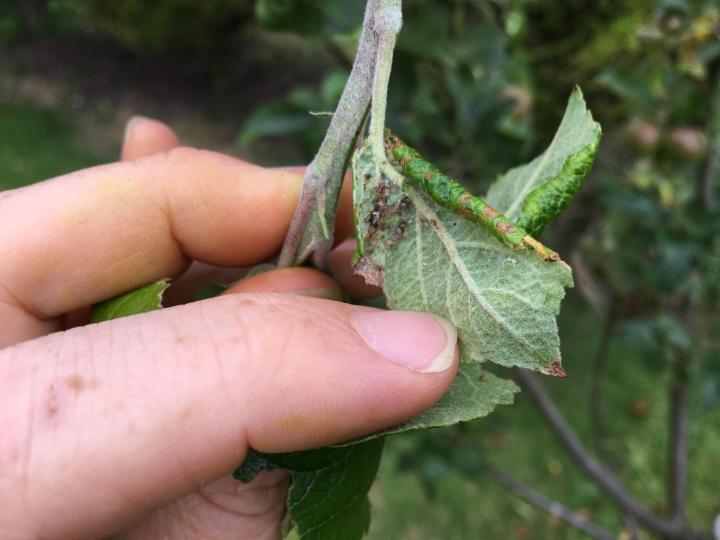
Photo credit: GrowVeg.com.
What Does Aphid Damage Look Like?
Nymphs and adults feed on plant juices, attacking leaves, stems, buds, flowers, fruit, and/or roots, depending on the species. Most aphids especially like succulent new growth. Some, such as the green peach aphid, feed on a variety of plants, while others, such as the rosy apple aphid, focus on one or just a few plant hosts.
- Look for misshapen, curling, stunted, or yellowing leaves. Be sure to check the undersides of leaves; aphids love to hide there.
- If the leaves or stems are covered with a sticky substance, that is a sign that aphids may have been sipping sap. This “honeydew,” a sugary liquid produced by the insects as waste, can attract other insects, such as ants, which gather the substance for food. When feeding on trees, aphids’ honeydew can drop onto cars, outdoor furniture, driveways, and so on.
- The honeydew can sometimes encourage a fungal growth called sooty mold, causing branches and leaves to appear black.
- Flowers or fruit can become distorted or deformed due to feeding aphids.
- Some aphid species cause galls to form on roots or leaves.
- Aphids may transmit viruses between plants.
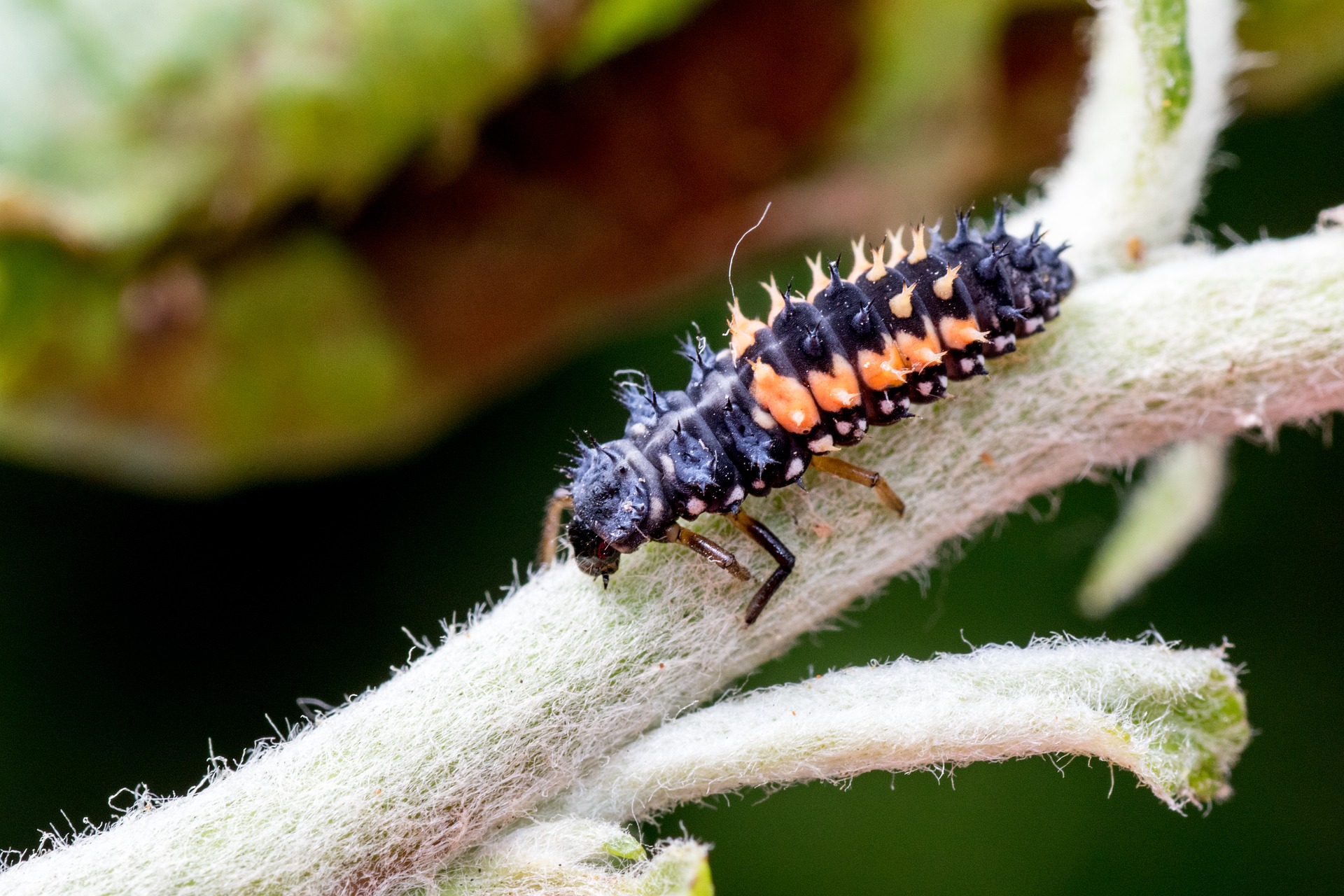
- Aphids also attract other insects that prey on them, such as ladybugs.
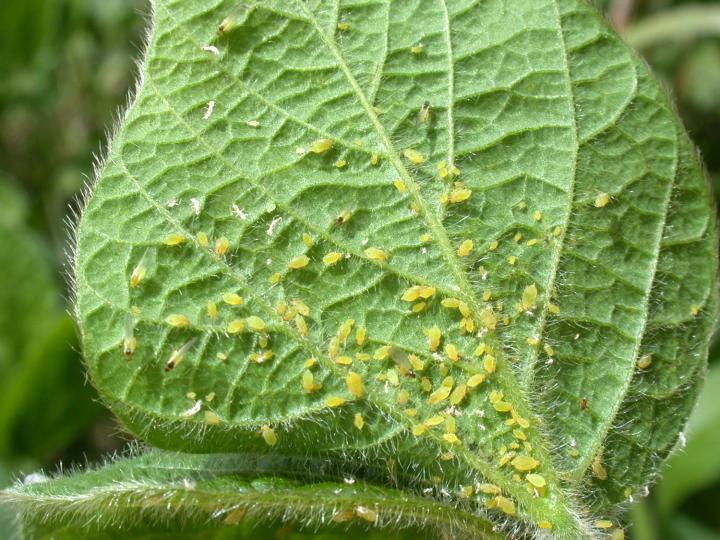
Photo Credit: John Obermeyer/Purdue University.
Still not sure? Use our Plant Problem ID tool to easily diagnose pests and diseases.
Control and Prevention
How to Get Rid of Aphids: Killing Aphids
- Try spraying infested plants with a strong stream of water; sometimes, all aphids need is a blast to dislodge them. Typically, they are unable to find their way back to the same plant.
- Neem oil, insecticidal soaps, and horticultural oils are effective against aphids, but these substances need to come into contact with the aphids in order to work. Be sure to follow the application instructions provided on the packaging.
- You can often control aphids by wiping or spraying the leaves of the plant with a mild solution of water and a few drops of dish soap. Soapy water should be reapplied every 2-3 days for 2 weeks.
- One variation of this soap-water mix includes cayenne pepper: Stir together 1 quart water, 1 tsp liquid dish soap, and a pinch of cayenne pepper. Do not dilute before spraying on plants.
- Diatomaceous earth (DE) is a nontoxic, organic material that will dehydrate aphids.
Warning: Do not apply DE when plants are in bloom, as it will kill pollinators such as bees and butterflies if they come into contact with it.

How to Prevent Aphids
- For fruit or shade trees, spray dormant horticultural oil to kill overwintering aphid eggs.
- Beneficial insects, such as ladybugs, lacewings, and parasitic wasps, will feed on aphids. Attract these insects to your garden by providing an environment that features a range of flowers and foliage plants, as well as access to water. Supplemental populations of these insects can be ordered online and should help control the aphid populations from the start.
- Companion planting can help keep aphids away from your plants in the first place, or can draw aphids away from the plants you want to grow. For example:
- Aphids are repelled by catnip.
- Aphids are especially attracted to mustard and nasturtium. Plant these near more valuable plants as traps for the aphids. The aphids will likely go for these plants before your prized tomatoes. (Check your trap plants regularly to keep aphid populations from jumping to your valued plants.)
- Nasturtiums spoil the taste of fruit tree sap for aphids and will help keep aphids off of broccoli.
- Garlic and chives repel aphids when planted near lettuce, peas, and rose bushes.
Using Alcohol to Control Aphids
Isopropyl alcohol (also called isopropanol or rubbing alcohol) works fine and is easy to find, but be sure it doesn’t have additives. Ethanol (grain alcohol) seems to work best. Alcohol usually comes in 70 percent strength in stores (or 95 percent strength purchased commercially). To make an insecticidal alcohol solution, mix equal parts 70 percent alcohol and water (or, if using 95 percent alcohol, mix 1 part alcohol to 1 ½ parts water).
You can also add alcohol to a soapy emulsion to make it more effective. For example, in a spray bottle, combine 5 cups water, 2 cups isopropyl alcohol, and 1 tablespoon liquid dish soap.
These types of solutions should NOT be sprayed over the entire plant at once. Spray or wipe down only the infested areas. It will only kill the aphids it comes into contact with, so repeated applications may be necessary.
CAUTION: When applying an alcohol or soap spray, or a combination, always test on a small area of the plant first, and apply in the morning or evening, when the Sun is not as intense. Watch the plant for a few days for any adverse reactions before applying more. Plants can be sensitive to alcohol and dish soap. Also, some soaps have additives that can damage plants—select the purest form.
Check out this video to learn more about how to get rid of aphids:
Do you have more tips for controlling aphids? Let us know in the comments below!

More Like This
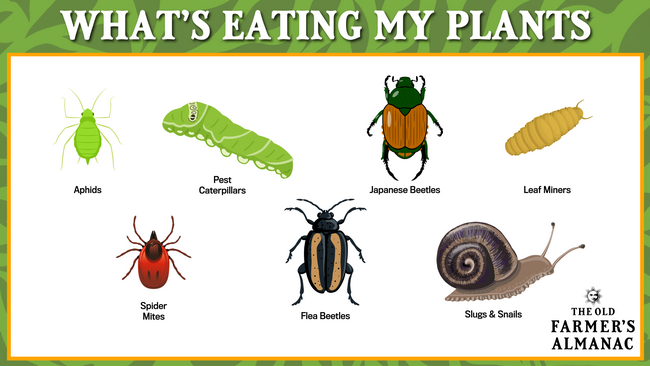
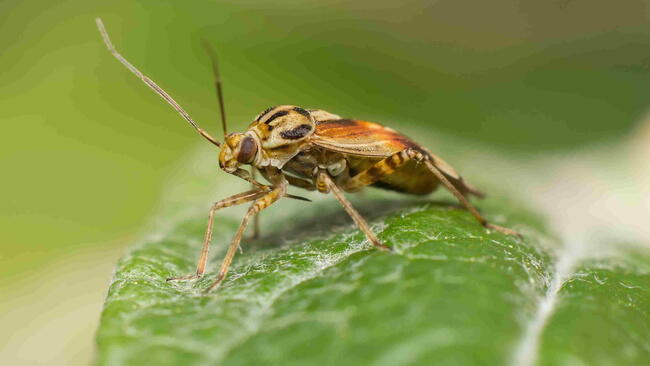
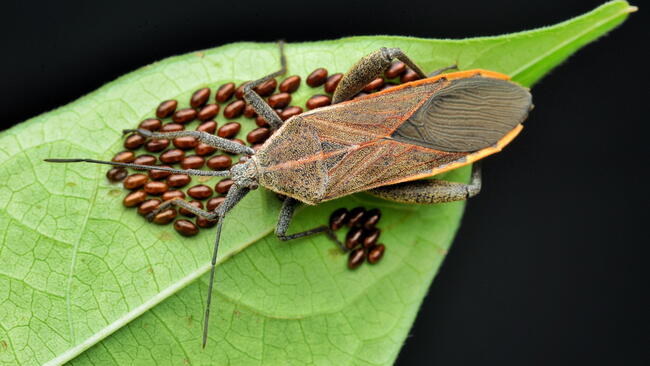


Although we are not entomologists, we can certainly try to help you identify the pest. We'd suggest that you send us an email at almanaceditors@yankeepub.com, along with 1 or 2 photo attachments (low resolution, please). If you can, please tell us the approximate size of the insect, the flower type that they visit, your state/province, where you normally see the pests (stem, flower, leaves, under leaves), if they group in clusters or individually, if they are active during the day or night, specific damage (such as holes in leaves, brown patches, fading, wilting), and any other clues that might help. Thank you!
It sounds like you're doing nearly everything you can! Borax ant traps are the most effective way to deal with a colony, so you may just have to wait and see if the borax does the trick. Alternatively, you could try using diatomaceous earth (DE), which is a fine powder that rapidly dehydrates ants and other insects. Spread a solid, 1/2-inch-wide ring of DE around the sunflower stems and bean stalks, as well as any other nearby structures that the ants could crawl up. Apply DE when you know the ground will stay dry for a few days, so the DE doesn't get washed away. DE is non-toxic, but cover your mouth and nose while applying it to ensure that the fine particles don't get into your lungs.
Most gardeners simply leave the bait plants be, but there's no reason not to periodically get rid of the bugs on bait plants, too. In fact, it's a good way to provide extra protection for more-valued flowers and vegetables. Avoid using chemical sprays or wipes on bait plants, though, as this might deter aphids and drive them back to your non-bait plants instead.
- « Previous
- 1
- 2
- …
- 10
- Next »

Comments