Summer Days are here! Summer begins with the solstice on Sunday, June 21, 2026, marking the astronomical first day of summer in the Northern Hemisphere. What exactly IS the summer solstice? Is it really the longest day of the year? Welcome the solstice with some interesting facts and folklore.
The June Solstice
In the Northern Hemisphere, the June solstice (aka summer solstice) occurs when the Sun travels along its northernmost path in the sky. This marks the astronomical start of summer in the northern half of the globe. (In the Southern Hemisphere, it’s the opposite: the June solstice marks the astronomical start of winter when the Sun is at its lowest point in the sky.)
When is the Summer Solstice?
The June solstice occurs on Sunday, June 21, at 4:24 A.M. EDT. Curious what time 4:24 A.M. EDT is where you live? Try our Time Zone Converter.
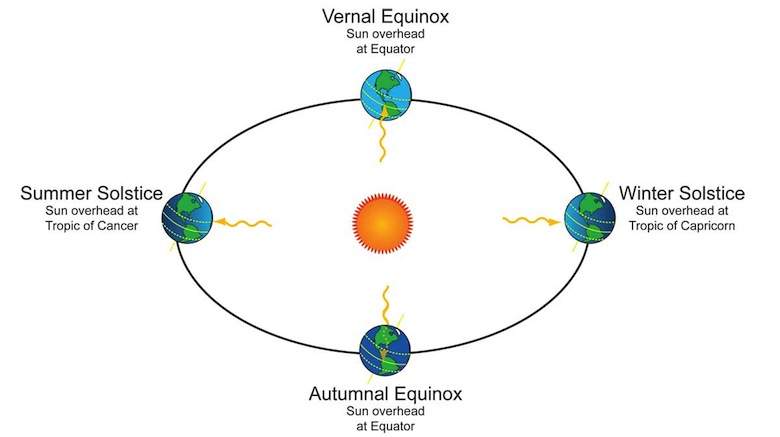
This solstice marks the official beginning of summer in the Northern Hemisphere, occurring when Earth arrives at the point in its orbit where the North Pole is at its maximum tilt (about 23.5 degrees) toward the Sun, resulting in the longest day and shortest night of the calendar year. (By longest “day,” we mean the longest period of sunlight hours.) On the day of the June solstice, the Northern Hemisphere receives sunlight at the most direct angle of the year.
In the Southern Hemisphere, the June solstice marks the beginning of winter.
| Year | Summer Solstice (Northern Hemisphere) | Summer Solstice (Southern Hemisphere) |
|---|---|---|
| 2026 | Sunday, June 21, at 4:24 A.M. EDT | Monday, December 21 |
| 2027 | Monday, June 21, at 10:11 A.M. EDT | Tuesday, December 21 |
| 2028 | Tuesday, June 20, at 4:01 P.M. EDT | Thursday, December 21 |
| 2029 | Wednesday, June 20, at 9:47 P.M. EDT | Friday, December 21 |
Tip: Want to know how many days are left until the longest day of the year? Use our simple day calculator.
What Is the Summer Solstice?
In the Northern Hemisphere, the June solstice (aka summer solstice) occurs when the Sun reaches its highest and northernmost points in the sky. It marks the start of summer in the northern half of the globe. (In contrast, the June solstice in the Southern Hemisphere is when the Sun is at its lowest point in the sky, marking the start of winter.)
Solstice comes from the Latin words sol (sun) and sistere (to stand still). Due to Earth’s tilted axis, the Sun doesn’t rise and set at the same locations on the horizon each morning and evening; its rise and set positions move northward or southward in the sky as Earth travels around the Sun through the year. Also, the Sun’s track in the sky becomes higher or lower throughout the year. The June solstice is significant because the Sun reaches its northernmost point in the sky at this time, at which point the Sun’s path does not change for a brief period of time.
After the solstice, the Sun appears to reverse course and head back in the opposite direction. The motion referred to here is the apparent path of the Sun when one views its position in the sky at the same time each day, for example, at local noon. Over the year, its path forms a sort of flattened figure eight, called an analemma. Of course, the Sun itself is not moving (unless you consider its orbit around the Milky Way galaxy); instead, this change in position in the sky that we on Earth notice is caused by the tilt of Earth’s axis as it orbits the Sun, as well as Earth’s elliptical, rather than circular, orbit.
Does the Solstice Always Occur on the Same Day?
The timing of the June solstice is not based on a specific calendar date or time; it all depends on when the Sun reaches its northernmost point from the celestial equator. Therefore, the solstice won’t always occur on the same day. Currently, it shifts between June 20, 21, and 22.
The Year’s Longest Day
The Summer Solstice is the day with the longest period of sunlight. Notice how the Sun appears highest in the sky at the solstice; its rays strike Earth at a more direct angle, causing the efficient warming we call summer.
For those locations at the Tropic of Cancer and northward, the Sun is highest in the sky on the June solstice, and you’ll notice that your shadow (at local, or solar, noon, not clock-time noon) is the shortest that it will be all year (in fact, at the Tropic of Cancer, there will be no shadow). [Local noon is when the Sun crosses the local meridian (an imaginary line between the North and South poles) and is highest in the sky for the day.]
For those who live in the Southern Hemisphere, the June solstice is the shortest day of the year and marks the arrival of winter.
→ See 7 fun facts about the June solstice!
Frequently Asked Questions
Is the Summer Solstice the First Day of Summer?
Yes and no… Technically, it depends on whether we’re speaking about the meteorological or astronomical start of the season. Most meteorologists divide the year into four seasons based on the months and the temperature cycle; this allows climate data to be compared and organized more easily. In this system, summer begins on June 1 and ends on August 31. Therefore, the summer solstice is not considered to be the first day of summer, meteorologically speaking.
Astronomically, however, the first day of summer is said to be when the Sun reaches its highest point in the sky, which occurs on the summer solstice (June 20–22). Therefore, the summer solstice is considered to be the first day of summer, astronomically speaking.
As an almanac, which is defined as a “calendar of the heavens,” we prefer to follow the astronomical interpretation of the seasons and consider the first day of summer to coincide with the summer solstice. That being said, you may choose to follow whichever system you like best!
There is also a common debate regarding how the exact timing of the solstice affects the first day of the season. For example, if the solstice occurs at 11:30 P.M. on a Saturday, should we consider that Saturday to be the first day of summer, or should we instead consider the following day (Sunday) to be the first day? It tends to differ by whichever source you follow.
Is the Summer Solstice the Longest Day of the Year?
Yes! As spring ends and summer begins, the daily periods of sunlight lengthen to their longest on the solstice, then begin to shorten again.
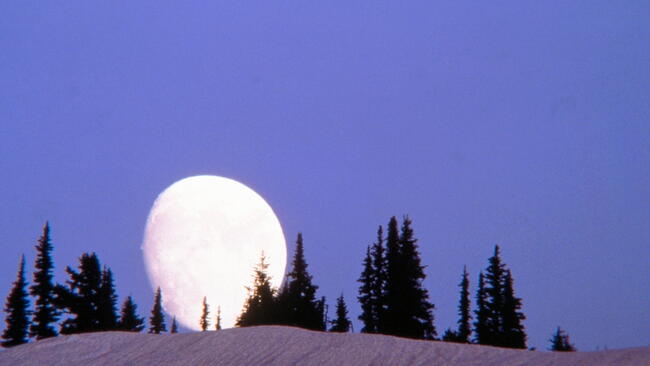
On the solstice, the Sun is at its highest point in the sky, and it takes longer for it to rise and set. (Note: When the Sun appears highest in the sky near the summer solstice, the Full Moon opposite the Sun generally appears lowest in the sky!)
On the winter solstice, just the opposite occurs: The Sun is at its lowest in the sky. At this time, the Sun’s rays hit part of Earth at an oblique angle, creating feeble winter sunlight.
Use our handy sunrise and sunset calculator to figure out how many hours of sunlight you’ll get in your location on the solstice!
Why Doesn’t the Summer Solstice Fall on the Same Date Each Year?
The summer solstice in the Northern Hemisphere ranges in date from June 20 to 22. This occurs in part because of the difference between the Gregorian calendar system, which normally has 365 days, and the tropical year (how long it takes Earth to orbit the Sun once), which has about 365.242199 days. To compensate for the missing fraction of days, the Gregorian calendar adds a leap day about every 4 years, which makes the date for summer jump backward. However, the date also changes because of other influences, such as the gravitational pull from the Moon and planets, as well as the slight wobble in Earth’s rotation.
Why isn’t the Summer Solstice—the Longest Day of the Year—Also the Hottest Day of the Year?
Earth’s atmosphere, land, and oceans absorb part of the incoming energy from the Sun and store it, releasing it back as heat at various rates. Water is slower to heat (or cool) than air or land. At the summer solstice, the Northern Hemisphere receives the most energy (highest intensity) from the Sun due to the angle of sunlight and day length. However, the land and oceans are still relatively cool due to spring temperatures, so the maximum heating effect on air temperature is not felt just yet. Eventually, the land—and especially the oceans—will release stored heat from the summer solstice back into the atmosphere. This usually results in the year’s hottest temperatures appearing in late July, August, or later, depending on latitude and other factors. This effect is called seasonal temperature lag.
What is Midsummer Day (June 24)?
Historically, Midsummer Day marked the midpoint of the growing season, halfway between planting and harvest. It is traditionally known as one of four “quarter days” in some cultures—folks celebrate by feasting, dancing, singing, and preparing for the hot summer days ahead. Read more about the ancient Quarter Days!

Celebrating the Solstice
Go strawberry picking. Enjoy a big bowl of strawberries and cream on the solstice.
There are many people—like the Swedes—who celebrate the beginning of summer by eating the first strawberries of the season. Indulging in some strawberries and cream is the perfect way to celebrate the June solstice since June’s Full Moon is also known as the Strawberry Moon. It typically coincided with the ripening of strawberries in what is now the northeastern and midwestern United States. In fact, in many states, this is the perfect time to go strawberry picking! Look up pick-your-own-strawberry farms in your area!
Have a solstice evening bonfire!
Many northern people also celebrate a solstice holiday known as Midsummer’s Day on June 24, which is one of the four ancient quarter days of the year. The eve prior is called Midsummer’s Eve, marking the shortest night of the year. A common way to celebrate is to have a bonfire party! After all, these northern people have emerged from some long, dark winters! In the Austrian state of Tyrol, torches and bonfires are lit up on mountainsides, which is a stunningly beautiful sight.
According to ancient Latvian legend, Midsummer’s Eve (St. John’s Eve) on June 23 is spent awake by the glow of a bonfire and in pursuit of a magical fern flower—said to bring good luck—before cleansing one’s face in the morning dew.
Solstice Fun Facts
The solstice does NOT bring the earliest sunrise
Although the day of the solstice has the most daylight hours of the year, the earliest sunrises of the year occur before the summer solstice. The exact timing will depend in part on your latitude: In the mid-latitudes of the Northern Hemisphere, it occurs about a week earlier than the June solstice.
The reason for the timing of sunrises is related to the inclination of the Earth’s rotational axis and Earth’s elliptical (rather than circular) orbit.
The latest sunsets of the year will occur several days after the solstice, again depending on latitude.
The Sun sets more slowly at the solstice
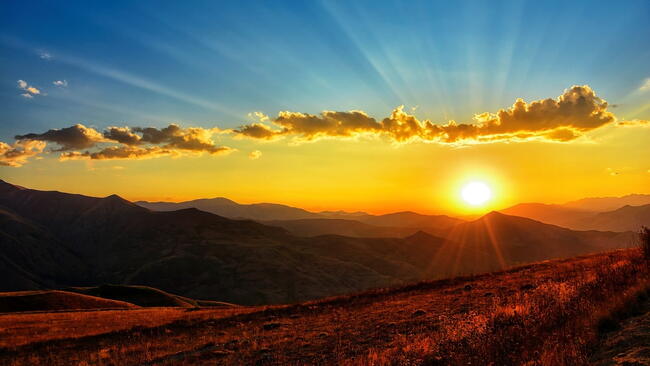
Did you know that the Sun actually sets more slowly around the time of a solstice, in that it takes longer to set below the horizon? This is related to the angle of the setting Sun. The farther the Sun sets from due west along the horizon, the shallower the angle of the setting Sun. (Conversely, it’s faster at or near the equinoxes.) Bottom line, enjoy those long, romantic summertime sunsets at or near the solstice!
→ See sunrise and sunset times for your area.
Seasons on Other Planets
- Mercury has virtually no tilt (less than one-thirtieth of a degree) relative to the plane of its orbit and, therefore, does not experience true seasons.
- Uranus is tilted by almost 98 degrees and has seasons that last 21 years.
→ See rise/set times for all the planets!
Summer Solstice Folklore
- Deep snow in winter, tall grain in summer. –Estonian proverb
- When the summer birds take their flight, goes the summer with them.
- If it rains on Midsummer’s Eve, the filbert crops will be spoiled. –Unknown
- One swallow never made a summer.
- Easterly winds from May 19 to 21 indicate a dry summer.
- If there are many falling stars during a clear summer evening, expect thunder. If there are none, expect fine weather.





- « Previous
- 1
- 2
- …
- 10
- Next »

Comments