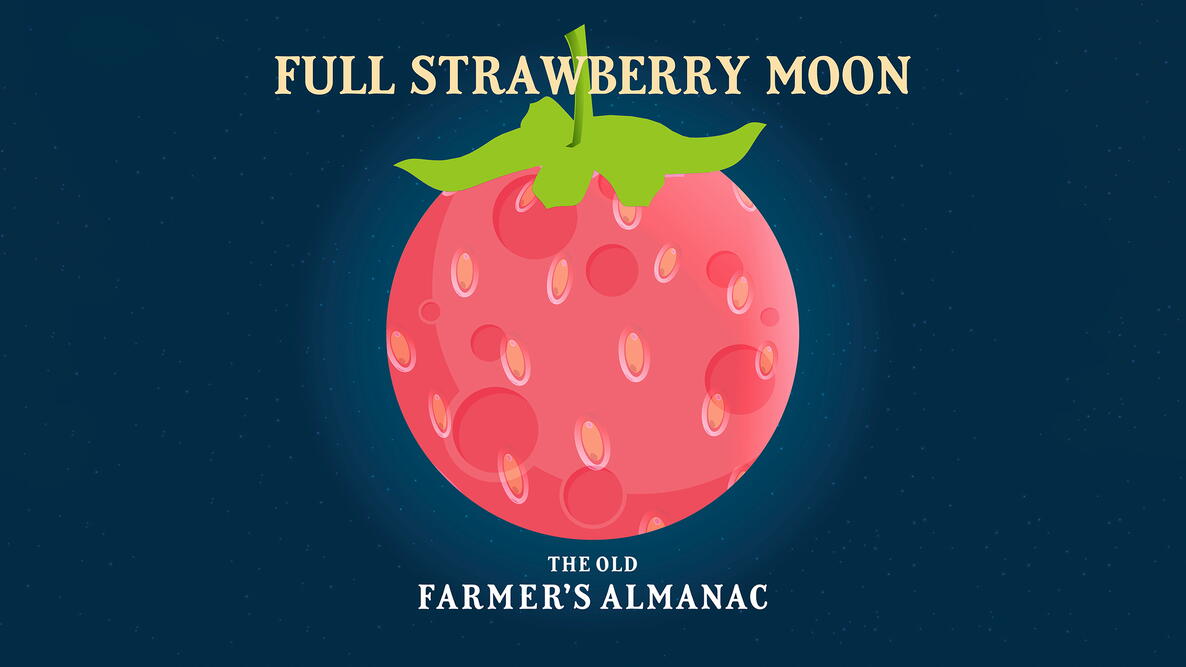
Look up! The Strawberry Moon appears on June 29, 2026. Will the first Full Moon of summer be strawberry red? Learn more about this unusual Full Moon and how it got its name.
When to See the Full Moon in June 2026
June’s Full Moon will reach peak illumination on June 29 at 7:56 P.M. Eastern Time. See the Full Moon Calculator for your local time.
Why Is It Called the Strawberry Moon?
The Full Moon names used by The Old Farmer’s Almanac come from many places, including Native American, Colonial American, and European sources. Historically, names for the Full or New Moons were used to track the seasons. Today, we think of Moon names as “nicknames” for the Moon.
June’s Full Moon—typically the last Full Moon of spring or the first of summer—has traditionally been called the Strawberry Moon. While strawberries certainly are a reddish-pink color and are roundish in shape, the origin of the name “Strawberry Moon” has nothing to do with the Moon’s hue or appearance, despite the evocative imagery (shown in the artist rendering below). A Moon usually appears reddish when it’s close to the horizon because the light rays must pass through the densest layers of the atmosphere.
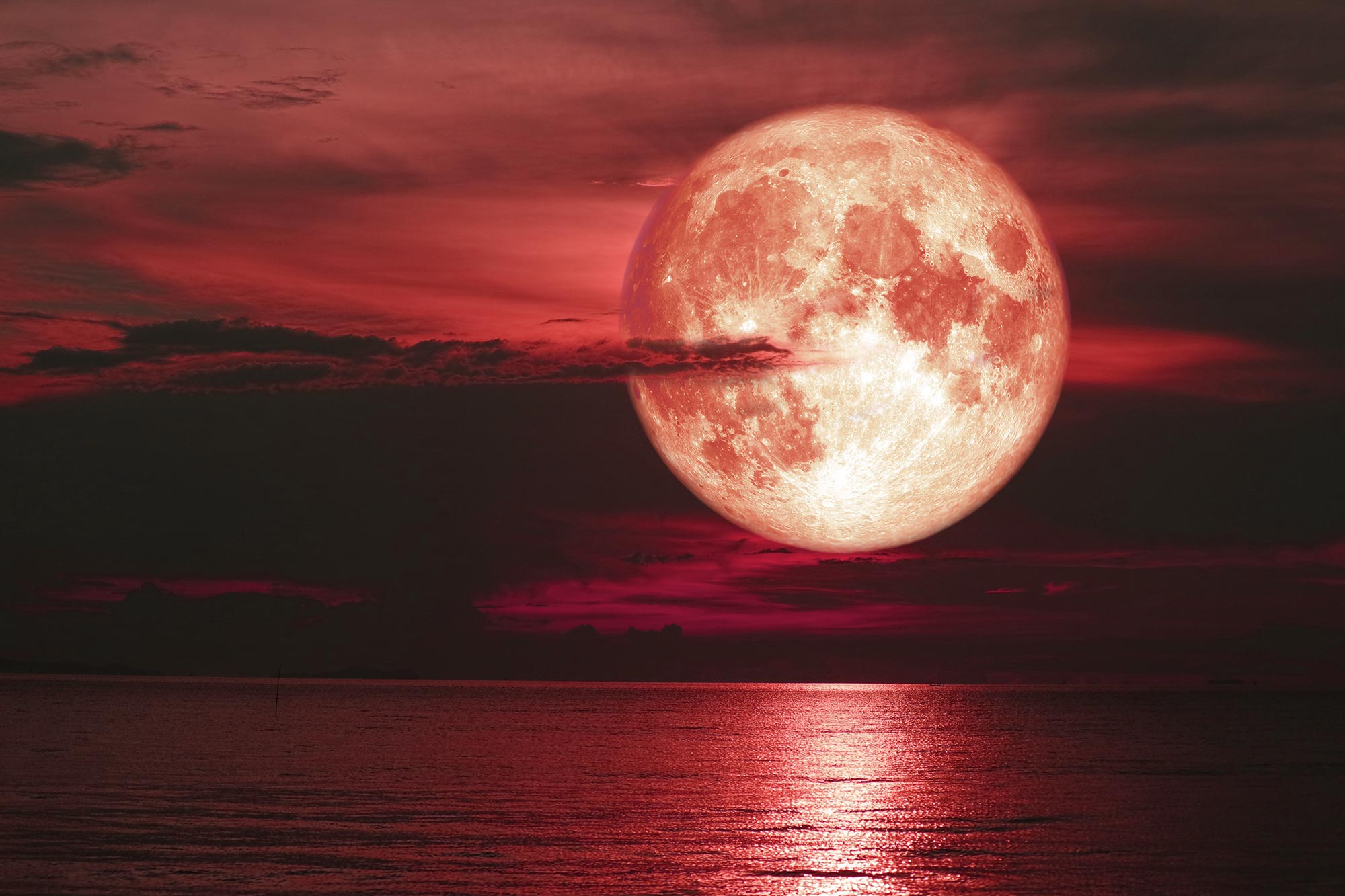
This “Strawberry Moon” name has been used by Native American Algonquian tribes that live in the northeastern United States as well as the Ojibwe, Dakota, and Lakota peoples to mark the ripening of “June-bearing” strawberries that are ready to be gathered. The Haida term Berries Ripen Moon reflects this as well. As flowers bloom and early fruit ripens, June is a time of great abundance for many.

Alternative June Moon Names
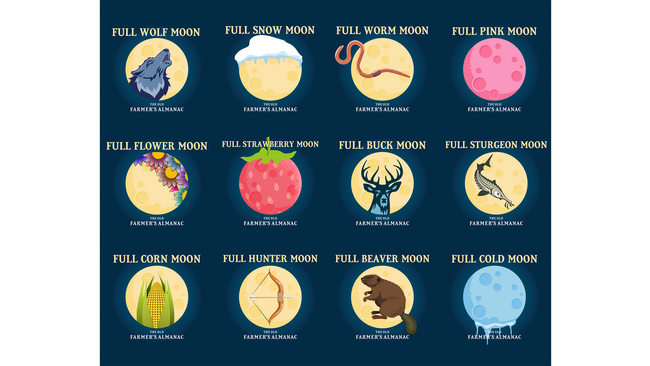
Over time, many cultures have used different names for the 12 Full Moons experienced each year. Usually, they’re not based on color but on a common activity that takes place at that time of year.
Blooming Moon (Anishinaabe) is indicative of the flowering season, while Green Corn Moon (Cherokee) and Hoer Moon (Western Abenaki) suggest that it’s time to tend to young crops.
Other names highlight that this is a time of new life: The Tlingit have used the term Birth Moon, referring to the time when certain animals are born in their region (the Pacific Northwest). Egg Laying Moon and Hatching Moon are Cree terms that also hint at a time when many animal babies were born.
Alternative European names for this Moon include the Honey Moon and the Mead Moon. June was traditionally the month of marriage and is even named after the Roman goddess of marriage, Juno. Following marriage comes the “honeymoon,” which may be tied to this alternative Moon name!
→ See all 12 months of Full Moon names and meanings.
Moon Phases for June 2026

See our Moon Phase Calendar to customize dates and times to your location.
 | Last Quarter: June 8, 6:00 A.M. EDT |
 | New Moon: June 14, 10:54 P.M. EDT |
 | First Quarter: June 21, 5:55 P.M. EDT |
 | Full Moon: June 29, 7:56 P.M. EDT |
→ Also, find the Moon rise and set times here.
June Moon Folklore
- A growing Moon and a flowing tide are lucky times to marry.
- Days following both the New and Full Moons are most likely to be rainy or stormy.
- Crabbing, shrimping, and clamming are best when the Moon is full.
Full Strawberry Moon Video
Learn more about how the Full Strawberry Moon name originated, along with some fascinating Moon facts, in our short video here:
Best Days in June 2026
Below are the best days for activities, based on the Moon’s sign and phase in June.
| Activity | Best Days |
| Go Camping | 1, 27, 28 |
| Quit Smoking | 9, 13 |
| Fishing | 14-29 |
→ See all activities on our Best Days calendar.
Share your thoughts about this month’s Moon below!

More Like This

- « Previous
- 1
- 2
- …
- 10
- Next »

Comments