Control and Prevention
How to Get Rid of Squash Bugs
- Early detection is critical! You want to catch squash bugs before they grow into adults, or they become very difficult to get rid of completely.
- Pick bugs off the plant early. Fill a bucket with water and liquid dish soap and flick bugs into soapy water. Once the bugs are dead, it’s fine to dump the water anywhere.
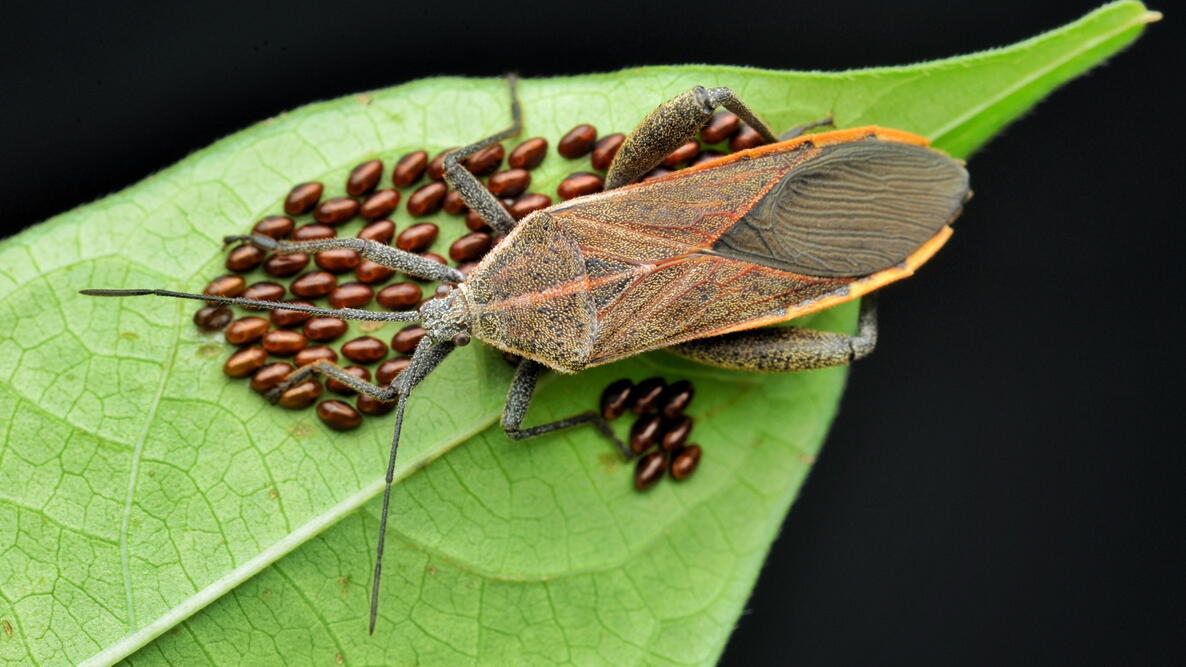
- Pick egg masses off the plants in the morning and later in the day. You can also simply scrape the eggs off the leaves with a butter knife and let them fall onto the ground, where beetles will eat them. Eggs hatch in about 10 days, so be sure to check for them on at least a weekly basis.
- Place a board or shingle in the garden at night (or pieces of newspaper). During the night, both adults and nymphs will congregate underneath the board. Squash between two hard surfaces in the morning and dispose of them.
- Keep checking your plants at least daily. If there are no more than a few vines infected, keep collecting and destroying the bugs and crushing the egg clusters that you find on the undersides of leaves.
- Remove plant debris during the growing season to reduce sites where squash bugs can hide.
Using pesticides
Insecticides are not effective in managing squash bugs once they are adults, so don’t bother trying.
In the event that you catch the squash wilting very early in the season and you catch this when eggs are hatching, then insecticide application is probably needed to manage it. See your local garden center or cooperative extension service for controls that are locally approved. The best time to apply pesticides is early morning or late at night (during minimum bee activity). Be sure to spray underneath the leaves, where most squash bugs are found.
It is not necessary to treat squash bugs found in the garden during late summer or fall.

How to Prevent Squash Bugs
- Prevention is key: In the fall, burn or compost old squash vines to rid your garden of any possible shelters for breeding and overwintering.
- Avoid thick layers of mulches like straw or hay that provide an environment that these bugs seem to love.
- Practice crop rotation.
- Consider keeping squash plants covered until blossoming begins. Remove the cover for pollination needs. There is typically only one generation of squash bugs per year, and you can avoid them by covering your plants for the first month of spring. You can also delay planting your squash until the early months of summer.
- Companion planting can be useful in repelling squash bugs. Try planting nasturtium and tansy around your plants that are commonly affected by squash bugs.
- Select varieties of squash that are resistant to the squash bug if you have a big problem. ‘Butternut’, ‘Royal Acorn’, and ‘Sweet Cheese’ varieties are all more resistant to squash bugs.
- Clean up cucurbits and other plant matter in the fall to reduce the number of overwintering sites.

More Like This

Comments

Squash bugs are a type of "true bug." Although they are not known to attack apricots, there are lookalike true bugs that do, such as various types of stink bugs. They may cause catfacing (corky areas) and deformed fruit. For more information, see:
http://www.epa.gov/pesticides/controlling/stinkbugs/
http://www.ent.uga.edu/peach/peachhbk/insects/plantbugs.pdf
http://fruitandnuteducation.ucdavis.edu/education/fruitnutproduction/Apricot/Apricot_Pests/Apricot_Insect_Mite_Nematode/
http://entnemdept.ufl.edu/creatures/veg/bean/green_stink_bug.htm
http://www.ladybug.uconn.edu/factsheets/BrownMarmoratedStinkBug.htm
For other apricot pests, see:
http://www.ipm.ucdavis.edu/PMG/GARDEN/FRUIT/apricots.html
http://utahpests.usu.edu/ipm/htm/fruits/fruit-insect-disease/pub-apricot-pests
Squash bugs and stink bugs may invade homes in the fall as they look for a warm place to shelter during the winter. They may cluster in attics, walls, etc.
Other lookalikes, such as pine seed bugs, can accidentally come into the home as well during the late summer etc, as they bask in the sun on the south side of buildings.
To deter these bugs, seal up cracks around windows, doors, foundations.
You did the right thing in cleaning up the infected plants but these pests might be back again. Single (unlated) bugs overwinter under plant debris, then in spring find a mate and start again, leaving eggs on the underside of leaves. A very cold winter could be your relief; they are more likely to survive mild winters.
Neem and horticultural oil and other soap products have been indentified as control agents but good penetration is needed. Consult a local nurseryman for product.
If they show up again, the Colorado extension recommends early season treatment with diatomaceous earth and or pyrethrins, as organic methods.
Next season, consider resistant varieties, rotation to non-cucurbit crops, and/or row covers (these help to keep the bugs from landing on your plants).
Here is further advice, from Utah's coop extenstion (useful in any location): https://extension.usu.edu/files/publications/factsheet/ENT-120-08.pdf
- « Previous
- 1
- 2
- …
- 10
- Next »

You can tell by the color. Squash bug eggs are copper colored. We've added a better picture to this page for you.