Frequently Asked Questions
-
Do we gain or lose an hour during Daylight Saving Time?
When Daylight Saving Time starts in spring, we set the clocks forward and lose an hour. When it ends in fall, we set the clocks back and gain an hour. -
What time do the clocks change?
Clocks change at 2:00 A.M. local time in most of the United States, a time when few people are working, traveling, or doing business. -
Will my phone change automatically for Daylight Saving Time?
Most smartphones, computers, and other devices that are connected to the internet update themselves if you have them set to update date, time, and time zone automatically.You might still need to change the time by hand on things like appliances, cars, or wall clocks. -
Does Canada change clocks on the same day as the United States?
Some parts of Canada still change their clocks on the same schedule as the United States. However, provinces and territories set their own time rules, and several of them stopped changing clocks in 2026.
British Columbia, Alberta, Manitoba, and the Northwest Territories will not turn their clocks back on November 1, 2026. Yukon and Saskatchewan also use one time year-round.
Other parts of Canada, including most of Ontario and Quebec and the Atlantic provinces, continue to observe seasonal time changes.
Sources
- U.S. Navy Office — Daylight Saving Time
- U.S. Department of Transportation — Daylight Saving Time
- U.S. Library of Congress — Daylight Saving Time (DST)
- U.S. Department of Transportation — Uniform Time
- National Institute of Standards and Technology (NIST) — Daylight Saving Time Rules

More Like This


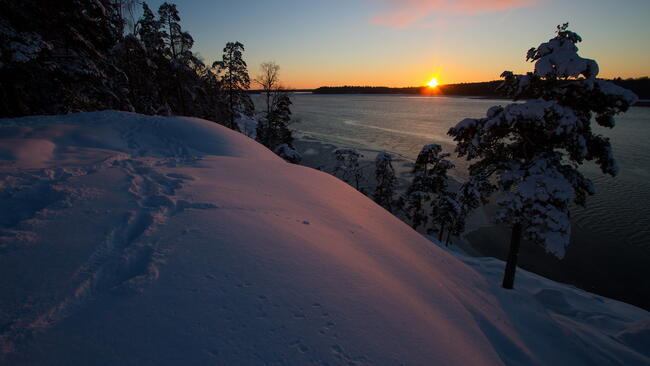



The earliest sunset for the year will occur, for the northern latitudes, a week or two before the winter solstice. For latitudes around 40 degrees, such as Eureka, California, this takes place around December 5 through 8, at about 4:48 pm EST. On November 5 for the same area, sunset occurred at about 5:07 pm EST. (November 4 was at 6:08 pm EDT.) So, even after we change our clocks back an hour in November, the sun is still setting earlier as the days progress. The day with the least amount of daylight, however, is the winter solstice (December 21 this year, 2017), because even though at latitude 40 degrees, for example, the sun will be setting slightly later at that point, the sun is also rising later. To check your area's sunset and sunrise times, as well as day length, for any day, you can go to: https://www.almanac.com/astronomy/rise
- « Previous
- 1
- 2
- …
- 10
- Next »

Comments