
Caption
DYI earwig oil trap that works!
Why are you seeing a container of oil in my garden? Unfortunately, it has been a banner year for earwigs in the vegetable garden. I tested five earwig trap ideas to figure out which worked best! See my results and learn to make your own earwig trap!
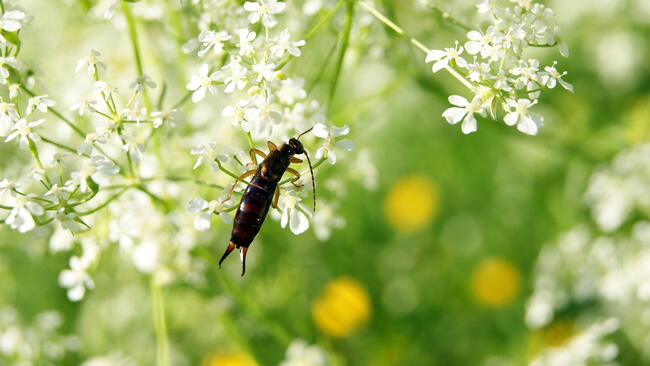
You know, those crawly critters with the pinchers on their tail end. If their looks aren’t enough to creep you out, then the old wives’ tale about them crawling into your ear at night and burrowing into your brain should do it. Of course, none of that is true! Darn, those old wives! Earwigs are a common garden inhabitant, and it seems like everything in the garden that I disturb or move, even just a little bit, usually has a few hiding under it.
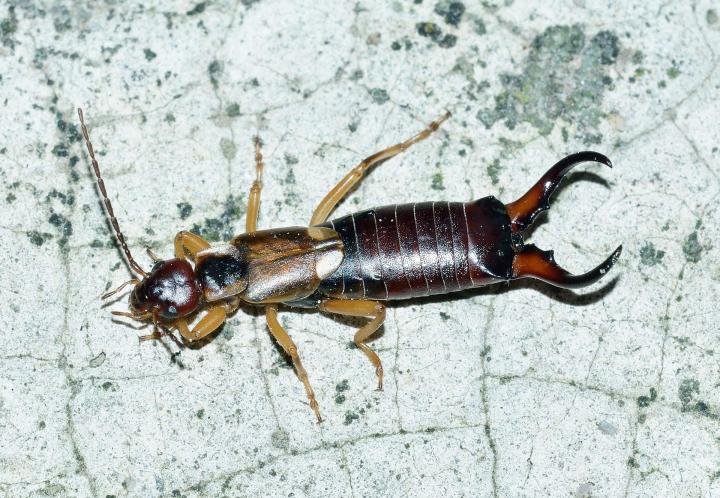
Earwig Damage to the Garden
It took me a while to put two and two together and come up with earwigs as the problem when my rutabagas were under attack.
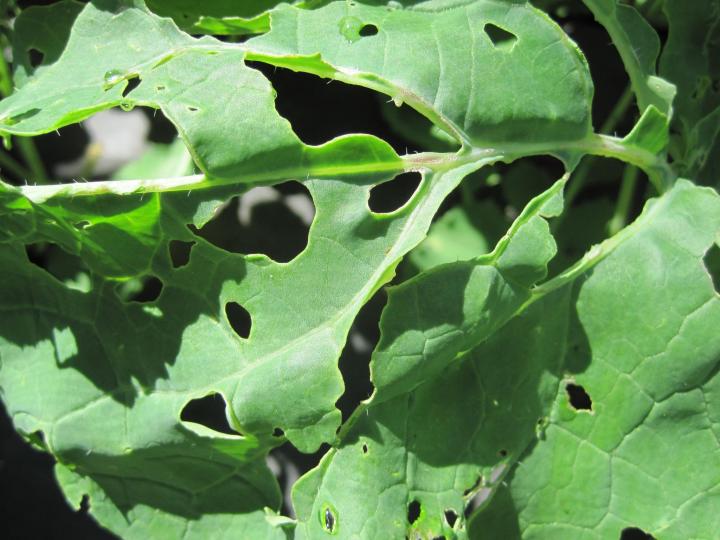
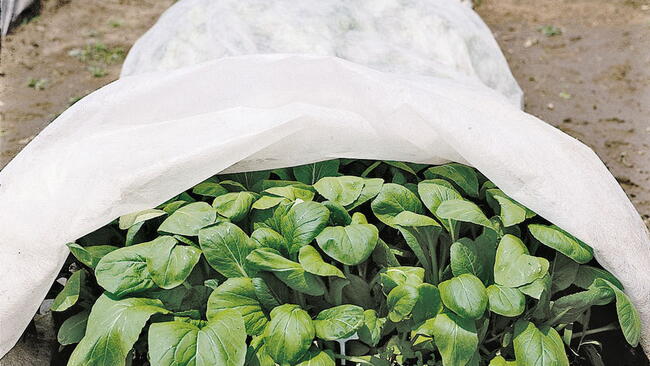
Every day, more and more leaves were eaten until they looked like tattered rags. Normally, I would blame a caterpillar, but since we grow most of the brassicas under a shade cloth tunnel to keep moths from laying eggs on them, I had to rule that out.
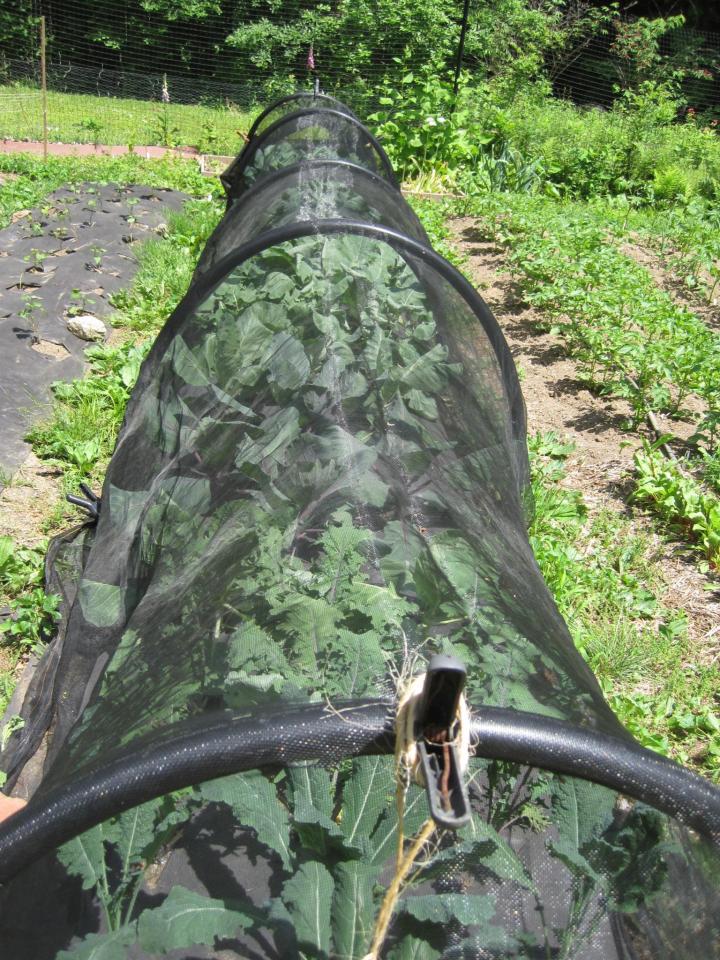
Plus, there weren’t any caterpillars to be found or their tell-tale droppings. Slugs were my second guess, but it has been a dry year, and I haven’t seen many slugs. Also, there was no trace of the slime trail they left behind. The damage is limited to the rutabagas only. Though planted next the rutabagas, the broccoli and cabbage plants have not been touched at all—a puzzle. Then, when harvesting bok choy from another part of the garden, I noticed that those plants had similar damage.
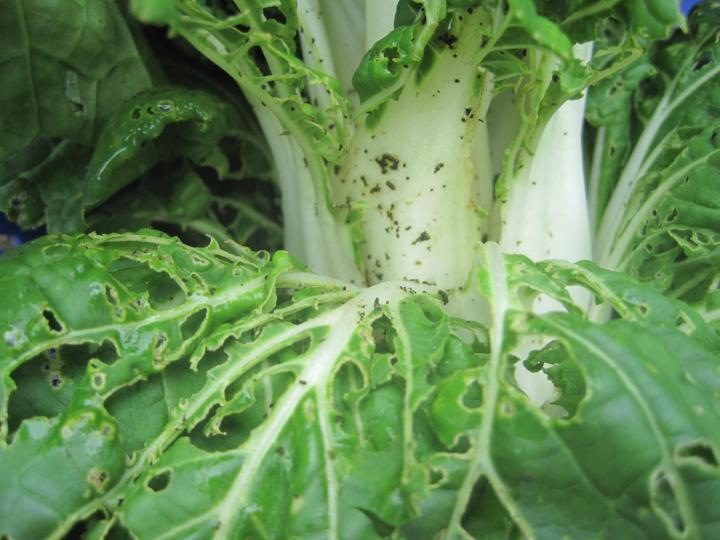
When I shook them upside down after cutting them, several earwigs fell out. Aha! We have seen them in the past, mostly on the dahlias and zinnia flowers, but I was under the impression that they were actually beneficial in the garden. They are known to eat aphids and insect larvae but feed mostly on decaying plant matter.
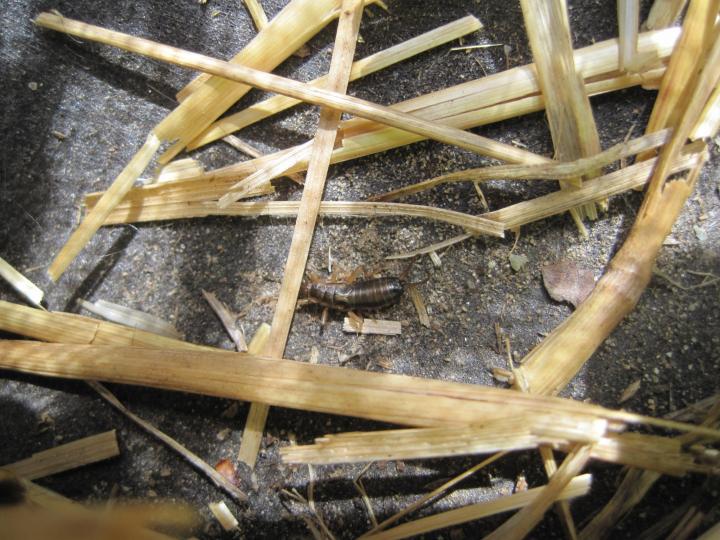
Then I learned that the nymphs do the most damage, eating holes in the leaves of young plants while the adults eat the flowers. The teenage nymphs look very like the adults, but their shells are softer and less dark.
The adults and the nymphs feed at night, dining under the cover of darkness and sleeping it off in a moist, shady spot during the day. I decided to try to eradicate them from the rutabagas by trapping them. After searching through several books and websites, I found five traps to try:
Testing Five Earwig Traps
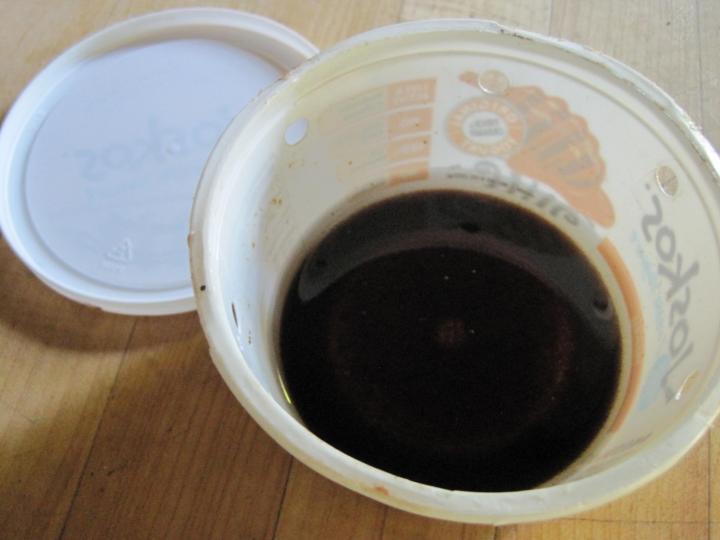
- Trap #1 had me punch holes near the rim of a small plastic container, add some oil, and add a bit of soy sauce. Then, I replaced the lid and buried the container with the holes level with the top of the soil. All it caught were ants—loads of tiny ants, drawn by the promise of Chinese food, I guess.
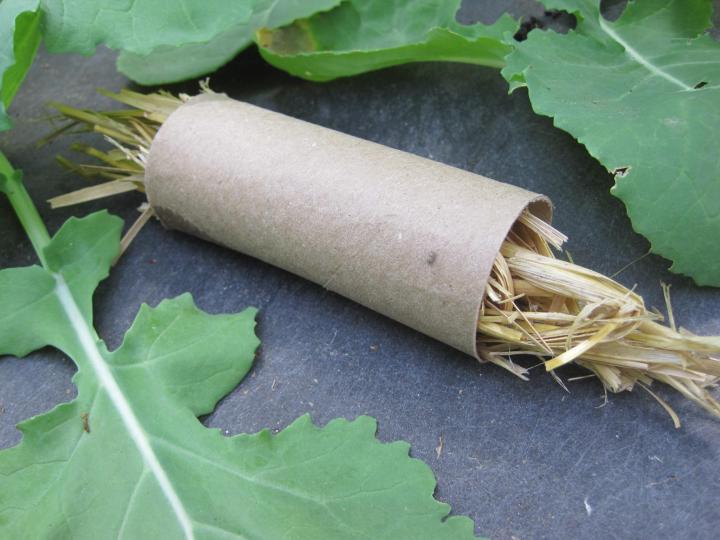
- Trap #2 was a toilet paper tube stuffed with straw placed among the plants under attack. It was a bit more successful, as it caught one earwig.
- Trap #3 was a can with some leftover beer in it. (Honestly, who has leftover beer?) I thought at least it would catch a slug or two, but it caught nothing, as slugs love beer. They probably didn’t like the cheap brand I bought.
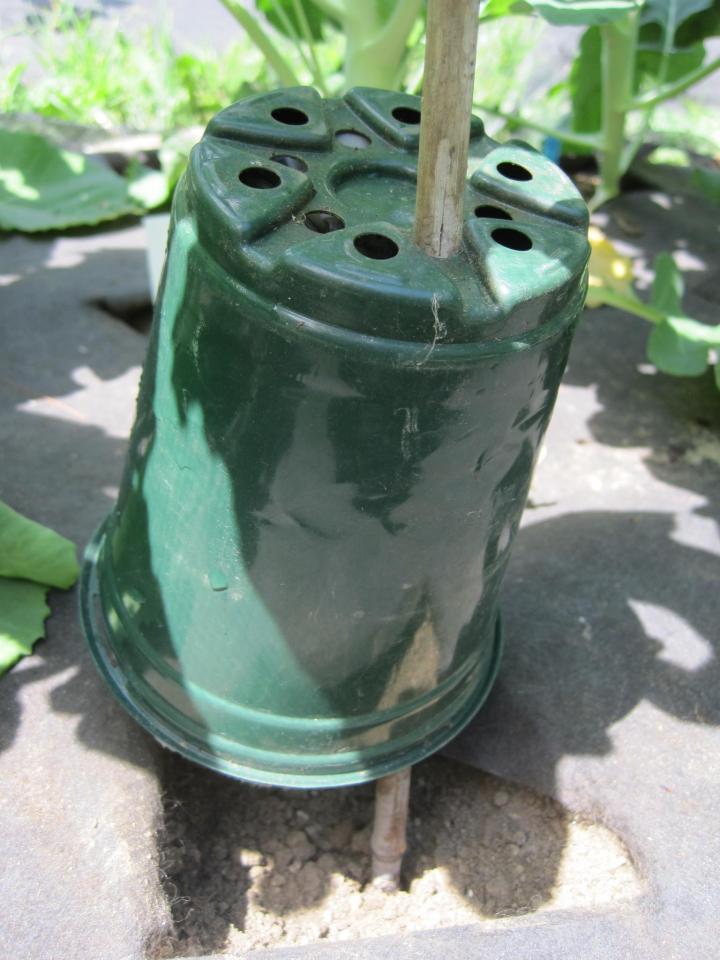
- Trap #4 was a crumpled, damp newspaper stuffed into a flowerpot. I hung the flowerpot upside down next to the rutabagas and again caught nothing. Maybe they had already read the comics from that day’s paper.
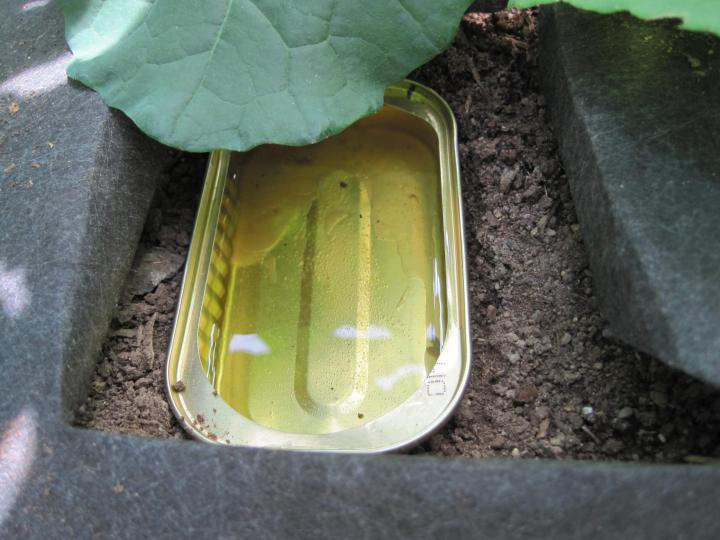
- Trap # 5 was the “oil trap,” which was simply a small container baited with fishy-smelling oil. That was the most successful trap. It caught about a dozen earwigs in one night!
You could also bait it with canola oil. Some folks add bacon grease or hamburger fat, as earwigs love greasy, oily stuff. But I didn’t have anything like that in the house. Plus, this could attract larger critters, including raccoons and skunks, so if your garden is not fenced to keep them out, you might not want to risk it.
Another idea to test is to cover the container with a lid, cut an entry hole in the lid, and then empty and refill every week or so. That way, you only catch earwigs (no other insect is interested in the oil trap).
I assume that the heavy amount of mulch we use in the garden contributes to the rise in the earwig population. Next spring, I might wait and use straw mulch later in the season after the nymphs have matured. The earwigs have stopped feeding, and my rutabagas seem to be recovering. Next year, I will try to be more observant and take action sooner if the plants are under attack again because I love my rutabagas!
See the Almanac’s article for more information on how to identify, prevent, and get rid of earwigs.


Comments