
Harvesting
When to Harvest
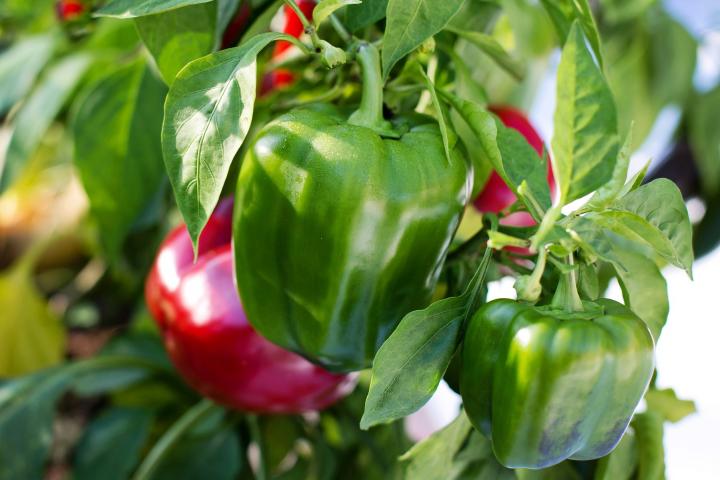
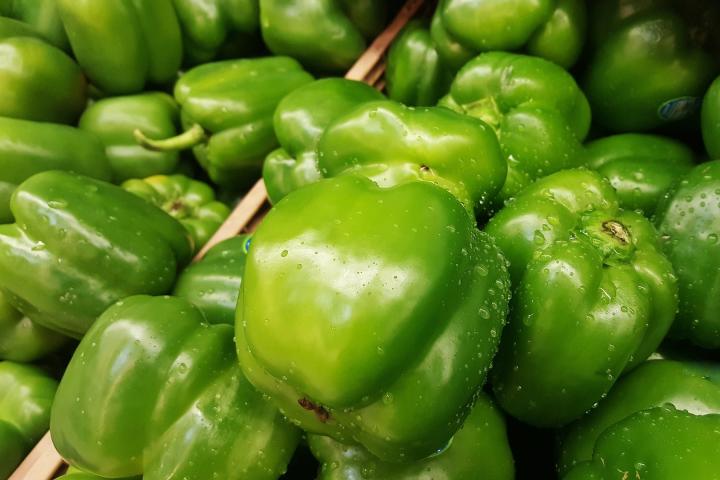
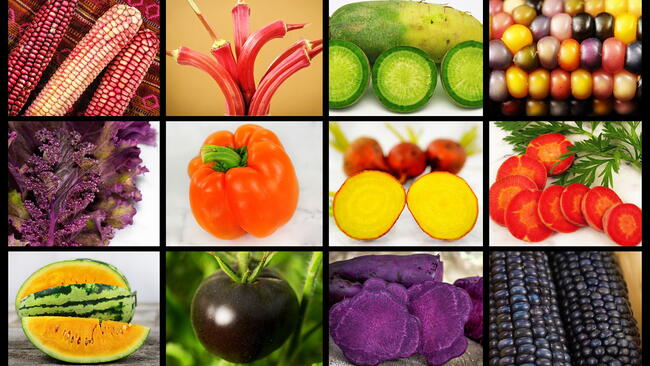
Begin harvesting bell peppers as soon as the plants begin fruiting and the peppers reach a usable size. You can harvest bell peppers when they’re green or when they reach their mature color, which may be red, orange, yellow, or even purple depending on the variety. Harvesting regularly prompts pepper plants to produce more fruit and safeguards harvests from pest damage; however, bell peppers get sweeter the longer they stay on the plant.
How to Harvest
To harvest bell peppers, hold the pepper stem and snip the stem off the plant with a clean pair of pruners, scissors, or a sharp knife. Don’t pull bell peppers off the plant as this can cause significant damage and make peppers less productive.
Storage
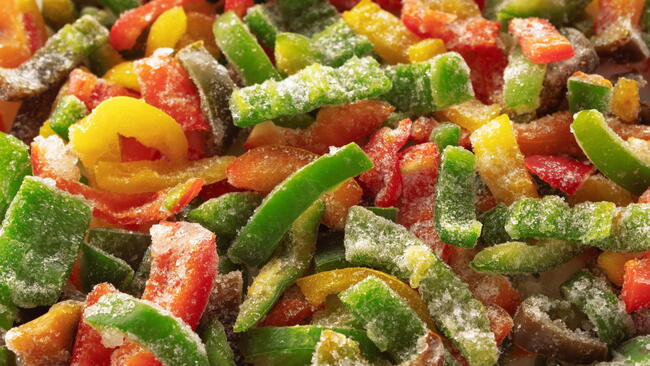
After harvesting, bell peppers should stay fresh in the cripsper drawer of your fridge for up to 10 days. For longer storage, you can also chop and freeze bell peppers, or wash, de-seed, chop and dry them in an oven or dehydrator set at 140°F for 4 to 6 hours.
Types
Look for varieties that ripen to their full color quickly; fully mature peppers are the most nutritious—and tastier, too!
- Green peppers that turn Red: ‘Lady Bell’, ‘Gypsy’, ‘Bell Boy’, ‘Lipstick’
- Orange: ‘Milena’, ‘Orange Sun’
- Yellow: ‘Golden California Wonder’

Comments

Hi, Joan, The temperature of the water should not be extreme at any time; warm water is not going to keep the seeds warm. The black plastic mentioned above is laid on bare ground to warm it; it is not placed on seeds. You'll have better results keeping the seed containers inside until the plants sprout. In fact, see this page for more advice on starting seeds: http://www.almanac.com/content/starting-seeds-indoors
We hope this helps.
Bell pepper plants are annuals: They produce through one growing season and then die. However, they may produce many peppers through that growing season, and not all at once, so it may seem like they keep producing. And they do—but only in one growing season. They will not survive or come back for next growing season. You need to start with new plants or seeds every year. Got it?
Bell peppers are tender herbaceous perennials usually grown as annuals in non-tropical conditions. They might last a few years, but they turn woody.
Here is one person's experience with the longevity of various pepper plants:
http://www.homegrown-peppers.com/growing-peppers/how-long-do-pepper-plants-live/
You also might be interested in this page that discusses the wild ancestor of the modern bell pepper. There, it says that it (Capsicum annuum) in its native habitat starts out as herbaceous but does become woody and shrub-like. A short-lived perennial, it usually lasts about 3 to 4 years.
http://www.fs.fed.us/global/iitf/pdf/shrubs/Capsicum%20annuum.pdf
- « Previous
- 1
- 2
- …
- 10
- Next »

It's difficult to be certain, but this could be caterpillars or flea beetles. Try an insecticidal soap, available in garden supply stores.