
Harvesting
When to Harvest
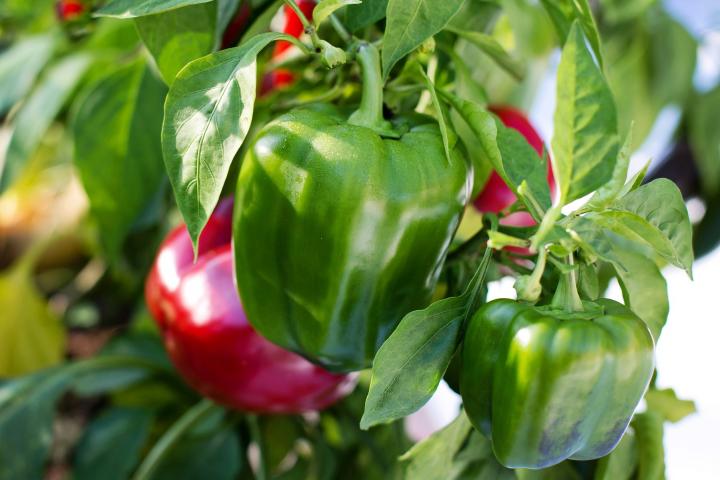
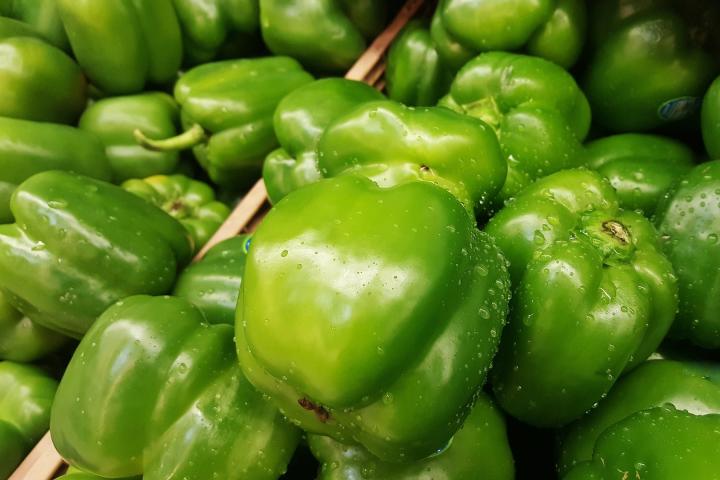
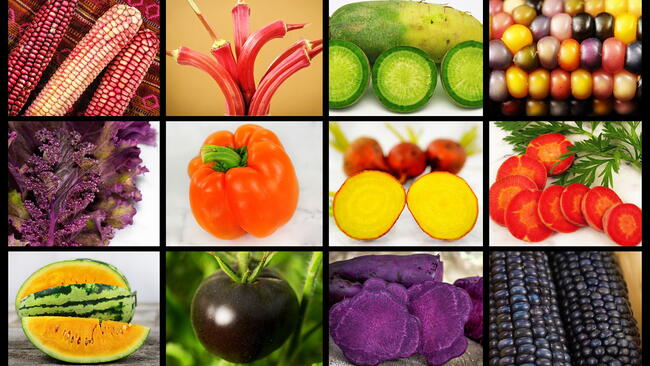
Begin harvesting bell peppers as soon as the plants begin fruiting and the peppers reach a usable size. You can harvest bell peppers when they’re green or when they reach their mature color, which may be red, orange, yellow, or even purple depending on the variety. Harvesting regularly prompts pepper plants to produce more fruit and safeguards harvests from pest damage; however, bell peppers get sweeter the longer they stay on the plant.
How to Harvest
To harvest bell peppers, hold the pepper stem and snip the stem off the plant with a clean pair of pruners, scissors, or a sharp knife. Don’t pull bell peppers off the plant as this can cause significant damage and make peppers less productive.
Storage
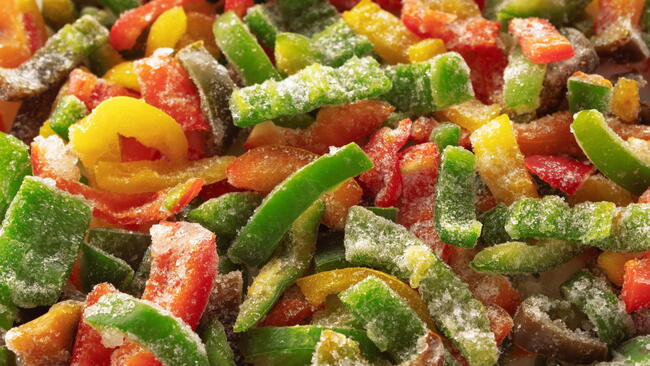
After harvesting, bell peppers should stay fresh in the cripsper drawer of your fridge for up to 10 days. For longer storage, you can also chop and freeze bell peppers, or wash, de-seed, chop and dry them in an oven or dehydrator set at 140°F for 4 to 6 hours.
Types
Look for varieties that ripen to their full color quickly; fully mature peppers are the most nutritious—and tastier, too!
- Green peppers that turn Red: ‘Lady Bell’, ‘Gypsy’, ‘Bell Boy’, ‘Lipstick’
- Orange: ‘Milena’, ‘Orange Sun’
- Yellow: ‘Golden California Wonder’


I'm not sure that I understand the setup--are there several pepper plants in one container, one plant being far more advanced than the others? Or, are they all now planted out in a garden? As the above article suggests, two seedlings grown together seems to work well, but otherwise it is best to space plants 18 to 24 inches apart; you might want to thin them out a little, by snipping at the base (don't pull plants up, to avoid disturbing roots of plants you'd like to keep). Fertilize when transplanting, and then after first fruit set. Be careful not to give too much nitrogen, which encourages leaf growth over flowering, until the peppers are developing. If you have lots of flowers but no fruit, you might try hand pollinating to help things along,
It's hard to know what it might be, as there are several things that can cause large brown spots on fruit. However, I'm wondering if it might have been anthracnose; for more information about this disease, see: http://www.almanac.com/pest/anthracnose and this article from the Ohio Cooperative Extension:
http://www.oardc.ohio-state.edu/sallymiller/Extension%20Outreach/information%20transfer/Factsheets/Vegetable/Anthracnosepepper.pdf
which shows you a picture of it on bell pepper fruit.
Some other possibilities might include:
blossom end rot: http://www.almanac.com/pest/blossom-end-rot
http://extension.uga.edu/publications/detail.cfm?number=C938
sunscald: http://msue.anr.msu.edu/news/hot_and_sunny_days_promote_sunscald_in_peppers_and_other_vegetables
Hope this helps!
You can keep your pepper seedlings in the peat pellets, to help minimize transplant shock (they are especially good for that, since you can plant them pellet and roots together in the ground). If you do not plan to transplant them out directly in the garden for several weeks, you might consider at some midway point between now and then, transplanting the seedling (including its peat pellet) into a larger pot. Otherwise, wait and plant outside directly, after hardening off. As to the lighting, seedlings usually need about 12 to 16 hours of light. Make sure that your desk light is not on constantly overnight--use a timer. It would be better to use a grow light that offers the spectrum needed by plants, or a fluorescent shop light. The windowsill and desk lamp (if using a regular light bulb) may lead to thin, elongated stems. If there is no other option, though, adjust the lamp so that it is close to the seedlings, but not too close to cause any heat damage. Keep rotating your plants every day, even twice a day, so that the stems do not grow in one direction (toward the source of light). Good luck!
It's up to you. Some gardeners pull the whole plant and hang it upside down in a basement or garage, while others just harvest the ripening peppers. The fruit can be placed in a paper bag with an apple to help hasten ripening, if you prefer. If you have lots of peppers that are not up to full size yet, you might try pulling the whole plant in case the plant can still give the fruit a tiny bit more nutrients before the plant dries. But if your peppers are mostly of a mature size, then just harvesting the peppers themselves should work fine.
- « Previous
- 1
- 2
- …
- 10
- Next »

Comments