Planting
When to Plant Brussels Sprouts
Brussels sprouts are a slow-growing, long-season crop that grows best in cool weather and can turn bitter when temperatures get too high.
Most varieties take between 80 and 100 days to reach a harvestable size when grown from transplants, which is the recommended growing method. I get the best results by planting nursery-grown transplants outdoors about 90 to 110 days before the first fall frost.
If you’re a reasonably savvy gardener, you can also start plants indoors from seed by sowing the seeds about 6 to 8 weeks before your last spring frost date. However, this is a trickier process!
Where to Plant Brussels Sprouts
Choose a planting site that gets full sun or about 8 to 10 hours of direct light per day. Raised beds are especially good for cool-season vegetables—particularly in the spring and fall when temperatures are irregular.
Brussels sprouts crave lots of nutrients, so be sure to work several inches of aged manure or compost into the soil before planting.
How to Plant Brussels Sprouts
To plant, work compost into the soil and then plant transplants at the same depth they were growing in their nursery pots. Firm the soil around the base of the transplants, space multiple plants 18 to 24 inches apart in rows located about 24 to 30 inches from each other, and water well. Adding mulch around the base of your plants will keep weeds down.
If you’re growing sprouts from seed, plant 2 seeds 1/4 inch deep per pot or planting cell and thin the weakest seedling out with fingernail scissors once true leaves form. Remember to harden off indoor plants before transitioning them outside.
Growing
Watering
Inconsistent moisture can lead to subpar sprout development. To avoid this, provide Brussels sprouts with about 1 to 1½ inches of water per week, and add mulch around the base of your plants too.
Fertilizing
Brussels sprouts are heavy feeding plants. For bigger sprouts, side-dress plants 2 to 4 weeks after planting or when the plants are 12 inches high using an organic, high-nitrogen fertilizer. Reapply the fertilizer every 3 to 4 weeks after that.
Pruning or Maintenance
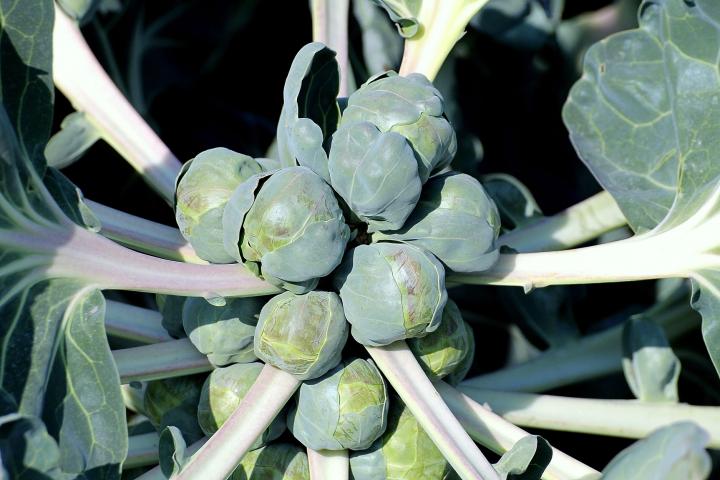
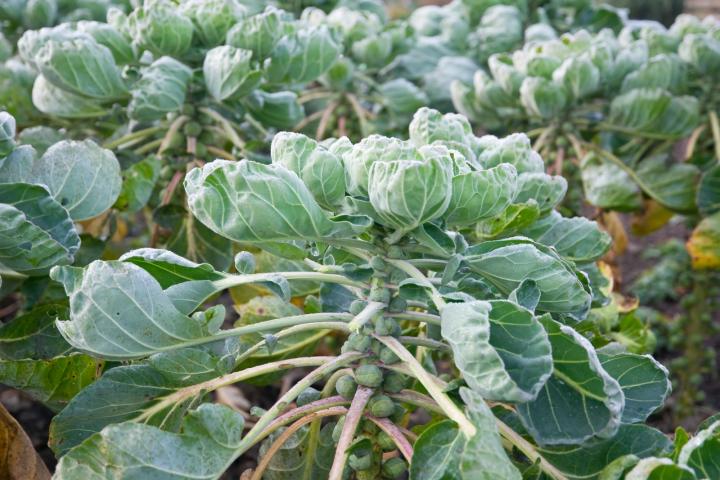
As they grow, Brussels sprout stems can easily reach over 2 to 3 feet tall and may require staking. Removing the yellowing leaves at the bottom of the plant boosts light levels around the plant’s stalk and helps increase sprout size. When working around your sprouts, take care not to disturb their roots as they’re shallow and easily damaged.
Seasonal Care
Like other brassicas, Brussels sprouts are prone to pests like cabbage loppers—especially right after planting. Protecting young plants with row covers can help. You can also try out organic pest control measures like BT thuricide.
- If you want to encourage sprouts to mature faster, cut off the top leaves 3 to 4 weeks before harvest.
- If you intend to harvest sprouts into winter, leave the plant’s top leaves intact as they provide protection from snow. Then, cover plants with 10 to 12 inches of mulch.
Harvesting
When to Harvest
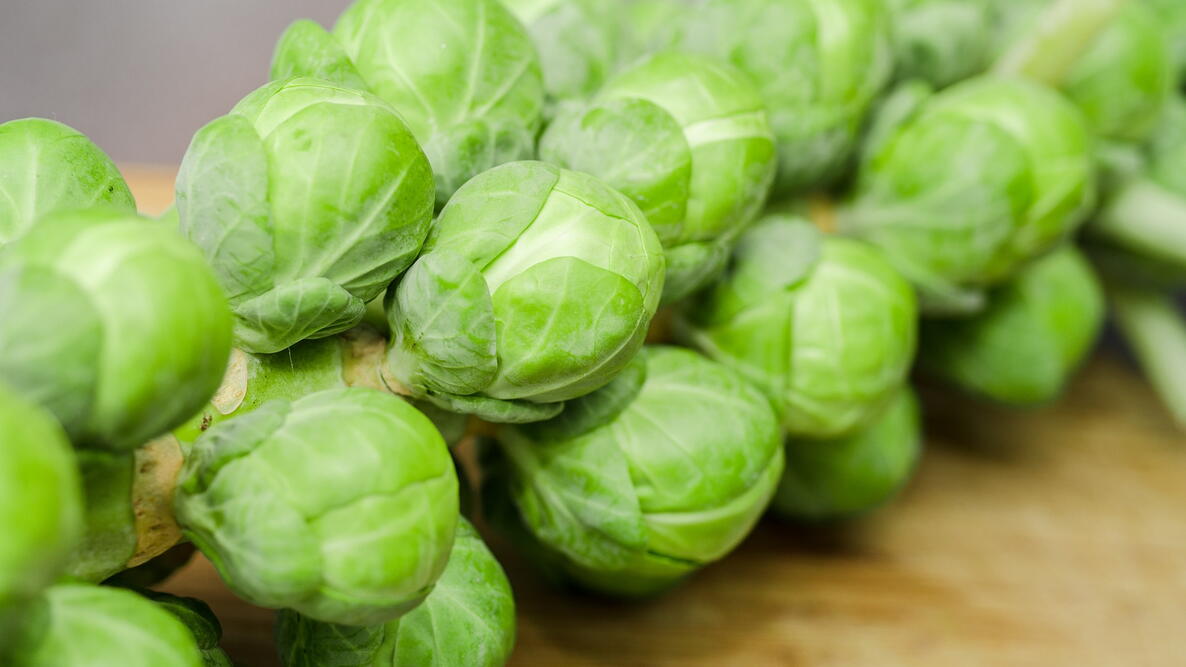
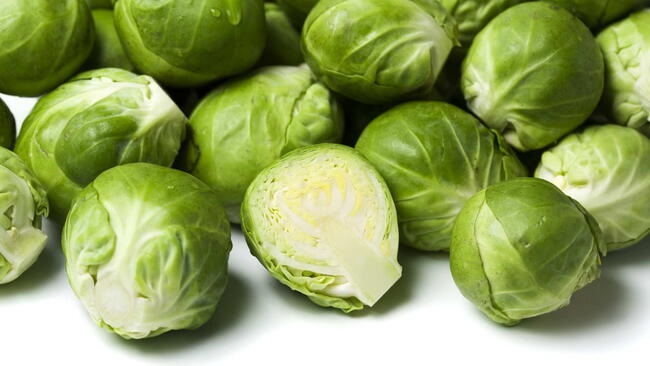
Brussels sprouts are typically harvested from fall to early winter and taste sweeter after a light kiss of frost. Sprouts mature from the bottom of the stalk upwards and are ready to pick when they’re about 1 inch in diameter. Ripe sprouts should be firm and green and have tightly closed leaves, while overripe sprouts will look yellow and open.
How to Harvest
Individual sprouts can be snapped off the plant’s stems with your fingers or cut free with a sharp knife. You can also pull the entire stalk of the plant up, roots and all.
Storage
Stalks of harvested Brussels sprouts can be stored in a root cellar or basement for about a month once you trim the roots free. Individual sprouts last about 1 to 2 weeks in the fridge when stored loosely in a plastic bag, but they’ll keep even longer if you blanch and freeze them. For longer storage, don’t wash Brussels sprouts until just before use.
Types
Different varieties of Brussels sprouts come in different colors, mature at different rates, and offer other specific perks. Here are a few of our favorite picks and what makes each stand out.
- ‘Diablo’ is a famously heavy producer and excellent pick if you want a bumper crop of sprouts.
- ‘Falstaff’ produces striking reddish-purple sprouts that hold their color even after cooking.
- ‘Jade Cross’ is a high-yielding and compact plant with resistance to some diseases and better heat tolerance than most.

More Like This

Hi Rod, We have a handy tool that shows you planting dates for all common veggies and fruits--all customized to your zip code. See here: https://www.almanac.com/gardening/planting-dates
There is still the possibility that they will grow. Depending on the variety, it may take 90 to 120 days from the time you transplant out in the garden to harvest. (Before that, it takes about 4 to 6 weeks to grow the transplants indoors, once they germinate). Also the plants do not like the heat--keep them as cool as possible if you are in a hot climate. By end of August and into September, you should start to see some sprouts form. If the plants are stressed, though, there is the possibility that they will not form, or that they will be delayed. Depending on your location, planting transplants in the garden in June or July will help the crop to mature during the cooler fall weather; if they mature in summer's heat, it can sometimes cause problems. For best planting advice for your area, you might contact your county's cooperative extension. For contact information, see:
https://www.almanac.com/content/cooperative-extension-services
Hope this helps!
Hi Ashley,
Starting seeds indoors need a lot of light. It sounds like your brussel sprouts didn't get enough sun and are trying to grow long and reach for it. Bring the sprouts outside for a few hours each day (not on rainy days) or set up a few grow lights about 4 inches over the sprout heads to help them out (low-energy LED bulbs or florescent work best; avoid using bulbs that heat up over time).
Your challenges are almost exactly those of another gardener at this time a year ago! So the issues are common. This is what we told him (it's posted below); hope it helps!
The sprouts will grow on their own, without leaf removal, but for larger sprouts, it helps to remove some of the leaves. When a leaf below a sprout begins to turn yellow, you can remove it to give the sprout more room to grow, as well as exposing it to more sunlight. It also helps the plant to focus its energy on developing the sprout rather than maintaining a decaying leaf. Trim the leaf back to about 1 inch from the main stem.
Some gardeners do this earlier on, when the lower sprouts are just begin to develop, or when they are about half the size that they’d like them to be. Often, one would work on the lower third of the plant first, then as the middle third of sprouts develop to the proper size, those leaves would be trimmed as well. One should leave the top third or so leaves on the plant, so that it can make food for itself.
If plants form sprouts that are loose, not compact, it might be due to high temperatures at the time the heads develop (temperatures should be below 75F or so). Next time, time your crop so that it starts to form heads during cooler weather of autumn. Keep up with the fertilizer/compost, too, and keep soil evenly moist. Mulch will help.
See the CARE guidance above, Joe. Sprouts like cool conditions; that's why it's wise to mulch at the stem. (They almost seem to slow or stop growing when it gets hot, although that might be my imagination at play.) As noted above, too, fertilize. A balanced formula is sufficient, just don't over do the nitrogen. Sprouts need the better part of the season to come to full maturity and a sweetened by a touch of frost. Water them when the ground dries our, but beyond that, just wait and watch. Good luck!
- « Previous
- 1
- 2
- …
- 10
- Next »

Comments