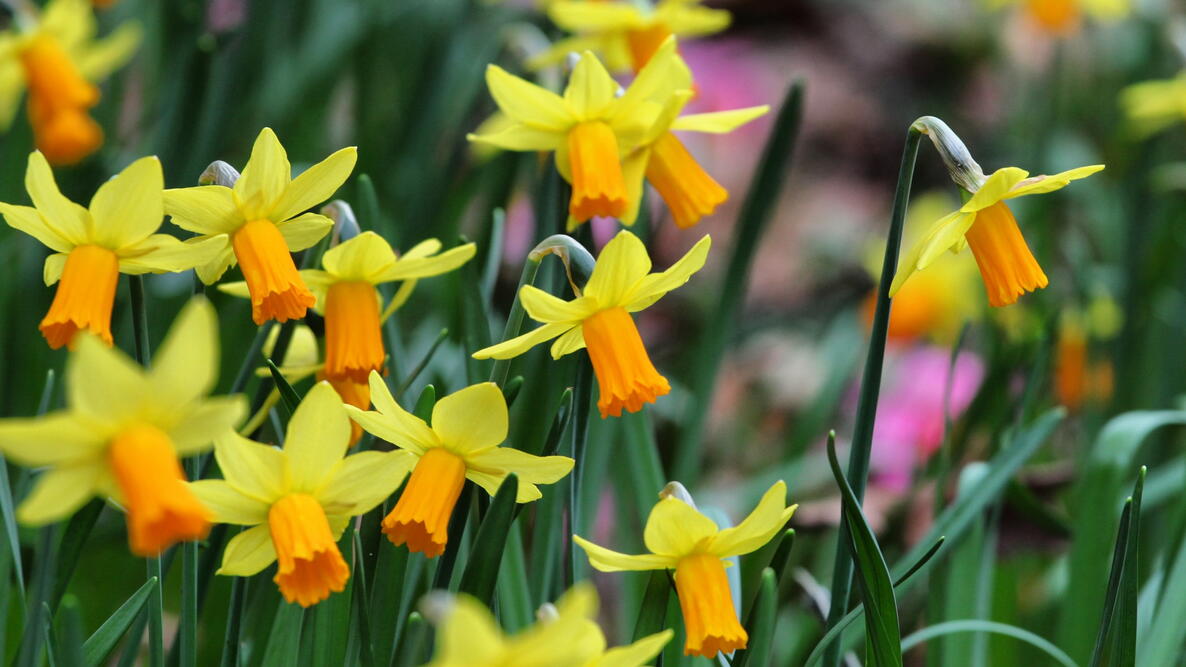
Caption
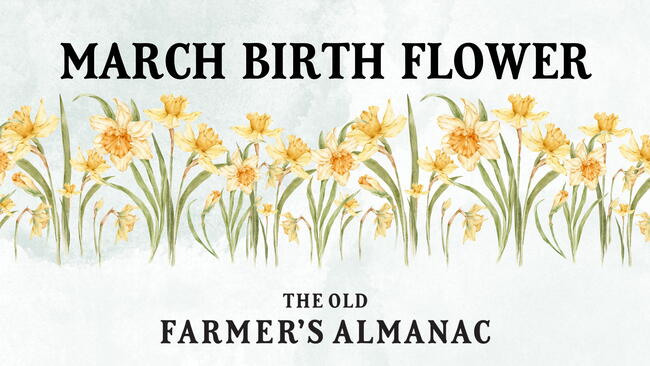
Yellow daffodils, ‘Jetfire’ Narcissus, in flower in early spring
Types
According to the American Daffodil Society, there are 13 official daffodil flower types and more than 25,000 named cultivars!
Whatever variety you choose, the most important tip is: Get the best quality bulbs for the best flowers. The bigger the bulbs, the better. Look for top-size bulbs, the biggest bulbs on the market.
- ‘Dutch Master’ is the classic daffodil—big and yellow with a very large cup and oversized trumpets. They bloom early, naturalize easily, and are great for planting in masses.

- ‘Barrett Browning’ is the recognizable pure white daffodil with a bright orange trumpet surrounded by a golden halo. They bloom early, naturalize easily, and do well in warmer climates, too.

- ’Tahiti’ is a stunner with layers of rounded, golden yellow petals interspersed with frilly, red-orange accents. They bloom mid- to late season, last longer, and make an excellent cut flower.

- ‘Tete-a-Tete’ is an adorable mini daffodil that flowers early and blooms for weeks as one of the longest-blooming varieties. Ideal for flower beds and containers and naturalizes with ease.

- ‘Jetfire’ is another mini daffodil with bright orange cups and swept-back yellow petals. It blooms in early spring, is very long-lasting, and doesn’t flop over.
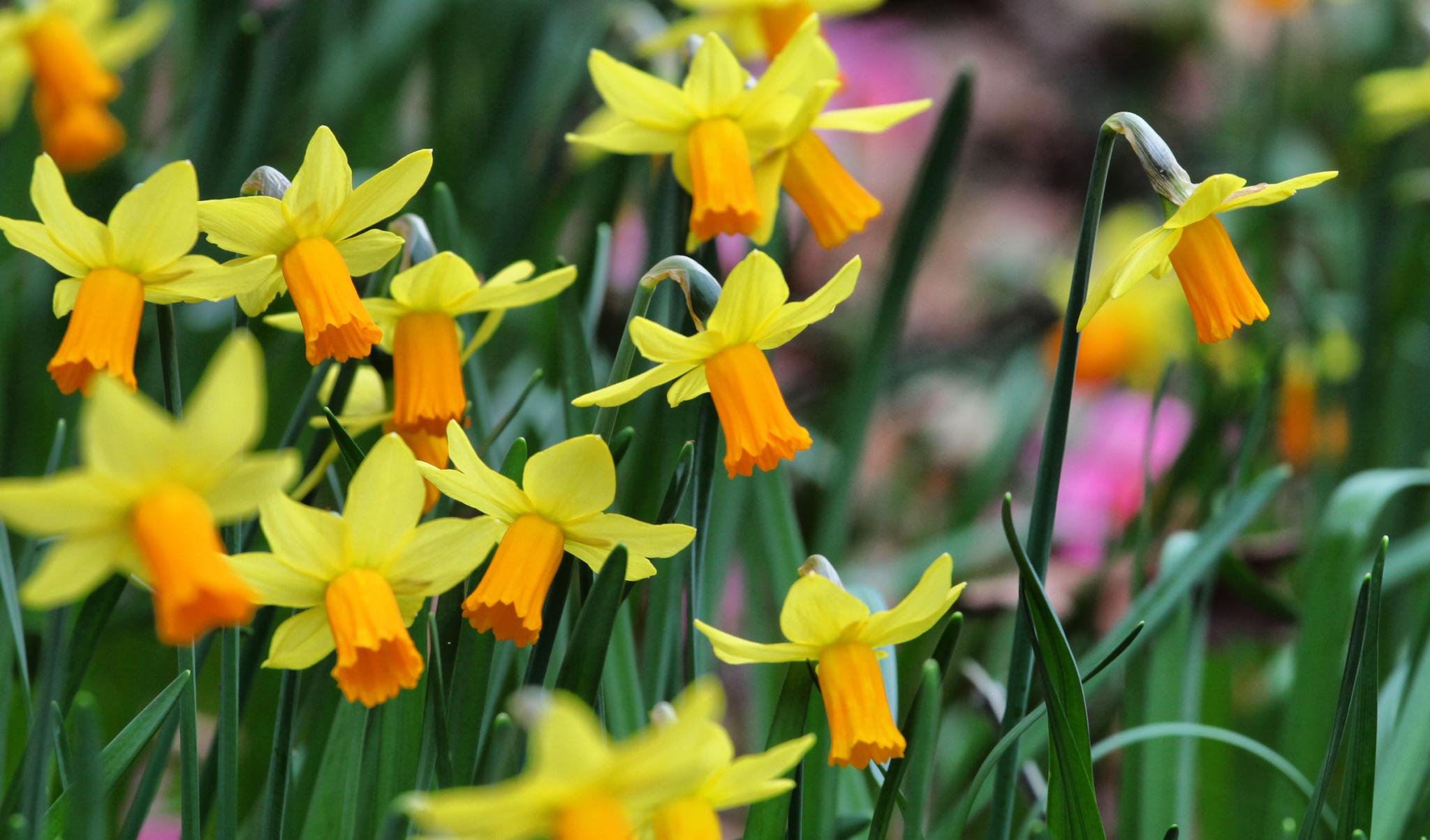
- ‘Petit Four’ is a good choice for a partially shady site. The flower has white petals with a double cup of apricot pink and grows 16 inches tall.
- ‘Cheerfulness’ bears double flowers and multiple blooms per stem; this daffodil is very fragrant with a lovely gardenia-like scent. Blooms in late spring and makes an excellent cut flower.
- ‘Thalia’ is an all-white daffodil, making it wonderful for moon gardens. Learn about 20 pure white flowers to include in your garden.

More Like This
Comments

As you know, bulbs should be planted the pointy side up. However, even if they're planted wrong, they usually do find their way to the surface.
The planting depth depends on size. Daffodils should be planted at least twice as deep as the bulb is high. In the case of smaller bulbs, a few inches should be fine. For larger bulbs, the depth is usually 5 to 6 inches.
If the planting isn't deep enough, your daffodils may grow but without flowers as shallow planting deprives them of the needed moisture. You'll have to see how they fare.
Be extra careful that your daffodils get needed moisture as well as the nutrients that come from rich soil; feed your daffodils regularly after flowering with a liquid fertilizer at intervals of 7 to 10 days. Continue this until foliage turns yellow.
Hi, Renee: First of all, there's no such thing as an inane question! That's what we inane question answerers are here for! And BTW: You are only the umpteenth billion person to have done this -- not to worry! The answer to your question is: There is only one way to find out: Replant. But most bulbs will find a way to make it regardless of their planting orientation, so hopefully there isn't something else going on here, like rot or pests. But go for it!
Hi, James: If there is any chance that the green foliage means that your plants are still alive, you should leave (sorry) them alone until they turn yellow. They are still providing energy to the bulb. Once you are confident that they have passed, then you can snip or twist off the plant from the bulb. Put the bulbs root down in shallow, loosely packed, well-draining, moist potting medium in a cool (40 to 45 degrees), dark area for at least 3 months, then bring out into the coolest area of your house and progressively move to warmer areas. Always be very careful and gentle with the bulbs/plants.
- « Previous
- 1
- 2
- …
- 10
- Next »

Sandie, Cover your daffs with some mulch to help to protect them from the coming cold and any that follows—but do not remove the foliage. The bulbs get their energy from the foliage. This autumn growth will die back and turn brown. In spring, when the buls come again you can cut off the brown foliage for appearances sake. You bulbs should come back, unless you're also seeing bulbs emerge now, which makes their future harder to predict.
This early growth could be the result of exceptionally warm weather, the bulbs being too shallow (and so closer to the surface where the warmth is), or they were planted too early in season. These last two reasons may not apply to you, as it doesn't sound like your situation, but I share for other readers.