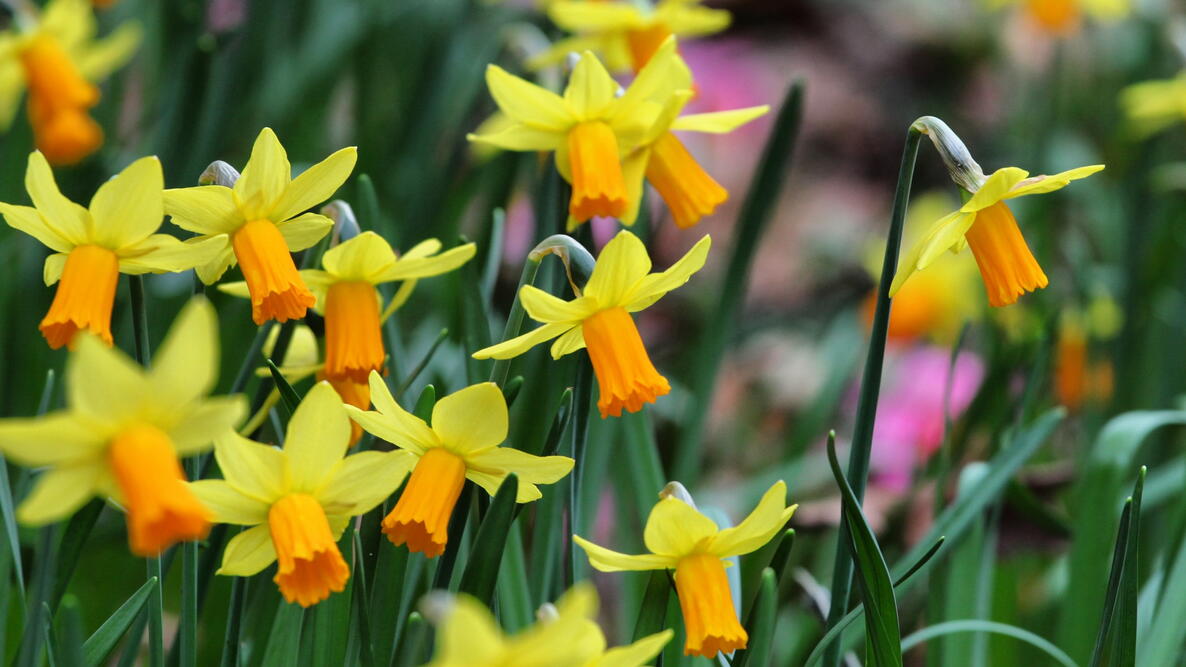
Caption
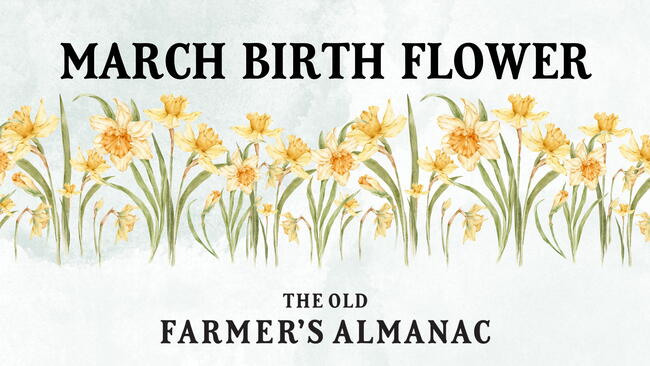
Yellow daffodils, ‘Jetfire’ Narcissus, in flower in early spring
Types
According to the American Daffodil Society, there are 13 official daffodil flower types and more than 25,000 named cultivars!
Whatever variety you choose, the most important tip is: Get the best quality bulbs for the best flowers. The bigger the bulbs, the better. Look for top-size bulbs, the biggest bulbs on the market.
- ‘Dutch Master’ is the classic daffodil—big and yellow with a very large cup and oversized trumpets. They bloom early, naturalize easily, and are great for planting in masses.

- ‘Barrett Browning’ is the recognizable pure white daffodil with a bright orange trumpet surrounded by a golden halo. They bloom early, naturalize easily, and do well in warmer climates, too.

- ’Tahiti’ is a stunner with layers of rounded, golden yellow petals interspersed with frilly, red-orange accents. They bloom mid- to late season, last longer, and make an excellent cut flower.

- ‘Tete-a-Tete’ is an adorable mini daffodil that flowers early and blooms for weeks as one of the longest-blooming varieties. Ideal for flower beds and containers and naturalizes with ease.

- ‘Jetfire’ is another mini daffodil with bright orange cups and swept-back yellow petals. It blooms in early spring, is very long-lasting, and doesn’t flop over.
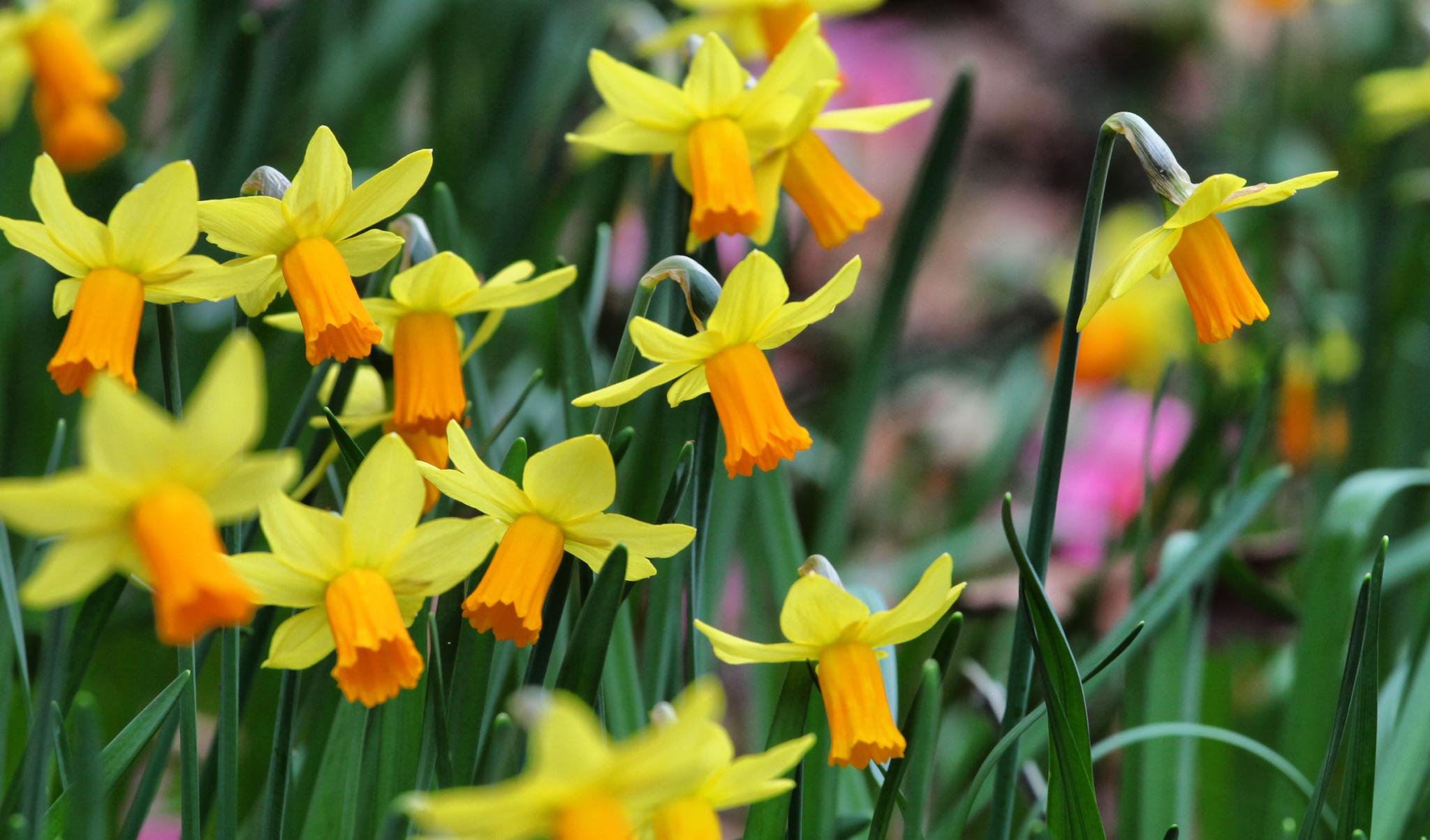
- ‘Petit Four’ is a good choice for a partially shady site. The flower has white petals with a double cup of apricot pink and grows 16 inches tall.
- ‘Cheerfulness’ bears double flowers and multiple blooms per stem; this daffodil is very fragrant with a lovely gardenia-like scent. Blooms in late spring and makes an excellent cut flower.
- ‘Thalia’ is an all-white daffodil, making it wonderful for moon gardens. Learn about 20 pure white flowers to include in your garden.

More Like This
Comments

Yes, the "bulb" you see is where the ovule is found (in the ovary) of wild daffodils. That is where seeds develop. It can take 5 to 7 years for a seed to become a plant.
The bulb in the ground is a quicker way for daffodils to reproduce.
For more on see see here: http://bioweb.uwlax.edu/bio203/s2013/cook_dani/reproduction.htm
Overcrowding can cause buds to dry up. If you haven't divided your bulbs the last few years you may want to dig them up and replant them this fall.
You can remove the spent flower but leave the leaves. If a flower stalk produces a seedpod it is a good idea to remove it. This will allow the daffodil plant to focus its energy on the underground bulb.
- « Previous
- 1
- 2
- …
- 10
- Next »

The leaves manufacture food so leave the bulbs/plants in the ground for about 8 weeks after they flower to allow the foliage to dry up on its own. Don't tie up or otherwise alter the foliage. You can remove the flower head, when it is spent to avoid seed production.
When you lift the bulbs, brush off any dirt and put the bulbs aside in a temperate, dry area where they will get good circulation but not on top of each other. Some folks use shallow trays or old nylon stockings or onion bags or vermiculite.
The freezer is too severe. The refrigerator is a better choice. The time required is 12 to 16 weeks. Do not place apples or other ethylene-producing products in the fridge you are using for the bulbs but do not wrap the bulbs in plastic either; they need to breathe.