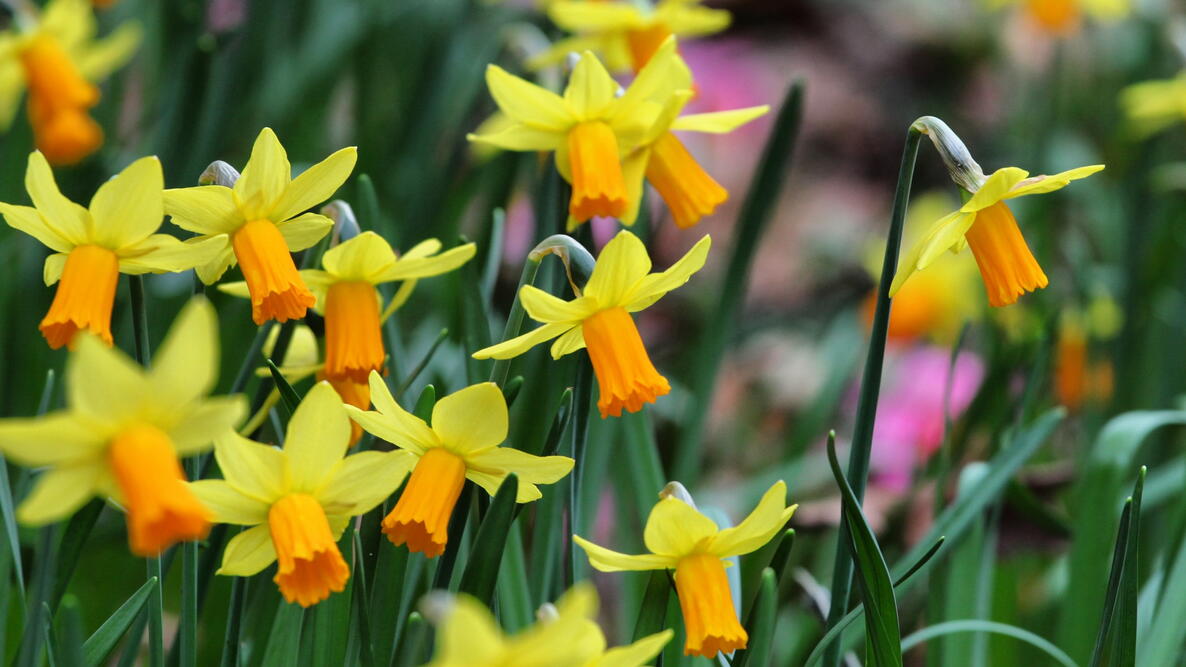
Caption
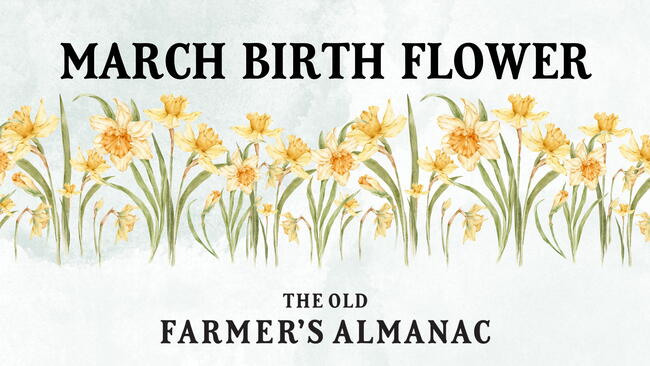
Yellow daffodils, ‘Jetfire’ Narcissus, in flower in early spring
Types
According to the American Daffodil Society, there are 13 official daffodil flower types and more than 25,000 named cultivars!
Whatever variety you choose, the most important tip is: Get the best quality bulbs for the best flowers. The bigger the bulbs, the better. Look for top-size bulbs, the biggest bulbs on the market.
- ‘Dutch Master’ is the classic daffodil—big and yellow with a very large cup and oversized trumpets. They bloom early, naturalize easily, and are great for planting in masses.

- ‘Barrett Browning’ is the recognizable pure white daffodil with a bright orange trumpet surrounded by a golden halo. They bloom early, naturalize easily, and do well in warmer climates, too.

- ’Tahiti’ is a stunner with layers of rounded, golden yellow petals interspersed with frilly, red-orange accents. They bloom mid- to late season, last longer, and make an excellent cut flower.

- ‘Tete-a-Tete’ is an adorable mini daffodil that flowers early and blooms for weeks as one of the longest-blooming varieties. Ideal for flower beds and containers and naturalizes with ease.

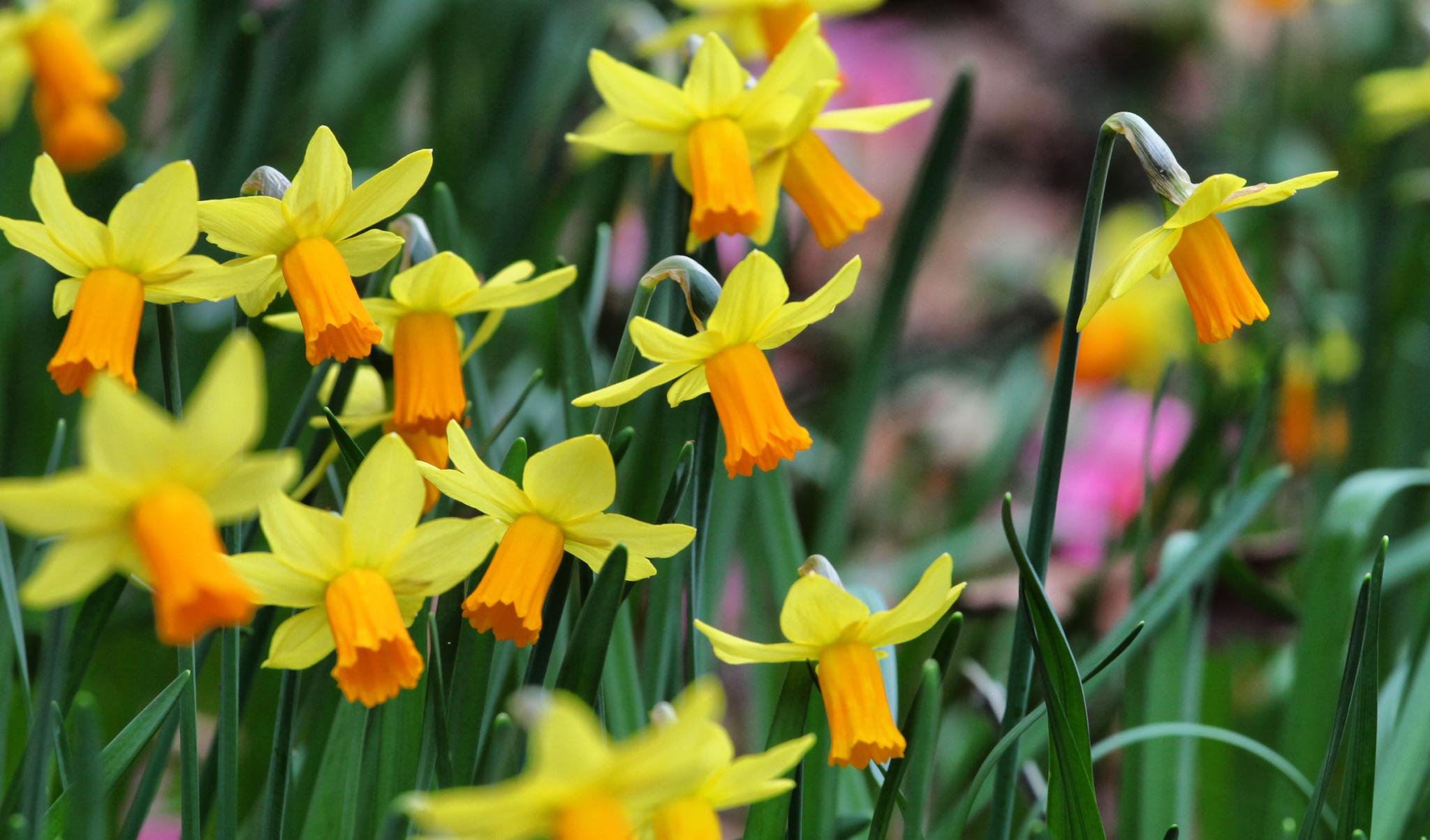
- ‘Jetfire’ is another mini daffodil with bright orange cups and swept-back yellow petals. It blooms in early spring, is very long-lasting, and doesn’t flop over.
- ‘Petit Four’ is a good choice for a partially shady site. The flower has white petals with a double cup of apricot pink and grows 16 inches tall.
- ‘Cheerfulness’ bears double flowers and multiple blooms per stem; this daffodil is very fragrant with a lovely gardenia-like scent. Blooms in late spring and makes an excellent cut flower.
- ‘Thalia’ is an all-white daffodil, making it wonderful for moon gardens. Learn about 20 pure white flowers to include in your garden.

More Like This

You can probably save (most of) them if you plant them again as soon as possible. Anywhere. Even in a container. It does not have to be a permanent location. They will probably droop for most of this season, even if you water them (which you should do, per normal). In fall, lift them and plant them where you want them to thrive.
You are fine. The daffs should bloom next season if, as you say you, the foliage dies back on its own.
If you were one of thousands (millions?) who experienced a particularly chilly to cold April, your bulbs might be just catching up with the calendar. Here in New England we are seeing that effect, too.
We would advise that you let them rest. If you uproot them now, you are interrupting their natural cycle. If the pot has a drainage hole (or a few) you could leave it outdoors for the summer, as if in the ground, and then lift and plant the bulbs in autumn.
By transplanting the bulbs, you interrupted them. Imagine: They are putting on their best show and you pull the rug (soil) out from under them. Their roots were getting what they needed in terms of nutrients and moisture in place and the transplanting put an end to that. They had to get new footing in a new pot and plants, especially bulbs, don't do that. (Did you notice the thin white roots coming out of the bulbs' bottom? That's their life line.) So they collapse, exhausted from the transition. Don't mean to sound harsh but that's essentially what happened. (BTW, this is a common error, usually only made one time.) Will they come back? Not this season. You might put them aside, remove the flowers, let the foliage die back on its own, and keep them in a cool, dry place. Try planting them in fall. And wait and see.
- « Previous
- 1
- 2
- …
- 10
- Next »

Comments