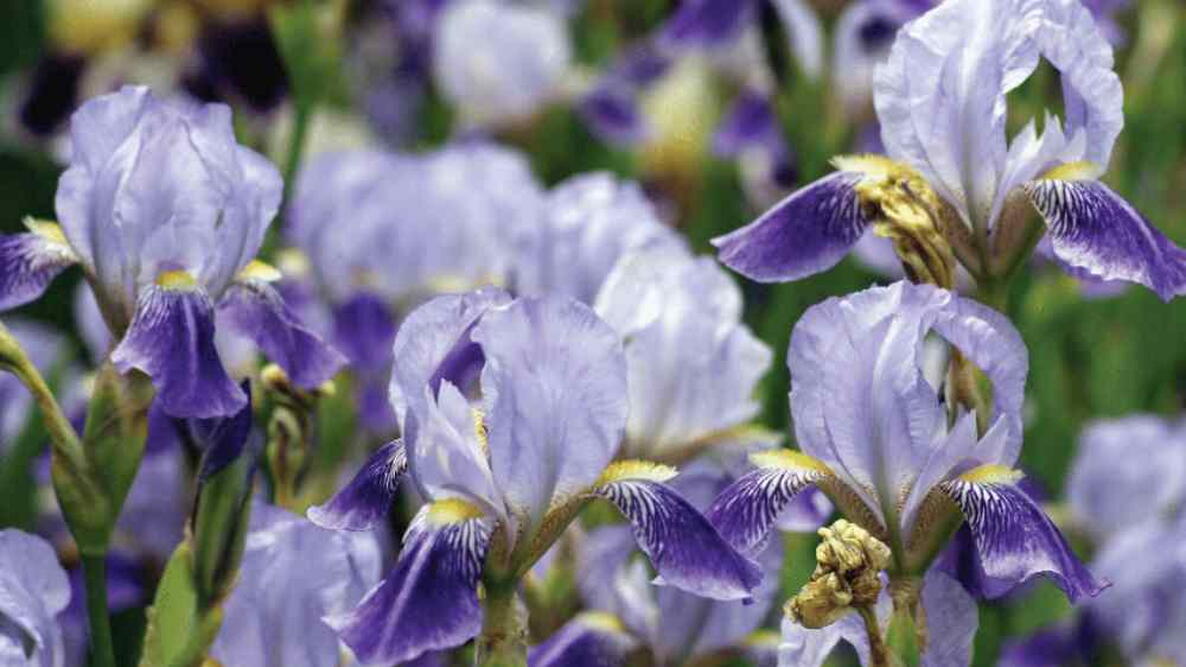
Planting
When to Plant Irises
- Plant most irises in late summer to early fall, when nighttime temperatures remain between 40° and 50°F (4° and 10°C) or above. This gives them plenty of time to get established before the coming winter.
- Tall bearded iris varieties are best planted closer to fall because they tend to go dormant in early to mid-summer.
- If you receive bare rhizomes or irises in a container at some point earlier in the year, plant them as soon as possible. It’s better to get them in the ground rather than wait until the “ideal” time.
Where to Plant Irises
Irises bloom best in full sun, meaning at least 6 to 8 hours of sunlight daily. They can tolerate as little as half a day of sun, but it’s not ideal. Without enough light, they won’t bloom well. Bearded irises must not be shaded out by other plants; many do best in a special bed.
Provide well-draining, fertile, neutral to slightly acidic soil. Loosen the soil to 12 to 15 inches deep, then mix in compost or aged manure. Good drainage is critical: Irises prefer “wet feet, but dry knees.” They will not tolerate wet soil in winter. Learn more about preparing the soil for planting and organic soil amendments.
How to Plant Irises
- Plant bare-root rhizomes (the thick stems) horizontally, with the top exposed and only the roots underground. In areas with particularly hot summers, set the rhizome just below the soil surface.
- Dig a hole 10 inches in diameter and 4 inches deep. Make a ridge of soil down the middle and place the rhizome on the ridge, spreading the roots down both sides. Fill in the hole and firm it gently, leaving part of the rhizome and the foliage uncovered.
- Plant singly or in groups of three, 1 to 2 feet apart, depending on the fully grown plant’s size.
- Soak Siberian iris rhizomes in water overnight before planting, then set them 1 inch deep (2 inches if the soil is sandy) and 2 feet apart. Over a period of years, they will form clumps; divide when blooms get smaller and vigor declines.
- Do not mulch around the rhizome, as this may encourage rot.
- Water thoroughly.
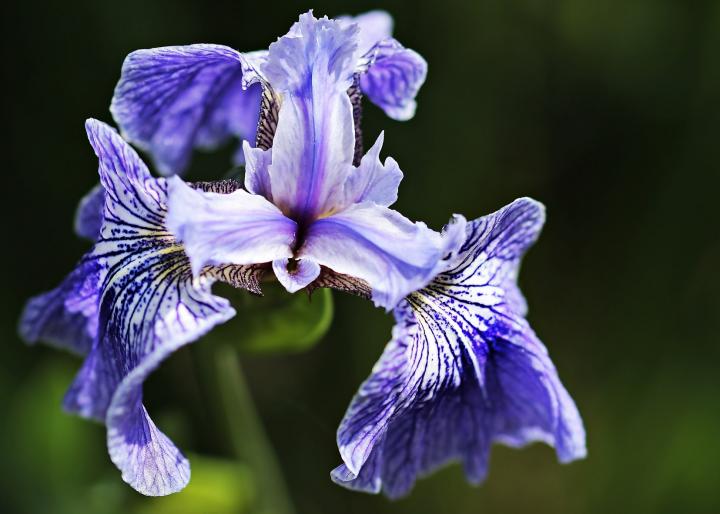
Growing
In the early spring, remove winter mulch and old foliage to allow for fresh growth.
Keep rhizomes exposed. Unlike bulbs, which thrive deep underground, bearded iris rhizomes need a bit of sun and air to dry them out. If they’re covered with soil or crowded by other plants, they’ll rot.
Watering
Do not overwater irises; too much moisture in the soil can cause the rhizomes to rot. Water consistently and deeply, especially during summer drought.
Fertilizing
Fertilize in early spring, scratching an all-purpose fertilizer around the plants. Avoid high-nitrogen fertilizers. Reblooming irises perform best if fertilized again after the first wave of flowering is finished.
Supporting Irises
Taller irises may need staking, or they will fall over.
Deadheading Iris
Deadhead (remove spent blooms) consistently. Bearded irises flower sequentially on buds spaced along the stems.
After blooming is finished, cut flower stems down to their base to discourage rhizome rot, but do NOT trim the iris’ leaves. The plant’s foliage carries on with photosynthesis and generates energy for next year’s growth and flowers. Only prune off brown leaf tips, if desired.
Seasonal Care
After a hard frost in the fall, cut foliage back hard, remove any foliage that appears spotted or yellowed, and dispose of all debris in the trash.
If iris foliage is hit with heavy frost, remove and destroy it to eliminate borer eggs. See your local frost dates.
For winter protection, cover the rhizomes with an inch or two of sand topped with a light layer of evergreen boughs, applied after the ground freezes and removed when the forsythias bloom in the following spring.
The iris borer, a common iris pest, overwinters as eggs in spent leaves. Signs include vertical streaks in the leaves. If apparent, look for the pests and squash them! If you see rot in the rhizome, dig it up and remove the affected parts. See pest tips below.
Dividing Irises
Over time, it’s not unusual for plantings of irises to become overcrowded, which causes the rhizomes to lose vitality and stop blooming. When this happens (usually every 2 to 5 years), it’s time to divide and replant healthy rhizomes in fresh soil.
When to divide? Do this task after flowering finishes, and then trim the foliage back to six inches.
- Shortly after blooming (usually around midsummer), carefully dig up (lift) the clump of irises. You’ll find that the original rhizome that you planted (the “mother”) has produced several offshoot rhizomes.
- Separate these rhizomes from the mother with a sharp knife and discard the mother, as it will no longer produce blooms.
- Inspect the rhizomes for any rotting tissue, soft spots, or other signs of disease, removing and discarding infected parts or entire unhealthy rhizomes.
- Plant these fresh rhizomes in a new bed, replant them where they were before (after adding new soil), or share them with friends and spread the joy of irises!
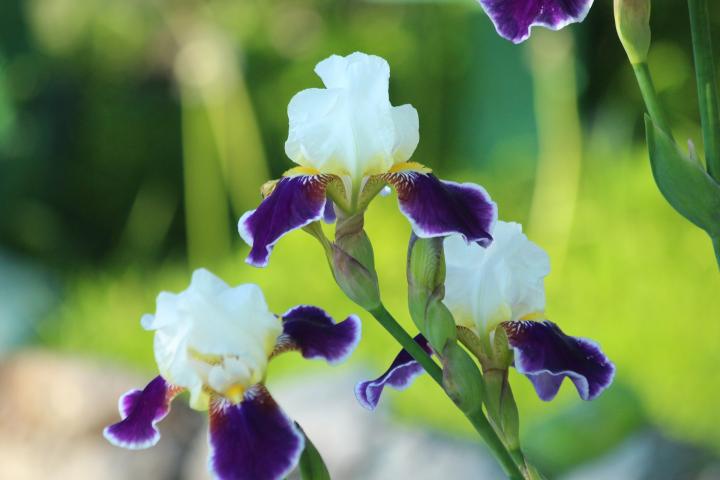
Types
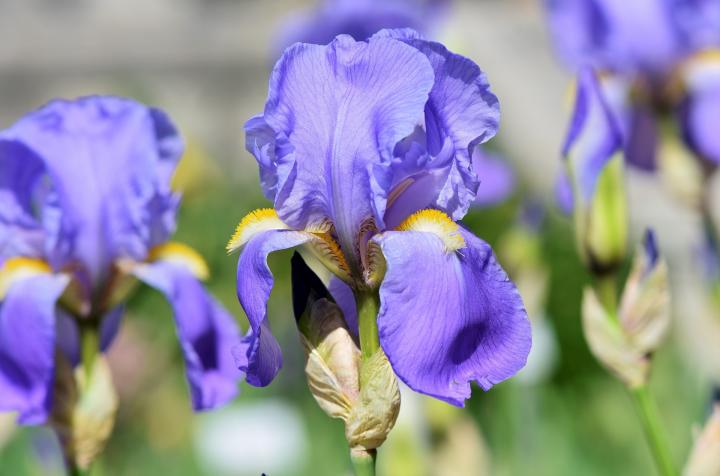
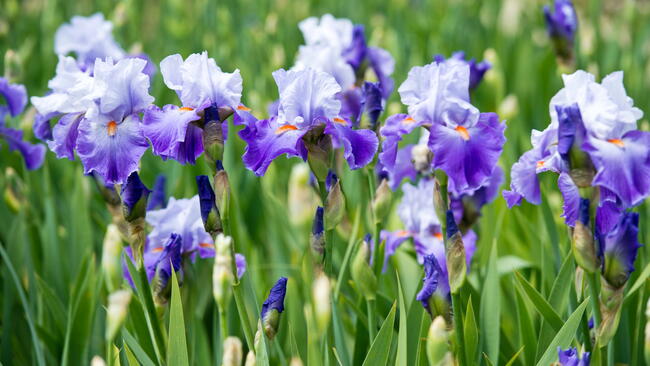
The tall bearded irises, Iris germanica, come in many flamboyant colors. They are generally planted in the fall. Rebloomers (remontant) varieties include:
- ‘Immortality’: fragrant white flowers that appear in early summer and again in late summer; hardy to Zone 4
- ‘Feed Back’: fragrant dark purple flowers; Zones 4 to 9
- ‘Earl of Essex’: white flowers, with purple edging; Zones 3 to 10
- ‘Jennifer Rebecca’: mauve pink flowers; Zones 4 to 9
Credit: Pixabay
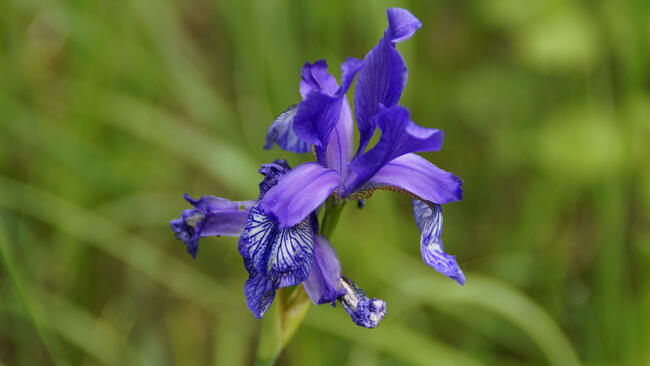
Siberian irises, I. sibirica, also come in a range of colors. They have a more delicate beauty than the stately bearded irises, but are equally as rugged. They also tend to be more pest and disease resistant.
- ‘Blueberry Fair’: ruffled blue flowers; Zones 3 to 8
- ‘Fond Kiss’: white flowers with pink flush; Zones 3 to 8
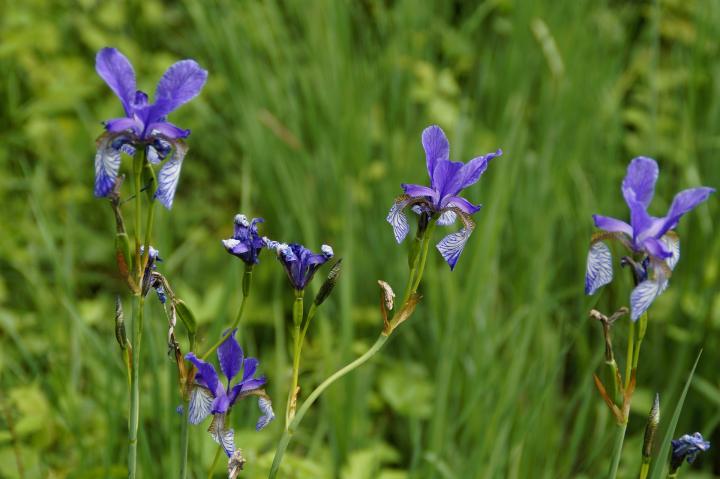
Credit: Pixabay.
Japanese irises, I. ensata, bear huge, flat blooms. These heavy feeders thrive on moisture during the growing season and do well around ponds; move to drier ground for fall and winter.
- ‘Coho’: pink flowers with golden flush; Zones 4 to 9
- ‘Variegata’: dark purple-reddish flowers; Zones 4 to 9
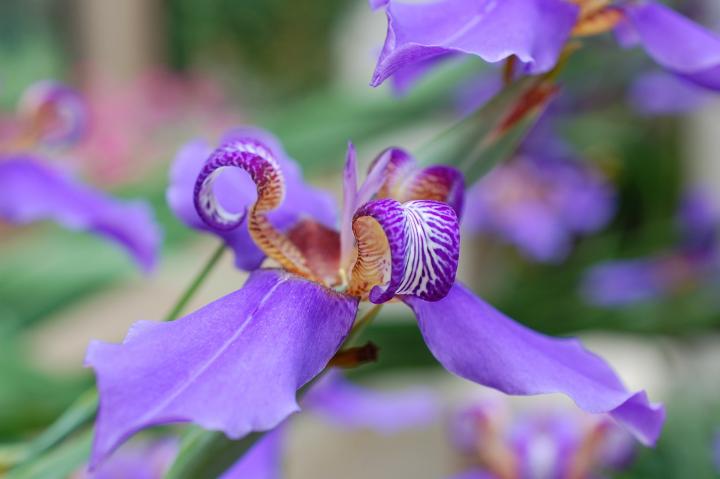
Credit: Pixabay.




- « Previous
- 1
- 2
- …
- 10
- Next »

Comments