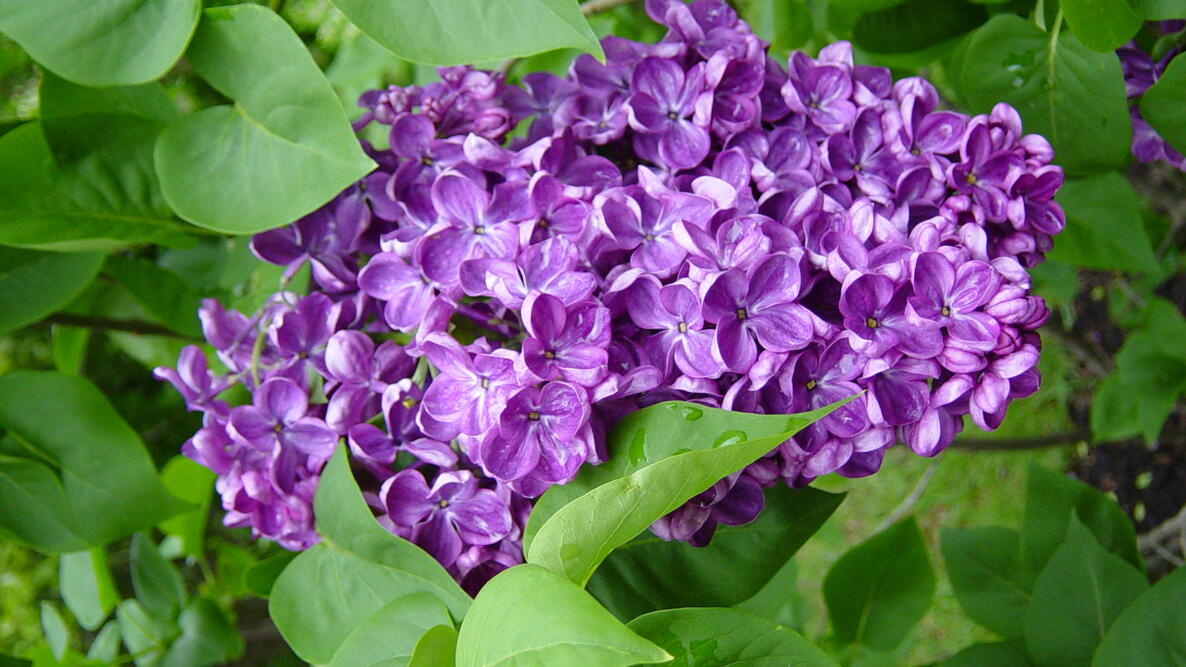
Caption
Huge blooms, wonderful scent.
Image Credit:
Wally Patrick
Botanical Name
Syringa spp.
Grown as
Toxicity
Sun Exposure
Water Needs
Height
Spread
Soil pH
Resilience
Plant Type
Types
For early flowers, try Syringa x hyacinthiflora hybrids; they bloom 7 to 10 days before S. vulgaris. Its fragrant blooms attract butterflies and hummingbirds.
The most common and fragrant lilacs are of the S. vulgaris variety:
- Try ‘Charles Joly’, a double magenta flower, an early bloomer.
- Mid-season lilacs include ‘Monge’, a dark reddish purple, and ‘Firmament’, a fine blue.
- Late-season beauties include ‘Miss Canada’, a reddish-pink, and ‘Donald Wyman’, a pink-purple flower.
Uncommon types/varieties include …
- S. x ‘Penda’ Bloomerang Purple: flowers in spring, pauses, then flowers again from midsummer through fall.
- Although common lilacs love cold weather, a few thrive as far south as Zone 8, including cutleaf hybrid S. x laciniata, with fragrant, pale lavender flowers, and S. pubescens ssp. patula ‘Miss Kim,’ with pale, lilac-blue blooms that fade to white.
Small Lilacs
For gardeners, especially those in urban spaces, who just don’t have the room for the traditional larger lilac, there are compact varieties! They’ll even grow in a container on your patio or balcony.
- ‘Baby Kim’ grows only 2 to 3 feet high (and 3 feet wide) in a nicely rounded shape with purple flowers that attract butterflies. Extended hardiness from Zones 3 to 8.
- ‘Little Lady’ (S. x) is a compact lilac that matures to 4 to 5 feet tall and wide with dark pink buds that open to lilac-pink flowers. Hardy in Zones 2 to 7.
- ‘New Age Lavender’ and ‘New Age White’ (S. vulgaris) are super-compact, growing from 4 to 5 feet tall and wide, and bred for mildew resistance. Their fragrant flowers attract butterflies and hummingbirds. Hardy to Zone 4.


I have a suckering lilac in a large garden and I want to keep the lilac but remove the rest of the garden and put in grass all around it. I figured that to get the soil primed for grass growth I would dig up the soil all around the lilac. I have realized that I'm cutting a bunch of roots from the lilac bush, is this OK? Also, if I plant the grass will it help prevent suckers from sprouting up to the surface? Or will the suckers and the intense root system prevent my grass from growing? Many thanks.

Leave a small area around the lilac without grass. Add mulch to this section to keep moisture in the soil and help keep the suckers from growing. It will also make it easier to mow the lawn around the lilac.
Hi! I have a lilac bush that is about 4 years old & hasn't ever bloomed. I planted it when it was very small (like a stick). I read your comments above about adding Lime to the soil (which I plan to do), but I think I may need to move it to a sunnier location. Is there a best time to transplant a lilac bush (i'm in IL, south of Chicago)? What about pruning, when is the best time to do that? Also, i'm not familiar with lime. Do you have a brand or type of lime I should be looking for? Thanks for your help, much appreciated!
I transplanted a sucker shoot my Mother-in-law gave me. It's about 8ft tall now & it took 4 years to get any flowers. When I saw the flowers I jumped up & down like a proud Mommy. Good luck with your transplants.
Spring or fall are the best times to transplant trees including lilacs (fall is preferred). Lilacs don't need annual pruning. Prune lilacs after they have bloomed in late spring or just remove the spent flowers. If your lilac doesn't bloom this year you can wait to prune.
Add ground limestone or hydrated/slaked lime to your soil. Good luck!
I also read the page above above pruning after it blooms, but if it doesn't have blooms do I prune at all and if so when & how? Thanks so much for any help i'm a new gardener & learning as I go.
I planted three lilacs last fall and carefully researched the needs and requirments before planting. Two have leafed out and seem to be thriving, however, the largest of the three still hasn't started to leaf out and it is mid-April here in southern illinois. I have broken a small twig off and the plant is still green inside but it is refusing to leaf out. If it's just being slow how long could it take to show signs of life?
Assuming everything else is equal (soil, moisture, overwinter)—and it sounds like it is, it's hard to tell how long it could take. Certainly if your other two plants and every other one that you see in town is in leaf and this one is not, consider consulting the source from which you acquired the lilacs.
A friend gave me a small lilac 10 years ago. Now is a big bush wich has little black fruit like grape type. Is this a lilac plant or not?
It would help if you told us where you lived. Also, you could send a photo to us at: AlmanacEditors@yankeepub.com
- « Previous
- 1
- 2
- …
- 10
- Next »
📣The Gardening Club Just Got Better! 3 Deliveries, 10% Store Discount, and more!

Comments