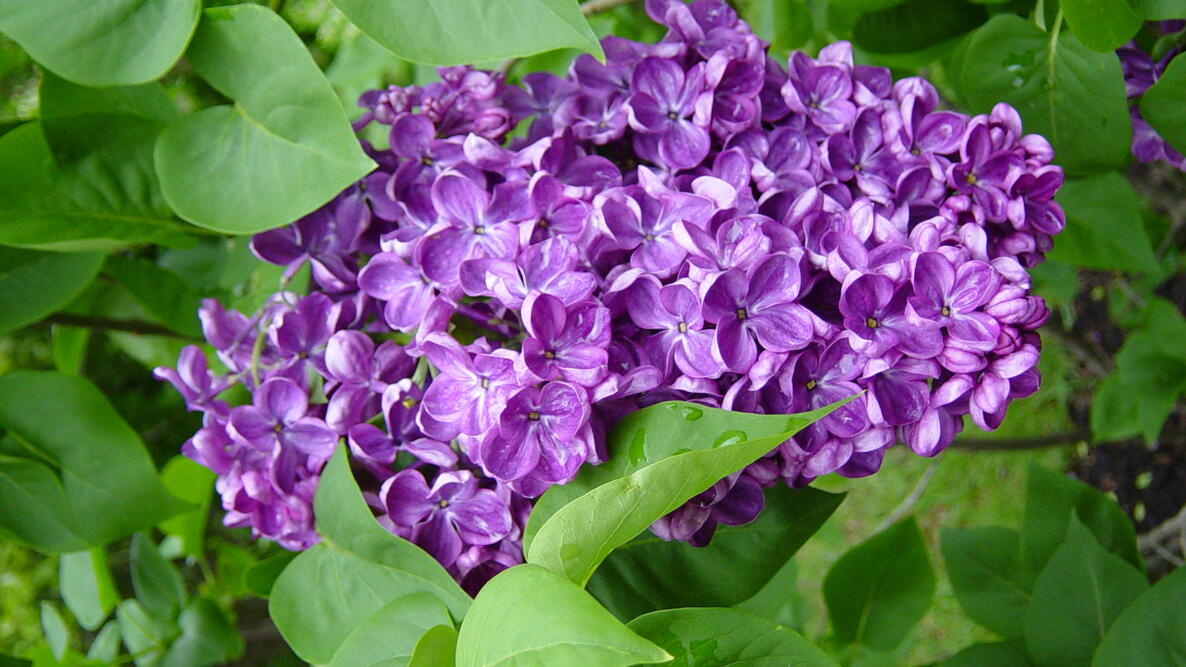
Caption
Huge blooms, wonderful scent.
Image Credit:
Wally Patrick
Botanical Name
Syringa spp.
Grown as
Toxicity
Sun Exposure
Water Needs
Height
Spread
Soil pH
Resilience
Plant Type
Types
For early flowers, try Syringa x hyacinthiflora hybrids; they bloom 7 to 10 days before S. vulgaris. Its fragrant blooms attract butterflies and hummingbirds.
The most common and fragrant lilacs are of the S. vulgaris variety:
- Try ‘Charles Joly’, a double magenta flower, an early bloomer.
- Mid-season lilacs include ‘Monge’, a dark reddish purple, and ‘Firmament’, a fine blue.
- Late-season beauties include ‘Miss Canada’, a reddish-pink, and ‘Donald Wyman’, a pink-purple flower.
Uncommon types/varieties include …
- S. x ‘Penda’ Bloomerang Purple: flowers in spring, pauses, then flowers again from midsummer through fall.
- Although common lilacs love cold weather, a few thrive as far south as Zone 8, including cutleaf hybrid S. x laciniata, with fragrant, pale lavender flowers, and S. pubescens ssp. patula ‘Miss Kim,’ with pale, lilac-blue blooms that fade to white.
Small Lilacs
For gardeners, especially those in urban spaces, who just don’t have the room for the traditional larger lilac, there are compact varieties! They’ll even grow in a container on your patio or balcony.
- ‘Baby Kim’ grows only 2 to 3 feet high (and 3 feet wide) in a nicely rounded shape with purple flowers that attract butterflies. Extended hardiness from Zones 3 to 8.
- ‘Little Lady’ (S. x) is a compact lilac that matures to 4 to 5 feet tall and wide with dark pink buds that open to lilac-pink flowers. Hardy in Zones 2 to 7.
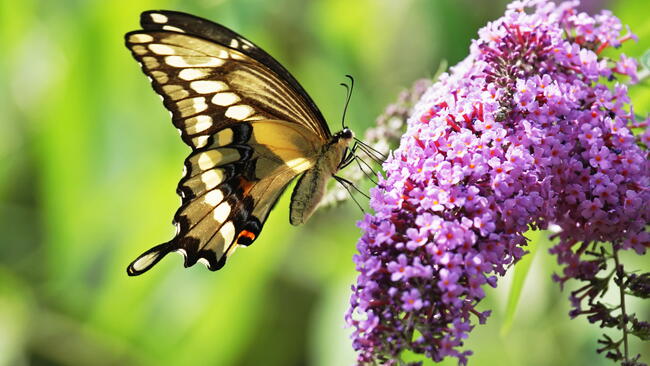
- ‘New Age Lavender’ and ‘New Age White’ (S. vulgaris) are super-compact, growing from 4 to 5 feet tall and wide, and bred for mildew resistance. Their fragrant flowers attract butterflies and hummingbirds. Hardy to Zone 4.

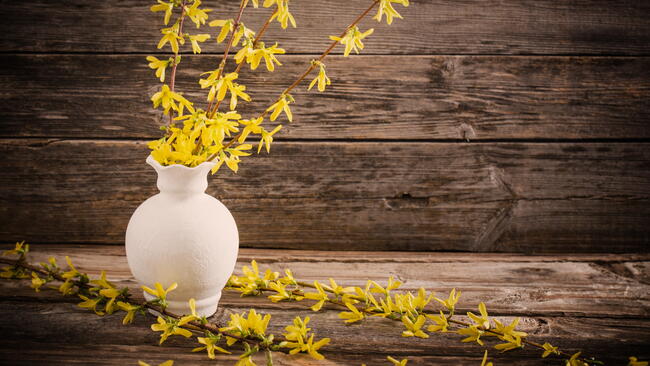

A lilac is fine in a container for the short-term, given plenty of water and sun. However, after a year or two, they'll get too large and they'd do better in the ground. In a pot, the lilac will also need fertilizer in early spring and after bloom--and also add a handful of lime once a season.
What is a sucker? I have lilacs in my yard and some are very tall and others short. They tend to only have blooms on the top and not towards the bottom. I looked at the blooms, which are no longer purple and appear dead. I thought this was what was to be pruned but there are new green buds in them. Should I be removing these? HELP!!!!
Suckers are plant sprouts from the root system. New lilac suckers grow into new lilacs! For some folks, this is desirable. For many homeowners, who don't want more growth, it is not. Your lilacs also need pruning. If you just have blooms on the top, then your lilac is overgrown. You must prune RIGHT after they finish flowering this year, and before mid-July. If overgrown, also cut down about a third of the older canes as close to the ground as possible next bring before they leaf out. You may not get blossoms that year but you'll send out new growth and the shrub will start to look better next year. Always thin out your thickest canes as low as you can cut them.
Hi,
I have recently planted 6 Charles joly lilac shrubs, May long weekend in northern Alberta. They are planted along the back of my fence which recieves full sun all day long. While watering them this evening, I noticed that on 3 of the 6 shrubs they have a few blackening leaves on them. Is this normal or should I be concerned about insects/desease affecting them? As I purchased and planted them at the end of May, I am unsure if they bloomed this year. They seem to me...a VERY inexperienced gardener...to be young they stand 3-4' tall. Other than the blackening leaves they appear to be healthy, as someone mentioned above they do have some leaves with holes but I think thats just par for the course...no
Black leaves may mean:
1) Frost injury on newly emerging tissue. If the black parts on more prominent on the margins of leaves, it's probably just the cold temperatures.
2) Lilac blight. This looks a bit different--starting as brown water-marked spots and progresses to blackened leaves. A cool, wet, rainy, spring season can lead to lilac blight, especially if rainy after a late frost. In this case, you want to prune and burn all infected areas.
You may wish to bring a sample to your local cooperative extension or garden center.
First time growing a drawf lilac tree/bush and this year it has what looks like seeds, when do I pick the seeds and how and when do I plant them. This drawf is 3 years old and has about ten 18" suckers growing I want to transplant them but need advice too. Hope someone has the answers, thanking you in advance.
Lilacs are relatively low maintenance, just be sure to trim the blooms after they’ve expired in the spring. Lilacs grow on old wood. The seeds should just be cut off, planting them will most likely get you nowhere. Also cut away the suckers. Lilacs are clump forming and produce new shoots from the base of the trunk. Use these shoots for propagating lilac bushes. Dig down from the main clump, exposing the roots and carefully cut the shoot away from the “mother” plant. Make sure you include roots. Then plant the shoot in a suitable location and water regularly until it takes hold.
Good luck!
I live in northern Alabama and planted a lilac bush about 4 years ago. It bloomed the first year, but although it is growing in size, it has not bloomed the past 3 years. I have tried everything, including soil acidifier. I was really hoping it would bloom this year, as I had been doing research on how to prune. But it never did, and now I'm not sure which canes to cut back, as I have read that you should only prune the canes that have produced blooms in spring. The only other thing I can think of is that I have not removed the grass and mulched around the bush. Could that really be the reason for its not blooming?
I live in DE and I have the exact same happen to me.First year it bloomed and hasn't bloomed in 3-4 years now. I have kept the grass away from mine by mulching and has not worked so I don't think that is your problem. HELP
You'll want to check for the same concerns: sunlight, pH levels of the soil, improper planting, and pruning that may have removed the buds for upcoming years.
See comments below for more advice.
Thank you for your interest in the Old Farmer's Almanac and our Web site.
- « Previous
- 1
- 2
- …
- 10
- Next »
📣The Gardening Club Just Got Better! 3 Deliveries, 10% Store Discount, and more!

Comments