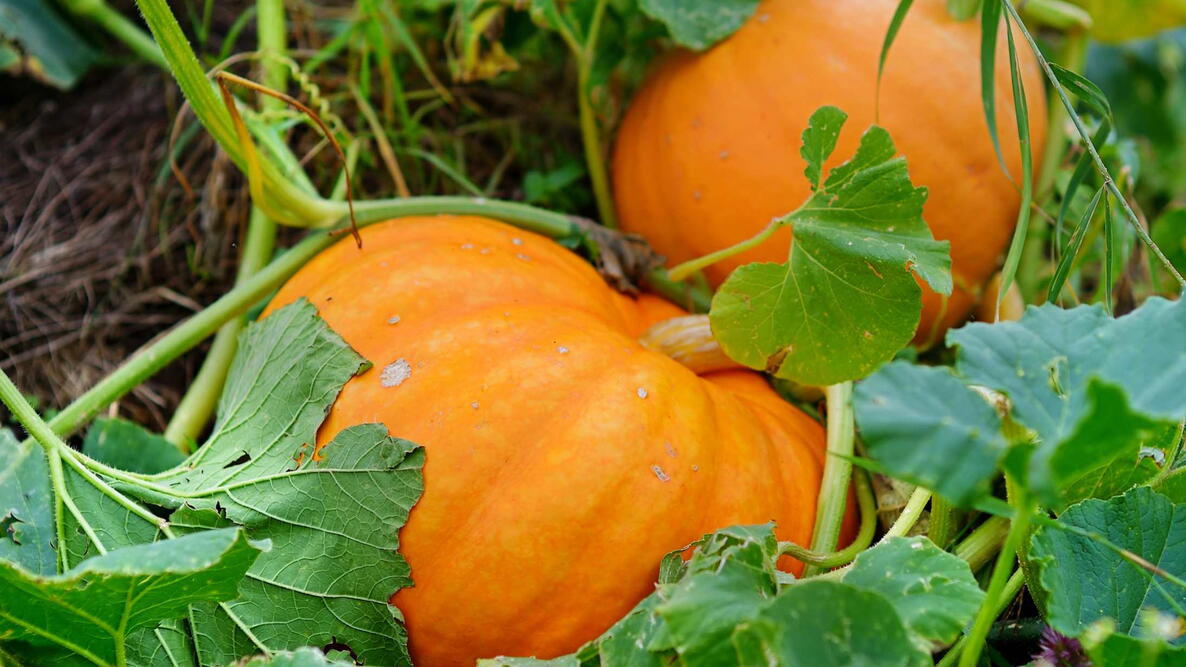
Growing
Watering
Pumpkins need about 1-inch of water per week, either from your hose or rainfall. For best results, water plants deeply in the morning and on very hot afternoons — especially during fruit set — and do your best to direct water straight to the plant roots. Keeping pumpkins leaves dry is one of the best ways to avoid rot and common diseases like powdery mildew.
Fertilizing
Blending compost or aged manure into the soil before planting helps pumpkins grow better and encourages larger fruit production. After that, side-dress plants with additional aged manure or compost mixed with water as needed and feed with a high nitrogen fertilizer when the plants are about 1-foot tall and the vines are just about to run. When flower buds form, switch to a high phosphorus fertilizer to fuel rapid pumpkin growth.
Pruning or Maintenance
Covering pumpkins with row covers early in the season can reduce some pest problems, but covers need to be removed before flowering to allow for pollination. Bees and other pollinators are essential for pumpkin growth, so avoid using pesticides whenever possible and consider growing flowering companion plants near pumpkins to increase pollinator activity. Placing a bee house in your garden is an effective way to draw bees in too.
Careful pruning can reduce disease, increase fruit size, and is key if you want to grow prize winning pumpkins. To do this, pinch off the fuzzy ends of pumpkin vines after a few pumpkins form to stop vine growth and focus the plant’s energy on fruiting. Once the fruit develops, remove all but the best 1 to 3 pumpkins per plant as well as all late blooming flowers, prune the main and secondary vines to 10 to 15 feet, cut away the smaller, tertiary vines, and bury the cut vine tips in the soil to optimize fruit development.
As the fruit matures, turn pumpkins carefully to encourage even growth. Placing a thin board, stone, or piece of tile under pumpkins can protect fruit from rot and pest damage as well.
Tip: If your first flowers aren’t forming fruits, that’s normal. Both male and female blossoms need to open for pollination to occur. Patience is key!
Seasonal Care
Maintaining a regular watering and fertilizing regimen is essential if you want to grow the best pumpkins. It’s also a good idea to add mulch around plants to retain moisture and suppress weeds. When needed, weed carefully to avoid damaging delicate pumpkin roots and vines.
If you’re growing pumpkins on a trellis, support developing fruit with a hammock or old nylon stocking to prevent vine breaks.

Types
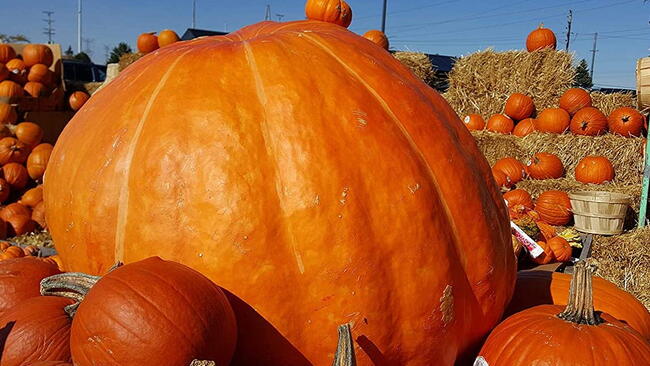
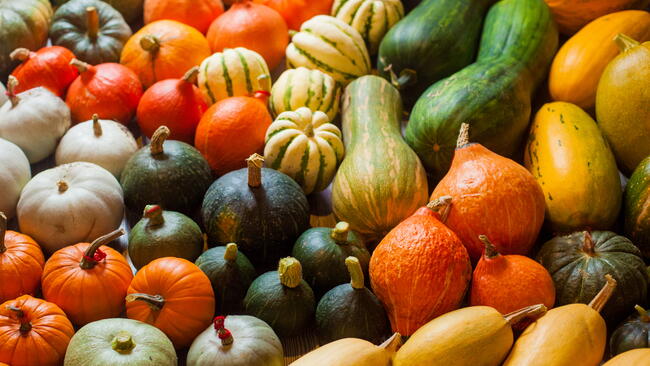
Pumpkins come in different sizes and colors and can be used for different purposes. Athough all pumpkins are technically edible, some are better for carving or display, while others are ideal for cooking. Knowing how you’d like to use pumpkins will help you select the very best varieties for your goals!
- Miniature pumpkins like ‘Jack Be Little’ and ‘We-B-Little’ are great for ornamental use and small spaces. They’re also super productive and easy to grow.
- Carving pumpkins like ‘Autumn Gold’ or ‘Merlin’ are the pumpkins you want for jack-o-lanterns.
- Pie pumpkins like ‘Sugar Treat’ and ‘Peanut Pumpkin’ are prized for their sweet flesh and can be used for pies, soups, curries, and purees.


Comments

There are several reasons why pumpkin flowers may drop. If you sure that it isn't a pest, then check to see if these flowers are male. The male flowers appear earlier (a few weeks) than the female ones, and can drop after a while. Unlike the male flowers, the female flowers have a little bulge at the base, which will turn into the pumpkin once pollinated. If these are not pollinated, the female flowers will drop. Also, in high heat (in the 90s or above), or during drought or other stress, the plant may drop its flowers. Be sure that the plant is getting enough water (but is not waterlogged), and check the soil nutrients and pH. If you are experiencing a heat wave, you might shade the plant during peak temperatures. New flowers should form once temperatures or other conditions become better. Male flowers should also keep forming when female flowers start to appear. If you suspect a pollination issue, you might dry dusting pollen from a male flower onto a female flower by hand--heat can affect pollination as well, but this can at least increase the chance for fruit development.
- « Previous
- 1
- 2
- …
- 10
- Next »

There are main vines (coming from the base/center of the plant), secondary vines which come off of the main ones, and tertiary vines that grow off of the secondaries. All of these may have flowers. Once fruit has started to develop on the vines, some gardeners like to prune the main and secondary vines to 10 to 15 feet (burying the cut tips in soil). Then they remove the tertiary vines completely. Others go a step further and trim the main and secondaries so that each only has 2 to 3 pumpkins developing on them (keeping several feet of vine/leaves past the last fruit). Hope this helps!