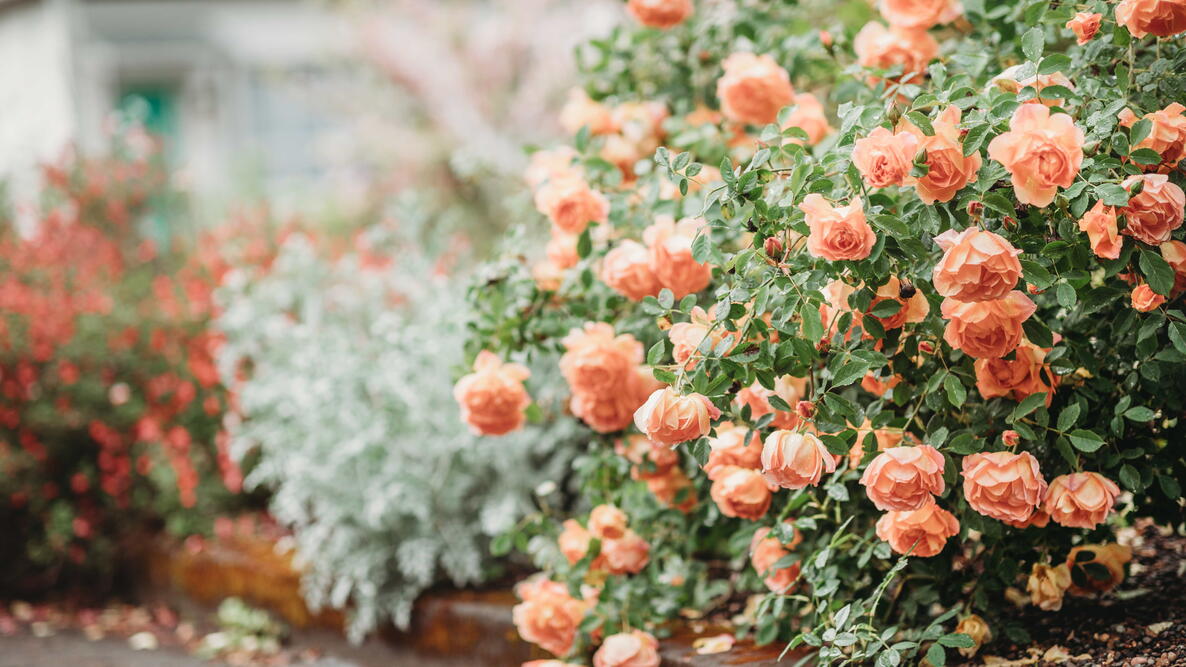
Roses (Rosa spp.) are popular garden shrubs, and with the right conditions, they are easier to grow than many gardeners expect.
Understanding a few basic growing needs—such as space, sunlight, and blooming habits—can make a big difference in how well your roses perform.
What Roses Need to Grow Well
Space and Mature Size
Roses vary in size, so it’s important to know how large a plant will be at maturity. Some roses stay compact at under 3 feet tall, while others grow much larger and need more room.
Giving roses enough space improves air circulation, reduces disease problems, and helps plants bloom more reliably.
Sunlight
Most roses grow best with at least 6 hours of direct sunlight each day. More sun generally means stronger growth and better flowering.
Some roses tolerate partial shade, but flowering may be lighter in less sun.
Blooming Habits
Roses differ in how often they bloom. Some flower once per season, while others bloom repeatedly from spring through fall.
For continuous color, look for roses labeled repeat-blooming or continuous bloom.

While roses vary in size and bloom habits, most garden roses share the same basic growing needs, making them easier to care for than many gardeners expect.
Types
Roses can feel overwhelming when you’re new to them. No need to learn the whole rose universe right away—or start with the fussy types. Let’s begin with sturdy, low‑maintenance roses that give you the best chance of success.
Botanically, roses fall into three broad groups (species, old garden, and modern), but beginners will find it most helpful to choose by growth habit: shrubs, climbers, hybrid teas, or miniatures.
Choosing Your First Rose
If you’re new to roses, start with a shrub rose. They’re the toughest, most low‑maintenance roses you can grow.
Shrub Roses (Rose Bushes)
Shrub roses form rounded, bushy plants and are the most reliable, low‑maintenance roses for new gardeners. They bloom generously, resist disease, and need very little pruning.
Examples:
- Knock Out Roses — continuous bloom, excellent disease resistance; hardy in Zones 5–10
- Flower Carpet Roses — groundcover style, nonstop flowers; hardy in Zones 4–10
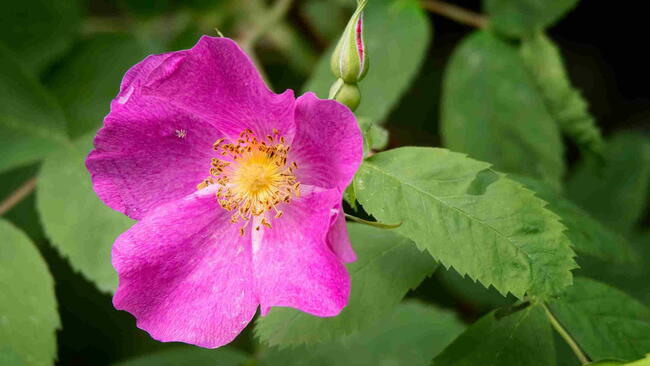
- Rugosa Roses — incredibly hardy, fragrant, and tough; many varieties (like ‘Jens Munk’) hardy to Zone 2
If you’re just starting out, shrub roses are your safest, easiest choice. See 3 easy roses for beginners!

Climbing Roses
Climbers send out long canes that need support from a trellis, fence, or arbor. They’re stunning but require training and a bit more attention, so many beginners add them after they’ve grown a shrub rose or two.
Examples:
- ‘Gertrude Jekyll’ (David Austin) — repeat‑blooming, fragrant; hardy in Zones 4–11
- ‘New Dawn’ — hardy, forgiving, blush‑pink; Zones 5–9
- ‘Don Juan’ — deep red, sweet fragrance; Zones 6–9
- ‘Iceberg’ — white, heat‑tolerant, disease‑resistant; Zones 4–9
Hybrid Tea Roses
These are the classic long‑stemmed roses you see in bouquets. They produce beautiful, elegant blooms — and they’re also the fussiest. Hybrid teas often need more pruning, feeding, and disease prevention, so they’re usually not a beginner’s first rose.
Examples:
- ‘Pink Peace’ — large, fragrant blooms; hardy in Zones 5–10
- ‘Sunsprite’ (‘KORresia’) — compact yellow floribunda; fragrant and disease‑resistant; Zones 5–9
Miniature Roses
Small, compact roses that stay tidy in containers or small gardens. They bloom repeatedly and are surprisingly tough, but need extra care if grown in pots. Most varieties fall within Zones 5–9.
See also our list of disease-resistant rose varieties.

More Like This

There might be two things going on with your roses. First, climbing roses produce a hormone at the tip of each cane that inhibits blooming further down the cane. The trick to getting blooms along much of the cane is to arch the cane so that it is mostly horizontal and the tip of the cane is lower than most of the rest of the cane. Check to see if the tips of the canes of your roses are higher than the rest of each cane, and adjust.
Also, older climbing roses often need rejevenative pruning, as over time the canes become woody and less and less flowers appear each year. For climbing roses that bloom once a year, prune just after blooming. For repeat-bloomers, prune when they are dormant, in late winter or early spring. To rejevenate climbing roses, select one or two of the oldest canes that are producing an unsatisfactory display, and cut them off near the base. This will encourage new canes to sprout in a few months. These new canes will not flower that same season, but next season, they should start to produce blooms. Keep up with the rejuvenative pruning every year (working on other old canes the following year, and rotating) to keep your overall display attractive.
It depends on many factors: your gardening zone, the rose variety, and how you will plant the rose bush. Many newly-rooted roses take 1 year to become a grown specimen.
To avoid problems, make sure your roses are a) planted in a large enough container to start -- no less than 15 inches in diameter and b) drain really well. Use 50% Perlite added to lighten the mix and provide faster drainage. Have drainage holes and do not use a saucer which invites root rot. Give each container plenty of space and air circulation to avoid a fungus.
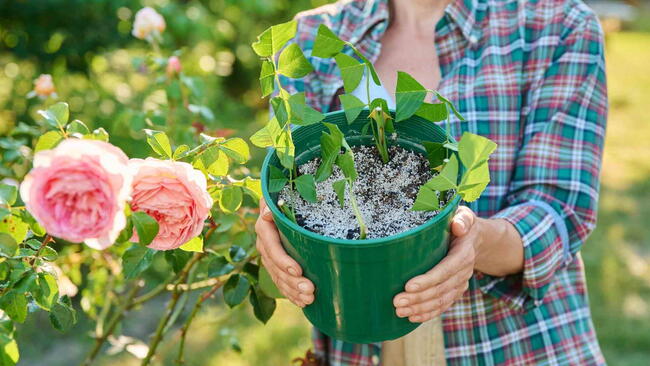
It's common for newly-planted roses to wilt for a couple weeks until they adapt to their new place. Water at soil level to make sure the roots aren't thirsty. Keep the water off the foliage. We hope you didn't put fertilizer near the root zone. Mulch to hold in moisture and then fertilize next spring.
- « Previous
- 1
- 2
- …
- 10
- Next »

Comments