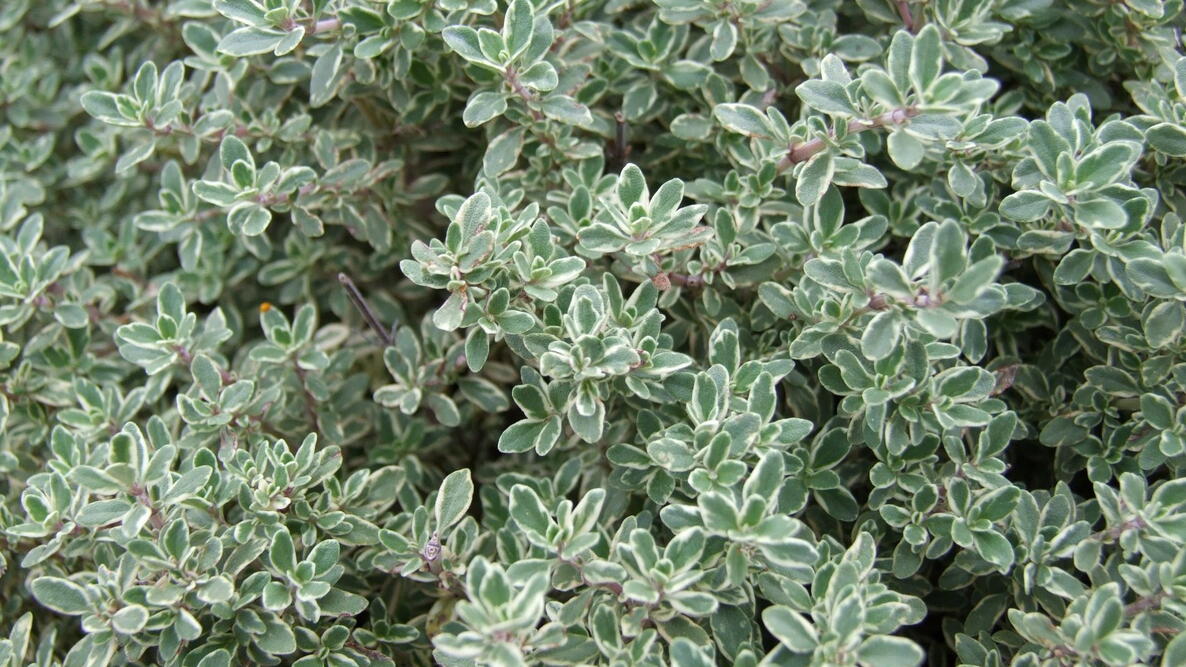
Caption
Learn how to plant, grow, and harvest thyme in your herb garden.
Growing
Watering
Water deeply only when the soil is completely dry.
Fertilizing
In early spring, you may fertilize with organic matter, like compost, but not much soil amendment is necessary.
Pruning
Prune the plants back in the spring and summer to contain the growth.
You can take some cuttings and plant them indoors in pots, too.
Mulching
If you have cold winters, remember to lightly mulch around the plants after the ground freezes.
How to Take a Cutting of Thyme
Clip a 3-inch cutting from the very tip of a stem, apply rooting hormone on the exposed portion of the stem, and plant it in either sterile sand or vermiculite. Roots will emerge within about 6 weeks. Transfer to a small pot, let the root ball form, and then transfer to a large pot or directly to your garden.

Photo: Rejdan
Types
The three most common varieties of culinary thyme are:
- French or English thyme (most common)
- Lemon thyme, for a hint of lemon
- Caraway thyme, for a nice fragrance of caraway and thyme

Comments

If you direct sow the seeds in the ground you need to keep them moist and that can be tricky. You may need to amend your soil so that it will retain moisture better. Thyme seed is known to be difficult to germinate outdoors. The temperature has to be warm (70 degrees F) for successful germination. Many start the seeds in trays indoors and then transplant outdoors.

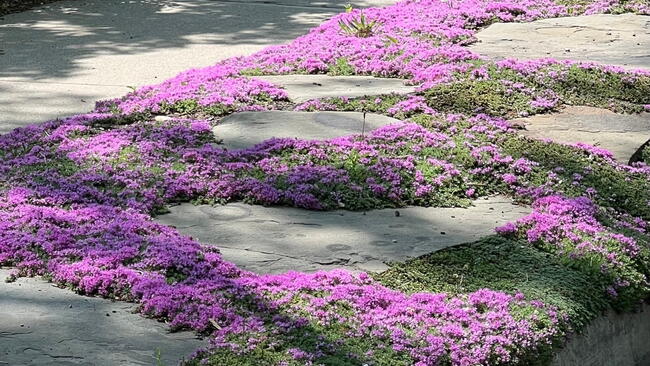
Thyme seems to thrive in pebbly environments. Think rock garden. When you grow in a container, put gravel at the bottom. Use a shallow, wide container so it's more horizontal than vertical. Use potting soil that does not contain peat. And also add a thin layer of light gravel on the soil surface. Basically, your soil needs to have access to water at all times but drain quickly and be very loose, not rich or dense.