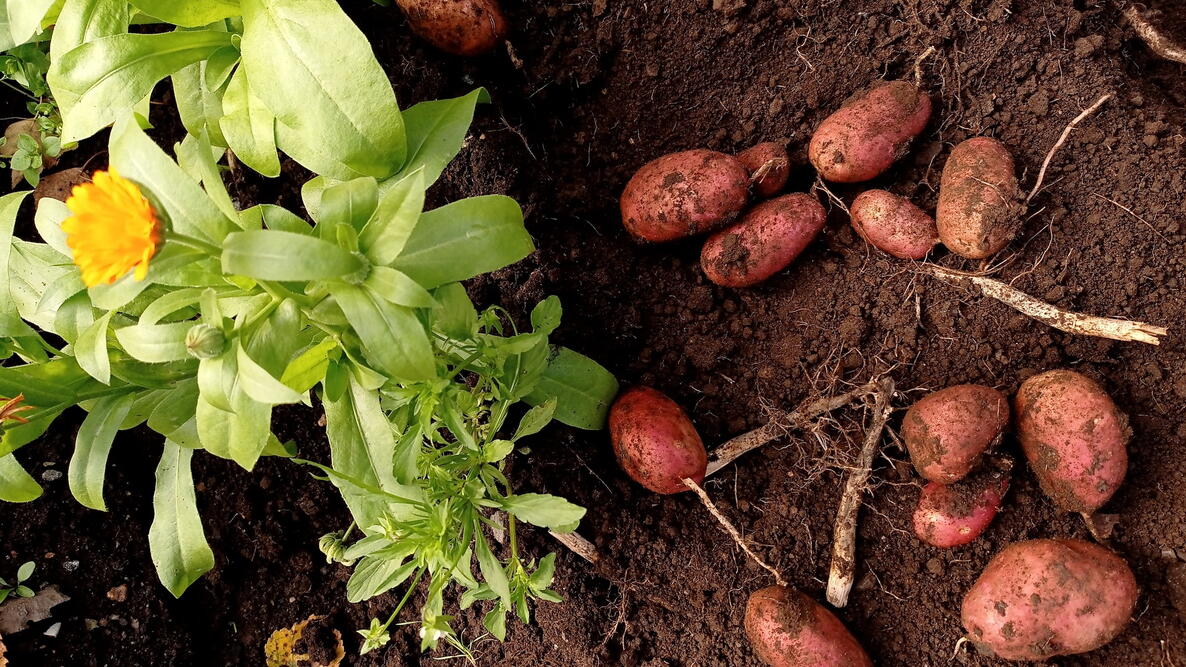
What should you plant near potatoes? Certain herbs, flowers, and vegetables—known as potato companion plants—can attract beneficial insects, make efficient use of garden space, or potentially help with pest management.
New to growing potatoes? See our complete Potato Growing Guide for planting, care, hilling, and harvesting tips.
Potato Companion Planting Chart
Companion planting simply means growing certain plants near one another because one may benefit the other. Use this quick chart to choose plants to grow near potatoes and see what each pairing may offer.
| Companion Plant | How It May Help Potatoes |
| Horseradish | Strong scents like horseradish may repel certain pests, according to research. |
| Beans and peas | Legumes fix nitrogen and can help support soil fertility over time. |
| Garlic and onions | Repel common pests that cause damage to potato plants. |
| Dill | Attracts beneficial insects that prey on garden pests. |
| Cilantro | Attracts beneficial insects that prey on garden pests. |
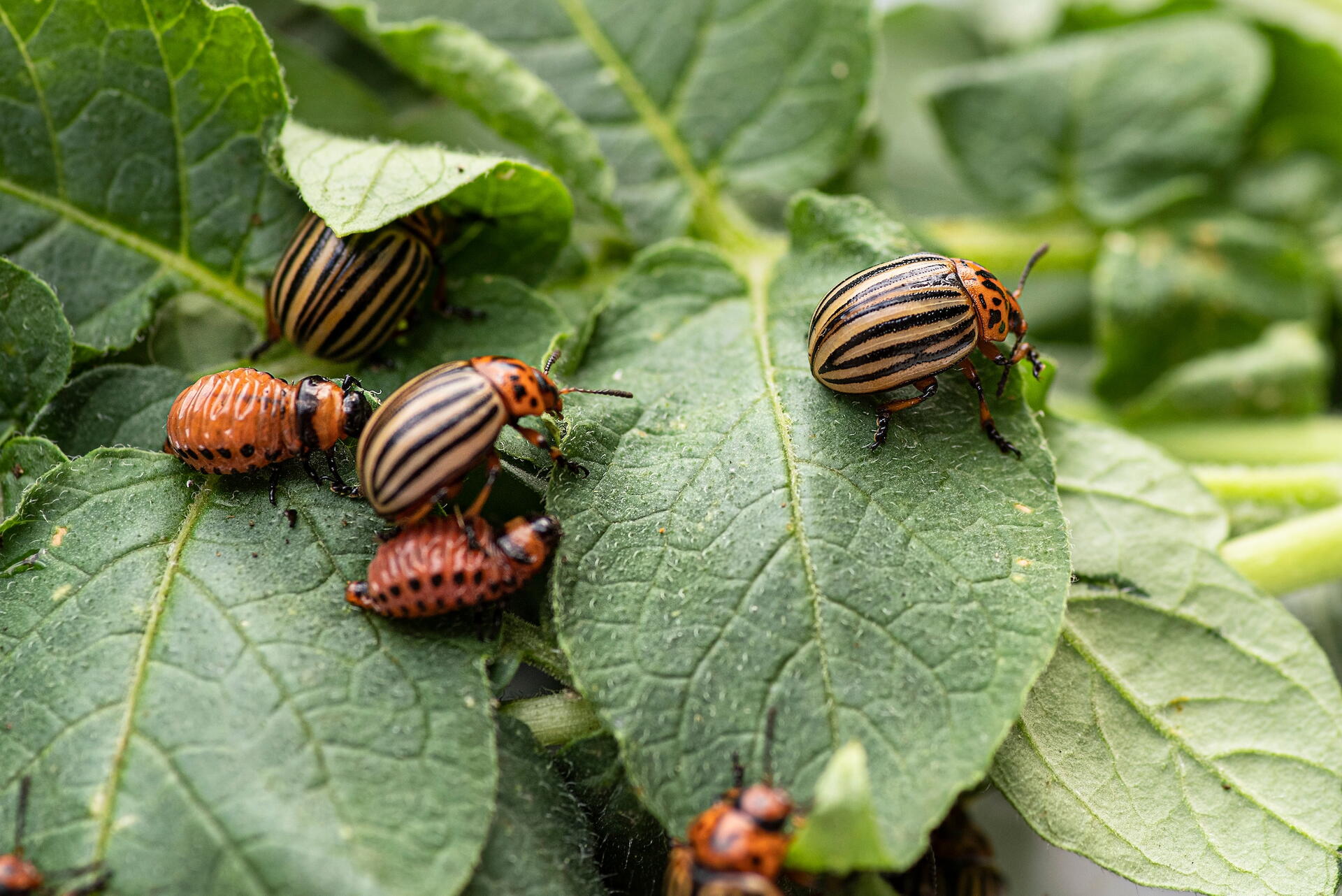
| Basil | Deterred Colorado potato beetles in a University of Delaware study. |
| Tansy | Deterred Colorado potato beetles in a University of Delaware study. |
| Calendula | Repels harmful pests that feed on potato leaves. |
You don’t need to grow every plant on this list. Choose one or two that suit your garden, and follow the recommended spacing for both crops. “Nearby” can mean in the same bed or in a separate container beside your potatoes. Leave enough room to add soil around the potato stems as they grow and to dig up the potatoes at harvest time.
Why Grow Companion Plants with Potatoes?
Potatoes are one of the many vegetables that benefit from companion planting, which consists of pairing vegetables with beneficial herbs, flowers, or other crops.
Credit: Nataliia Maksymenko
The right companion plants may help you:
- Reduce beetle damage. Basil and tansy may help deter Colorado potato beetle feeding.
- Attract beneficial insects. Cilantro and dill flowers draw in helpful hoverflies, whose young eat aphids.
- Get more from your veggie beds. Filling in open areas with companion plants is a great way to get more from your garden.
Keep in mind that while companion planting can help manage pests, you should still inspect plants regularly and address problems when they appear! Results may vary with spacing, growing conditions, and the pests that show up in your garden.
What to Plant with Potatoes
Whether you’re growing potatoes in containers or garden beds, you can use the art of companion planting to help your spuds thrive. Here are some research-backed potato pairings and how each companion may help.
Horseradish
Horseradish has a strong scent that may help deter pests from potatoes, making it a useful companion plant—as well as a spicy condiment!
Because horseradish can spread aggressively, I’d grow it in a pot or raised bed nearby rather than let it loose in the potato patch.
Beans and Peas
Green beans and sweet peas are legumes, which work with soil bacteria to fix nitrogen from the air. While much of that nitrogen is used by the legumes themselves, they can help support soil fertility over time.
Climbing beans and peas can also be grown on trellises, leaving more ground space for lower-growing potatoes.
Garlic and Onions
When planted near potatoes, garlic and onions may help deter beetles, cabbage loopers, and aphids, which can cause curling or misshapen leaves, weaken plants, and reduce potato harvests.
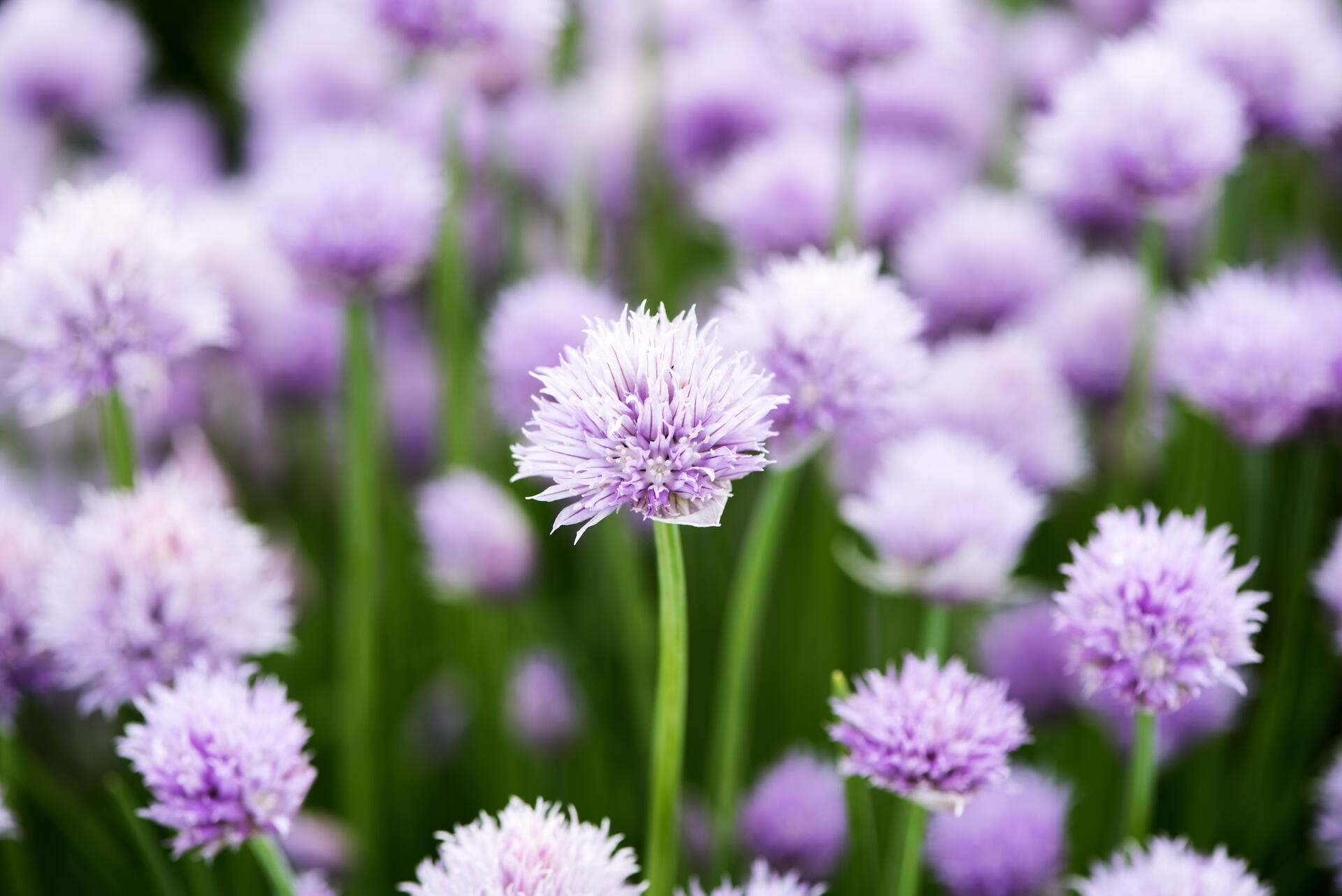
If you grow chives, let them bloom into pretty edible flowers for additional pest-fighting powers! The flowers attract beneficial insects such as hoverflies. These are pollinating flies whose young feed on aphids.
Credit: Floating Petals
Dill
Dill is a great companion for potatoes, both in recipes and in the garden! Dill attracts hoverflies, which help provide natural pest control. When dill blooms, its flowers lure even more beneficial insects that prey on the destructive Colorado potato beetle.
I like to sow a little dill every few weeks rather than planting it all at once. That way, some plants can flower for beneficial insects while younger plants keep producing fresh leaves for the kitchen.
Cilantro
Like dill, cilantro (also known as coriander) attracts beneficial insects that can help keep aphids and other pests in check. This includes pest-eating hoverflies. Cilantro also thrives in the rich soil that potatoes crave, and its small size means you won’t need to worry about cilantro competing with potatoes for space.
I’d recommend placing cilantro in a separate pot nearby so it doesn’t interfere with adding soil around the potato stems or harvesting the potatoes.
Basil
Basil is a friendly neighbor to most herbs, veggies, and annual flowers, and potatoes are no exception. Basil is one of a handful of herbs that has been shown to actually repel Colorado potato beetles, a known enemy of potato plants.
Tansy
Tansy is a cute-as-a-button perennial herb is a pest-fighting powerhouse and a good companion for potatoes. It naturally deters a wide range of garden pests, including the Colorado potato beetle. In one study, adult Colorado potato beetles completely refused to eat leaves coated in tansy!
Not that tansy may spread aggressively under the ground, so it’s best grown next to potatoes in containers or raised beds.
Calendula
Vibrant calendula attracts beneficial insects that can help keep aphids and other pests in check. I like tucking a few plants into open spots around the vegetable garden whenever I have room.
Calendula is a hardy plant that adapts easily to various conditions. Its edible petals can also be used fresh or dried—try dried calendula as a substitute for saffron in your next potato dish!
What Not to Plant Near Potatoes
While potatoes get along well with many other veggies, it’s best to avoid planting them near crops that attract the same pests, compete with essential soil nutrients, or take up too much space.
Be sure to give your potatoes plenty of room around:
- Tomatoes, peppers, and eggplants. These are all nightshades, like potatoes, and can share important pests and diseases. Keeping them separated also makes crop rotation easier from year to year.
- Heavy-feeding crops. Cucumbers, melons, squash, and pumpkins are heavy-feeding crops that may compete with potatoes for soil nutrients or smother them with spreading vines. Cucumbers and potatoes also share a few pests, which can make them particularly challenging to grow together.
- Raspberries. Raspberries are potentially vulnerable to a few of the same plant diseases as potatoes, so you’ll want to avoid growing them near one another. Their spreading roots and tall canes can also compete for growing space.
With the right type of soil (slightly acidic) and plenty of access to nutrients, potatoes can grow just fine near most garden vegetables and herbs.
Frequently Asked Questions
-
What can I plant next to potatoes?
Research-supported potato companion plants include horseradish, beans and peas, garlic and onions, dill, cilantro, basil, tansy, and calendula. Depending on the plant, they may reduce beetle damage, attract beneficial insects, and naturally feed the soil.
-
What should I avoid planting next to potatoes?
Potatoes can grow well near most vegetables and herbs, but they need plenty of nutrients and room to grow. Give them space around heavy-feeding crops (cucumbers, melons, squash, pumpkins) and tall cane fruits (raspberries). Also, avoid growing them too close to other nightshades (tomatoes, peppers, eggplants) that may attract the same pests.
-
Do potatoes and tomatoes grow well together?
No, it’s best to not grow potatoes and tomatoes together, as they can attract the same pests.
Sources
- The University of Arizona — The Art of Companion Planting
- University of Georgia Extension — Insect-Repelling Plants For Your Garden
- West Virginia University Extension — Companion Planting
- Utah State University — How to Grow Calendula in Your Garden
- Environmental Entomology, Volume 19, Issue 2, 1 April 1990 — Antifeedant Effects of Common Herbs on the Colorado Potato Beetle (Coleoptera: Chrysomelidae)
- University of New Hampshire — Research Report: Using insectary plants to attract hoverflies, 2017-2018
- Colorado State University — Give peas a chance: CSU study shows legumes as a solution to the soil-carbon dilemma

More Like This

Comments