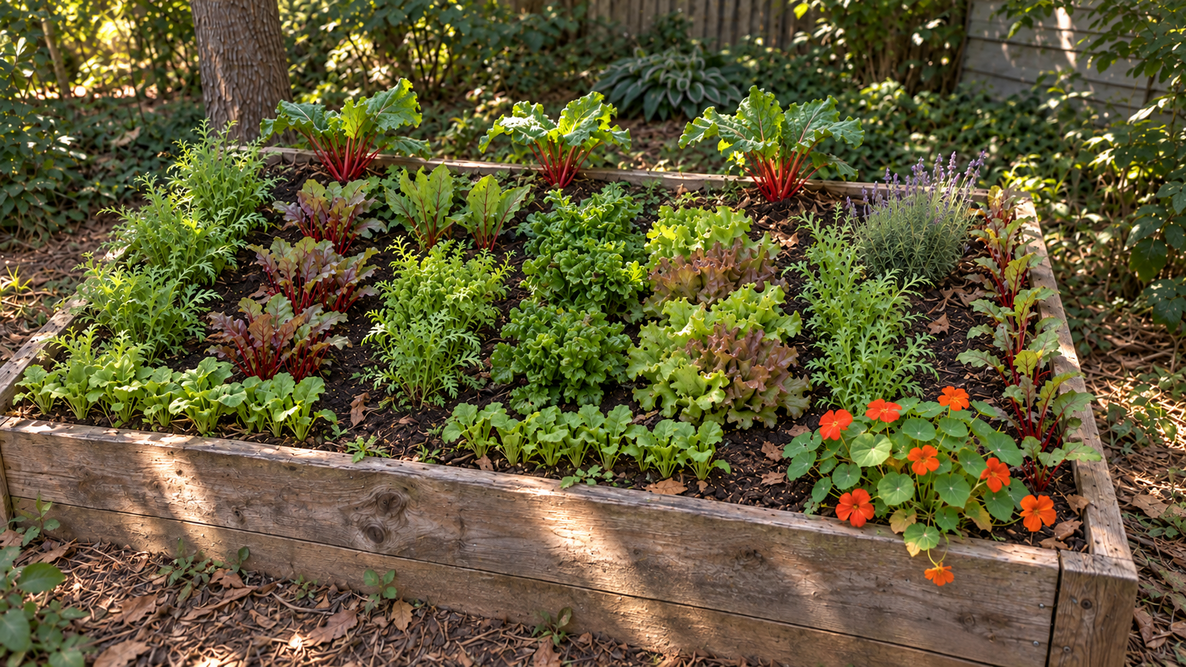
Only have 3 to 6 hours of sun? This shade vegetable garden plan shows what to grow—and how to lay it out—in a productive 7 × 10-foot garden.
Leafy greens, herbs, beets, radishes, and rhubarb can grow with less sun than fruiting crops. Follow the plant list, spacing, and quantities to recreate the plan as shown or adapt it to your space.
Quick Plan Overview
| Feature | Details |
|---|---|
| Garden Type | Partial-shade vegetable garden |
| Garden Size | About 7 × 10 feet; adaptable |
| Difficulty | Beginner |
| Sun Exposure | Partial shade; about 3–6 hours of direct sun |
| Season | Spring through fall |
| Soil | Rich, moisture-retentive, well-drained |
| Watering | Regular, especially for leafy greens |
| Best For | Leafy greens, herbs, root crops, and other shade-tolerant edibles |
Shade Vegetable Garden Layout
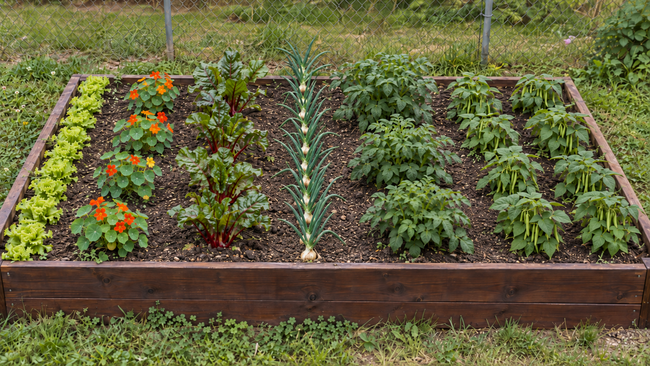
This 7 × 10-foot garden plan combines vegetables and herbs that can produce with part-day sun. Before planting, watch the area for a few days to see how many hours of direct sunlight it actually receives.
As a general guide:
- Fruiting crops such as tomatoes, peppers, and cucumbers need the most sun—generally 6 or more hours.
- Root crops such as beets can grow with about 4 to 6 hours of sun.
- Leafy greens and herbs such as lettuce, arugula, parsley, and mizuna are especially well suited to partial shade.

The Plant List
| Plant Name | Spacings | Quantity | Sow Indoors | Sow/Plant Outdoors |
|---|---|---|---|---|
| Arugula | Single: 6”, In-Row: 4”, 8” row gap | 4 | March → mid April | April → mid October |
| Beet | Single: 6”, In-Row: 4”, 8” row gap | 11 | — | May → mid June |
| Beet (Multi-sown) | Single: 10”, In-Row: 10”, 10” row gap | 3 | — | May → mid June |
| Lavender | Single: 1’ 4”, In-Row: 1’ 2”, 1’ 2” row gap | 1 | Mid March → mid May | May → June |
| Lettuce (Green or Red Leaf) | Single: 4”, In-Row: 4”, 6” row gap | 12 | March → mid April | April → mid September |
| Mizuna | Single: 10”, In-Row: 8”, 1’ 0” row gap | 8 | — | Mid May → June |
| Nasturtium | Single: 1’ 0”, In-Row: 1’ 0”, 1’ 0” row gap | 1 | Mid April → mid May | Mid May → end of May |
| Parsley | Single: 6”, In-Row: 4”, 10” row gap | 6 | April → mid May | Mid May → end of June |
| Radish | Single: 4”, In-Row: 4”, 8” row gap | 14 | — | Mid April → mid October |
| Rhubarb | Single: 2’ 11”, In-Row: 2’ 11”, 2’ 11” row gap | 3 | — | April → mid May |
| Sorrel | Single: 1’ 0”, In-Row: 1’ 0”, 1’ 0” row gap | 2 | March → mid May | May → end of May |
Note: This gardener had a brighter spot at the edge of the bed for lavender. In most part-shade gardens, swap it for chives or another shade-tolerant herb. Use the “Partial Shade Tolerant” filter in the Almanac Garden Planner for more options.
Need growing instructions? See our Vegetable Growing Guides.
Why This Design Works
This plan focuses on crops that can produce with less sun, especially leafy greens, herbs, and quick-growing root crops. In warm weather, partial shade can also help lettuce and other greens stay tender and delay bolting.
Bonus: Small Salad Garden for Shade
Have an even smaller space? Try a simple 7 × 4-foot bed of spinach and lettuce near the kitchen, where you can harvest the leaves often as cut-and-come-again crops. Containers work well, too, and can be moved to take advantage of the best available light.


Tips for Growing Vegetables in Partial Shade
- Know how much sun you actually have. Watch the site through the day before planting. Partial shade generally means about 3 to 6 hours of direct sun. See our guide to sun and shade definitions.
- Start with leafy crops. Lettuce, arugula, mizuna, parsley, and other greens are among the most reliable choices when sunlight is limited.
- Try quick-growing root crops. Radishes and beets can produce in partial shade, although growth may be slower than in full sun.
- Keep an eye on moisture. Shaded soil often dries more slowly, so water when needed rather than on a fixed schedule. Good drainage is still important.
- Use containers strategically. You don’t need a raised bed to grow food in partial shade. Pots can be moved to capture more light as the season changes.
Gardener Spotlight: Susie H.
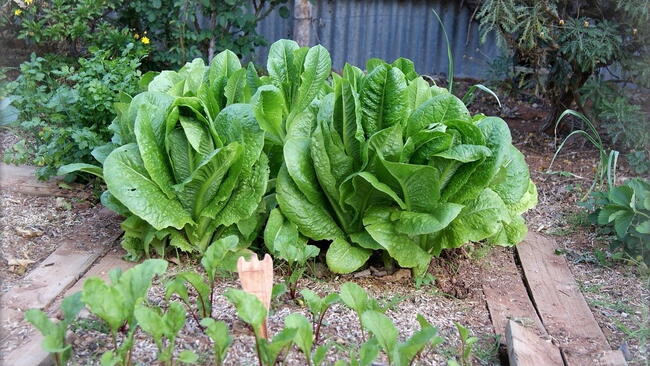
Susie found that the partly shaded corners of her garden—behind a shed, beneath neighboring trees, and near play equipment—could still be productive growing spaces.
Once she started choosing crops for the available light instead of fighting the shade, those areas became especially useful for summer salad greens. The Almanac Garden Planner helped her identify more crops that tolerate partial shade.


More Garden Plans to Explore
- Raised-Bed Vegetable Garden Plan — a productive kitchen garden for a sunnier location.
- Square-Foot Garden Plan — a compact layout for vegetables and herbs.
- Herb Garden Plans — five layouts for beds and containers.
Frequently Asked Questions
-
How much sun does a shade vegetable garden need?
Most crops described as shade tolerant still need some direct sunlight. Aim for about 3 to 6 hours a day. Leafy greens and herbs are generally the most forgiving when light is limited.
-
What vegetables grow best in partial shade?
Leafy greens such as lettuce, spinach, arugula, sorrel, and mizuna are excellent choices. Parsley, beets, and radishes can also grow with part-day sun. See our guide to shade-tolerant vegetables.
-
Can vegetables grow in full shade?
Very few vegetables produce well without direct sun. If a site receives less than about 3 hours of direct sunlight, try leafy greens and herbs first, and expect slower growth and smaller harvests.
-
Will vegetables grow more slowly in partial shade?
Often, yes. Root crops may take longer to mature, but slower growth can benefit some leafy greens by helping them stay tender and delay bolting during hot weather.
-
Do I need a raised bed for a shade vegetable garden?
No. This plan can be adapted to a raised bed, an in-ground garden, or containers. Pots are especially useful because you can move them to take advantage of changing sunlight.


Vegetable Garden Plans
Flower Garden Plans

Comments