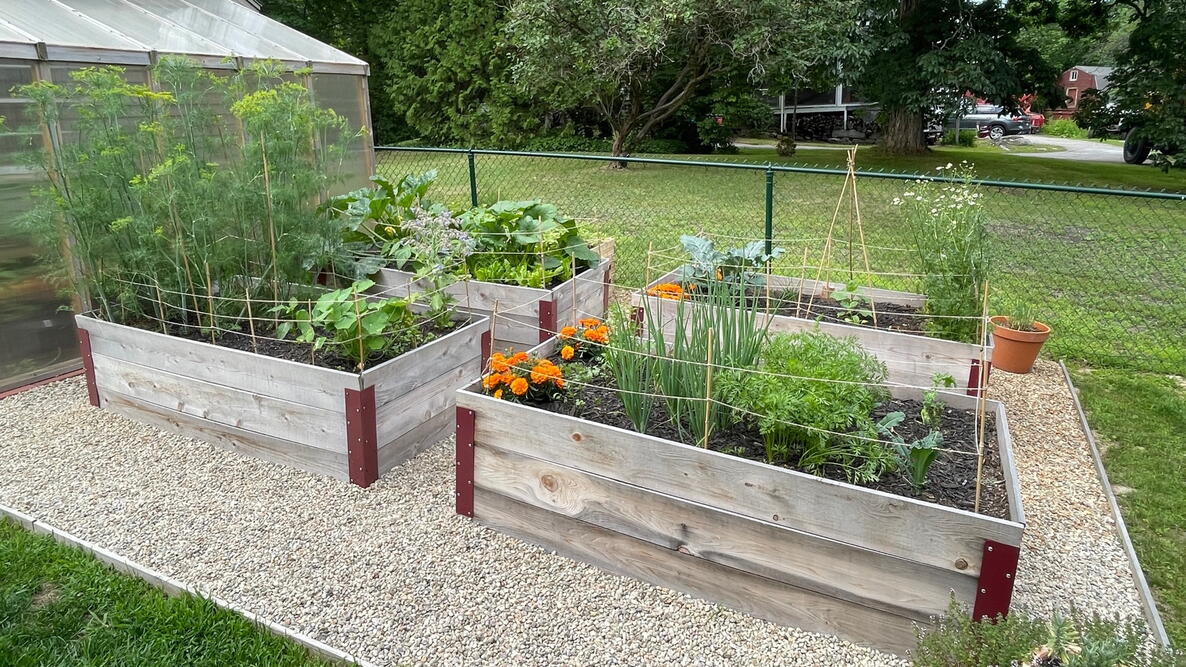
Caption
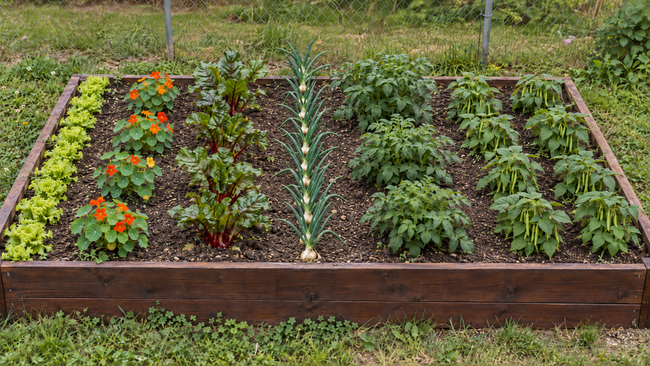
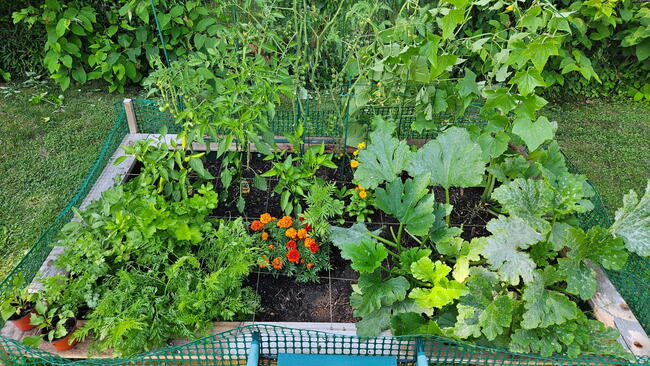
M. Spalding’s raised-bed vegetable garden—four cedar boxes bursting with organic produce.
Looking for a practical raised-bed vegetable garden layout? This design features four raised beds and a separate tomato bed, with room for vegetables, herbs, and flowers.
Created by Maine gardener M. Spalding using the Almanac Garden Planner, this real-life garden combines spring and summer crops, companion planting, and a small greenhouse for starting seedlings. See the garden plan, discover what was planted in each bed, and take a look at how the garden turned out!
| Feature | Details |
|---|---|
| Garden Type | Raised-bed vegetable garden (4 beds + separate tomato bed) |
| Difficulty Level | Beginner to intermediate |
| Sun Exposure | Full sun (6–8+ hours daily) |
| Seasonality | Spring through fall; successive plantings of cool- and warm-season crops |
| Soil Type | Fertile, well-draining soil enriched with compost |
| Watering Needs | Consistent moisture; raised beds may dry out faster than in-ground gardens |
| Special Features | Companion planting, succession planting, permanent asparagus planting, small greenhouse |
| Garden Size | Four approximately 4 × 8-foot beds plus a separate tomato bed; adapt the bed sizes and layout to your space |
Raised-Bed Vegetable Garden Layout
This raised-bed vegetable garden layout combines vegetables, herbs, and flowers in four raised beds and a separate tomato bed. Use it as inspiration for your own garden, adjusting the size of the beds and the crops to suit your space and growing season.

Use the Almanac Garden Planner to recreate or customize this design.
Planting Through the Seasons
This garden combines cool-season and warm-season vegetables, so not everything grows at once. Start with spinach, radishes, green onions, and carrots in spring. As quick-growing crops finish, replant their space with warm-season vegetables such as tomatoes, peppers, squash, and cucumbers.
Note: Asparagus is a perennial, so give it a permanent spot where it can grow undisturbed for years.
Plants in This Raised-Bed Garden
This plant list follows Spalding’s original Garden Planner design. Growing seasons are approximate and will vary by location.
| Plant | Growing Season | Notes |
|---|---|---|
| Tomato and Basil Bed | ||
| Large tomatoes | Summer | Allow room for mature plants and provide support. |
| Cherry tomatoes | Summer | Provide cages or stakes as plants grow. |
| Basil | Summer | Harvest regularly to encourage new growth. |
| Upper Middle Bed | ||
| Winter squash | Summer–fall | Allow plenty of space for spreading vines. |
| Bush snap beans | Summer | Compact plants that generally need no trellis. |
| Zucchini | Summer | Allow plenty of room for mature foliage. |
| Upper Right Bed | ||
| Marigolds | Summer–fall | Flowers that attract pollinators and beneficial insects. |
| Parsnips | Spring planting, fall harvest | Long-growing root crop; sow seeds directly. |
| Radishes | Spring and fall | Quick-growing crop that frees space for later planting. |
| Cucumbers | Summer | Provide support for climbing varieties. |
| Lower Middle Bed | ||
| Asparagus | Perennial; spring harvest | Permanent planting; allow 2–3 years to establish. |
| Dill | Spring–summer | Flowers attract beneficial insects. |
| Peppers | Summer | Plant after frost danger has passed. |
| Parsley | Spring–fall | Harvest outer stems as needed. |
| Lower Right Bed | ||
| Marigolds | Summer–fall | Flowers attract pollinators and beneficial insects. |
| Green onions | Spring–fall | Can be planted in successive batches. |
| Carrots | Spring planting, summer–fall harvest | Sow directly; thin seedlings for proper root development. |
| Spinach | Spring and fall | Grows best in cool weather; often bolts in summer heat. |
This list reflects crops shown in the garden plan, not necessarily everything Spalding grew. Some crops are planted and harvested at different times during the growing season. For planting dates in your area, see our Free Planting Calendar.
Starting with just one raised bed? Try our 4×8 Vegetable Garden Layout for Beginners for a simpler planting plan.
Tips for a Productive Raised-Bed Vegetable Garden
- Start with good soil. Fill raised beds with a loose, well-draining soil mix enriched with compost.
- Give large plants room. Tomatoes, zucchini, and winter squash need space for mature foliage, good airflow, and easy harvesting.
- Keep the asparagus bed permanent. Asparagus is a perennial vegetable. Avoid disturbing its established roots when planting nearby crops.
- Mulch to retain moisture. A layer of organic mulch helps reduce weeds and keeps soil moisture more consistent.
- Water regularly. Raised beds can dry out faster than in-ground gardens, especially during hot weather. Check soil moisture rather than watering on a fixed schedule.
- Harvest frequently. Regular picking encourages continued production from crops such as beans, cucumbers, and zucchini.
Gardener Spotlight: M. Spalding’s Raised-Bed Garden
Maine gardener M. Spalding shares what worked, what didn’t, and what she learned from growing vegetables in her raised beds:
My partner built our small greenhouse, where tomatoes thrive all summer and I get an early start on seedlings. He also built our cedar raised beds, which I planted using the Almanac Garden Planner.
I planned our garden from early spring through late summer, focusing on organic growing methods and using homemade compost tea. I also tried companion planting for the first time, using the Garden Planner’s suggestions for which crops to grow together. We had very few pest problems that season! I let the spiders stay, too—they help keep insect populations in check.
Not everything was a success. I won’t plant broccoli again because one plant took up too much valuable space for such a small harvest. I’ve also struggled with kale, but I’ll keep trying!
Our carrots were much more successful once I started sowing seeds directly in the garden rather than transplanting seedlings. We enjoyed abundant lettuce, mini cucumbers, and bush beans growing beside the zucchini. I also added two potato boxes outside the original plan and harvested a wonderful crop of red potatoes.
In the asparagus bed, I grew nasturtiums, dill, and borage. The parsley grew so well that I dehydrated and stored enough to use throughout winter.
This has been my best garden yet, and the Garden Planner deserves some of the credit!


More References
Frequently Asked Questions
-
What is the best size for a raised-bed vegetable garden?
A 4 × 8-foot raised bed is a popular choice. It’s wide enough to grow a variety of vegetables but narrow enough to reach the center from either side without stepping on the soil. Keep beds no wider than 4 feet if you can access them from both sides.
-
How many raised beds do I need to grow vegetables?
You can grow plenty of vegetables in just one raised bed! Start with one or two beds if you’re a beginner, then expand as you gain experience. Spalding’s garden uses four raised beds plus a separate tomato bed, but you can adapt the design to your available space.
-
Can I customize this raised-bed garden layout?
Absolutely! Change the size or number of beds, swap vegetables based on what your family enjoys, and adjust planting times for your climate. Use our Almanac Garden Planner to create your own layout, check plant spacing, and plan what to grow throughout the season.


Vegetable Garden Plans
Flower Garden Plans

Comments