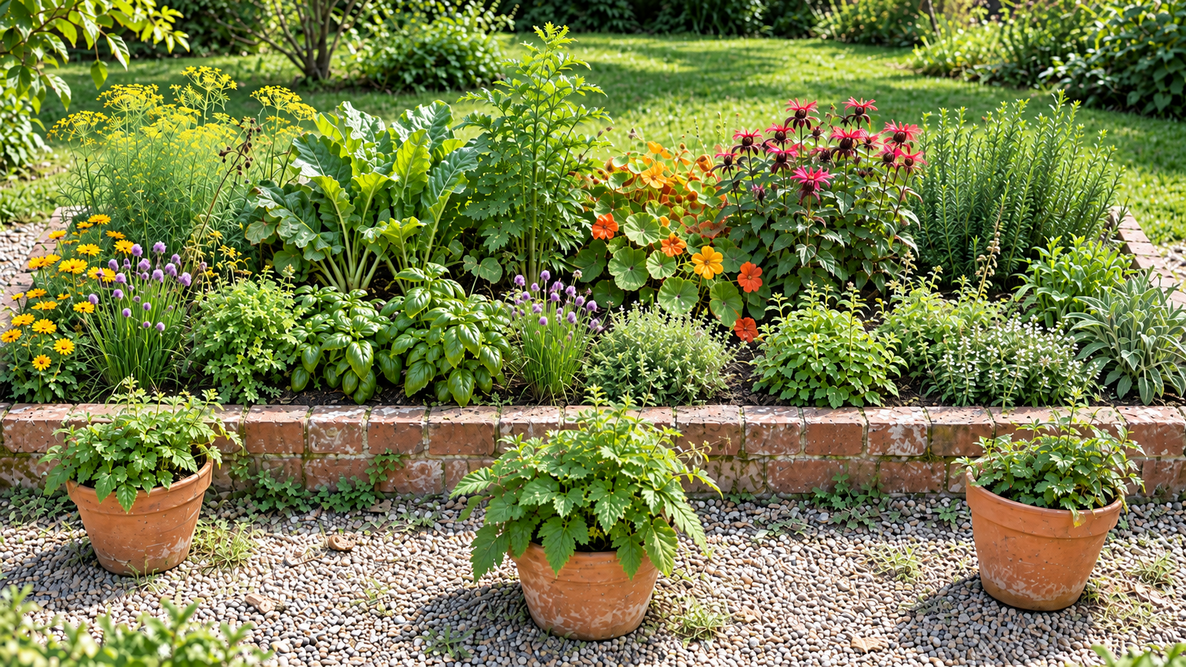
Looking for herb garden ideas? Explore three herb garden plans with layouts for a simple planting bed, multiple raised beds, and a decorative checkerboard garden. These designs show different ways to grow culinary herbs, fragrant foliage, and pollinator-friendly flowers.
Herbs fit easily into almost any garden. Grow a few favorites in pots near the kitchen, create a fragrant border along a walkway, or dedicate a raised bed to culinary and flowering herbs. The key is matching plants to your space and grouping herbs with similar sunlight and watering needs. Use the layouts and plant lists below to create a garden of your own.
| Feature | Details |
|---|---|
| Garden Type | Herb gardens in planting beds, raised beds, and decorative layouts |
| Difficulty Level | Beginner to intermediate |
| Sun Exposure | Full sun to partial shade, depending on the herbs |
| Seasonality | Spring through fall; perennial herbs return in suitable climates |
| Soil Type | Well-draining soil; fertility needs vary by herb |
| Watering Needs | Varies by herb; Mediterranean herbs prefer drier soil, while leafy herbs need more consistent moisture |
| Special Features | Culinary herbs, flowering herbs, pollinator-friendly plants, and flexible layouts |
| Garden Size | Three adaptable layouts: a 15 × 4-foot bed, three 10 × 4-foot raised beds, and an 18 × 4-foot checkerboard garden |
3 Herb Garden Layouts
Choose a layout that suits your space, then use the planting diagram and plant list to make it your own.
1. One-Bed Herb Garden Plan
A Simple Rectangular Herb Garden Layout
This 15 × 4-foot garden combines culinary herbs, fragrant foliage, and colorful flowers in one long planting bed. Taller herbs and flowering plants provide height, while smaller herbs fill the front of the border.
Place the bed near your kitchen, along a walkway, or beside a patio for easy harvesting. You can shorten the layout to fit your space, keeping the width to about 4 feet so you can reach the plants without stepping on the soil.

Plants in This Herb Garden
This plan includes 17 types of herbs and flowers. The quantities match the Garden Planner layout, including mint and lemon balm grown in separate containers.
| Plant | Quantity | Growing Notes |
|---|---|---|
| Arugula | 3 | Cool-season leafy green; harvest young leaves |
| Basil | 5 | Warm-season herb; pinch tips for bushier growth |
| Calendula | 4 | Edible flowers that attract pollinators |
| Chives | 4 | Perennial herb with edible leaves and flowers |
| Dill | 3 | Tall annual herb; attracts beneficial insects |
| Horseradish | 3 | Vigorous perennial with spreading roots |
| Lemon Balm | 1 | Grow in a separate pot to control spreading |
| Lovage | 1 | Tall perennial herb; allow room for growth |
| Mint | 2 | Grow in separate pots to contain spreading roots |
| Monarda (Bee Balm) | 3 | Flowering perennial that attracts pollinators |
| Nasturtium | 3 | Edible flowers and leaves; trailing growth |
| Oregano | 3 | Perennial herb; prefers well-drained soil |
| Parsley | 3 | Leafy herb; harvest outer stems regularly |
| Rosemary | 3 | Woody herb; prefers good drainage |
| Sage | 1 | Perennial herb; likes sunny, well-drained soil |
| Summer Savory | 3 | Annual culinary herb; harvest before flowering |
| Thyme | 3 | Low-growing herb; prefers well-drained soil |
Planting through the seasons: This herb garden combines cool-season crops, warm-season annuals, and perennial herbs, so everything doesn’t need to be planted or reach its peak at the same time.
- Early spring: Start with cool-season plants such as arugula, parsley, and calendula.
- After the last frost: Add warm-season plants such as basil, nasturtiums, and summer savory once the soil has warmed.
- Perennial herbs: Plant chives, thyme, oregano, sage, lovage, horseradish, monarda, lemon balm, and mint in spring. These can return year after year where hardy. Rosemary also returns in warmer climates but may need winter protection elsewhere.
Growing tip: Horseradish spreads aggressively through its roots. Although it’s shown growing directly in the bed, consider planting it in a separate deep container or using a root barrier to prevent it from taking over.
2. Large Raised-Bed Herb Garden Plan
Three Raised Beds for a Larger Herb Garden
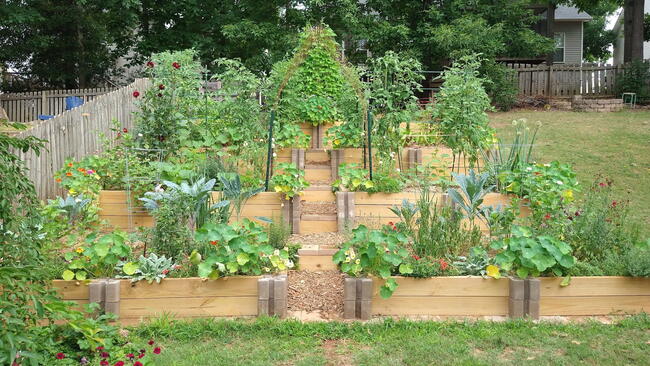
Ready to grow more? This layout features three 10 × 4-foot raised beds filled with culinary herbs, fragrant foliage, and pollinator-friendly flowers. You can start with just one bed or use all three, depending on your space.
The separate beds make it easier to organize herbs by growing needs. The design combines everyday favorites such as basil, parsley, and thyme with flowering plants such as calendula, chamomile, and echinacea. Mint, lemon balm, and horseradish grow in separate containers to help control their spreading roots.

Plants in This Herb Garden
This layout features three raised beds with culinary herbs and flowering plants, plus separate containers for mint, horseradish, and lemon balm. Quantities follow the original Garden Planner design.
| Plant | Quantity | Growing Notes |
|---|---|---|
| Basil (Genovese) | 12 | Warm-season herb; pinch regularly for bushy growth |
| Calendula | 3 | Edible flowers that attract pollinators |
| Chamomile | 6 | Daisy-like flowers traditionally harvested for tea |
| Echinacea | 6 | Flowering perennial that attracts pollinators |
| Ginger | 8 | Warm-season plant; prefers moisture and partial shade |
| Horseradish | 2 | Vigorous perennial; grow in separate deep containers |
| Lavender | 4 | Flowering perennial; needs excellent drainage |
| Lemon Balm | 1 | Grow in a separate pot to control spreading |
| Lovage | 1 | Tall perennial herb; allow plenty of room |
| Mint | 10 | Shown in two pots; contain spreading roots |
| Nasturtium | 4 | Edible flowers and leaves; trailing growth |
| Oregano | 12 | Perennial herb; prefers well-drained soil |
| Parsley | 18 | Leafy herb; harvest outer stems regularly |
| Rosemary | 4 | Woody herb; prefers sunny, well-drained conditions |
| Sage | 6 | Perennial herb; prefers well-drained soil |
| Thyme | 6 | Low-growing herb; prefers well-drained soil |
Growing tip: Sow dill in spring when conditions are suitable, then make additional sowings for a longer harvest. Horseradish spreads vigorously through its roots; consider a deep container or root barrier to keep it from taking over the bed.
3. Checkerboard Herb Garden Plan
A Geometric Herb Garden With Paver Paths
This checkerboard herb garden alternates planted squares with paving stones, creating an attractive pattern with easy access for planting, weeding, and harvesting. The layout measures about 18 × 4 feet, but you can shorten it to fit your space.
Choose a sunny location with well-drained soil. Plant each square with a different herb, or repeat favorites for a more unified look. The pavers make it easy to reach your plants, while the individual planting areas help organize herbs with different growing habits.
Growing tip: The checkerboard design keeps herbs in defined planting areas, but vigorous spreaders such as mint may still need a buried container to prevent roots from traveling beneath the pavers. Give larger herbs room to mature.

Plants in This Herb Garden
This checkerboard layout features nine types of herbs, with planting squares separated by pavers. Quantities match the original Garden Planner design.
| Plant | Quantity | Growing Notes |
|---|---|---|
| Basil | 4 | Warm-season herb; pinch tips for bushier growth |
| Bay Laurel | 1 | Evergreen shrub; grow in a pot to manage its size |
| Borage | 2 | Annual with pollinator-friendly flowers; allow room to spread |
| Fennel (Herb) | 1 | Tall herb; grow for aromatic foliage and seeds |
| Lavender | 3 | Flowering perennial; needs full sun and excellent drainage |
| Mint | 2 | Grow in a buried pot to help contain spreading roots |
| Rosemary | 1 | Woody herb; prefers sunny, well-drained conditions |
| Sage | 1 | Perennial herb; prefers well-drained soil |
| Thyme | 3 | Low-growing herb; prefers well-drained soil |
Planting tip: Pavers separate the planting areas but won’t stop roots from spreading underneath. Keep mint in a container with drainage holes, with its rim above soil level. Bay laurel also benefits from container growing, especially in colder climates where it needs winter protection.
Tips for Growing Herbs Successfully
Most herbs grow best in a sunny location with well-drained soil, but not all herbs need the same amount of water. Grouping plants with similar growing needs makes them easier to care for.
Mediterranean herbs: Rosemary, thyme, sage, oregano, and lavender prefer full sun, excellent drainage, and relatively dry soil once established. Avoid heavy fertilizing.
Leafy herbs: Basil, parsley, cilantro, chives, dill, and mint generally appreciate more consistent moisture, although they shouldn’t sit in soggy soil.
For best results:
- Choose a sunny location with good drainage.
- Group herbs with similar watering needs.
- Avoid overfertilizing, especially Mediterranean herbs.
- Use raised beds or containers if your garden soil drains poorly.
- Keep vigorous spreaders such as mint and lemon balm in separate containers.
More Herb Garden Ideas: Get Creative With Containers
Herb gardens don’t have to be traditional rectangular beds. You can grow herbs in individual pots, window boxes, or creative planters that make the most of a small space.
Almanac gardener Susie designed this hexagonal herb planter with separate sections for different herbs. It’s a fun example of how herbs can be both useful and decorative.
“I find that you don’t need a large area to grow herbs—once you understand what they need, even a small container can be productive. I’ve even used an old wine crate or just a collection of containers.”
Susie also recommends considering sunlight, drainage, and watering needs when choosing which herbs to grow together. Keep vigorous spreaders such as mint and lemon balm in their own pots so they don’t take over neighboring plants.


More Herb Gardening Resources
Frequently Asked Questions
-
What herbs grow well together?
Herbs with similar sunlight, soil, and watering needs grow best together. Rosemary, thyme, sage, lavender, and oregano prefer sunny locations with well-drained soil. Basil, parsley, and chives appreciate more consistent moisture. Keep spreading herbs such as mint and lemon balm in separate containers.
-
Do herb gardens need full sun?
Most herbs grow best with at least 6 hours of direct sunlight daily. Mediterranean herbs such as rosemary, lavender, thyme, and sage especially benefit from full sun. Choose a sunny, well-drained location for the herb garden layouts shown here.
-
Can you grow an herb garden in partial shade?
Yes! Parsley, chives, mint, lemon balm, and cilantro can tolerate partial shade, particularly in hot climates. They still need adequate light to grow well, and most herbs won’t thrive in deep shade.


Vegetable Garden Plans
Flower Garden Plans

Comments