Look up at the night sky, and you’ll see stars shining in white, blue, yellow, and red. But one color is mysteriously missing—green. Why don’t green stars exist, even though our eyes are most sensitive to green light? The answer lies in how stars produce light and how human vision works.
The Colors of Stars
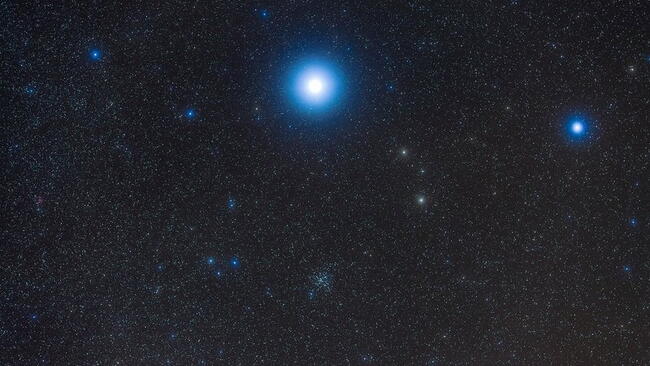
Some stars clearly look yellow, white, orange, or blue. Binoculars bring out these pastel hues beautifully. A small telescope reveals red and even purple. Blacks and browns are out there, too.
But no green! That’s ironic, because green is the color to which our eyes are most sensitive.
Star Color Quick Facts
Star color depends on temperature.
Blue stars are hottest.
Red stars are coolest.
The Sun produces green light but appears white.
Human eyes blend green, red, and blue into white.
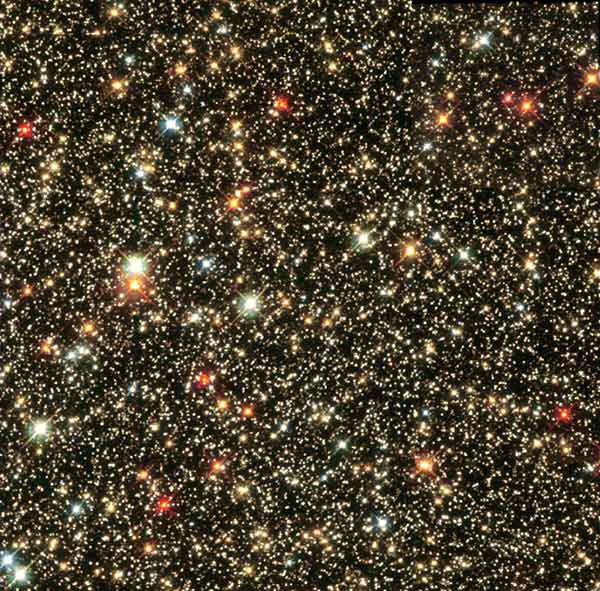
Note: In real life, to the eye, reds are rarely as deep as seen here. Blue, yellow, and orange are more common.
Photo Credit: NASA
| Star Color | Temperature | Example |
|---|---|---|
| Blue | Hottest | Young massive stars |
| White | Very hot | Sirius |
| Yellow | Medium | Sun |
| Orange | Cooler | Arcturus |
| Red | Coolest | Betelgeuse |
Why Our Eyes Are Most Sensitive to Green
For a quick demonstration of our emerald-tinted vision, look around when twilight deepens. As your vision slowly adjusts, all hues fade out until the last to vanish is … green. By the Full Moon, your lawn will still look dimly green when garden roses and violets have all become gray.
This human sensitivity to green is why, in the 1950s, it was decided that color should be used for the signs in the Interstate Highway System. It also explains why more and more municipalities are replacing their traditional red fire trucks with pale green ones. (Despite this, surveys show that blue is most often named when people are asked their favorite color.)
Why Stars Don’t Appear Green
Why no green stars? Our star (the Sun) and most stars actually do give off green light, but also the stars give off enough blue and red light that our eyes end up perceiving many colors at once, so we see it as white. In other words, when such mixtures are involved, so far as our vision goes, the sensation of white is what we see instead of green.
Green in the Night Sky: Planets, Meteors, and Auroras
When it comes to the solar system, many planets have no obvious tint. With Venus, Saturn, and Jupiter, it’s a case of the bland leading the bland. They seem whitish to the naked eye.
But a few planets do boast decisive color: Neptune looks blue, Mars orange, and Uranus—that’s the cosmic Erin. Its green is obvious through any telescope.

Brilliant meteors, too, sometimes display a vivid green that can appear as in-your-face as a traffic light—as do bright auroras, if you’re lucky enough to see one. Green is far and away the most common color of the Northern Lights.
Just not stars.
Frequently Asked Questions
Why are there no green stars?
Stars emit green light, but they also emit red and blue light, which our eyes blend into white.
Can a star actually be green?
Not to human eyes. A star emitting green wavelengths would appear white.
What color is the Sun?
The Sun produces green light but appears white or yellow to us.
What celestial objects appear green?
Auroras, meteors, and Uranus can appear green.
Why is green the most visible color to humans?
Human eyes are most sensitive to green wavelengths, especially in low light.
Next time you look up at the night sky, try spotting different star colors—and explore more astronomy guides to uncover the hidden secrets of the universe.

More Like This




Hi Mrs. Hodges,
That's because you didn't include me in the study. I went to elementary school in the 50s, and I doubt my parents would have ever held me up as an example of focused and calm. Still, a fascinating topic -- how colors affect us.
Chris, your letter triggers such wonderful memories for me! As a teenager, I remembering reading a book listing a few stars (like the one in Libra you mentioned) as being green. I felt like a failure that they merely looked white to me. Turns out, they ARE white and those old authors were soon discredited. Best guess is that some observers first looked at a nearby reddish star (like Antares)and when they then quickly turned to observe a white one, their eyes projected the after-image, which is the complementary color!
- « Previous
- 1
- 2
- …
- 10
- Next »

Comments