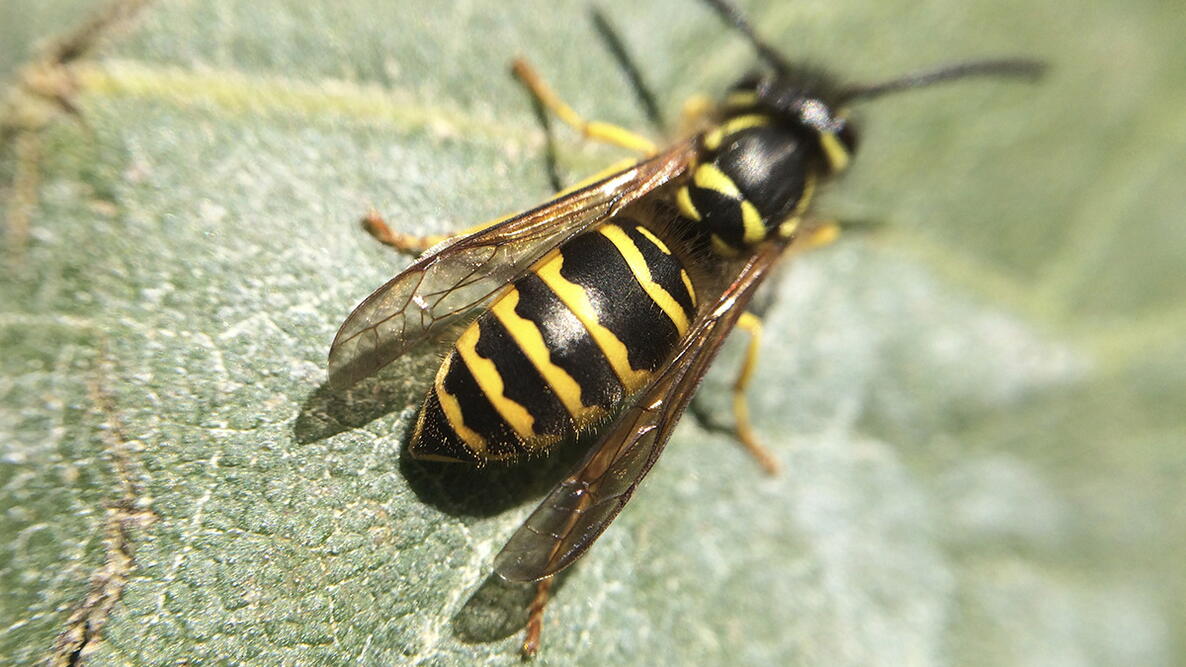
Seemingly out of nowhere, yellow jackets come at you and strike at blazing speed. Their venom hurts like the devil. Do yellow jackets die after they sting? How do you treat their stings? What do you do if there’s a nest in the yard or garden? Let’s take the sting out of fall by learning about yellow jackets!
In late summer and fall, untamed places abound with gorgeous displays of late goldenrod, Joe-pye, and fall asters, but some less-welcome visitors are the yellow jackets and other aggressive wasps.
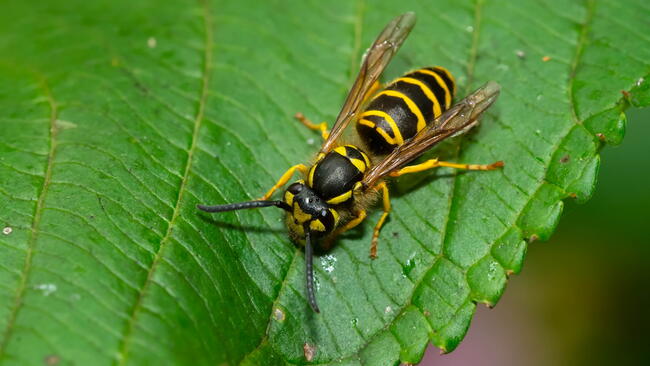
Identifying Yellow Jackets
Unlike honeybees, bumblebees, and gentle native bees, yellow jackets are extremely aggressive insects at this time of year.
Yellow jackets are predatory social wasps distinguished from bees by their thin “waists.” Bees have thicker waists and fuzzy bodies.

Do Yellow Jackets Die After They Sting?
A yellow jacket stings multiple times without dying and injects venom into its victim (a honeybee can only sting once). Both honeybees and bumblebees will only sting defensively, while yellow jackets are easily provoked. They attack in swarms and will give chase over long distances if they feel threatened.
Please note: We’re not saying that wasps do not have an important part in the ecosystem! In fact, they are excellent at regulating populations of insect pests. They are parasites of caterpillars, aphids, whiteflies, and a lot of other insects that eat crops. They are also pollinators for a lot of native plants, such as goldenrod, and many fruit trees, such as figs.
However, yellow jackets tend to be quite aggressive in the fall as natural sugar sources decline and they need to find energy. They are scavengers of meat and sweet liquids, which brings them in frequent contact with humans (whereas honeybees visit flowers for nectar and keep away from humans). Let’s briefly understand the yellow jacket’s life cycle:
The Yellow Jacket’s Life Cycle
- In spring, yellow jackets start building nests of extraordinarily sophisticated architecture—underground, suspended from tree branches, under eaves, in shed rafters, in wall cavities, and sometimes in abandoned cars. Within the nest, the queen lays eggs, which will mature into adult workers.
- All summer, the yellow jacket workers capture and kill caterpillars and other soft-bodied insects, which, along with carrion, serve as protein foods to feed their growing broods. They sip flower nectar, rotting and damaged fruit, and tree sap to feed themselves.
- In late summer, the queen begins laying the eggs that will develop into potential queens and a few males (called drones), which will mate with the queens.
- As fall progresses and supplies of prey insects and overripe fruit decline, wasps become increasingly aggressive in defending their expanding nests. You’ll see them showing up at barbecues and picnics and hovering near trash cans. They are going after both the meats (to feed their larvae) and the sweets (candy, desserts, sugary drinks) to furnish themselves with energy.
- In late fall, the workers, the drones, and the queen will all leave the nest and die. Only the mated queens survive, burrowing into leaf litter and hibernating in suspended animation until spring.
How to Prevent Yellow Jacket Stings
From late summer on:
- Keep garbage cans and recycling bins tightly closed and far away from children, playgrounds, and social areas.
- Don’t wear perfume or other scented body products when you’re out doing yard and garden work. Wasps may mistake a floral scent for actual nectar-producing flowers.
- Stay aware. Watch the ground around you for wasps entering and leaving holes in the ground that lead to their underground nests. Approach outbuildings slowly and cautiously, looking up under the eaves and rafters; wasps will buzz out and around the nest hole to warn you not to approach further. Give them a wide berth, and they are unlikely to attack.
- If you have the task of mowing tall grass or whacking weeds, wear protective clothing, including boots (long pants tucked inside), long sleeves tucked inside your gloves, and face protection (I use a bee veil). Wasps nesting underground will sense the vibrations from power equipment and may strike from some distance away.
How to Avoid Yellow Jacket Stings
Resist the urge to swat, slap, and run away. The wasps may perceive rapid movement as even more threatening.
Move away slowly, covering your face with your arms, and keep moving.
If you’ve disturbed the whole colony and many wasps have come for you, run into a densely shaded spot; wasps prefer bright sunlight.
Don’t jump in a pond if one is nearby. The wasps will hover around, waiting for you to surface, then immediately attack your head.
How to Treat Yellow Jacket Stings
Most people develop pain, redness, and swelling around the site of a wasp sting.
Self-care involves spreading a paste of baking soda or salt and water over the area immediately after the sting, then later applying an ice pack to reduce the swelling.
However, some people have a severe, potentially life-threatening reaction to a yellow jacket sting or stings. Get medical attention immediately if:
- You’ve received many stings.
- You’ve been stung in the mouth or throat.
- You begin wheezing or sweating profusely.
- You have difficulty breathing or speaking.
- If your throat or chest feels tight.
- You break out in hives.
- You feel nauseous, dizzy, or severely anxious.
Talk to your doctor about carrying emergency medication to use in case this happens again.

Eliminating Wasp Nests
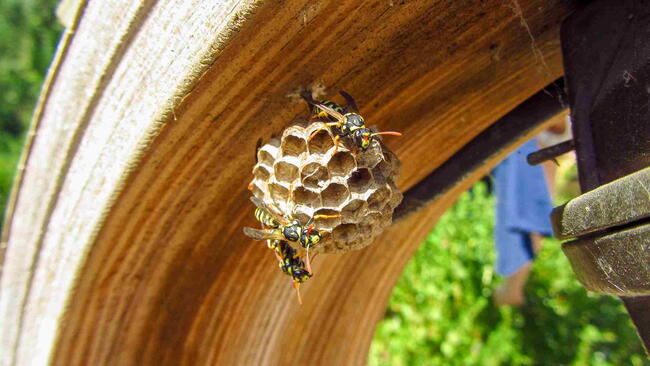
Yellow jacket nests are built out of paper fibers and are most often underground, but they can also be seen under eaves. They are covered with a single opening, unlike paper wasp nests, which have exposed, honeycomb-like nests.
Because all wasps are useful as insect predators, experts suggest leaving their nests alone unless they pose an imminent threat to human or animal health. Mark the area, and stay away from it until the wasps all leave in late fall. They won’t return to the nest next year.
But when yellow jackets have stung or built their nest near the home or outbuildings or in the path of human activities, you may want to eliminate it.
Here’s what to do:
- If it’s a very large nest or if you’ve ever had a severe reaction to wasp or other insect stings, hire a licensed exterminator to handle the job.
- If you decide to do it yourself, identify that the stinging insect is indeed a yellow jacket or other aggressive wasp. Mark the location of the nest without getting too close.
- Buy a pressurized can of wasp and hornet insecticide that will spray a solid stream 10 feet or more.
Then, follow UNH Cooperative Extension entomologist Alan Eaton’s excellent instructions:
- Treat at night when yellow jackets are least active, and most workers are in the nest. Use a flashlight with a red filter over the bulb. Wasps can’t see red light well.
- At least 2 hours after dark, quietly and carefully approach the colony and thoroughly spray into the entrance. Don’t give a quick shot; spray for several seconds to make sure the spray penetrates deep into the nest.
- After spraying, walk away immediately and stay away for a full day. For ground colonies, carry a shovelful of soil with you to cover the entrance before you walk away.
- Coveralls can be helpful, especially if they are made of slick, smooth material and worn over other thick clothing. Many people choose Tyvek.
- Securely tape or tuck shirt and pants together at the waist.
- Wear boots. Wasps may crawl over your shoes and sting your ankles.
- Seal pant legs securely over the boots with tape or rubber bands.
- Protect hands with leather or heavy rubber gloves, securely sealing the arms to the gloves at the cuffs.
- A beekeeper’s hat and veil will keep wasps away from your face and neck. Make sure to fasten it to the clothing around your neck and shoulders.
If you get stung, here is how to treat bee and wasp stings.

Fall Flowers and Foliage
Fall Vegetable Gardening
Fall Garden Cleanup
Garden Soil Preparation

If you have a lemon slice handy, that seems like a good option. Over the years, I've seen/heard medical experts suggest baking soda paste, vinegar, lemon juice, an ice pack, hydrocortisone cream, a pinch of meat tenderizer (!), a dose of antihistamine and/or an over-the-counter painkiller. They probably suggest baking soda most often because almost everyone has a box of it handy.
Unless you have a serious allergic reaction, I'd say take your pick.
I've suffered a good many yellow-jacket stings in my lifetime, and to be honest, I usually just swear a bit, wash the area, and get on with it.
- « Previous
- 1
- 2
- …
- 10
- Next »

Comments