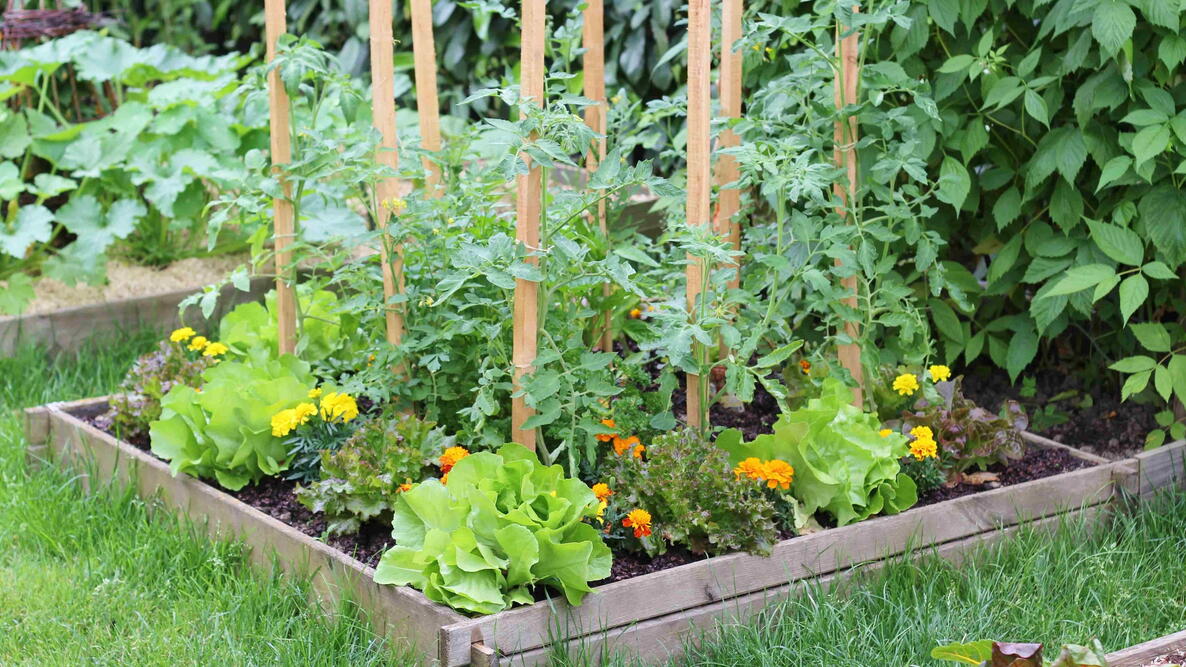
Caption
A simple 4×4 raised bed is a perfect starting point for beginner gardeners.
Starting a vegetable garden from scratch? You don’t need a big backyard — or any gardening experience — to get it done. From choosing the perfect spot for your garden to preparing the soil and selecting and planting easy-care veggies, this beginner’s guide will walk you through all the steps you need to get your new garden planted and growing!
How to Start a Vegetable Garden in 7 Steps
Ready to grow your own vegetables? Here are the steps you need to grow any veggies you want.
- Choose a sunny location. Most vegetables need at least 6 to 8 hours of direct sunlight per day.
- Start small. A 4×4 or 4×8-foot garden is a manageable size for most beginners. If you’re short on space, you can grow many vegetables in pots or grow bags too.
- Choose easy vegetables. Grow crops you enjoy eating that are suited to your climate and growing season. There’s no reason to save space in your beds for vegetables you don’t like to eat!
- Prepare your soil. Clear the planting area and improve the soil with compost or other organic matter before you start.
- Find your planting dates. Use your local frost dates to determine when to plant each vegetable to get the harvests you want.
- Plant seeds or transplants. Follow the recommended planting depth and spacing for each crop, and don’t forget to harden veggies off when needed.
- Care for your garden. Water consistently, control weeds, watch for pests, and harvest vegetables as they mature. You can often plant multiple sowings of crops throughout the season.
Let’s look at each step in more detail to help you build the perfect garden for you!
1. Choose the Right Location
The first step to creating that perfect garden is finding a place where veggies are sure to thrive. Sunlight is especially important, but you’ll also need healthy soil, good drainage, and easy access to water. I learned the hard way that it’s important to site your garden on a flat surface too. Gardening on a slope can lead to drainage issues and make it much harder to weed and harvest.
How Much Sun Do Vegetables Need?
Most vegetables grow best when they receive 6 to 8 hours of bright sunlight per day. This includes heavy-feeding crops and ones that produce fruit, like tomatoes, peppers, and zucchini. However, if your space receives dappled light, you can still grow many leafy greens, like lettuce, spinach, and kale, which tolerate partial shade.
Judging how much light your garden actually receives may take a bit of time as sunlight varies throughout the day — especially if your garden is overshadowed by tall trees, fencing, or buildings. Before starting a new bed, I try to keep tabs on the area through a single growing season to make sure the spot I want to grow in continues to get plenty of light from spring til fall. It’s suprising how much light and shade can fluctuate from season to season!
Other Considerations:
Aside from lighting, here are a few more must-haves when selecting a garden location:
- Well-draining. Plant roots need access to both water and air and can develop root rot in soggy locations. Areas where water pools and doesn’t drain quickly after rainfall aren’t well-suited for growing veggies of any sort.
- Level. Garden locations don’t need to be perfectly level, but growing on sloping hillsides is much trickier unless you’re working with plants like pumpkins with vines that can be trained where you want them to grow.
- Water access. Make sure your hose can reach the furthest corner of your garden. If not, you may find yourself lugging a heavy watering can to and fro.
- Sheltered from wind. Windy spots can spell disaster for trellised beans and plants with long stems, like tomatoes. They also make it harder for pollinators to pollinate plants like squash.
Tip: Don’t worry if your soil isn’t perfect. We’ll teach you how to improve it below!

2. Start Small: Choose Your Garden Size
It’s better to be proud of a small garden than be frustrated by a big one.
One of the most common beginner mistakes is planting too much at once. A small vegetable garden is much easier to water, weed, and harvest—and you can fit a surprising amount of crops in it!

Which Garden Style is Right for Me?
Before getting into garden sizing, understanding the different types of common gardens can help you pick the right garden style for your needs.
- In-ground gardens: Grown directly in the ground. This is an economical option if you have suitable soil and enough space. These gardens are also the easiest to expand later on.
- Raised beds: Grow in a defined bed above the surrounding ground and are often framed out with wood, galvanized steel, rocks, or bricks. Raised beds drain quickly and the taller sides can make tending plants easier on your back, but they cost more to build and fill.
- Containers: Grow in pots, tubs, or grow bags. This is a good option for patios, decks, and other small spaces. Containers need drainage holes, suitable potting mix, and more frequent watering.
How Much Space Do I Need?
The amount of space you’ll need depends a lot on the types of plants you want to grow and how much you want to harvest.
If you’re brand new to gardening, growing a few plants in containers or grow bags can be a good place to start. Or you can create a simple 4x4-foot raised bed garden with a few pieces of ledgerboard and simply expand it later on when you need more space. My first garden was a simple 4x8-foot raised bed, which provided plenty of room for a few tomato plants, some leafy greens, and herbs; however, I extended it later on when I wanted to grow more produce for canning.
Here are a few guidelines that should you help you decide on the right size for your garden!
- Containers. A 12-inch pot can hold a few lettuce plants, while a single tomato plant typically needs a 5-gallon sized pot. Mixing and matching containers and grow bags can provide you with a surprising amount of space.
- Raised beds. Beds that are 4x4 or 4x8-feet in size are ideal for beginners. Later on, you can extend the length of these beds or add more of them!
- In-ground gardens. A 10x10-foot in-ground garden can accomodate most veggies as long as you don’t overplant. Avoid making gardens larger than 12x24-feet when you’re just starting out as they can become overwhelming fast.
- Pathways. Place pathways every 4-feet and keep raised beds under 4-feet wide so you won’t need to walk on the soil while tending your plants.
Tip: Some vegetables need more room than others. A zucchini plant can spread across several feet, while lettuce and radishes fit comfortably into smaller spaces. Mastering the art of square foot gardening can help you fit more plants into less space!
Watch: 3 Things to Consider Before Starting Your Garden
3. Choose What to Grow
The best vegetables for a beginner garden are productive, easy to care for, and suited to your local growing season. But they should also be edibles that you actually want to eat!
Before I started my first garden, I took a good, hard look at my weekly grocery list and the vegetables I bought the most often. This helped me determine what I actually wanted to grow, but it’s important to consider how much space different types of veggies need too.
Easiest Vegetables for Beginners
If you’re working with limited space and time, it can be helpful to select about 3 to 5 different types of vegetables to grow during your first planting season. This will allow you to fine-tune your green thumb and master the art of growing specific plants, and you can add to your knowledge later on.
Here are 10 of the easiest vegetables for beginners that you may want to try:
- Lettuce: A cool-season crop that grows quickly. Leaf lettuces like ‘Red Fire’ can be harvested a few leaves at a time, while romaine and other heading lettuces take longer to grow and are usually harvested all at once.
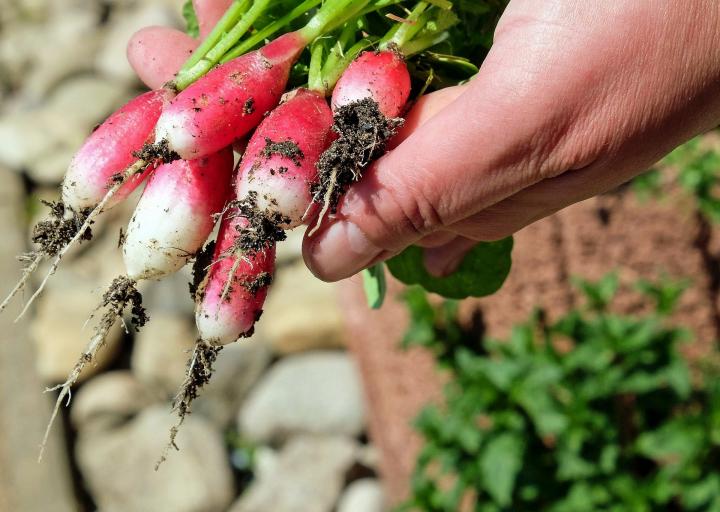
- Radishes: One of the fastest growing veggies, radishes thrive in cool spring and fall weather. Try out popular varieties like ‘French Breakfast’ and ‘Easter Egg,’ or storage-types like ‘Watermelon.’
- Green beans: Bush varieties are compact and productive, while vining varieties can be trained on trellises for space savings. I like to succession plant beans right after peas to keep my garden productive from spring through summer.
- Peas: Grow well in cool spring weather and can be trained on trellises too. Try planting radishes beneath trellised peas to make smart use of your space.
- Swiss chard: A productive leafy vegetable, Swiss chard is a cut-and-come-again plant that can be harvested throughout spring and fall. The colorful leaves add brilliance to gardens too.
- Tomatoes: Tomatoes take a long time to grow from seed, but you can speed things along by purchasing transplants at local nurseries. Indeterminate tomatoes get big and produce fruit throughout the season, while determinate tomatoes are better for containers and produce fruit all at once for canning.
- Zucchini: A productive warm-season vegetable, zucchinis require plenty of space to spread out. Make sure to harvest often as the fruit gets massive fast.
- Beets: Grow best in cool conditions and need regular watering. Both the roots and greens are edible on these multi-use plants!
- Kale: A hardy leafy green that tolerates cool weather and can be harvested repeatedly. I’ve even harvested fresh kale leaves in mid-winter in chilly Maine.
- Peppers: Start with nursery-grown transplants and provide warm weather and plenty of sun for bigger harvests. Bell peppers often need staking, while hot peppers stay smaller and are great for pots.
Tip: Choose vegetables that match your available space. One or two tomato plants may be plenty for a small garden, while quick-growing lettuce and radishes can provide several harvests.
A Simple 4×8 Vegetable Garden Plan
Not sure how to arrange your vegetables? Sketching out a garden layout on some scrap paper can help you visualize where everything will grow. Make sure to locate taller plants, like tomatoes, towards the rear or north side of gardens so they don’t overshadow shorter plants like lettuce.
Our 4×8 Vegetable Garden Layout for Beginners shows how to grow several crops in one manageable bed, including:
- Leaf lettuce
- Swiss chard
- Onions
- Early potatoes
- Bush beans
- Nasturtiums
The illustrated plan includes plant quantities, spacing, and a planting schedule.

You can build the layout as a raised bed or use the same dimensions in an in-ground garden.
Remember: You don’t need to plant all your veggies at once. Succession planting warm-season plants like beans after spring peas and following up with a fall planting of cold-hardy radishes can extend your growing season a lot!
For more ideas, browse our free vegetable garden plans and layouts.
4. Prepare Your Garden Soil
Healthy soil is the foundation of a productive vegetable garden and plants just won’t grow without it. But how do you know if your soil is good for growing veggies or if it needs a little TLC before your start?
Testing Your Soil
Most vegetables grow best in rich, well-draining soil with a relatively neutral to slightly acidic pH. If you’re creating a new garden, it’s a good idea to test your soil at home with a home test kit or with the help of your local cooperative extension office. Sending your test away to local experts can be particularly helpful as extension offices provide more thorough test results and recommendations for the types and amounts of amendments you may want to add.
Soil test results can tell you a lot about:
- Soil structure. Healthy soil is made of a mixture of organic matter, sand, clay, and silt. If soil has too much clay, it won’t drain well, while too much sand can leave soils nutrient-poor.
- PH. Issues with pH levels make it harder for veggies to absorb nutrients and can lead to deficiencies. Potatoes, in particular, love slightly acidic soil and are more likely to develop diseases in alkaline conditions.
- Nutrients. Low nutrient levels can cause plants to grow stunted and produce limited yields. Most soil tests will indicate if your soil is lacking in the big three “macronutrients” - nitrogen (N), phosphorous (P), potassium (K) — and micronutrients like calcium and magnesium.
- Contaminants. Lead paint and other nasties can find their way into gardens and the plants you grow in them. Testing for contaminnats is a particularly good idea if you’re growing a garden near an older home that may be covered in lead paint.
Preparing a New In-Ground Garden
If you’re lucky, you may have inherited a home with a pre-made garden that just needs a topping of compost and a bit of weeding before you plant. However, if you’re starting out with a completely “blank slate,” here’s a basic walkthrough of how to prep your soil and start a new bed.
- Mark your garden area. Use string, stakes, or a garden hose to outline the length and width of the bed you’d like to create.
- Remove the grass and weeds. The easiest way to do this is to cover the area with cardboard topped with compost in fall and allow this covering to smother the grass over winter. If you’re in a time crunch, you can remove grass by hand or with a tiller, but this may lead to more weedy issues later on.
- Loosen compacted soil if needed. Use a garden fork or tiller to loosen heavily compacted soil. Loose soil is important for all veggies, but it’s particularly critical for carrots and other root crops that can develop malformed roots in dense earth.
- Add compost. Spread about 2 to 3-inches of compost or aged manure over the soil and work it into the top 6-inches of earth with a shovel or gardening fork. If your soil test suggested adding other amendments, do so now.
- Rake the surface smooth. Use a rake to smooth the area out and remove any leftover weeds. Avoid walking on the soil as compressed soil doesn’t drain well.
Tip: Don’t dig or work soil when it’s soaking wet. Wet soil compacts easily and can form hard clods as it dries.
Preparing Raised Beds
To install a raised bed, follow steps 1 and 2 as above. Once you’ve cleared the area of weeds, install your raised bed frame and fill it up with a loose and well-draining soil blend that’s intended for raised gardens. You can usually buy this in bulk or bags at home improvement or landscaping centers. Don’t use standard garden soil as it can cause drainage problems.
Raised beds should be at least 6-inches deep for short-rooted vegetables like lettuce, and 12 to 18-inches deep for root crops, tomatoes, and melons. I like to fill the bottom few inches of raised beds with sticks, pinecones, kitchen scraps, and other biodegradable items before adding a layer of soil as this reduces the amount of soil I need to purchase and saves me money!
For more details, see our complete guide to preparing garden soil for planting.
5. Know When to Plant
Knowing when to plant is just as important as knowing what to grow.
Planting dates vary depending on where you live and which vegetables you choose. Some crops grow best in the cool weather of early spring, while others need warm soil and frost-free conditions. If you plant at the wrong time, your veggies may not sprout or they may not have enough time to produce a harvest before fall frosts.
Find Your Local Planting Dates
Start out by looking up your area’s average last spring frost date. This is an important guide for deciding when tender vegetables can safely go outdoors.
Use our Frost Date Calculator to find the average frost dates for your ZIP or postal code.
Remember: Frost dates are estimates of when frost is likely to stop in spring, but they’re not guarantees. Always check your local weather forecast before planting tender vegetables outdoors. If a late season frost threatens, bring potted plants inside or cover them with cloches or blankets until conditions improve.
Understanding Seed Packets
Once you’ve pinpointed your frost date, check your seed packets or plant labels for planting instructions. These usually contain information about when to plant seeds indoors or outside, and if the plants do better with direct sowing or transplanting. Some seed packets will provide you with exact dates on when to plant, while others will give you “days to harvest” informations that you can use to count backwards on your calendar to discover exactly when the seeds need to be planted to harvest them on time!
If seed packets don’t contain the information you need to plant, check out the Almanac Planting Calendar for recommended dates to:
- Start specific seeds indoors
- Plant seeds directly outside
- And transplant young plants into the garden
Cool-Season vs. Warm-Season Vegetables
Vegetables fall into two broad groups based on the temperatures they prefer and when they grow best.
Cool-season vegetables thrive in cool weather and are usually planted as soon as the soil is workable in spring or in mid- to late summer for an autumn harvest. This includes:
- Peas
- Lettuce
- Spinach
- Radishes
- Carrots
- Parsnips
- And most brassicas, like kale, collard greens, broccoli, and cabbage
Warm-season vegetables need warmer soil to sprout and die back quickly if they’re set out too early. This includes plants that are slow-to-grow and usually started indoors to extend the growing season, such as:
- Tomatoes
- Peppers
- Eggplants
This category also includes faster-growing crops that do well with direct sowing — but only if you sow the seeds outside after the risk of frost has passed. This includes:
- Green beans
- Cucumbers
- Corn
- Zucchini
- Melons
- Pumpkins
6. Plant Seeds or Transplants
Seed packets usually let you know if specific seed varieties do better with direct sowing or if they should be started indoors and transplanted outside. However, if you don’t want to start seeds yourself, many veggies are also sold as transplants at local nurseries. But why exactly would you want to use transplants and when is it better to start veggies from seed?
Seeds vs. Transplants: Which Should You Use?
I personally love planting seeds in my garden and usually opt to grow plants from seed when I can. Not only are seeds much more affordable, some plants — and particularly rarer cultivars of certain veggies — are only sold as seeds and I can add a lot more variety to my garden by going this route. Not to mention, seeds can usually be stored for a few years and some veggies produce seeds that are great for saving, which translates into even more savings in my wallet!
Many fast-growing vegetables are easiest to grow from seed, and other plants don’t do well with transplanting so it’s best to directly sow them. This includes:
- Radishes
- Carrots
- Peas
- Beans
- Beets
Transplants, on the other hand, are pre-started plants that you can either start indoors yourself or purchase from a local nursery. While they’re pricier, transplants can speed the growing season along and allow you to harvest veggies sooner.
Plants like tomatoes and peppers that are commonly started indoors can be a little tricky for new gardeners, so these are some of the best plants to purchase as transplants. Either way, these warm-weather plants should be hardened off before you transplant them by slowly transitioning them to outdoor living so they don’t experience transplant shock.
Tip: Avoid transplanting vining plants, like beans and peas, root veggies, sunflowers, and corn. These plants have delicate tendrils, roots, and/or stems that break easily.

How to Plant and Space Your Vegetables
Once it comes time to plant, you have a few different options. You can either directly sow seeds outdoors, start them inside and transplant them out, or begin with pre-started transplants from the get-go!
Direct Sowing Seeds Outside:
This is the best option for root vegetables, vining plants, and many fast-growing, cool season crops.
- Check the seed packet for planting depth and spacing. Planting seeds too deep can prevent them from sprouting.
- Use your finger or a pencil to poke individual planting holes or draw a small trench in the soil if you’re planting lots of seeds at once.
- Place the seeds at the recommended depth. I usually like to plant 2 to 3 seeds per planting hole as they don’t always sprout — this is particularly true if you’re planting older seeds or seeds that are on the smaller side, like carrots.
- Gently cover the seeds with soil and water them lightly so you don’t accidentally wash them away.
- Keep the soil evenly moist until the seeds germinate. This takes a few days to a week or two for most crops.
- If you’ve planted extra seeds, thin out the weakest ones when they’re an inch or two tall by pulling them up or clipping them off at the soil line with scissors. I know it can be hard to remove these extras, but overcrowded seedlings become thin and spindly and result in weakened plants. Thinnings from radishes, lettuce, and brassicas can be used as tasty microgreens though!
- Continue to water and tend your plants as per their specific growing needs. Once they’re a few inches tall, add a light layer of straw mulch beneth them to keep weeds at bay.
Starting Seeds Inside:
This is the best option for slow-to-grow plants like tomatoes.
Fill seeding trays or pots with seed starting mix and follow steps 1 to 6 as above to plant. If you’re growing nightshades, warm their roots by placing pots on a heating mat or your radiator for faster germination.
While indoors, most vegetables can be kept in their original pots until it’s time to transplant them. However, some plants may need to be “potted up” into larger containers if they become top-heavy or their roots appear through the drainage holes in their pots. When the weather warms, harden the seedlings off before planting them outside.
Planting transplants:
This is the planting process for both indoor-started transplants and store-bought ones.
- Water your transplants well to reduce shock.
- Dig a hole that’s slighlty larger than your plant’s root ball and amend the excavated soil with a bit of compost if you haven’t already added compost to your garden.
- Gently remove the plant from its container without damaging the roots. I find that pinching plastic pots or using a butter knife can help. Biodegradable coconut coir containers don’t need to be removed.
- Set the plant into the hole at the same depth it was growing in its nursery pot. If you’re growing tomatoes, bury the plant and stem slightly deeper to encourage stronger roots.
- Water thoroughly to help the plant settle into its new home and add mulch to reduce weeds.
- If you’re growing multiple plants together, consult seed packets or plant labels for spacing instructions.
- This is a good time to install trellises or cages for plants that need them, such as tomatoes, pole beans, and vining cucumbers.
For more detailed instructions, see our guides to sowing seeds outdoors and transplanting seedlings.
Tip: Tomatoes and other nightshades are the most finicky about temperature and most prone to cold weather damage. I only ever set these plants outside when nighttime tempeatures are consistently around 55°F or higher, which is towards the middle or end of May in New England.
7. Care for Your Vegetable Garden
Planting is only the beginning if you want your vegetable garden to thrive. But you don’t need to spend hours in your garden every day. Just a few minutes checking your plants, watering, and pulling young weeds can make all the difference.
How Often Should You Water?
Vegetables need consistent moisture, especially when seeds are germinating, transplants are establishing roots, and crops are producing. Not watering enough is the single biggest issue in gardens and can lead to problems like wilting and blossom end rot. But watering too much is a surefire way to rot your plants.
Most established vegetable gardens need roughly 1-inch of water per week from the rain or your hose. But watering frequency can vary depending on your soil type, the weather, and the plants you’re growing. And how exactly do you even know if your plants have gotten an inch of water anyway?
Instead of watering on a fixed schedule, I always recommend checking the soil first by inserting your finger to the knuckle. If the top 1-inch of soil feels dry, it’s time to water. If it’s still damp, don’t water just yet.
I usually water my vegetable garden every day or two in summer, and less in spring and fall. Plants in containers need to be watered more often.
Just remember….
- Plants absorb water best in the morning.
- When possible, direct water to the soil to keep plant leaves dry. This helps to prevent powdery mildew!
- Most plants prefer deep watering over frequent shallow watering sessions.
- Newly sown seeds need more consistent watering than established plants.
Fertilizing, Mulching, Weeding, and Pests
Weeds can be the biggest nemesis of new gardeners, so it’s important to stay on top of them. Pests, too, can be problematic, but you don’t necesssarily need pesticides to keep them out.
Fertilzing
Compared to flowers, vegetables can get hungry. But too much fertilizer can burn plant roots and stems.
I always recommend amending the soil with compost or aged manure before planting to add nutrients. Then, I feed plants throughout the season with either a liquid or granular organic fertilizer. Liquid fertilizers need to be applied more often but are gentler and better for potted plants, while granular fertilizers are usually slow-release and last longer in the soil.
Balanced fertilziers with equal NPK, which usually looks like 5-5-5 or 10-10-10, on fertilizer packing work well for most plants. But high nitrogen fertilizers are also good for leafy greens (like 30-10-10), and fruiting plants like fertilizers with lots of phosphorous and potassium (such as 5-10-10). Notice how each nutrient correlates to a number, letting you know the relative ratio of each nutrient that a specific fertilizer contains.
I like to use organic fertilizers only and find them to be super effective in my garden. Some of my favorite products are made with kelp meal, fish emulsion, alfalfa meal, or soybean meal. I may apply fertilizer only once after planting light-feeding plants, but I’ll usually apply it several times throughout the season for heavier feeders like tomatoes. Fertilizer packaging will always provide you with recommending feeding guidelines.
Preventing Weeds
The single best thing you can do to keep weeds down is to apply a 2 to 3-inch layer of mulch over the soil once your plants are a few inches tall. I find straw mulch works best in my garden, but compost is a good option too. Keep mulch lines away from plant stems as too much moisture can lead to rot.
Mulch alone won’t prevent all weeds, so you’ll still want to weed as needed. This is easiest when weeds are still young with tender stems that can be removed quickly with a hoe or rake. Later in the season, more established weeds may need to be removed by digging them up with a small shovel or hori-hori knife.
You don’t need to weed every day, but a minimum of once a week is recommended. And whatever you do, don’t let weeds go to seed. This makes weeding much, much harder.
Dealing with Pests
Different vegetables attract different pests and certain pests may never find their way into your garden. Still, pests can do a lot of damage if you don’t notice them on time. That’s why it’s a good idea to check veggies at least once a week for signs of pest damage, like nibbled on or holey leaves, sticky residue on stems and flowers, leaf discoloration, or plants that are entirely…gone!
Larger pest like deer and rabbits can make short work of entire gardens and are best prevented with fencing and deterrent sprays. Insect pests are sneakier foes and may hide under plant leaves or lay their eggs along raised bed frames. Companion planting veggies with scented herbs and flowers can help, but deterrent sprays, organic soap sprays, and handpicking work wonders too.
I personally never grow brassicas without some coverage as I find they are the most pest-prone plants. For these guys, I always keep them under grow tunnels from the beginning to the end of the season. When I’ve failed to do this, their leaves have been riddled with holes from cabbage loopers.
Tip: If plants aren’t growing well, check the basics first: sunlight, soil moisture, drainage, and temperature. Watering issues are the number one cause of plant stress and death.
When to Harvest Vegetables
The ultimate reward of growing your own veggies comes at harvest time, but harvesting guidelines vary depending on what you’re growing.
Cool-season crops like radishes and spinach should be harvested in spring before temperatures climb and the plants bolt. Fruiting plants like tomatoes and cucumbers are more prolific if you harvest often. Some cool season crops can be harvested into fall and even winter in warm areas, but warm-season plants should always be picked before fall frosts.
Here are a few harvesting tips for common plants you may want to grow:
- Leaf lettuce, kale, chard, and other leafy greens: Typically grown as cut-and-come-again plants, you may be able to get multiple harvests from these crops by harvesting the outer leaves first.
- Root veggies like radishes and carrots: Harvest when the roots reach the recommended size for the variety you’re growing and before the roots become oversized and tough. Sowing multiple plantings every few weeks will extend your harvest.
- Fruiting plants like green beans, tomatoes, and zucchini: Pick fruit when it reaches the mature size and color for the variety you’re growing. Harvesting often makes plants more prolific, but take care not to pull on stems when harvesting as this can do damage.
Tip: Check seed packets for information about days to maturity and recommended harvest size.
For crop-specific harvesting advice, explore our Vegetable Growing Guides.
Any questions or advice about starting your garden? See our guide on how to plan a vegetable garden. And check out the comments below from our Almanac community. Happy gardening!

Getting Started
Planning For a Garden
Planting a Garden
Plant Growing and Care
Harvesting and Storing Vegetables
More Like This



ADVERTISEMENT
- « Previous
- 1
- 2
- …
- 10
- Next »

Comments