Starting your first vegetable garden? This 4 × 8 vegetable garden layout gives you a simple, manageable bed of lettuce, Swiss chard, onions, potatoes, bush beans, and nasturtiums.
Build it as a 4 × 8 raised bed, or mark out the same space in the ground and follow the planting layout and spacing shown below.
Quick Plan Overview
| Feature | Details |
|---|
| Garden Type | Beginner vegetable garden |
| Garden Size | One 4 × 8-foot bed |
| Difficulty | Beginner |
| Sun Exposure | Full sun; about 6–8 hours daily |
| Season | Spring through fall |
| Soil | Rich, well-drained garden soil or raised-bed mix |
| Watering | Regular, consistent moisture |
| Best For | First-time gardeners and small spaces |
4×8 Vegetable Garden Layout
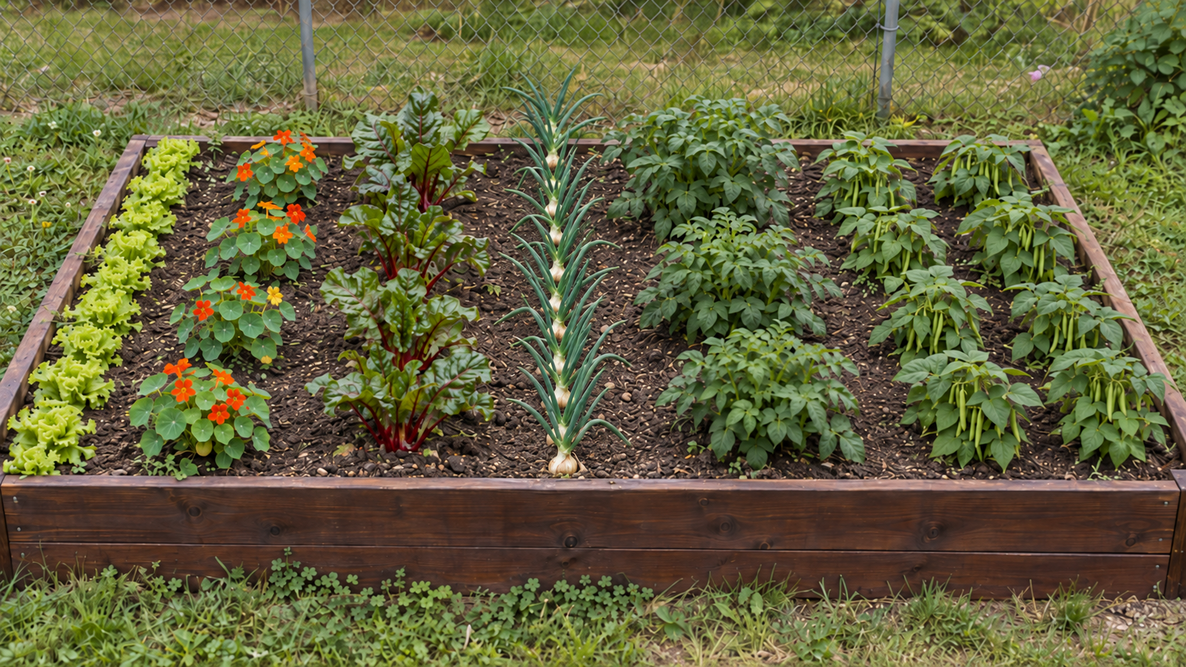
This plan keeps the garden simple by grouping each crop in its own planting row. Lettuce, nasturtiums, Swiss chard, onions, early potatoes, and bush beans give a first-time gardener a mix of leafy greens, root crops, flowers, and productive vegetables in one compact bed.
If possible, orient the bed so taller plants do not shade shorter crops. Keep to the spacing shown in the plan rather than squeezing in extra plants; good spacing improves airflow and gives roots room to grow.
Quick Plan Overview
| Feature | Details |
|---|
| Garden Type | Beginner vegetable garden |
| Garden Size | One 4 × 8-foot bed |
| Difficulty | Beginner |
| Sun Exposure | Full sun; about 6–8 hours daily |
| Season | Spring through fall |
| Soil | Rich, well-drained garden soil or raised-bed mix |
| Watering | Regular, consistent moisture |
| Best For | First-time gardeners and small spaces |
4×8 Vegetable Garden Layout
This plan keeps the garden simple by grouping each crop in its own planting row. Lettuce, nasturtiums, Swiss chard, onions, early potatoes, and bush beans give a first-time gardener a mix of leafy greens, root crops, flowers, and productive vegetables in one compact bed.
If possible, orient the bed so taller plants do not shade shorter crops. Keep to the spacing shown in the plan rather than squeezing in extra plants; good spacing improves airflow and gives roots room to grow.
Beginner Vegetable Garden Layout
Want to customize this layout? Use the Almanac Garden Planner to adjust spacing, swap crops, or create your own version.
The Plant List
The plant list below matches the 4 × 8-foot layout above, including spacing and quantities for each crop.
| Plant Name | Spacing | Quantity | Sow Indoors | Sow/Plant Outdoors |
|---|
| Beans (Bush Snap) | 10” apart (rows 14” apart) | 10 | Early-to-mid May | Mid May → mid June |
| Lettuce (Leaf) | 4” apart (rows 6” apart) | 11 | March → mid April | April → mid September |
| Nasturtium (companion flower) | 12” apart | 4 | Mid April → mid May | After last frost |
| Onion | 6” apart (rows 8” apart) | 11 | February → mid April | April → mid June |
| Green Onions | 4” apart (rows 4” apart) | 11 | February → mid April | April → June |
| Potatoes (Early) | 16” apart (rows 20” apart) | 3 | — | Plant in spring (after soil is workable) |
| Swiss Chard | 14” apart | 4 | April | Mid April → mid August |
Planting dates vary by location, and these crops are not all planted at the same time. Check your Use our Frost Dates and use the Planting Calendar for local sowing and planting dates.
Why This Plan Works for Beginners
This layout keeps your first garden manageable by growing just six crops in one 32-square-foot bed. Each crop has its own planting row, so spacing, watering, weeding, and harvesting are easy to follow.
Lettuce and Swiss chard provide leafy harvests, onions and early potatoes add root crops, bush beans produce through summer, and nasturtiums add edible flowers while attracting pollinators.
Simple Tips for First-Time Gardeners
- Start with good soil. Mix compost into garden soil before planting, or use a quality raised-bed mix.
- Plant at the right time. Lettuce, chard, onions, potatoes, beans, and nasturtiums have different temperature needs, so follow the planting dates for each crop.
- Water consistently. Keep the soil evenly moist, especially while seeds and young plants are becoming established.
- Give plants enough space. Follow the spacing in the plan so plants have room for roots and good airflow.
- Harvest regularly. Pick lettuce leaves, Swiss chard, and beans as they mature to keep the garden productive.
New to vegetable gardening? See our complete guide to starting a vegetable garden.
More Garden Plans to Explore



Comments