Choose from five herb garden plans for beds and containers, each with a planting layout, plant list, and growing tips.
From backyard beds to patio pots, these beginner-friendly designs make it easy to grow fresh herbs for cooking, fragrance, and pollinators.
In This Article
Garden Plan Collection
This herb garden guide is part of our Garden Plan Collection, a free library of practical, beginner-friendly garden layouts designed to simplify gardening and build confidence. Each plan is flexible, proven, and easy to adapt to your climate and space.
What’s Included
- Five herb garden layout plans for raised beds, containers, and mixed-garden designs
- Culinary and perennial herb combinations
- Pollinator-friendly planting ideas
- Gardener-tested advice for long-term success
| Feature | Details |
|---|---|
| Garden Type: | Herb Garden |
| Difficulty Level | Beginner to Intermediate |
| Hardiness Zones: | 3–10 (varies by herb; many grown as annuals) |
| Sun Exposure: | Full Sun to Partial Sun |
| Seasonality: | Spring through Fall |
| Soil Type: | Well-draining; fertility needs vary by herb |
| Watering Needs: | Light to moderate; avoid waterlogged soil |
| Special Features: | Culinary, medicinal, pollinator-friendly |
| Garden Size: | Varies from small single-bed to large herb garden. |
5 Herb Garden Layouts
Use these plans as-is or adapt them to your space. Most herbs prefer a sunny spot with well-drained soil, and planting near the kitchen makes harvesting especially convenient.
Want to customize a design? Use the Almanac Garden Planner to create a layout for your own space.
Below are five herb garden plans you can use as‑is or adapt to suit your space. Many herbs tolerate frost surprisingly well, but they dislike wet, compacted soil. A sunny spot near the back door is ideal, though a balcony or terrace works just as well. You can use the to recreate or customize these designs.
1. One-Bed Herb Garden Plan
A simple herb border for cooking and pollinators
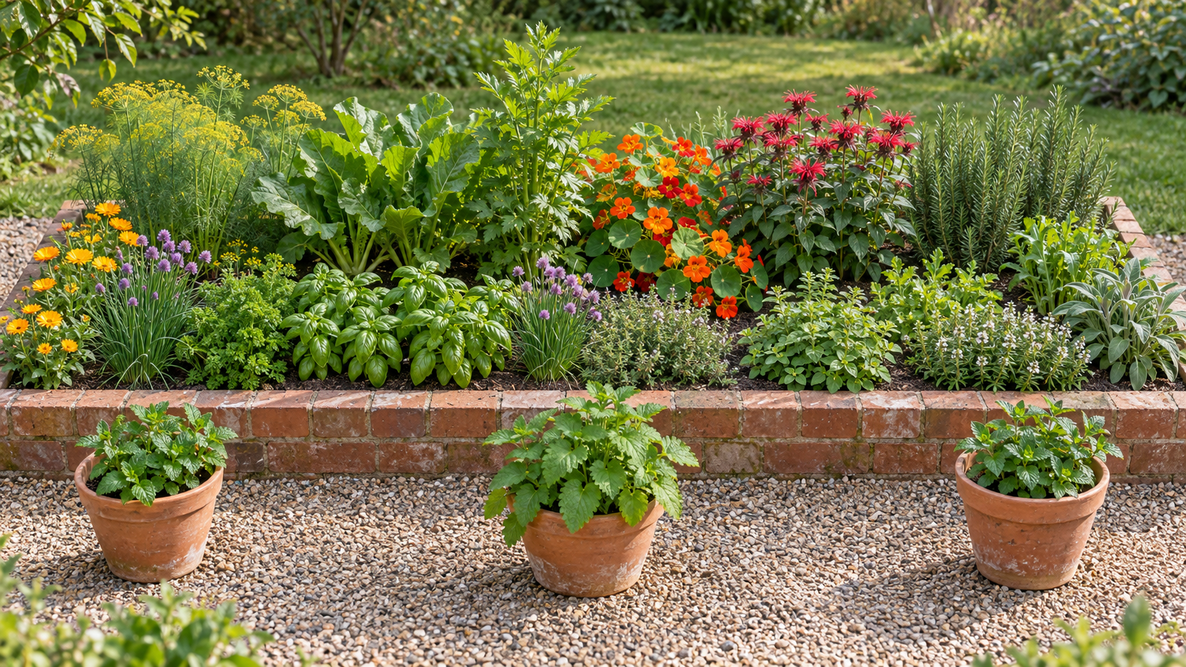
This classic layout fits a generous mix of culinary herbs and flowering companions into a 15-by-4-foot bed. Place it near the kitchen, alongside a path or patio, or in a sunny side yard.
Need a smaller garden? Simply shorten the bed. Keep the width to about 4 feet so you can reach the plants without stepping on the soil.
Why this plan works: Growing herbs together makes watering, harvesting, and maintenance easier. Letting some herbs flower also provides food for pollinators, while keeping spreading herbs such as mint and lemon balm in pots helps keep them under control.

| Plant Name | Spacings | Quantity | Sow Indoors | Sow/Plant Outdoors |
|---|---|---|---|---|
| Arugula | Single: 6”, In-Row: 4”, 8” row gap | 3 | March → mid April | April → mid October |
| Basil | Single: 8”, In-Row: 6”, 10” row gap | 5 | Mid April → end of May | Mid May → end of June |
| Calendula | Single: 1’ 0”, In-Row: 10”, 2’ 0” row gap | 4 | March → mid May | May → end of June |
| Chives | Single: 8”, In-Row: 6”, 10” row gap | 4 | Mid February → end of April | May → end of June |
| Dill | Single: 8”, In-Row: 6”, 10” row gap | 3 | Start of May | Mid May → end of June |
| Horseradish | Single: 1’ 2”, In-Row: 1’ 2”, 1’ 2” row gap | 3 | - | Mid May → end of June |
| Lemon Balm | Single: 2’ 0”, In-Row: 2’ 0”, 2’ 0” row gap | 1 | March → mid May | May → end of June |
| Lovage | Single: 2’ 0”, In-Row: 2’ 0”, 2’ 0” row gap | 1 | Early February → end of May | May → end of June |
| Mint | Single: 8”, In-Row: 6”, 10” row gap | 2 | - | Mid May → end of June |
| Monarda | Single: 1’ 0”, In-Row: 1’ 0”, 1’ 8” row gap | 3 | March → mid May | May → end of June |
| Nasturtium | Single: 1’ 0”, In-Row: 1’ 0”, 1’ 0” row gap | 3 | Mid April → mid May | Mid May |
| Oregano | Single: 8”, In-Row: 6”, 10” row gap | 3 | April → mid May | Mid May → end of June |
| Parsley | Single: 6”, In-Row: 4”, 10” row gap | 3 | April → mid May | Mid May → end of June |
| Rosemary | Single: 8”, In-Row: 8”, 8” row gap | 3 | - | Mid May → end of June |
| Sage | Single: 1’ 0”, In-Row: 1’ 0”, 1’ 4” row gap | 1 | Mid March → mid May | Mid May → end of June |
| Summer Savory | Single: 8”, In-Row: 6”, 10” row gap | 3 | Mid April → end of May | Mid May → end of June |
| Thyme | Single: 1’ 0”, In-Row: 1’ 0”, 1’ 4” row gap | 3 | - | Mid May → end of June |
2. Container Herb Garden Plan
Perfect for patios, balconies, and small spaces
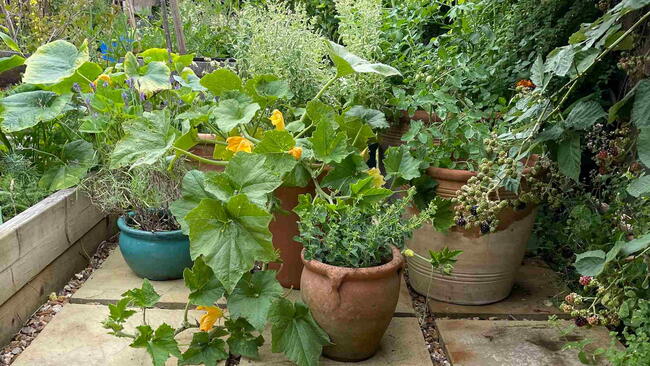
Containers make it easy to grow herbs when garden space is limited—and they help contain vigorous spreaders such as mint.
This plan uses a 4-foot-wide hexagonal planter, but you can recreate the same idea with a group of pots or containers you already have. Keep mint in its own pot, and group herbs with similar needs: basil and parsley prefer more consistent moisture, while rosemary and thyme like drier, well-drained soil.
Why this plan works: Containers let you match soil and moisture to different herbs, move plants to better light, and grow a useful herb garden almost anywhere.

The Plant List
| Plant Name | Spacings | Quantity | Sow Indoors | Sow/Plant Outdoors |
|---|---|---|---|---|
| Basil | Single: 8”, In-Row: 6”, 10” row gap | 2 | Early April → end of May | Mid May → end of June |
| Chives | Single: 8”, In-Row: 6”, 10” row gap | 3 | Early February → end of April | Mid Apr → end of June |
| Cilantro | Single: 8”, In-Row: 6”, 10” row gap | 1 | Not recommended | Early March → mid April |
| Mint | Single: 8”, In-Row: 6”, 10” row gap | 1 | Not recommended | Mid May → end of June |
| Parsley | Single: 6”, In-Row: 4”, 10” row gap | 4 | April → mid May | Mid May → end of June |
| Rosemary | Single: 8”, In-Row: 8”, 8” row gap | 1 | Not recommended | Mid May → end of June |
| Sage | Single: 1’ 0”, In-Row: 1’ 0”, 1’ 4” row gap | 1 | Mid March → mid May | Mid May → end of June |
| Tarragon | Single: 1’ 4”, In-Row: 1’ 4”, 1’ 8” row gap | 1 | Mid April → mid May | Mid May → end of June |
| Thyme | Single: 1’ 0”, In-Row: 1’ 0”, 1’ 4” row gap | 1 | Not recommended | Early May → end of June |

3. Large Raised-Bed Herb Garden Plan
Three beds for bigger harvests and more variety
Ready to grow more? This layout uses three 10-by-4-foot raised beds with room for a wide mix of culinary, flowering, and perennial herbs. You can also shorten or reduce the number of beds to fit your space.
The larger layout makes it easier to group herbs with similar growing needs and gives perennial herbs room to establish while leaving plenty of space for annual favorites such as basil, parsley, and calendula.
Why this plan works: Multiple raised beds provide generous harvests, make herbs easy to reach and maintain, and let you organize plants by their soil, water, and growing needs.

| Plant Name | Spacings | Quantity | Sow Indoors | Sow/Plant Outdoors |
|---|---|---|---|---|
| Basil (Genoese) | Single: 8”, In-Row: 6”, 10” row gap | 12 | Mid April → end of June | Mid May → end of June |
| Calendula | Single: 1’ 0”, In-Row: 10”, 2’ 0” row gap | 3 | March → mid May | May → end of June |
| Chamomile | Single: 1’ 0”, In-Row: 10”, 1’ 4” row gap | 6 | March → mid May | May → end of June |
| Echinacea | Single: 1’ 2”, In-Row: 1’ 0”, 1’ 4” row gap | 6 | Mid February → mid May | May → end of June |
| Herb (General) | Single: 8”, In-Row: 6”, 10” row gap | 8 | Mid March → end of April | Mid April → mid June |
| Horseradish | Single: 1’ 2”, In-Row: 1’ 2”, 1’ 2” row gap | 2 | - | Mid May → end of June |
| Lavender | Single: 1’ 4”, In-Row: 1’ 2”, 1’ 2” row gap | 4 | Mid March → mid Mid | May → end of June |
| Lemon Balm | Single: 2’ 0”, In-Row: 2’ 0”, 2’ 0” row gap | 1 | Mid February → mid May | May → end of June |
| Lovage | Single: 2’ 0”, In-Row: 2’ 0”, 2’ 0” row gap | 1 | March → mid May | May → end of June |
| Mint | Single: 8”, In-Row: 6”, 10” row gap | 10 | - | Early May → end of June |
| Nasturtium | Single: 1’ 0”, In-Row: 1’ 0”, 1’ 0” row gap | 4 | Mid April → mid May | Late May |
| Oregano | Single: 8”, In-Row: 6”, 10” row gap | 12 | April → mid May | Mid May → end of June |
| Parsley | Single: 6”, In-Row: 4”, 10” row gap | 18 | April → mid May | Mid May → end of June |
| Rosemary | Single: 8”, In-Row: 8”, 8” row gap | 4 | - | Mid May → end of June |
| Sage | Single: 1’ 0”, In-Row: 1’ 0”, 1’ 4” row gap | 6 | Mid March → mid May | Mid May → end of June |
| Thyme | Single: 1’ 0”, In-Row: 1’ 0”, 1’ 4” row gap | 6 | - | Mid May → end of June |
4. Herb Wheel Garden Plan
A classic circular garden divided into easy-to-reach sections
An herb wheel divides a circular bed into wedges, creating a practical and attractive way to organize several herbs in one compact garden. This plan is about 8 feet across, with paths or dividers that make each section easy to reach.
Plant each section with the herbs you use most. Keep vigorous spreaders such as mint and lemon balm in containers if you don’t want them spreading into neighboring sections.
Why this plan works: The divided layout keeps herbs organized, provides easy access for harvesting, and turns a simple herb bed into an attractive garden feature.

The Plant List
| Plant Name | Spacings | Quantity | Sow Indoors | Sow/Plant Outdoors |
|---|---|---|---|---|
| Basil | Single: 8”, In-Row: 6”, 10” row gap | 6 | Early April → end of May | Mid May → end of June |
| Chives | Single: 8”, In-Row: 6”, 10” row gap | 11 | Early February → end of April | Mid Apr → end of June |
| Lavender | Single: 1’ 4”, In-Row: 1’ 2”, 1’ 2” row gap | 3 | Mid March → mid May | Mid May → end of June |
| Mint | Single: 8”, In-Row: 6”, 10” row gap | 2 | - | Mid May → end of June |
| Oregano | Single: 8”, In-Row: 6”, 10” row gap | 7 | April → mid May | Mid May → end of June |
| Rosemary | Single: 8”, In-Row: 8”, 8” row gap | 4 | - | Mid May → end of June |
| Sage | Single: 1’ 0”, In-Row: 1’ 0”, 1’ 4” row gap | 3 | Mid March → mid May | Mid May → end of June |
| Tarragon | Single: 1’ 4”, In-Row: 1’ 4”, 1’ 8” row gap | 3 | Mid April → mid May | Mid May → end of June |
| Thyme | Single: 1’ 0”, In-Row: 1’ 0”, 1’ 4” row gap | 3 | - | Early May → end of June |
5. Checkerboard Herb Garden Plan
A geometric herb garden with built-in paver paths
This checkerboard layout alternates herb-planted squares with pavers, creating a tidy design with built-in access for watering, weeding, and harvesting. The full bed is about 18 by 4 feet, but you can shorten it to suit your space.
Plant each square with a different herb or repeat your favorites for a more unified look. The separate planting areas make the garden easy to organize, but vigorous spreaders such as mint should still be kept in a container or buried pot.
Let some herbs flower and the garden can also provide nectar for pollinators.
Why this plan works: The pavers provide easy access without stepping on the soil, while the individual squares make planting, harvesting, and replacing herbs simple.

The Plant List
| Plant Name | Spacings | Quantity | Sow Indoors | Sow/Plant Outdoors |
|---|---|---|---|---|
| Basil | Single: 8”, In-Row: 6”, 10” row gap | 4 | Mid April → end of May | Mid May → end of June |
| Bay | Single: 1’ 6”, In-Row: 1’ 6”, 2’ 0” row gap | 1 | - | Early May → end of June |
| Borage | Single: 1’ 2”, In-Row: 1’ 0”, 2’ 0” row gap | 2 | - | Mid May → end of June |
| Fennel (Herb) | Single: 1’ 2”, In-Row: 1’ 0”, 1’ 4” row gap | 1 | March → end of April | Mid April → end of June |
| Lavender | Single: 1’ 4”, In-Row: 1’ 2”, 1’ 2” row gap | 3 | Mid March → mid May | May → end of June |
| Mint | Single: 8”, In-Row: 6”, 10” row gap | 2 | - | Mid May → end of June |
| Rosemary | Single: 8”, In-Row: 8”, 8” row gap | 1 | - | Mid May → end of June |
| Sage | Single: 1’ 0”, In-Row: 1’ 0”, 1’ 4” row gap | 1 | Mid March → mid May | Mid May → end of June |
| Thyme | Single: 1’ 0”, In-Row: 1’ 0”, 1’ 4” row gap | 3 | - | Mid May → end of June |
Tips for Growing Herbs Successfully
Good drainage is one of the keys to growing herbs successfully. Many Mediterranean herbs, including rosemary, thyme, sage, oregano, and lavender, prefer sunny sites and soil that drains quickly.
For best results:
- Choose well-drained soil
- Avoid overfertilizing
- Use containers or raised beds where drainage is poor
- Group herbs with similar water needs
Two Broad Types of Herb Growing Needs
One of the most common misconceptions about herb gardening is that all herbs prefer identical growing conditions. In reality, herb soil needs fall into two broad groups.
Mediterranean Herbs
Rosemary, thyme, sage, oregano, lavender
These herbs generally prefer full sun, excellent drainage, and somewhat drier soil. Avoid overly rich soil or heavy fertilizing, which can produce lush growth with less concentrated flavor and aroma.
Leafy Herbs
Basil, parsley, cilantro, chives, dill, mint
These herbs generally prefer well-drained soil with more consistent moisture. They shouldn’t be allowed to sit in soggy soil.
Tip: Containers or separate planting areas make it easier to group herbs with similar needs.
Gardener Spotlight: Susie’s Experience
Susie, who created several of these layouts, says herbs don’t need much space. She considers light, drainage, and water needs when deciding where each herb should go, and recommends containing vigorous spreaders such as mint and lemon balm.
“I find that you don’t need a large area to grow herbs—once you understand what they need, even a small container can be productive. I’ve even used an old wine crate or just a collection of containers.”
“I enjoy planting herbs in a wheel or circular shape, as you can think about what each herb needs based on how your garden slopes, and group herbs by light, water, and soil needs. Both lemon balm and the mints can sucker and, if left to their own devices, can overrun their allocated segments. I personally don’t mind this; I use both a lot. But if you’re going to leave the garden unattended at times, consider containers.”
“Herbs are tougher than people think. Leaving some stems standing through winter can also provide shelter for beneficial insects.”
Wit & Wisdom
Herbs reward attention but forgive neglect—and few plants offer so much value in so little space.
“A man may esteem himself happy when that which is his food is also his medicine.” —Henry David Thoreau
More Garden Plans to Explore
If you’re looking to try a different approach, check out these alternative garden plans:
- Vegetable Container Garden Plan — grow food in pots and small spaces
- Square-Foot Garden — a compact, beginner-friendly garden
- Pollinator Garden Plan — a colorful layout for bees and butterflies
- Vegetable Garden — a simple 4 x 4 raised bed layout for new gardeners
- Foliage Garden Plan — a garden designed for shade and part shade
More Herb References
Frequently Asked Questions
-
Do herbs need full sun to grow well?
Most herbs grow best with at least 6 hours of sun a day. Parsley, chives, mint, and cilantro can also grow in partial sun.
-
Can I grow herbs in containers instead of a garden bed?
Yes. Many herbs grow very well in pots. Choose containers with drainage holes, and group herbs with similar water needs.
-
What kind of soil is best for herbs?
Most herbs need well-drained soil. Mediterranean herbs such as rosemary, thyme, and lavender prefer drier conditions, while basil, parsley, and mint appreciate more consistent moisture.
-
How often should I water herbs?
Water according to the herb and growing conditions rather than on a fixed schedule. Basil and parsley prefer more consistent moisture, while rosemary and thyme should dry somewhat between waterings. Penn State Extension
-
Should I harvest herbs often?
Yes. Harvest leafy herbs regularly, taking a little at a time. Frequent cutting can encourage branching and fresh growth.
-
Do herbs survive winter?
Some do, depending on the herb and your climate. Thyme, sage, oregano, chives, and mint are perennial in many regions. Basil is frost-tender; cilantro and dill are annuals, although cilantro tolerates cool weather better than basil. Check the plant’s hardiness for your area.


Vegetable Garden Plans
Flower Garden Plans
More Like This

Comments