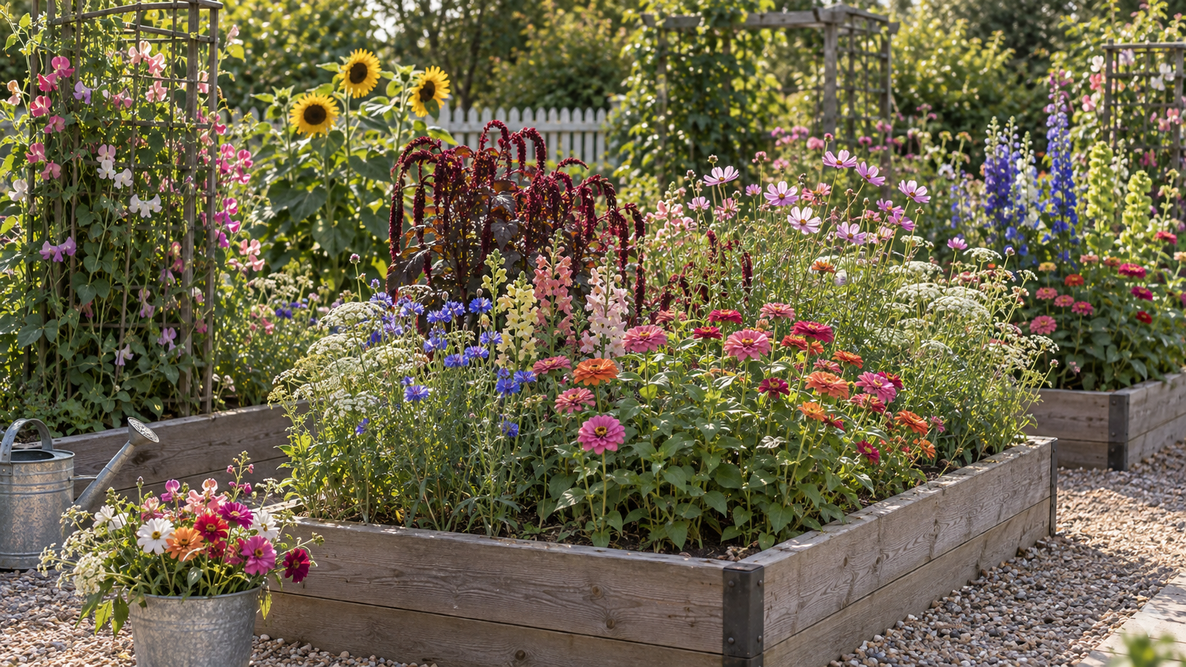
Want plenty of flowers for bouquets without cutting from your ornamental beds? This raised-bed cut-flower garden plan uses three 4 × 8-foot beds to grow annual flowers for cutting from early summer through frost.
The layout combines zinnias, cosmos, sunflowers, sweet peas, snapdragons, and other favorite cut flowers, with spacing and quantities for each bed. Follow the plan as shown or adapt the same flower-farm approach to in-ground beds.
Quick Plan Overview
| Feature | Details |
|---|---|
| Garden Type | Raised-bed annual cut-flower garden |
| Garden Size | Three 4 × 8-foot raised beds |
| Difficulty | Beginner |
| Sun Exposure | Full sun |
| Season | Early summer through frost |
| Soil | Rich, well-drained garden soil or raised-bed mix |
| Watering | Regular, even moisture |
| Best For | Bouquets, frequent cutting, and a steady supply of annual flowers |
Raised-Bed Cut-Flower Garden Layout
This plan turns three raised beds into a small backyard flower farm. Each bed groups flowers by type and spacing, making them easy to sow, maintain, and cut for bouquets.
The plan focuses on annual flowers, which are grown and replanted each year. Sweet peas climb supports beside the beds, while taller flowers such as sunflowers are positioned so they do not overwhelm shorter cutting flowers.
Raised beds provide good drainage and make rows easy to reach for planting and harvesting. Prefer to grow in the ground? You can use the same layout and spacing in traditional garden beds.
| Feature | Details |
|---|---|
| Garden Type: | Raised-Bed Annual Cut-Flower |
| Difficulty Level: | Beginner |
| Hardiness Zones: | 4–9 |
| Sun Exposure: | Full sun |
| Seasonality: | Spring through fall |
| Soil Type: | Rich, well-draining garden soil or raised-bed mix |
| Watering Needs: | Regular, even moisture |
| Special Features: | Long-lasting cut flowers, pollinator-friendly, colorful all season |
| Garden Size: | Three 4’×8’ raised beds |

The Raised Bed Cut Flower Garden Layout
This plan packs a surprising amount of flower power into just three raised beds, producing enough blooms to keep fresh bouquets flowing from midsummer into fall. Keep in mind that this plan is specifically for annual cut flowers—flowers you replant each year—rather than perennials. Because this is a pure cutting garden, annuals are ideal for fast growth and repeat harvesting.
Raised beds warm faster in spring, improve drainage, and make harvesting easier. However, this layout can also be adapted for in-ground garden beds if needed.
Plan

Want a different look? Choose varieties in pastels, brights, a single color family, or a lively mix. For more options, see our guide to the best flowers for a cutting garden.
The Plant List
This plant list matches the raised-bed layout above. The quantity shown is the number of plants to keep in the garden after thinning, not the number of seeds to sow.
For detailed growing instructions, refer to the Flower Growing Guide Library.\
| Plant Name | Spacing | Quantity per Bed | Sow/Plant Outdoors | Bloom Season |
|---|---|---|---|---|
| Zinnia | 9–12” | 6 | Mid-May | July–Frost |
| Cosmos | 12–18” | 16 | Mid-May | July–Frost |
| Amaranthus | 12–18” | 6 | Mid-May | July–Frost |
| Sunflowers | 12–24” | 4 | Mid-May | July–September |
| False Queen Anne’s Lace | 12–18” | 6 | Mid-Spring | June–Frost |
| Larkspur | 6–12” | 6 | Early Spring | June–Frost |
| Snapdragon | 6–12” | 6 | Early Spring | June–Frost |
| Cornflowers (Bachelor’s Buttons) | 6–12” | 16 | Mid-Spring | June–Frost |
| Bells of Ireland | 6–12” | 4 | Mid-Spring | July–Frost |
| Sweet Peas | 3–6” | 22 | Early Spring | June–July |
Need growing instructions? See our Flower Growing Guides.
How to Grow This Cut-Flower Garden
Step 1: Prepare the Beds
- Choose a site in full sun with well-drained soil.
- Fill the raised beds with good-quality garden soil or raised-bed mix, and work in compost before planting.
- Keep the soil loose and level so seeds can be sown at the correct depth and spacing.
Step 2: Plant at the Right Time
- Sow or plant cool-season flowers such as sweet peas, larkspur, cornflowers, and snapdragons in early spring according to their individual growing instructions.
- Plant warm-season flowers such as zinnias, cosmos, sunflowers, and amaranthus after danger of frost has passed and the soil has warmed.
- For flowers that benefit from succession sowing, make additional plantings a few weeks apart to extend the cutting season.
Step 3: Thin, Space, and Support
If you direct-sow seeds, thin the seedlings once they are large enough to handle, leaving the strongest plants at the spacing shown in the plant list. Good spacing improves airflow and gives each plant room to develop.
Learn more about direct sowing and thinning.
Taller flowers may need support as they grow. Sweet peas need a trellis or other climbing support, and tall sunflowers may benefit from staking in exposed sites.
Step 4: Water, Cut, and Keep Flowers Coming
- Water deeply enough to keep the soil evenly moist, especially while plants are becoming established.
- Add mulch after seedlings are established to conserve moisture and suppress weeds.
- Harvest regularly. Many annual cutting flowers respond to frequent cutting by producing more stems and blooms.
- Cut flowers in the cool of the morning and place the stems in clean water as soon as possible.
For arranging and caring for your harvest, see our tips for keeping cut flowers fresh longer.
Gardener Spotlight: Susie H.
“This little plan produces enough flowers to see my family and friends through the summer into fall. Zinnias, cosmos, amaranthus, and sunflowers are my favorites. I sow some seeds indoors and others directly in the beds once the soil warms.”
“Harvesting regularly keeps the blooms coming, and it’s so satisfying to share fresh bouquets with everyone.”
FAQs About Raised-Bed Cut-Flower Gardens
Do I have to start the flowers indoors?
No. Many flowers in this plan can be direct-sown outdoors. Warm-season flowers such as zinnias, cosmos, sunflowers, and amaranthus should be planted after danger of frost has passed. Other flowers, including snapdragons and sweet peas, can be started earlier depending on the crop and your climate.
How do I keep a cutting garden blooming?
Harvest flowers regularly, remove spent blooms, and succession-sow suitable annuals when recommended. Different flowers respond differently, so check the growing instructions for each crop.
Can I grow this plan in the ground instead of raised beds?
Yes. Use the same layout and plant spacing in an in-ground garden with full sun and well-drained soil. Leave enough room between beds or rows for planting, weeding, watering, and harvesting.
Can I add perennial flowers?
Yes, but this plan is designed around annual cutting flowers that are replanted each year. If you want a garden that combines annuals and perennials, see our Cut-Flower Garden Plan with Perennials and Annuals.
More Garden Plans to Explore
- Cut-Flower Garden Plan with Perennials and Annuals — a traditional flower garden designed for both bouquets and the landscape.
- Pollinator Garden Plan — a colorful garden designed to support bees, butterflies, and other pollinators.
- Perennial Flower Garden Plan — a long-lasting border with flowers, grasses, and season-long structure.

Vegetable Garden Plans
Flower Garden Plans
More Like This

Comments