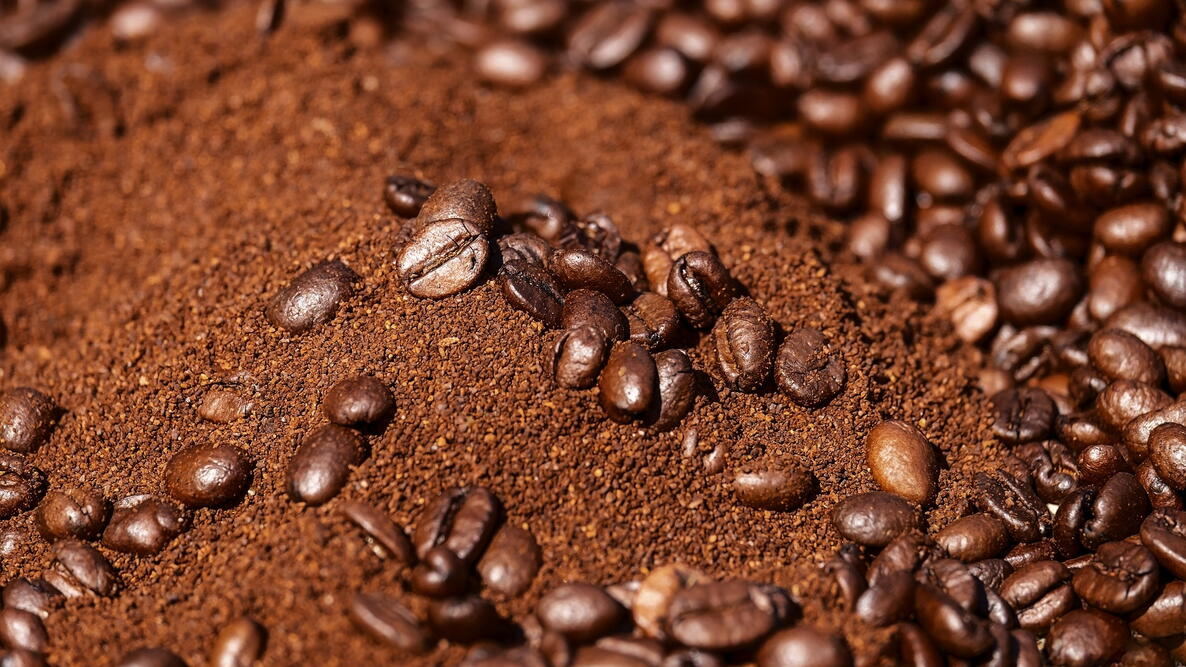
Used coffee grounds can be great for your garden! But there’s some misinformation out there. In this article, we’ll explore how this nitrogen-rich material can improve your soil—if used correctly—and how to use coffee grounds for plants.
I love my coffee strong and black. We get our beans from the local food co-op and grind them fresh for every pot, leaving us with many coffee grounds. These leftovers are valuable waste for the garden compost—and a natural pest deterrent!
If you don’t drink coffee, visit your local mom-and-pop café—many give away used coffee grounds for free. Starbucks also offers them through its Grounds for Your Gardens program.
What Are Coffee Grounds?
It might seem like an obvious question, but it helps to understand the difference between fresh and used coffee grounds—never use fresh grounds on plants—and its nutrient content, pH, and texture.
- Fresh coffee grounds are high in caffeine and acidity, which can burn plant roots. However, used grounds are low in caffeine and generally have a neutral pH (around 6.5 to 6.8), so they won’t acidify your soil.
- Used coffee grounds are made up about 2% nitrogen, .06% phosphorus, and .06% potassium—plus, a small amounts of micronutrients like magnesium, iron, and calcium. However, the nutrients can not be taken up by plants immediately. The grounds need a few months of decomposition before nutrients become accessible.
What Do Coffee Grounds Do for Plants?
Composted coffee grounds can improve soil texture. Don’t apply in thick layers—such finely textured particles tend to compact and form a crust that blocks water and air from reaching roots. (This is why coffee grounds are not recommended as mulch.)
Composted coffee grounds are at their best as a soil amendment that feeds all your garden plants. They feed beneficial microbes, improve drainage, and contribute low nitrogen levels (about 1–2%). Note: You can’t rely on coffee grounds alone for nitrogen; pair up composted grounds with other nitrogen sources, like aged manure.
Benefits of Using Coffee Grounds
- Great for composting: Coffee grounds are superb for composting. Microorganisms break them down over a few months, releasing plant-available nitrogen. Their fine texture helps them mix and rot quickly. Just make sure coffee grounds make up no more than 15–20% of your total compost volume.

- Worm-approved! Coffee grounds provide grit for compost worms’ digestive process. Worms will also work coffee grounds deeper into the compost, ultimately helping improve soil structure and aeration. They’re nature’s plow! Note: Some experts advise against adding grounds to worm bins, aka vermicompost bins, as the bins are too constricting, and the worms can die; others state that it depends on the type of worm.

- Natural slug repellent: Coffee grounds help deter slugs and other pests. Their grainy texture and caffeine content are unappealing—and potentially toxic—to soft-bodied pests. A 1–2% caffeine solution caused 100% of slugs to leave the treated soil.

- Prevents disease: The “good” bacteria and fungi that help decompose coffee grounds help prevent the “bad” or pathogenic fungi from establishing. And that’s a very good thing!
Note: Caffeine can be toxic to dogs. While used grounds have lower levels, avoid surface application if your pup tends to snack on what’s on the ground. Composting or burying the grounds is a safer option.
How to Use Coffee Grounds for Plants
Age for a few months:
Leave the grounds outside in a pile for a few months (alone or, ideally, in a compost pile, which microbes will break down faster). Ensure your grounds are cooled off before adding them to an outdoor compost pile. Hot grounds can kill the beneficial organisms that are doing all that work. A good compost recipe: 3 parts leaves, 1 part grass clippings, and 1 part coffee grounds. Turn weekly with a pitchfork. Avoid exceeding 20% coffee grounds.
Application:
If applying composted grounds directly to soil, stick to a thin layer—no more than ½ inch. Just sprinkle on top or rake into the top 2 inches of soil. Don’t turn it under.
Don’t apply in thick layers—such finely textured particles tend to compact and form a crust that blocks water and air from reaching roots. (This is why they are not recommended as mulch.)
After applying coffee grounds, cover with a 4-inch layer or organic mulch—wood chips, bark, or leaves—to prevent compaction and protect the soil.
Tip: Test your soil before adding any type of fertilizer or even compost. If your soil is already high in nutrients or alkaline soil, hold off on adding coffee grounds—they’re not always needed, and too much nitrogen can harm plants.

Are Coffee Grounds Good for Plants?
Yes, but we need to qualify that we are talking about composted coffee grounds (not used grounds taken immediately from a coffee maker).
Composted coffee grounds are at their best as a soil amendment that feeds all your garden plants. They feed beneficial microbes, improve drainage, and contribute low nitrogen levels (about 1–2%). Note: You can’t rely on coffee grounds alone for nitrogen; pair up composted grounds with other nitrogen sources, like aged manure.
Which Plants Do You Put Coffee Grounds on?
It’s a myth that used coffee grounds are acidic. That applies to fresh grounds, which you would NOT use near plants.
In reality, once brewed, the grounds are nearly neutral in pH (6.5–6.8).
Therefore, composted coffee grounds do not help acid-loving plants like blueberries, azaleas, and rhododendrons. First, test your soil’s pH. If you need to increase acidity, this is best achieved by using soil acidifiers like elemental sulfur. But don’t just add acidifiers if you don’t know your soil’s pH, as you may do more harm than good.
Coffee grounds are best for nutrient-hungry plants like roses, which may benefit from a light layer of coffee grounds, mulched over with coarse mulch. Other heavy feeders include leafy greens (spinach, kale, lettuce), corn, tomatoes, cucumbers, squash, broccoli, and Brussels sprouts.
Tip: Plants hungry for nitrogen have stems and stalks that often appear light yellowish-green in color, as well as leaves that show yellowing starting at the tip of the leaf and moving downward.
Which Plants Do NOT Like Coffee Grounds?
Never use coffee grounds when planting seeds, or on seedlings, or very young plants—especially with tomatoes and other delicate crops.
Grounds can inhibit seed germination; caffeine (even low) stunts early growth. High doses of nitrogen applied directly can burn roots.
Tip: Nitrogen is best added when plants are in full growth mode (e.g., for tomatoes, about 30 days after seeding).
Final Thoughts
Coffee grounds are a valuable, free resource for gardeners! If you wish to use grounds to increase the nutrients in your garden soil, it’s safest and most effective to add them to your compost. And try it as a slug repellent!
How do you use your coffee grounds? We’d love to hear your tips and tricks!






Comments