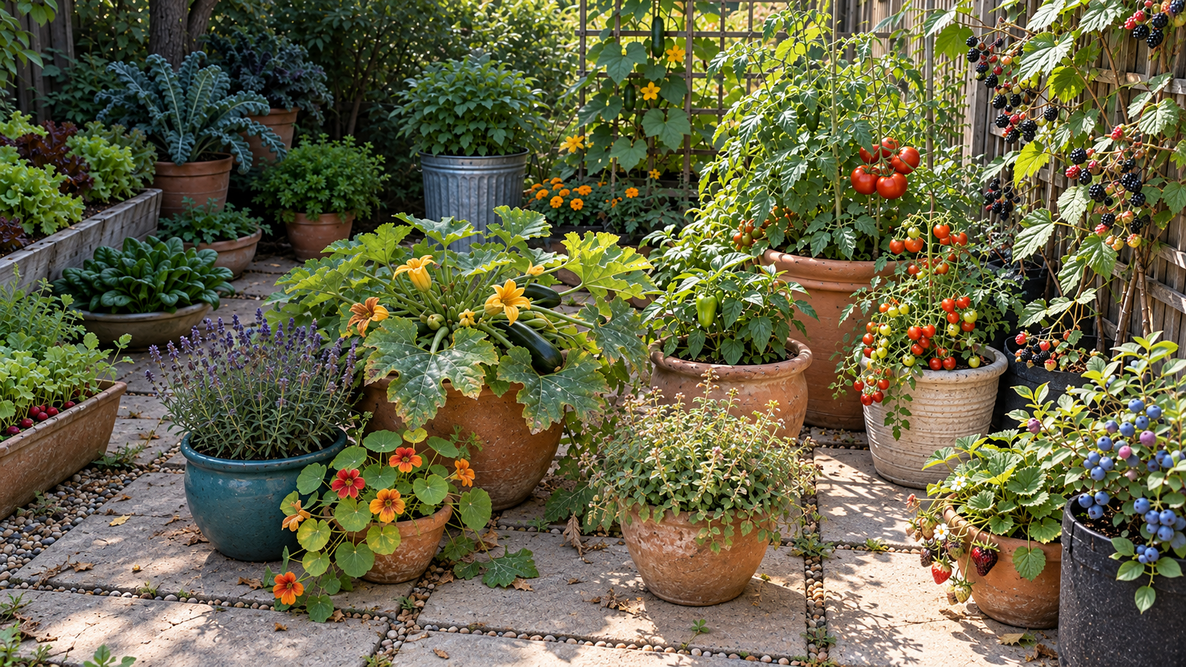
Grow fresh vegetables, herbs, and berries in pots and containers—even in a small space! This container vegetable garden layout shows how to arrange tomatoes, zucchini, peppers, leafy greens, and more to make the most of your growing space.
A container garden changes with the seasons. Grow tomatoes, peppers, and zucchini in the sunny spots during summer, then take advantage of cooler spring and fall weather to grow lettuce, spinach, kale, and other cool-season crops. Choose pots and planters to suit each plant, and rearrange or replant them as the seasons change.
| Feature | Details |
|---|---|
| Garden Type | Container vegetable garden |
| Difficulty Level | Beginner |
| Sun Exposure | Full sun to partial shade, depending on crops |
| Seasonality | Spring through fall; replant containers as seasons change |
| Soil Type | Lightweight potting mix formulated for containers; avoid straight garden soil |
| Watering Needs | Varies by crop; vegetables need consistent moisture, while Mediterranean herbs prefer drier soil |
| Special Features | Portable containers; adaptable to patios, decks, balconies, and small yards |
| Garden Size | Shown as a 14 × 14-foot patio, but easily adapted to other spaces |
Container Vegetable Garden Layout
Here’s one way to arrange pots, planters, and grow bags for a productive container garden. Use this layout as a starting point, adjusting the plants and containers to suit your space.
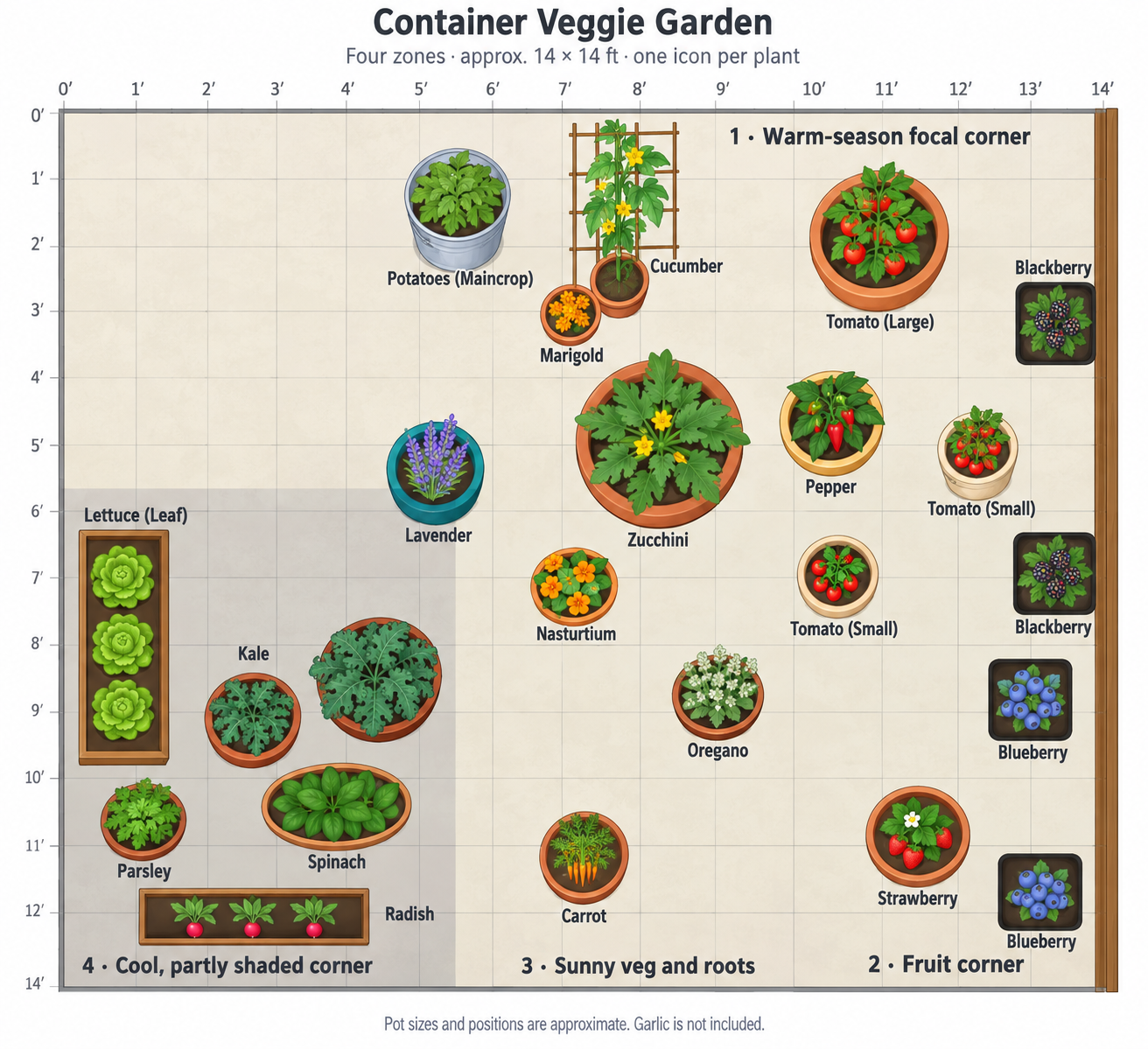
The size and depth of your containers help determine what you can grow. Fruiting vegetables such as tomatoes and zucchini need larger pots, while leafy greens and herbs can thrive in smaller containers.
Use the plant list below as a guide, or try our Vegetable Container Size Chart & Pot Size Calculator to find the right pot for each crop.
The Container Plant List
| Plant | Quantity | Recommended Container |
|---|---|---|
| Warm-Season Vegetables | ||
| Tomato (large) | 1 | 5–10 gal. (determinate) or 15–25 gal. (indeterminate) |
| Cherry tomato | 2 | Separate pots; 5–10 gal. (determinate) or 15–25 gal. (indeterminate) |
| Bush zucchini | 1 | Large pot, 5–10 gal. |
| Pepper | 1 | Pot, 3–5 gal. |
| Bush cucumber | 1 | Pot, 5 gal., at least 12 in. wide and deep |
| Fruits and Berries | ||
| Blackberry | 2 | Separate grow bags, 15–20 gal. each |
| Blueberry | 2 | Separate grow bags, 10–20 gal. each; use acid-loving potting mix |
| Strawberry | 1 | Wide pot or hanging basket |
| Herbs and Flowers | ||
| Lavender | 1 | Pot, 3–5 gal. |
| Oregano | 1 | Pot, 2–3 gal. |
| Nasturtium | 1 | Pot, 2–3 gal. |
| Marigold | 1 | Small pot |
| Parsley | 1 | Pot, 2–3 gal. |
| Cool-Season and Root Vegetables | ||
| Potato | 1 planting | Grow bag or trash can with drainage holes, 15–20 gal. |
| Lettuce | 1 trough, 3 plants | Long wooden trough; allow sufficient volume for the plants |
| Spinach | 1 planting | Wide, shallow container, 2+ gal. |
| Kale | 2 plants | Separate pots, 5 gal. each |
| Radish | 1 planting | Rectangular planter, 2+ gal., 6+ in. deep |
| Carrot | 1 planting | Deep pot, 5+ gal., 12+ in. deep |
Quantities reflect the garden plan. Container sizes are general recommendations and may vary by variety. A “planting” may contain multiple individual plants.
How to Set Up Your Container Vegetable Garden
Start with a few containers if you’re new to vegetable gardening. You can always add more as you discover what grows best in your space. Here are four essentials for getting started.
Choose the Right Containers
Match the pot to the plant. Tomatoes and zucchini need larger containers for their roots, while lettuce, spinach, herbs, and radishes can grow in smaller pots or shallow planters. Use our Vegetable Container Size Chart & Pot Size Calculator to check the size and depth needed for each crop.
Every container needs drainage holes. Without them, excess water collects around the roots and can cause root rot. You can use terracotta pots, grow bags, wooden planters, or repurposed containers, as long as they’re safe for growing food and allow water to drain.
Remember that large containers become very heavy once filled with moist potting mix. Position them before planting.
Use the Right Potting Mix
One of the biggest mistakes in container gardening is filling pots with ordinary garden soil. It can become compacted, restricting drainage and air circulation around the roots.
Instead, choose a lightweight potting mix made for containers. These mixes hold moisture while allowing excess water to drain, giving roots the air they need to grow.
Some plants have special requirements. Blueberries need an acidic potting mix, while lavender prefers especially well-drained soil.
Don’t forget to fertilize! Container plants have a limited supply of nutrients, even when the potting mix includes fertilizer. Follow the fertilizer label for your crops throughout the growing season.
Arrange Pots for Sunlight
Most fruiting vegetables—including tomatoes, peppers, zucchini, and cucumbers—need at least 6 to 8 hours of direct sunlight daily. Place these containers in your sunniest location.
Lettuce, spinach, and other cool-season greens also need light, but they can benefit from afternoon shade as temperatures rise. A partly shaded corner is useful for extending their growing season.
Remember to leave enough room between containers for air circulation, plant growth, and access for watering and harvesting.
Group Plants by Watering Needs
Not all plants need the same amount of water. Tomatoes, zucchini, and peppers need consistent moisture, especially during hot weather. Lavender and oregano prefer well-drained soil that dries out somewhat between waterings.
Keep lavender and oregano together, away from the thirstiest vegetable pots, so you can water each group according to its needs.
Check the soil regularly rather than watering every container on the same schedule. Terracotta pots and grow bags may dry out faster than plastic or glazed containers.
For more advice on choosing containers, planting, and caring for your crops, see our complete Vegetable Container Gardening Guide.
Growing a Container Garden Through the Seasons
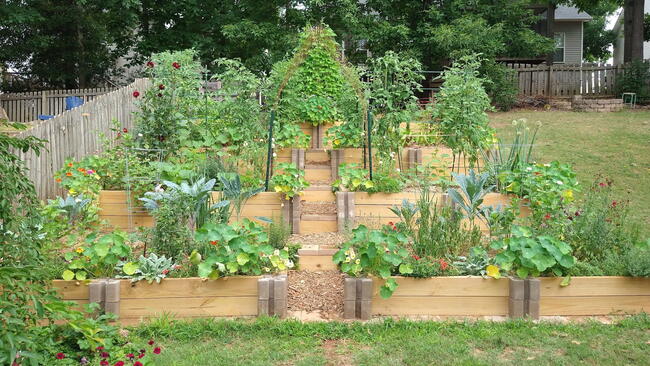
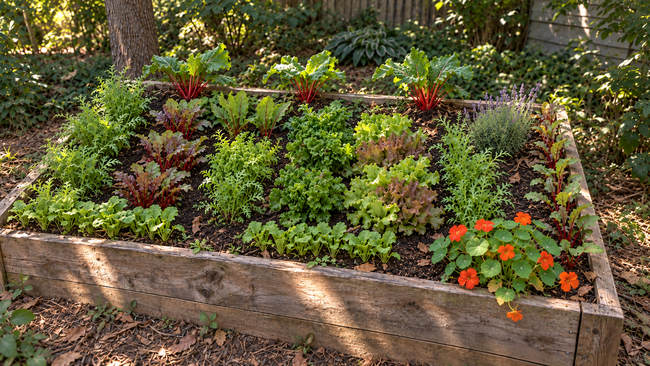
One of the best things about container gardening is that you can reuse the same pots throughout the growing season. As one crop finishes, another can take its place. Our garden plan shows plants at their peak, but they won’t all be growing or producing at the same time.
- Spring: Start with cool-season vegetables such as lettuce, spinach, kale, radishes, and potatoes. These crops grow best before summer’s heat arrives.
- Summer: Fill your sunniest containers with tomatoes, peppers, zucchini, and cucumbers. Many herbs, flowers, and berries will also be growing during the warmer months.
- Fall: As temperatures cool, plant another round of lettuce, spinach, kale, and radishes. You can reuse containers after summer crops finish, or grow fall greens in separate pots while tomatoes and peppers are still producing.
Before replanting a container, remove the old crop and its roots, check the potting mix, and replenish nutrients as needed. If the previous plants had serious soilborne disease problems, replace the potting mix.
Tip: Planting dates depend on where you live. Use our Planting Calendar to find the best times to grow vegetables in your area.
Gardener Spotlight: Susie’s Container Garden
Container gardener Susie Hughes shares what she’s learned from more than 40 years of growing in pots:
“My gardening adventures started when I was a student, with a small but much-loved container garden in a tiny city yard next to a highway wall. Over the past 40 years, I’ve grown just about everything you can imagine in pots—and enjoyed every minute!
I love mixing different kinds of containers. Even a humble wooden crate can become a planter, and old tins make fun, quirky displays. Container gardening is especially useful if you have limited space or move frequently, since many pots can come along with you.
I also reuse my containers throughout the growing season. When my tomatoes finish, I plant spinach and lettuce in the same pots for a fall harvest.
The Almanac Garden Planner helps me figure out how much space each crop needs so I can match what I want to grow with the containers I have available.”


Other Garden Layouts to Explore
Looking for another way to grow vegetables, herbs, or flowers? Explore these garden plans:
- Raised-Bed Vegetable Garden Layout — A larger kitchen garden with multiple raised beds.
- Square-Foot Garden Layout — A space-saving approach to growing vegetables, herbs, and flowers.
- Herb Garden Plans — Five layouts for growing herbs in beds, containers, and small spaces.
- Beginner Vegetable Garden Layout — A simple 4 × 8-foot plan for new gardeners.
Frequently Asked Questions
-
What are the easiest vegetables to grow in containers?
Lettuce, radishes, peppers, and bush varieties of tomatoes and cucumbers are good choices for beginners. Start with two or three crops you enjoy eating, then expand your garden as you gain experience.
-
Can I reuse potting soil from year to year?
Yes, if the previous plants were healthy. Remove old roots and plant debris, loosen the mix, and add fresh potting mix and fertilizer as needed. Replace the potting mix if plants had serious soilborne disease problems.
-
Can vegetables grow in containers year-round?
It depends on your climate. In mild regions, you may be able to grow cool-season vegetables through winter. In colder regions, containers can extend the growing season with frost protection, but the potting mix and roots are more exposed to freezing temperatures than plants growing in the ground.


Vegetable Garden Plans
Flower Garden Plans
More Like This

Comments