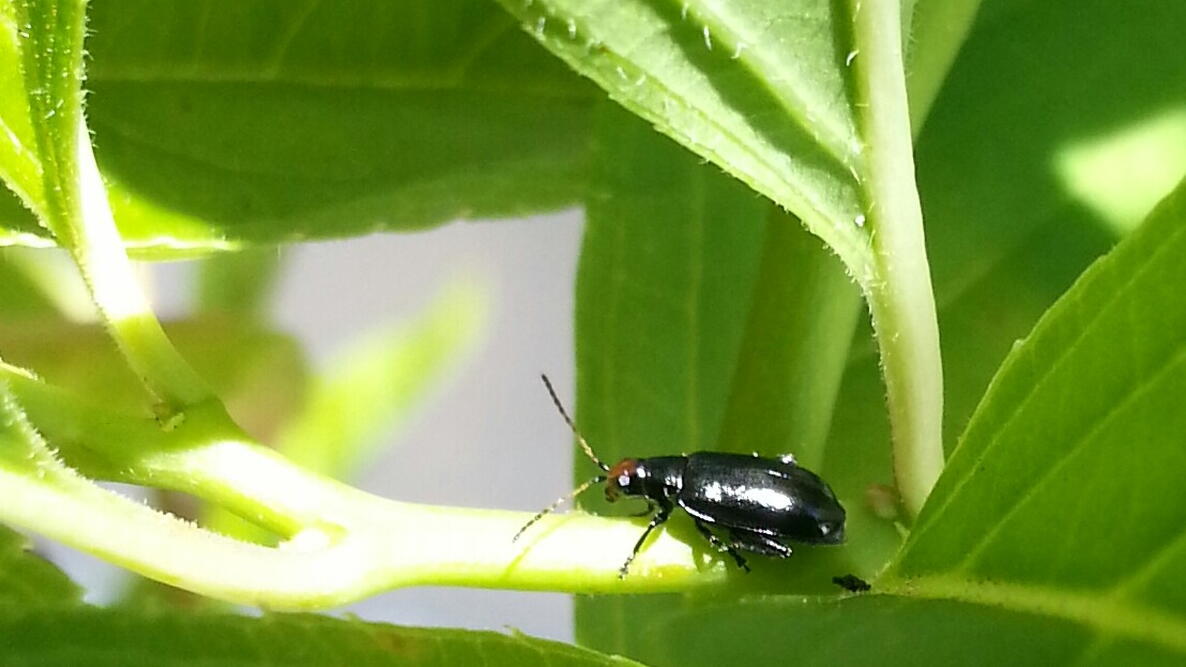
Caption
Flea beetles can be very destructive to a wide variety of plants, so be sure to take preventative measures.
Identification
How to Identify Flea Beetles on Plants
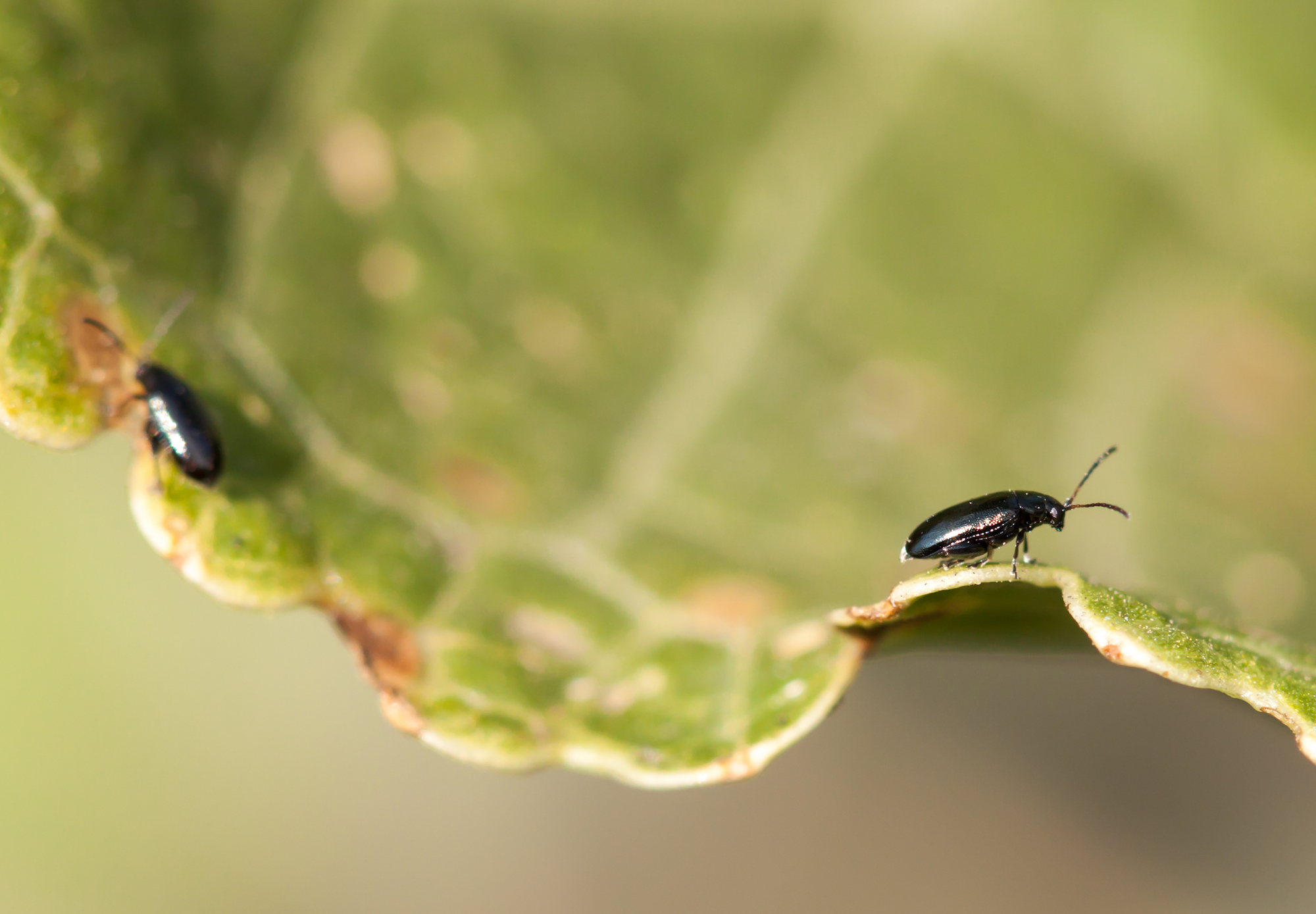
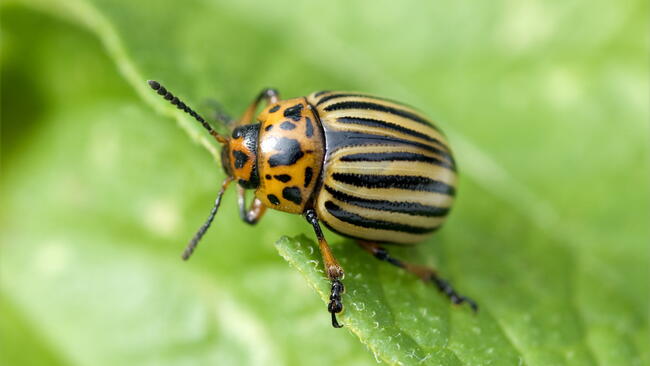
Given that there are so many species of flea beetles, they vary in appearance quite a bit. Colors range from black to tan, with other, brighter colors mixed in, and the beetles may have a solid, striped, or spotted pattern, depending on the species.
To identify flea beetles, it’s easier to look for signs of their damage (described below) than for the beetles themselves. At only 1/16 of an inch in length, flea beetles are very tiny and will quickly spring away—like fleas—if they see you approach!
When Do Flea Beetles Appear?
Adult flea beetles overwinter in brush and wooded areas. Adult bugs pose the biggest threat early in the planting season, emerging typically when outdoor temperatures reach 50ºF (10°C). At this time, seedlings are also being planted, and they are most susceptible to beetle damage.
Eggs are laid at the base of plant stems in early summer after the spring feeding period, and larvae feed at the roots.
What Flea Beetle Damage Looks Like
Adult beetles feed on foliage, producing “shotholes” in the leaves. Look out for these holes, especially on young seedlings, where damage is most rapid and will cause the most harm. The holes flea beetles make will be round and can quickly ruin leafy greens. New leaves are usually damaged first and will have a lacy appearance.
Flea beetles usually don’t cause fatal damage to established plants because the leaves are already large enough to survive a few holes. The greater danger is that the beetles can spread bacterial diseases, such as wilt and blight, from plant to plant. Additionally, in leafy crops like lettuce or spinach, the holes can decrease the quality of the leaves.


More Like This

Comments

I'm not sure if a study has been done as to the minimum ratio of alcohol/water plus soap for effectiveness. However, you are right to be concerned about burning plants. With alcohol sprays, always test a solution on a small area before spraying an entire plant or crop; some plants may be more sensitive than others. You might try a solution with a small percentage of alcohol to water and work up to determine the minimum you can use and still have it be effective. As to vinegar, same precautions. One must be very careful about proportions, or as you have read, the vinegar's acetic acid can kill plants (at higher concentrations, vinegar is used as an herbicide). Some sources suggest avoiding using it at all, especially on vegetables or flowers. Others suggest 3 parts water to 1 part vinegar, and only spraying leaves. If you try this route, you might try diluting the solution even further, then testing on a small area first. Hope this helps!
Hi, Betty: Sorry to hear! It sounds like these might be blue milkweed beetles, which always pose a tricky problem because hosts for them like milkweed and oleander, which you would want to eliminate if nearby, are also beneficial to monarch butterflies and others. The best thing to do is bite the bullet and try to physically remove as many as possible by plucking or even using a handheld battery-operated vac. Another option is an organic insecticide applied very specifically to aggregations of beetles where found. It's important to try to do this before they lay their eggs, so alacrity is of the essence. Good luck!
- « Previous
- 1
- 2
- …
- 10
- Next »

You're right, Linda. It seems we've mixed apples and oranges here. We suggest mixing 5 cups water with 2 cups alcohol plus 1 tablespoon of liquid soap.