
Harvesting
When to Harvest
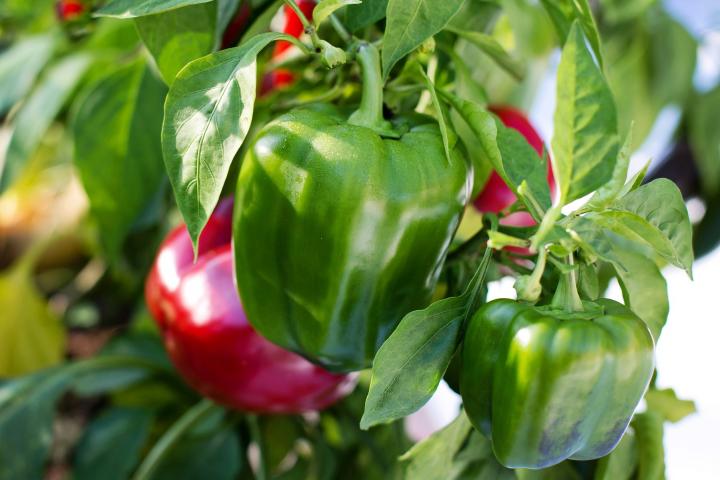
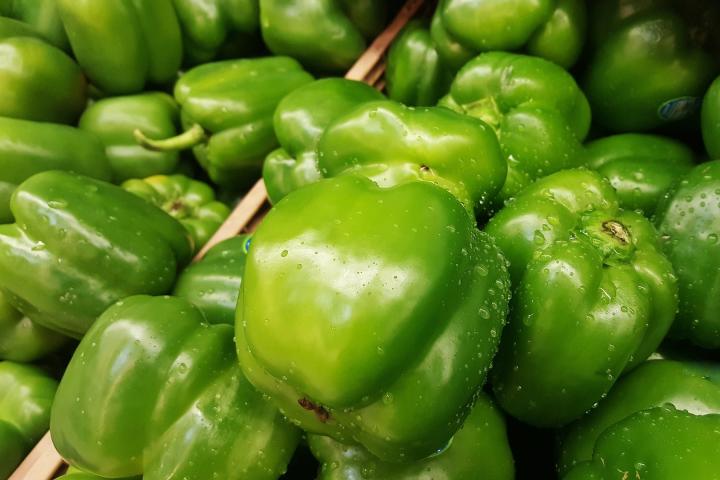
Begin harvesting bell peppers as soon as the plants begin fruiting and the peppers reach a usable size. You can harvest bell peppers when they’re green or when they reach their mature color, which may be red, orange, yellow, or even purple depending on the variety. Harvesting regularly prompts pepper plants to produce more fruit and safeguards harvests from pest damage; however, bell peppers get sweeter the longer they stay on the plant.
How to Harvest
To harvest bell peppers, hold the pepper stem and snip the stem off the plant with a clean pair of pruners, scissors, or a sharp knife. Don’t pull bell peppers off the plant as this can cause significant damage and make peppers less productive.
Storage
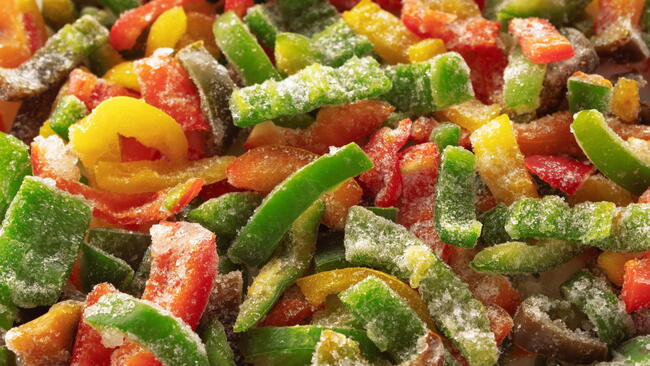
After harvesting, bell peppers should stay fresh in the cripsper drawer of your fridge for up to 10 days. For longer storage, you can also chop and freeze bell peppers, or wash, de-seed, chop and dry them in an oven or dehydrator set at 140°F for 4 to 6 hours.
Types
Look for varieties that ripen to their full color quickly; fully mature peppers are the most nutritious—and tastier, too!
- Green peppers that turn Red: ‘Lady Bell’, ‘Gypsy’, ‘Bell Boy’, ‘Lipstick’
- Orange: ‘Milena’, ‘Orange Sun’
- Yellow: ‘Golden California Wonder’


Always check your soil's pH (acidity/alkalinity) before introducing additives. Acidic, or sour, soil has a pH lower than 7.0 and is amended with finely ground limestone. Ideally, lime is added to soil several months before planting.
Aklaline, or sweet soil, has a pH above 7.0 and is amended by adding ground sulphur—again, several months before planting.
Bell peppers prefer well draining, composted soil that is slightly acidic, with a pH between 5.5 and 7.0.
Too much lime can be harmful to peppers. Perhaps you want to check the soil's pH. Kits for doing so are available at almost any garden or home store for a couple dollars.
Pepper seeds germinate best at temps between 85°F and 90°F, and seedlings develop well at 75°F during the day and no less than 65°F (some say 60°F) at night. They slow down during cool periods. Did anything change in your temp conditions?
If they come back to life, beware of transplant shock: reduce the air temp and amount of water and increase the air circulation around them before bringing them outside.
Peppers have many fans that are not humans.
Corn earworm (shows up where corn is grown, probably not your area), fall armyworm (strikes in autumn, as the name suggests), pepper maggot (is about the size of a housefly; here's a candidate) and pepper weevil larva (these are tiny and found in sub-tropical areas, also a contender) are among the insects that bore into the fruit. There are others.
Management on a few pots (vs a field or bed) usually involve using crop rotation methods (or changing pot soil from year to year) and using trays or saucers under the pots to deny some pests entry from the bottom. Use a slow-release fertilizer and if using composted material, be sure that it reached a temperture high enough to kill pest organisms.
See the next entry for more advice.
- « Previous
- 1
- 2
- …
- 10
- Next »

Comments