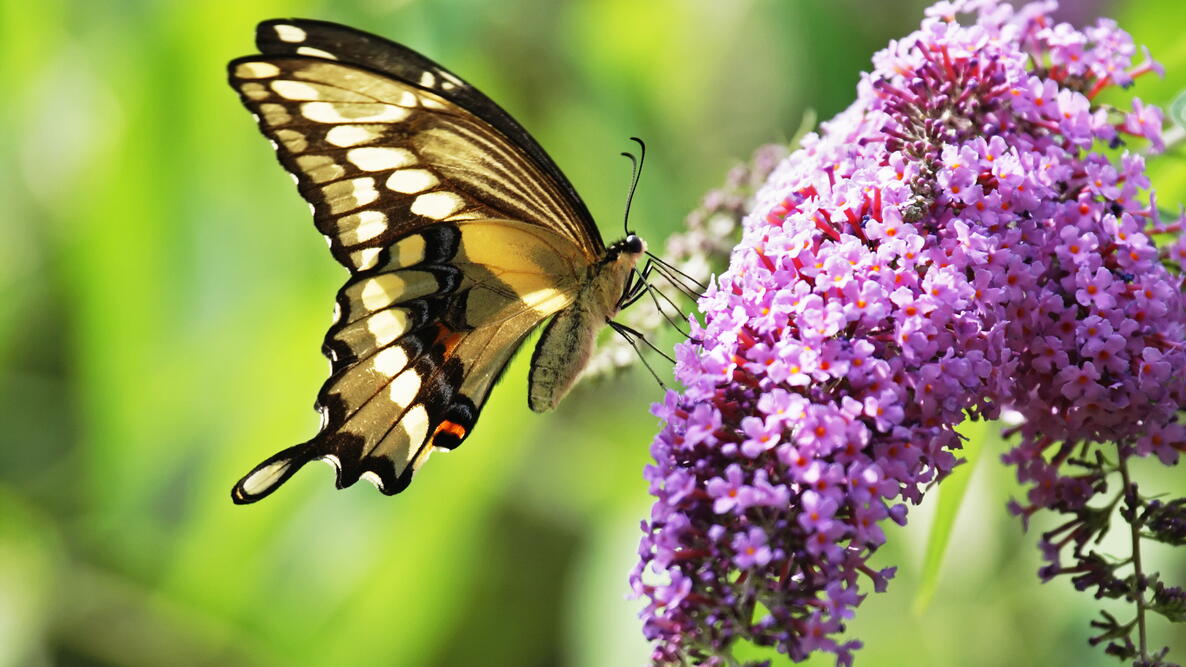
Caption
Attract beautiful butterflies to your garden with a butterfly bush.
If you’ve ever dreamed of a garden buzzing with butterflies, the butterfly bush might seem like your perfect match. With its arching stems and cone-shaped clusters of fragrant blooms, this fast-growing shrub is a pollinator magnet that brings nonstop summer color. But before you plant, there’s more to consider—like when to prune (hint: not too early!) and whether your region may classify it as invasive.
In this guide, we’ll help you plant, grow, prune, and responsibly care for Buddleja—so you can enjoy its beauty while being a smart steward of your garden.
Also called “summer lilacs,” butterfly bushes (Buddleia davidii) are hardy to Zone 5 and remain evergreen from Zone 8 south. Growing 5 to 10 feet tall, this large, arching shrub produces an abundance of flowers—long, spiked trusses—in mainly purple and pink colors. The shrub grows well in perennial gardens or as a shrub border, and the flowers are good for cutting.
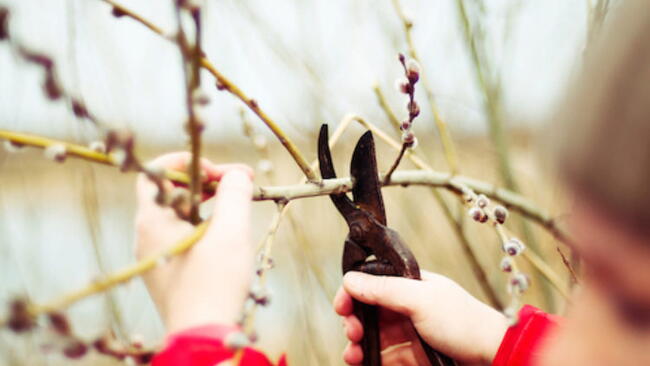
Don’t prune at the wrong time. Butterfly bush growth appears on new wood, so pruning should wait until the new wood is ready to grow in spring. Also, be patient with this shrub as it may not leaf out in the spring until after other perennials.
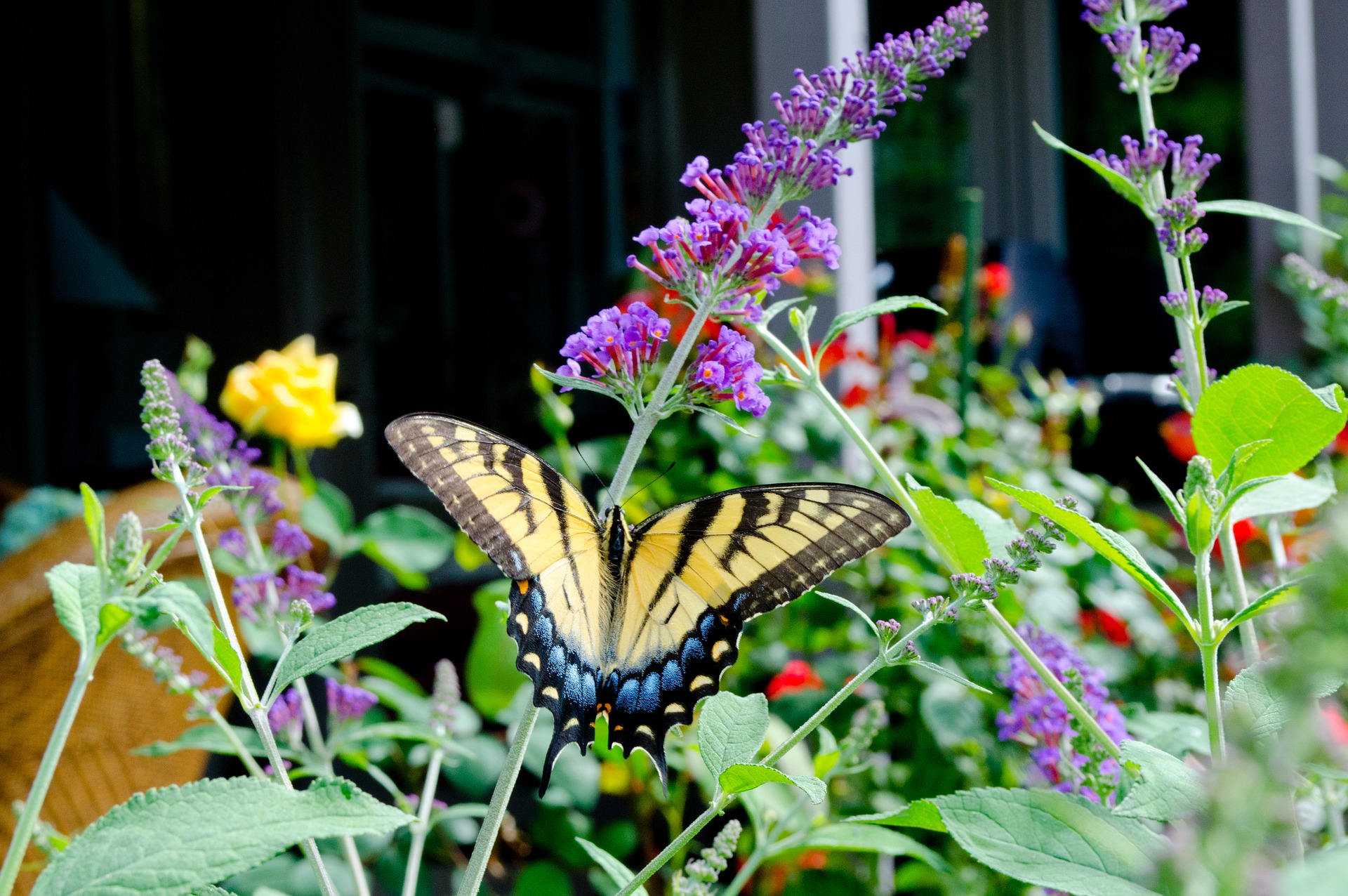
Invasive Concerns of Butterfly Bushes
Please note that the butterfly bush, originally imported from China, has been classified as an invasive species in many U.S. states, as it’s known to crowd out native plants that are essential to wildlife. In warm climates, it can become a noxious weed and spread aggressively, while in cooler climates, it mostly stays contained if gardeners deadhead the flowers.
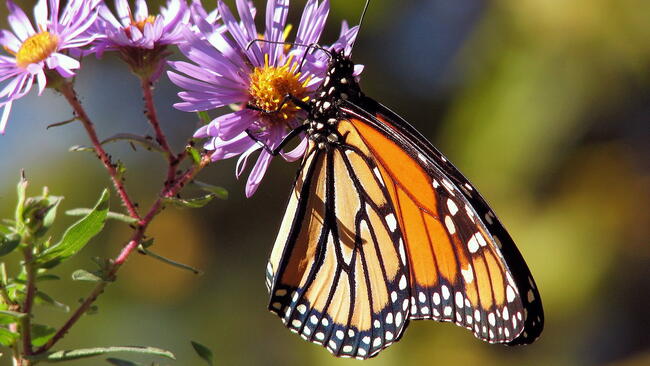
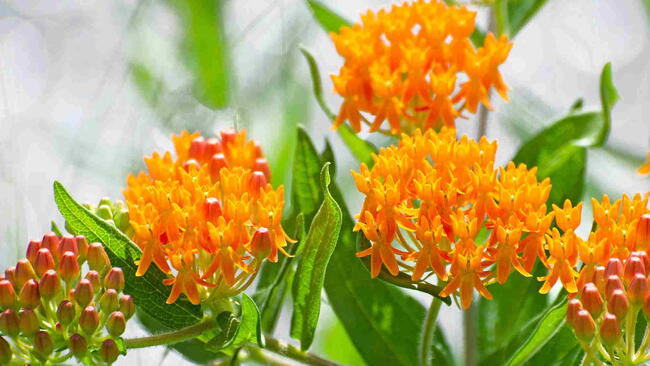
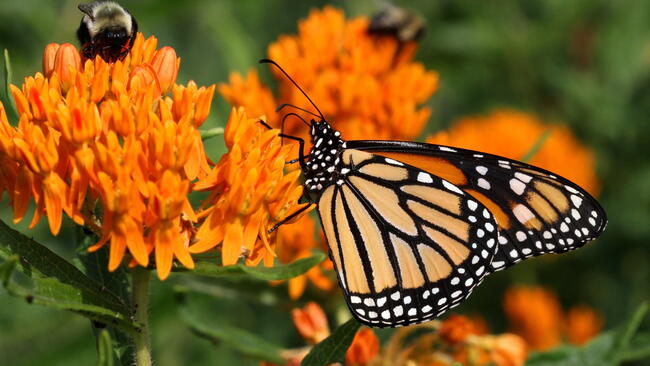
Note: The butterfly bush does provide adult butterflies with nectar similar to that of many flowers. However, it is not a “host plant” for butterfly larvae; if you want the butterflies to stay, be sure to add native host plants such as milkweed, aster, and dill. See plants that attract butterflies.
If you would still like to put a butterfly bush in your garden, there are a few species of non-invasive butterfly bushes native to the southwestern United States. Also, there are newer varieties that stay compact and won’t take over your garden. See our native list of butterfly bushes below.
Please check with your local cooperative extension for more information.
Types
We are no longer recommending new plantings of the butterfly bush, given its categorization as an invasive in most of North America. Instead, we recommend using plants that better support the native landscape and food web, given our declining pollinator population. See alternative plants that attract butterflies.
Native Alternatives to Butterfly Bushes
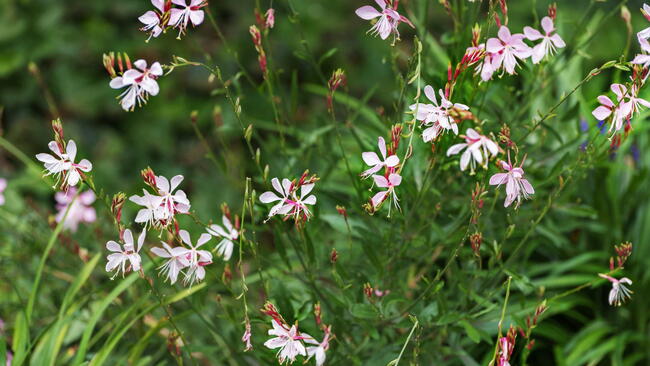
Here are a few great flowering alternatives that also serve as host plants for caterpillars:
- Asters (Symphyotrichum)
- Beardtongue (Penstemon)
- Bee Balm (Monarda)
- Black-Eyed Susan (Rudbeckia)
- Columbine (Aquilegia)
- Coneflowers (Echinacea)
- Goldenrod (Solidago)
- Irises (Iris)
- Milkweed (Asclepias)
- Rhododendrons & Azaleas (Rhododendron)
- Spicebush (Lindera)
- Strawberries (Fragaria)
- Verbena (Verbena)
- Viburnum (Viburnum)
- Yarrow (Achillea)
See a list of host plants native to your area here: Native Plant Finder

More Like This
Comments

Buddleia has a very shallow root system, which makes successful transplanting a challenge. Be prepared by watering it well before and after digging. Also dig wide around the root zone to get as many feeder roots as possible. Before transplanting, only prune what you know is dead. (It blooms on one-year-old wood.)
You should have time to prune them as long as you do it very soon, although they may not bloom. Hopefully they will bloom next year as long as you get your pruning done a bit earlier.
- « Previous
- 1
- 2
- …
- 10
- Next »

Hi Susan,
The bushy growth habit you like is the result of proper pruning (not cutting down to the ground). With respect to your leaves, there are a few different insect pests that cause that kind of damage. All told, your buddleia doesn't sound like it is particularly healthy. But don't despair, this is a great opportunity! The standard Butterfly bush is an invasive species; horticulturists now advise against planting it, so consider replacing yours with a non-invasive, sterile cultivar like 'Asian Moon', 'Blue Chip', or 'Ice Chip'.