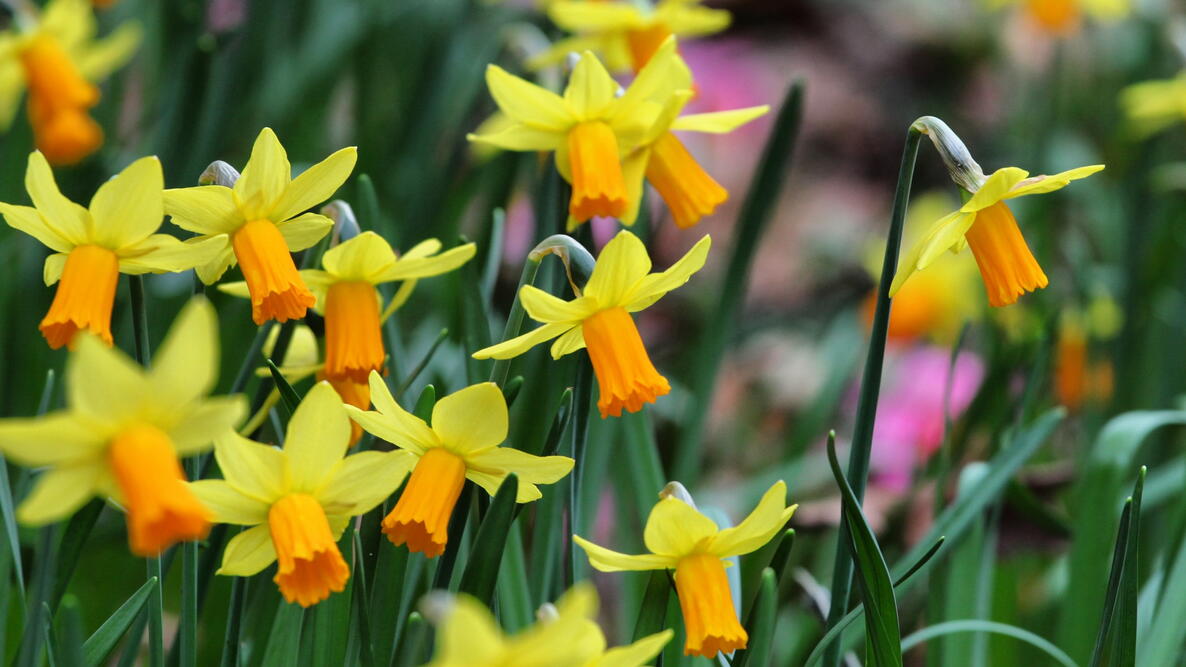
Caption
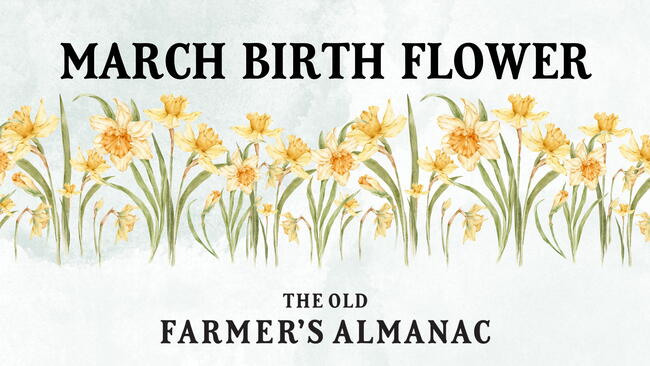
Yellow daffodils, ‘Jetfire’ Narcissus, in flower in early spring
Types
According to the American Daffodil Society, there are 13 official daffodil flower types and more than 25,000 named cultivars!
Whatever variety you choose, the most important tip is: Get the best quality bulbs for the best flowers. The bigger the bulbs, the better. Look for top-size bulbs, the biggest bulbs on the market.
- ‘Dutch Master’ is the classic daffodil—big and yellow with a very large cup and oversized trumpets. They bloom early, naturalize easily, and are great for planting in masses.

- ‘Barrett Browning’ is the recognizable pure white daffodil with a bright orange trumpet surrounded by a golden halo. They bloom early, naturalize easily, and do well in warmer climates, too.

- ’Tahiti’ is a stunner with layers of rounded, golden yellow petals interspersed with frilly, red-orange accents. They bloom mid- to late season, last longer, and make an excellent cut flower.

- ‘Tete-a-Tete’ is an adorable mini daffodil that flowers early and blooms for weeks as one of the longest-blooming varieties. Ideal for flower beds and containers and naturalizes with ease.

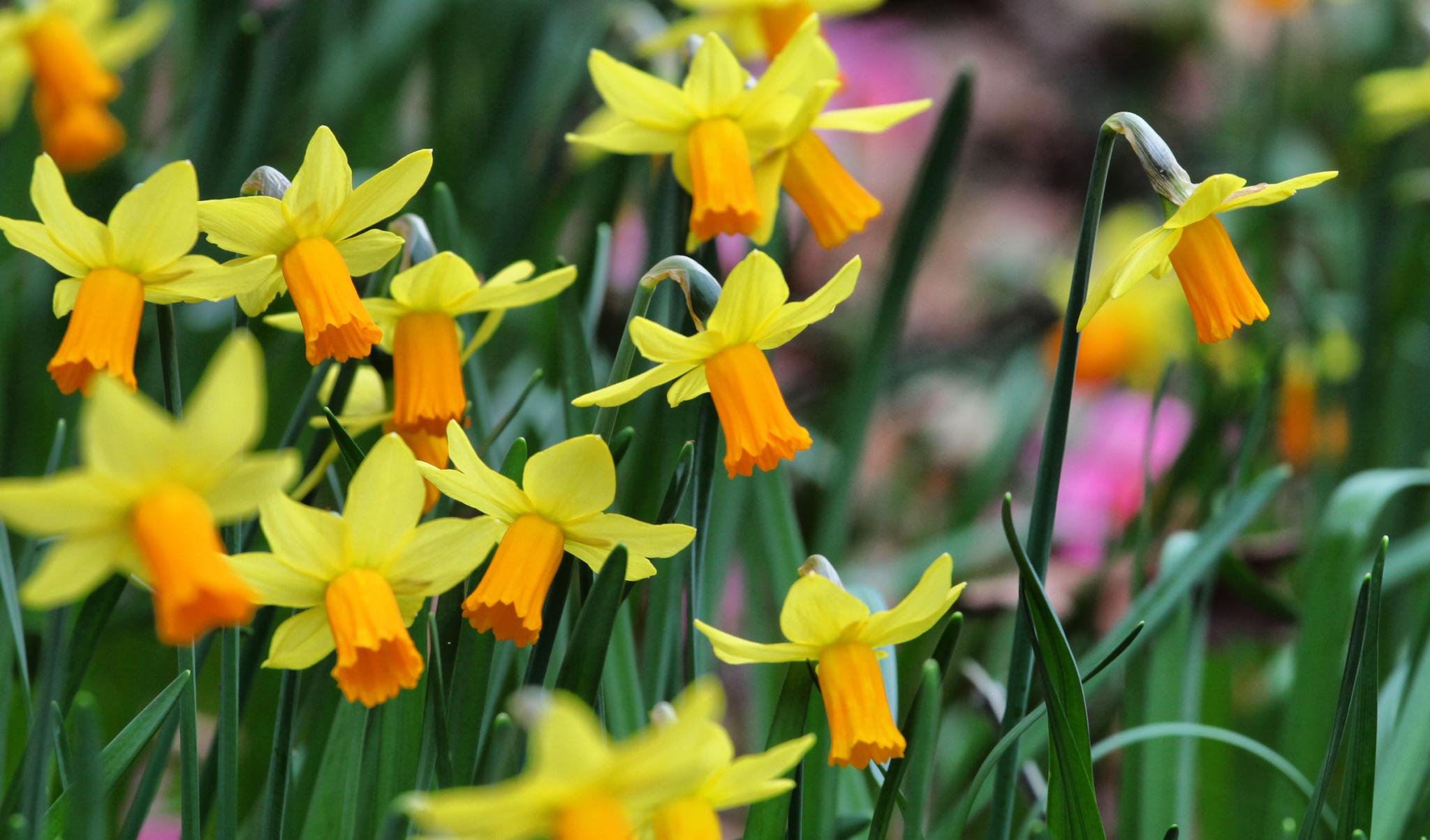
- ‘Jetfire’ is another mini daffodil with bright orange cups and swept-back yellow petals. It blooms in early spring, is very long-lasting, and doesn’t flop over.
- ‘Petit Four’ is a good choice for a partially shady site. The flower has white petals with a double cup of apricot pink and grows 16 inches tall.
- ‘Cheerfulness’ bears double flowers and multiple blooms per stem; this daffodil is very fragrant with a lovely gardenia-like scent. Blooms in late spring and makes an excellent cut flower.
- ‘Thalia’ is an all-white daffodil, making it wonderful for moon gardens. Learn about 20 pure white flowers to include in your garden.

More Like This
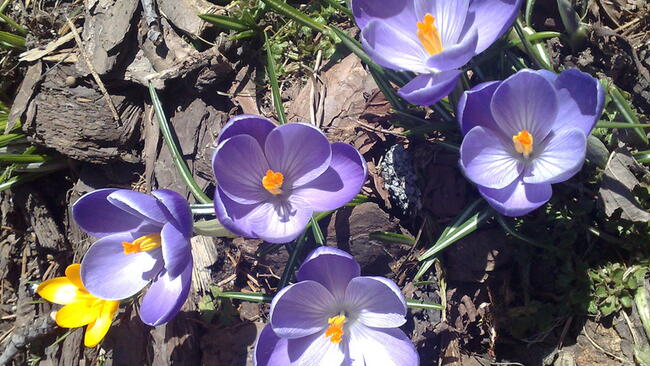
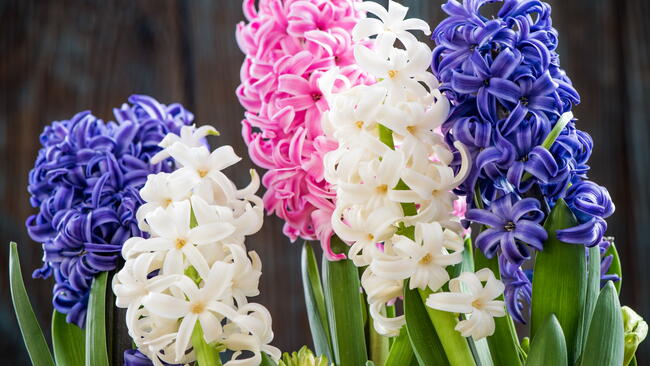

Store them in peat moss, lightly dampened, in a cool, dark place and plant them in the fall.
It is likely that weeds would peak through gravel as easily (maybe easier) than mulch but mulch would be easier to work with to remove them. (It's lighter!) We would go with the mulch. And consider that you might have to add more from time to time (year to year). Sounds lovely!
Yes, there are "florist" plants. They were raised indoors and they're more of a "gift" plant that lasts through their bloom. They aren't usually bred to survive the outdoors. In a way, we're glad the retailer is being honest about this. Many people are misled. Just keep the soil moist as it's in a pot (but don't let it sit in water collected at bottom of pot) and it should be easy to for indoors.
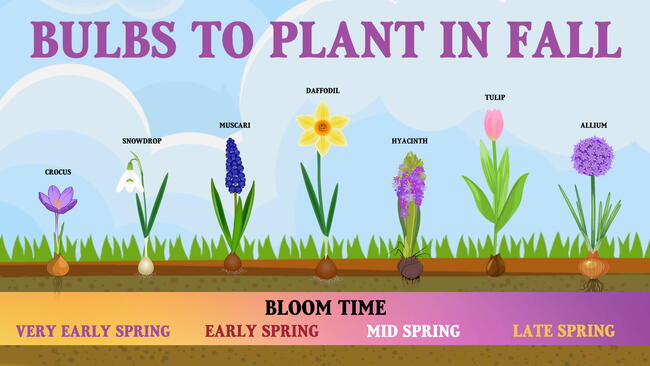
No, you will not likely see any growth from the bulbs until spring 2019. Daffodils are "fall-planted" bulbs that bloom in the spring, which means they are typically planted in autumn. They generally need a cold spell in order to bloom. These include crocus, daffodil, iris, and tulip. See more here: https://www.almanac.com/content/planting-bulbs-spring-flowers
"Spring-planted" bulbs are those that are planted in the spring for early to late summer blooms (depending on the particular bulb; not all bloom through the summer). These include tuberous begonia, canna, dahlia, daylily, gladiolus, and Asiatic lily. See more here: https://www.almanac.com/content/growing-guide-spring-planted-bulbs
Just because you purchased the bulbs in bloom from a local store that does not mean that they bloomed locally. It is very common to ship plants grown/forced elsewhere into communities for purchase seasonally. Daffodils need a chill at temps around 40°F for 12 to 16 weeks. It's not likely they got an adequate chill where you are, and it's not likely that they would recover and return to their original form. Some people try to refrigerate them for the period but results are not guaranteed.
- « Previous
- 1
- 2
- …
- 10
- Next »

Comments