
Image Credit:
Beeldbewerking/GettyImages
Sponsored Article:
Cummins
Botanical Name
Brassica oleracea var. acephala
Grown as
Toxicity
Sun Exposure
Water Needs
Height
Spread
Soil pH
Special Features
Resilience
Plant Type
Harvesting
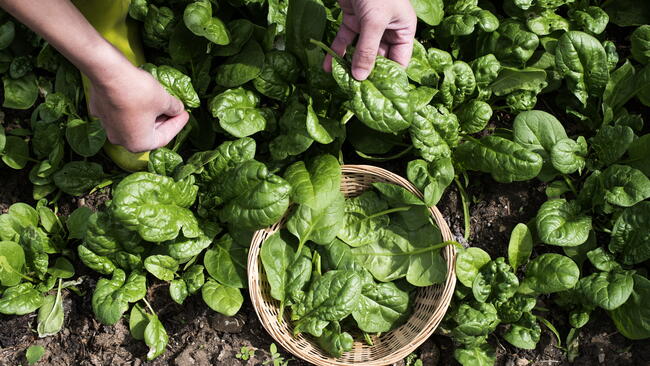
- Kale is ready to harvest when the leaves are about the size of your hand. Pick about a fistful of outer leaves per harvest, but no more than one-third of the plant at one time.
- Avoid picking the terminal bud (at the top center of the plant), which helps to maintain the plant’s productivity.
- Kale will continue growing until temperatures reach 20°F/-7°C. Do not stop harvesting: A “kiss” of frost makes it even sweeter. (See local frost dates.)
- To extend the harvest, protect with row covers or tarps. Or, create a makeshift cover of old blankets propped up by hay bales.

Photo credit: Beeldbewerking/GettyImages
How to Store Kale
Store kale, like other leafy greens, in a loose plastic bag in the refrigerator. It should keep for about 1 week.
Types
- ‘Red Russian’ (or ‘Russian Red’): heirloom; oak leaf-shape, gray-green leaves with deep-purple veins and stem; an early crop.
- ‘Lacinato’ (aka ‘Lacinato Blue’, ‘Tuscan’, ‘Black Palm Tree’, or ‘Cavil Nero’): heirloom, straplike leaves up to 2 feet long on plants that resemble small palm trees; heat tolerant and very cold-hardy.
- ‘True Siberian’: large, frilly, blue-green leaves; cold-hardy; pick all winter in some areas.
- ‘Vates Blue Curled’: hardy variety that is slow to bolt and does not yellow in cold weather. Its eponymous leaves reach 12 to 14 inches on 15-inch plants.
- ‘Winterbor’: resembles ‘Vates’, with 24-inch leaves on 2- to 3-foot-tall plants; baby leaves can be harvested at 28 days; frost-tolerant.


More Like This
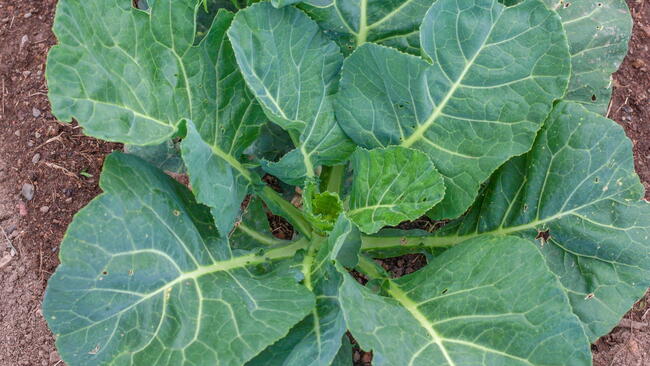
About 5 or 6 years ago I bought a perennial kale in 4" pot. It has survived, thrived, and been divided numerous times since then. Takes cold & snow well. Milder flavor than cavalo nero ("dinosaur") and slightly more tender leaves. A nice ornamental as well as edible.
So last year I had giant beautiful Kale plants. They overwintered and held out pretty decent. Then they flowered and went to seed. I meant to gather the seeds before they all fell but got sidetracked. So my dirt is full of Kale seeds. It's mid summer, July, here. Can I just stir some of what's on the ground into the dirt and water and have new Kale for the rest of the summer? Thanks!

Hi Kristan,
As long as the temperature is between 60 and 85 degrees F, you can be fairly certain your seeds will germinate in the soil and sprout again!
A neighbor (novice gardener) has several large kale plants, though they look rather ragged in July. (Live in Tennessee). Says her daughter bought the seedling plants, but she is going to destroy them because they are not the 'curly kind' of kale she likes and are broad-leafed instead. I told her, well, if you're going to rip them up, i might try replanting in my garden to see if they'll survive the winter. (Read here that kale is a biennial -- and i'm non-discriminatory insofar as kale varieties go.) OK, she says, but lemme know in a week or so or they're gone. Worth the effort?
If you've got the space for it, sure! Try planting in a place that gets partial sun, as full summer sun may be too much for transplanted kale. If it survives, you should get more growth as the weather cools in late summer and fall.
I live in central France and, at the moment, we are in the middle of a Drought Crisis with daily temperatures in the high 30's/low 40's °C. I have an 18 metre long poly tunnel that I am watering with used bath water as the water table is so low. The tunnel runs, more or less, East to West with the beds going North to South across the tunnel. I mulch my beds with the old straw bedding from the rabbits / hens / ducks and most of the veg seems to be surviving.
The other day I was given a packet of Curly Kale seeds. I've never grown them before so I'm looking for pointers as to (1) when to plant the seeds and (2) how to care for them. Any advice greatly welcome.
Thanks in advance
Jannie
I live in SoCal and we don’t get frosts at all. Can I ‘simulate’ a frost by either putting the leaves in the freezer or dumping ice to melt around the leaves?
No. When the PLANT experiences cold weather and/or frost or snow, it responds by adding sugar to its fluids. The sugar acts as an antifreeze to protect the veins, stems and leaves from freezing. WE like it because it makes the leaves sweeter but the plant could care less what we think. Your putting the leaves in the freezer has no effect on the plant because you've already picked the leaves. Dumping ice around the leaves would also have zero effect. It's the roots and stems which are sensing the cold and producing the sugar. IF you were raising Kale indoors or in a greenhouse in water ("Hydroponics"), you could chill the water down to 33 degrees and stimulate the Kale to produce the sugar. But that would be a very elaborate and expensive way just to get sweeter Kale and would hardly be worth it.
How deep does the soil in the raised bed need to be to grow kale

Soil should be 12 to 18 inches in depth. Till the soil to a depth of 6 to 8 inches
- « Previous
- 1
- 2
- …
- 10
- Next »
📣The Gardening Club Just Got Better! 3 Deliveries, 10% Store Discount, and more!

Comments