
Harvesting
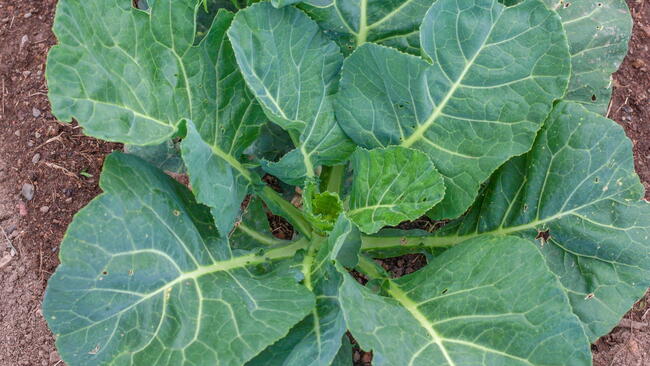
- Kale is ready to harvest when the leaves are about the size of your hand. Pick about a fistful of outer leaves per harvest, but no more than one-third of the plant at one time.
- Avoid picking the terminal bud (at the top center of the plant), which helps to maintain the plant’s productivity.
- Kale will continue growing until temperatures reach 20°F/-7°C. Do not stop harvesting: A “kiss” of frost makes it even sweeter. (See local frost dates.)
- To extend the harvest, protect with row covers or tarps. Or, create a makeshift cover of old blankets propped up by hay bales.

Photo credit: Beeldbewerking/GettyImages
How to Store Kale
Store kale, like other leafy greens, in a loose plastic bag in the refrigerator. It should keep for about 1 week.
Types
- ‘Red Russian’ (or ‘Russian Red’): heirloom; oak leaf-shape, gray-green leaves with deep-purple veins and stem; an early crop.
- ‘Lacinato’ (aka ‘Lacinato Blue’, ‘Tuscan’, ‘Black Palm Tree’, or ‘Cavil Nero’): heirloom, straplike leaves up to 2 feet long on plants that resemble small palm trees; heat tolerant and very cold-hardy.
- ‘True Siberian’: large, frilly, blue-green leaves; cold-hardy; pick all winter in some areas.
- ‘Vates Blue Curled’: hardy variety that is slow to bolt and does not yellow in cold weather. Its eponymous leaves reach 12 to 14 inches on 15-inch plants.
- ‘Winterbor’: resembles ‘Vates’, with 24-inch leaves on 2- to 3-foot-tall plants; baby leaves can be harvested at 28 days; frost-tolerant.

More Like This

Russian kale is not the same as Siberian kale. Russian kale is edible but it is tough; it is usually grown as an ornamental (decorative) plant, not a food source.
Are you eating it, Charles?
That's quite a lot of growth! If you want to save the seeds, let it flower and see what happens (we have not had the pleasure).
Because kale is an annual, we would expect that you would want to get another crop going for this year, so removing it after it sets seeds and you harvest those would seem like your best bet.
According to one chart produced by a Georgia county extension, Feb 1 to March 10 is good for a spring sowing of kale seeds or transplants in middle Georgia. Northern areas, such as Atlanta, should add 2 to 3 weeks to those dates (start around Feb 14). You might call your county's Cooperative Extension for specific dates for your area. Contact information can be found at:
http://www.almanac.com/content/cooperative-extension-services
- « Previous
- 1
- 2
- …
- 10
- Next »

Comments