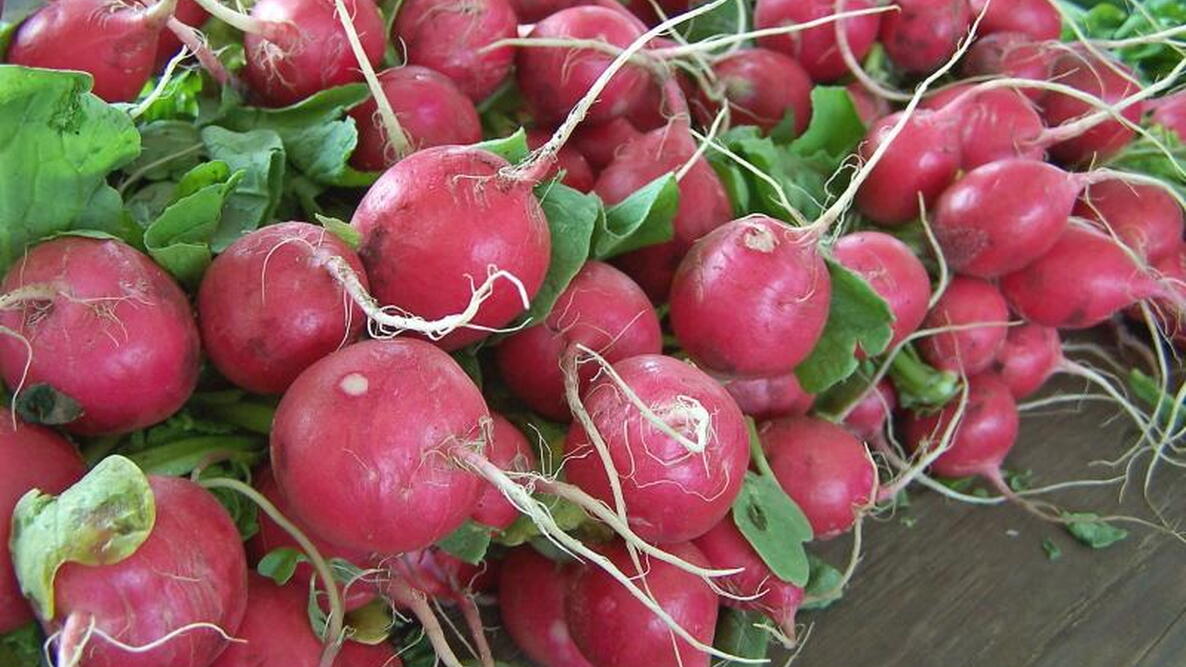
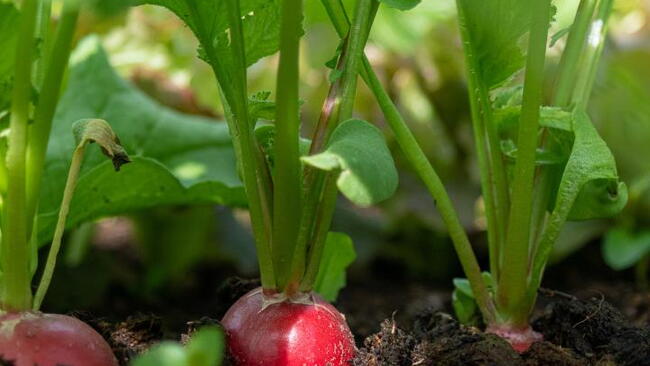
Who knew something so small could be so mighty? Radishes are the garden’s speedsters—ready to harvest in just weeks! Whether you’re sneaking them between rows of your bigger veggies, growing them in pots, or even sowing for a winter crop, radishes are the versatile root vegetable you’ve been waiting for. With their crisp, peppery bite, they’ll add a refreshing crunch to salads and main dishes. Learn how easy it is to grow radishes.
Speedy radishes can be grown almost anywhere: between larger vegetables, around soon-to-finish crops, or in pots—and will grow peppery roots both early and late in the season. Try some for yourself, including delicious winter radishes to sow from late summer. In this short video, we’ll tell you all you need to grow them successfully.
What’s the most opportunistic crop you could possibly grow? For me, it’s the humble, lowly radish—or rather, the rousing, ravishing radish! Squeeze a sneaky row or two between larger vegetables. Sow radishes around crops that are about to finish. Grow them in pots, or squeeze in an extravagantly early or late harvest of these peppery roots. They’re super fast, super flexible—oh, and super yummy! So let’s crack on and sow some!
About Radishes
Radishes are an annual root vegetable and a member of the Brassicaceae or cabbage family, which also includes broccoli, cabbage, cauliflower, collards, horseradish, and kale. The entire radish plant is edible—from root to leaves—and can be enjoyed raw or cooked. (See cooking notes below.)
Seeds can be planted in both the spring and the fall, but sowing should be suspended when warm temperatures arrive (70°F or higher); heat causes radishes to bolt, making them essentially useless. Otherwise, radishes are one of the easiest vegetables to grow.
Because radishes mature so quickly, you can sow them anywhere there is an empty space or sow in between rows of other vegetables such as beets or carrots. Radishes also happen to make excellent companion plants to help deter pests from other vegetables.
Growing
Thinning Radishes
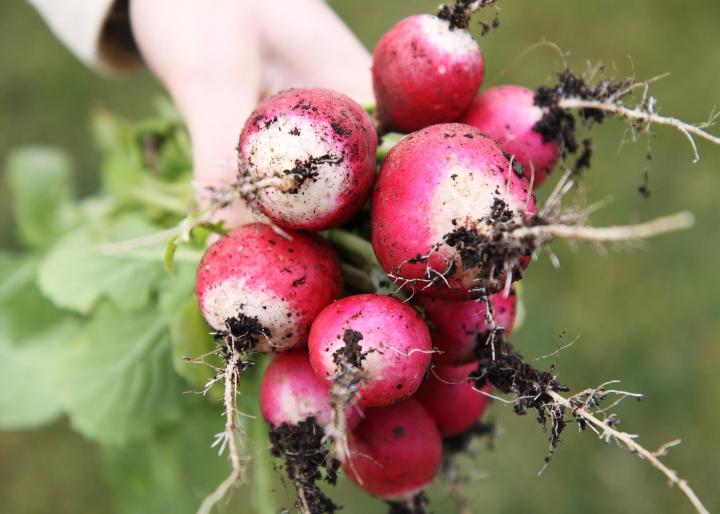
Thinning is probably the most important step in growing radishes. Once the seedlings are 2 inches tall or about a week old, it’s important to thin radishes to 2- to 3-inch spacings. Crowded radishes do not grow well, and you’ll end up getting small, shriveled, inedible roots.
To thin, just snip the greens at the soil line. The thinnings are edible, so add them to a salad! Or, if thinnings have been carefully extracted with roots, leaves, and stem intact, replant them. Transplants might be a bit stressed, but they should recover.

Watering Radishes
- Consistent, even moisture is key. Don’t let the plants dry out, or you’ll get pithy, pungent roots, but don’t let them get waterlogged, or the roots will rot. A drip irrigation system is a great way to achieve a good balance.
- Mulch the radishes with compost enriched with wood ashes to help retain moisture in dry conditions and keep root maggots at bay.
- Weed often; weeds will quickly crowd out radishes.
Harvesting
The biggest mistake gardeners make with spring radishes is leaving them in the ground past their maturity; then, they will get tough and taste starchy. Winter radishes, on the other hand, can be kept in the ground for a few weeks after they mature, if the weather is cool. Finish the harvest before frost.
- To harvest, check your seed packet. Different types of radishes have different growth times. Some varieties are pulled as soon as 3 weeks after planting, when roots are approximately 1 inch in diameter. Pull one out as a test.
- Harvest roots as soon as they have reached their final size. Don’t delay, as they can go from crisp and crunchy to woody and excessively spicy within a matter of days. Lift the biggest roots each time you harvest, so the remainder can continue to swell.
- Another good sign that your radish root is doing well is that the green growth above the soil is 6 to 8 inches tall.
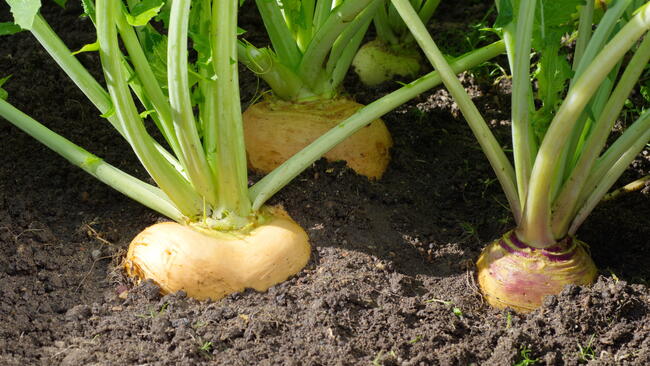
- Finally, you should see or feel the “shoulder” or top part of the radish pushing up against the topsoil.
If some radishes bolt before you have a chance to harvest them, leave a few to develop seedpods. The seedpods, which look like tiny bean or pea pods, are quite tasty in a salad.
How to Store Radishes
- Cut off the tops and the thin root tails, wash the radishes, and dry them thoroughly. Store in produce or zip-top bags in the crisper drawer of the refrigerator.
- Radish greens can be stored separately for up to 3 days. Put them in a produce bag with a dry paper towel.
Types
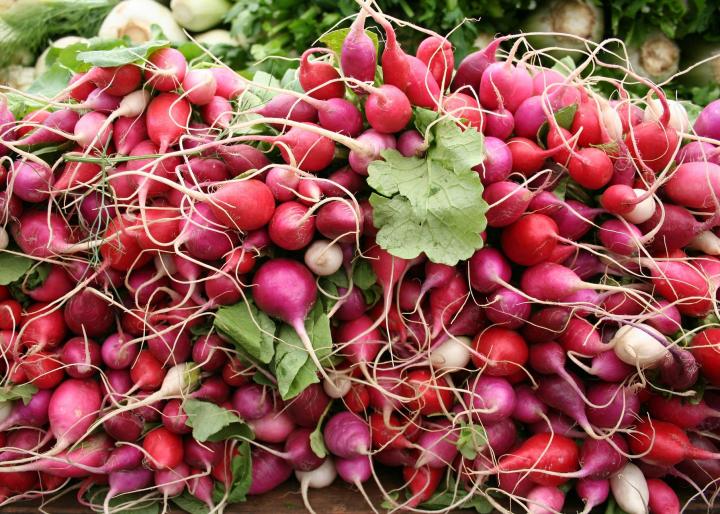
There are both “spring” and “winter” radishes. Note: The small, round varieties do not tolerate heat as well as the longer types, so plant the small types first in early spring. In general, we find that smaller radishes are milder in flavor and the larger varieties are spicier.
- ‘Burpee White’: spring variety; small type; heirloom radish with white crisp flesh; mild flavor
- ‘Champion’: spring variety; small type; bright scarlet with firm, crisp white flesh; mild flavor
- ‘Cherry Belle’: small type; round, red with white flesh; heirloom radish; crisp, light flavor
- ‘Daikon’: winter radish; grows to 14 inches long; best grown in cooler climates or during the cooler ends of the growing season; crisp and snappy taste
- ‘French Breakfast’: spring, late-maturing type can tolerate moderate heat; heirloom radish with 3-inch red roots, oblong shape, mild flavor
- ‘German Giant’: spring variety, red baseball-size; never gets too hot; sweet and mild
- ‘Spanish Black’: winter radish; large 3- to 4-inch turnip-shaped globes have crisp, pungent, spicy, pure-white flesh; great for storage
- ‘Watermelon’: winter radish; an heirloom Daikon radish variety with striking white skin and bright red insides; mild flavor with a light peppery tang.
- ‘White Icicle’: late spring, cylindrical white roots up to 5 inches long; can tolerate moderate heat; heirloom; mild-flavored with hints of peppery taste

More Like This


Comments