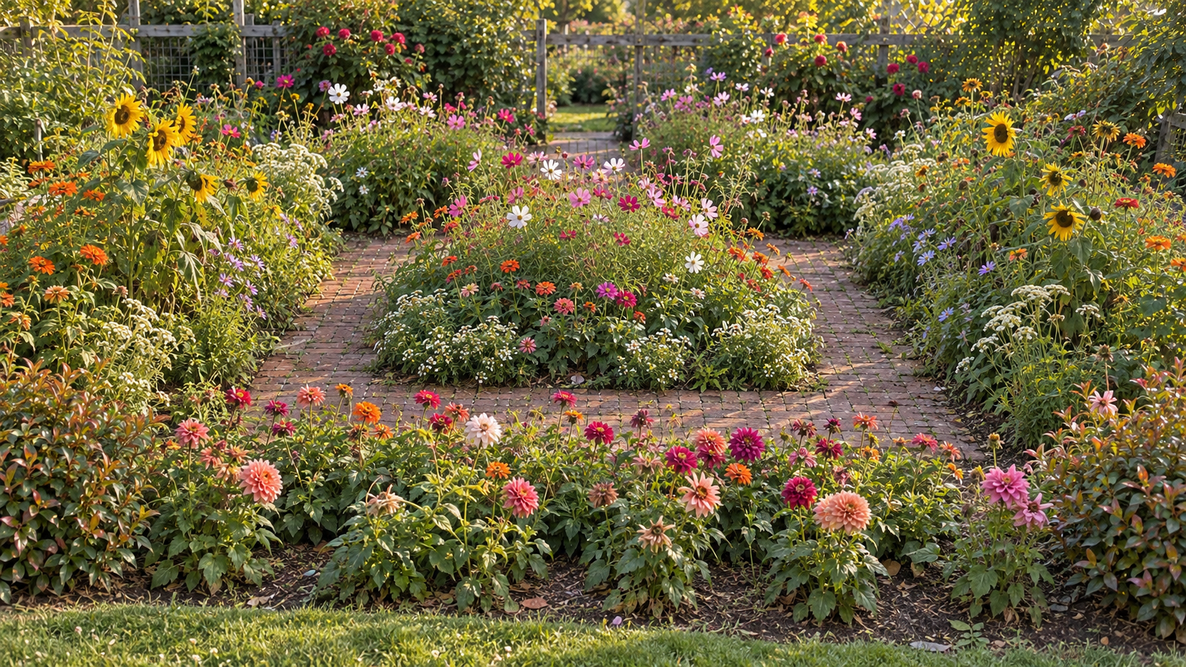
This cut flower garden layout gives you blooms for bouquets from spring through fall. It combines perennials, annuals, bulbs, and foliage plants for a steady supply of flowers to cut.
The plan also keeps the garden attractive outdoors, so you can bring flowers inside without leaving the beds looking bare.
In This Article
Part of Our Garden Plan Collection
This plan is part of our Garden Plan Library. Each plan guides you on what to plant, when, and how—so you can grow with confidence and enjoy a steady supply of blooms for cutting or decorative purposes.
What’s Included
- A dedicated layout and planting map for a cut flower garden design that includes perennials and annuals, which are good for cutting and bouquets.
- Step-by-step instructions for soil prep, planting, watering, and maintenance.
- Plant list along with a schedule and spacing guidance for consistent blooms.
- Tips for succession sowing to keep flowers blooming all season.
- Real gardener insights using this exact layout.
| Feature | Details |
|---|---|
| Garden Type: | Flower Cutting Garden |
| Difficulty Level | Beginner |
| Hardiness Zones: | 4–8 |
| Sun Exposure: | Full Sun |
| Seasonality: | Spring through Fall |
| Soil Type: | Rich, well-draining raised bed mix |
| Watering Needs: | Regular, consistent moisture |
| Special Features: | Annuals + perennials, built-in foliage, bouquet-friendly varieties |
| Garden Size: | Flexible — shown as a dedicated bed, but works in rows or borders |
| Fun Fact | Almost all flowers in this plan can be grown easily from seed! |

The Cut Flower Garden Layout
Unlike a cutting garden grown purely for production, this plan blends long-lasting plants with seasonal color. Flowers return year after year, while easy annuals fill in gaps and keep bouquets coming all season long. By mixing perennials, annuals, bulbs, and foliage plants, you get structure, variety, and repeat blooms from spring through fall.
This plan beautifully blends:
- Perennials such as roses and yarrow, which return every year.
- Annuals such as zinnias, sunflowers, scabiosa, cosmos, nigella, and dill, which provide abundant flowers for cutting.
- Tender perennials such as dahlias. Lift the tubers in colder regions and replant in spring.
- Spring bulbs such as tulips and pest-resistant alliums, which provide early-season flowers before the summer cutting garden reaches its peak.
- Foliage, because great bouquets need greenery, too. Photinia provides attractive foliage for cutting as well as year-round structure in the garden.
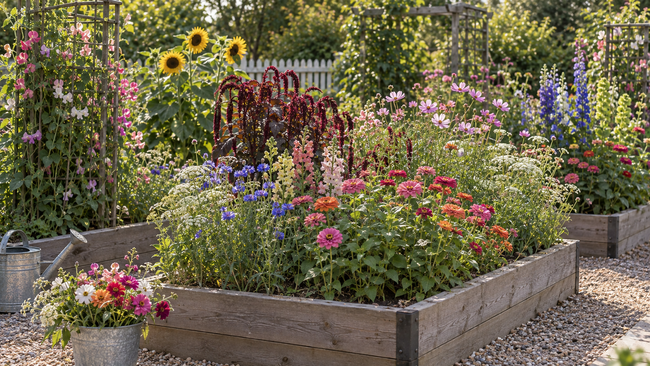
This cutting garden is shown as a single flower bed for clarity, but the same plants can be grown in rows, along borders, or woven into mixed garden beds.
Planting Map

A Seasonal Center Bed
The center bed is a succession area: tulips provide the spring display, followed by Orlaya, zinnias, and cosmos for summer cutting. Tulip bulbs are planted in the fall and Orlaya seeds are planted in late winter/early spring.
After the tulips flower, allow their foliage to remain until it yellows naturally so the bulbs can store energy for the following year. As spring gives way to summer, zinnia and cosmos seeds are planted.
Orlaya fills the four outer corners with low, lacy white flowers; zinnias form the colorful middle layer; and taller, airy cosmos rise from the center. Together, they help disguise the fading tulip foliage and turn the center bed into a productive summer cutting garden.
The Plant List
See guides to all plants listed below: Almanac Flower Growing Guides.
Main Garden Plant List
| Plant Name | Type | Spacing | Quantity | Sow Indoors | Sow/Plant Outdoors | Bloom Season |
|---|---|---|---|---|---|---|
| Zinnia | Annual | 9–12” | 10–12 | — | Mid May | July–Frost |
| Sunflower (Multi-stem) | Annual | 12–24” | 12–14 | — | Mid May | July–September |
| Cosmos | Annual | 12” | 6–8 | — | Mid May | July–Frost |
| Nigella (Love-in-a-Mist) | Annual | 6” | 6 | — | March/April | May–August |
| Scabiosa (Pincushion Flower) | Annual | 9–12” | 10 | — | Mid May | June–Frost |
| Mexican Sunflower | Annual | 18–24” | 6–8 | — | Mid May | July–September |
| Dill | Herb (annual) | 10–12” | 16 | — | Mid May | June–August |
| Rose (Shrub or Floribunda) | Perennial | 2 to 5 feet | 2 | Nursery plant | Spring | June–Frost |
| Yarrow | Perennial | 12–24” | 5 | — | Spring | June–September |
| Dahlia | Tender Perennial | 18–24” | 6–8 | — | After frost | July–Frost |
| Allium (Ornamental) | Bulb | 6–8” | 12–14 | — | Fall planting | Late Spring |
| Photinia (Red Robin) | Shrub | 2 to 3 feet | 2 | Nursery plant | Spring | Foliage year-round |
Seasonal Center Bed (4 × 4 Feet)
The quantities below are for the center bed only. The zinnias and cosmos are in addition to those shown in the main garden plan.
| Plant Name | Type | Spacing | Quantity | Sow/Plant Outdoors | Bloom Season | Role in Center Bed |
|---|---|---|---|---|---|---|
| Tulip | Bulb | 4–6” | 12–14 | Fall planting | Early-to-late spring | Spring centerpiece |
| Orlaya | Annual | 6” | 16 (from ~35 seeds) | Late winter/early spring | May–July | Low, lacy filler that helps disguise fading tulip foliage |
| Zinnia | Annual | 9–12” | 10–12 (from ~24 seeds) | Mid May | July–Frost | Summer focal flower |
| Cosmos | Annual | 12” | 6–8 (from ~16 seeds) | Mid May | July–Frost | Tall, airy canopy |
Succession tip: After the tulips finish flowering, leave their foliage in place until it yellows naturally. As the season progresses, Orlaya fills the lower layer, zinnias provide the middle layer, and cosmos rise above them, gradually turning the center bed from a spring bulb display into a summer cutting garden.
- Two Photinia (Red Robin) shrubs anchor the plan. Their evergreen leaves provide beautiful filler for arrangements year-round. Variegated pittosporum is another excellent choice, but truly any shrub with attractive foliage will work.
- Annuals give the biggest bang for your buck—plant generously for abundant summer color.
- Dill may surprise beginners, but its airy foliage and yellow umbels bring movement and depth to summer bouquets. Depending on your variety choices, your cutting garden can be pastel, bold and bright, or a cheerful mix of both.
- New to cutting flowers? Also consider multi-stemmed dwarf sunflowers in pale shades—‘Valentine’ is a lovely beginner-friendly choice with soft, lemon-colored petals.
How to Create Your Cutting Garden
Step 1: Soil Prep
Mix in compost or aged manure to build a deep, rich bed—flowers grown for cutting appreciate fertile, loose soil for long stems and full blooms.
Step 2: Plant for Succession
- Fall: Plant tulips in the center bed and ornamental alliums in their designated areas for spring flowers.
- Late Winter to Early Spring (Cool Season): Direct-sow Nigella seeds into the main perimeter beds while the soil is still cool. In the 4×4 center bed, surface-sow Orlaya in the four outer corners. In cold climates, sow as soon as the soil can be worked.
- Spring: Plant roses, yarrow, Photinia, and other perennial or shrub components.
- After frost danger passes: Direct-sow or transplant zinnias, cosmos, sunflowers, Mexican sunflowers, scabiosa, and dill. In the center bed, plant zinnias through the middle layer and cosmos in the center.
- Center bed: Allow tulip foliage to die back naturally while the Orlaya, zinnias, and cosmos grow up around it and gradually take over the summer display.
- After the soil warms: Plant dahlias.
Step 3: Maintenance
- Deadhead or harvest often—the more you cut, the more they bloom.
- For tulips, leave the foliage until it yellows naturally so the bulbs can recharge; many hybrids are replanted each fall for the best display.
- In colder zones, lift tubers in fall and replant in spring.
- Add 1 to 2 inches of compost around perennials at season’s end to keep them vigorous.
Step 4: Harvesting
- Cut flowers in the early morning, using clean pruning snips.
- Put stems immediately into water. Keep a bucket handy in the garden for easy harvesting.
Gardener Spotlight: Susie’s Experience
I always dreamed of having a cutting garden, but I never knew where to start. The Garden Planner made it so simple to see how many plants I needed and how to lay them out.
I created a dedicated cutting flower area with a pathway (mostly because it was fun to draw in the Planner!)—but the truth is, these flowers grow beautifully in rows or right inside a regular flower bed.
My favorites were the zinnias, dahlias, and scabiosa. And oddly enough, the dill! Its feathery leaves added such a pretty texture to my bouquets. The photinia shrub was the real secret—having easy greenery to snip made every bouquet look professional.
I now have a constant supply of gorgeous, fresh-cut bouquets on my kitchen table from spring until the first winter frost! By late summer, I was cutting flowers every few days and giving bouquets to neighbors. I must have a green thumb after all! If I can grow a cutting garden, anyone can.
Why Grow a Mixed Cutting Garden?
- Provides flowers for bouquets while still looking attractive outdoors.
- Combines plants that return each year with easy seasonal color.
- Attracts pollinators such as butterflies and bees.
- Encourages regular harvesting, which promotes more blooms.
- Offers flowers for everyday enjoyment and special occasions.
- Creates a garden meant to be shared.
FAQs for the Cut Flower Garden Layout
Q: Do I need a dedicated cutting garden area?
A: Not at all! This plan is shown as a standalone bed for clarity, but the flowers grow just as well in rows or mixed borders.
Q: Can everything be started outdoors?
A: Yes—most annuals are easy to direct-sow. Perennials, shrubs, and dahlias are planted as nursery plants or tubers.
Q: How do I keep flowers blooming all season?
A: Cut often. Harvesting encourages more growth—especially with zinnias, cosmos, and scabiosa.
Q: How should I overwinter dahlias?
A: In Zones 5b–10, mulch deeply after frost. In colder zones, lift tubers and store them in a cool, dry place.
Q: Do I need foliage plants?
A: Yes! Even one shrub adds structure and
Wit & Wisdom
“I must have flowers, always and always.” — Claude Monet.
A cutting garden rewards you for every snip—more blooms, more color, more joy. Whether pastel, bold, or wildly mixed, it’s a garden designed to be shared.
Other Plans to Explore
Want more inspiration for cut flowers? Check out these plot plans:
- Cut Flower Garden Plan for 3 Raised Beds - a steady supply of fresh flowers for bouquets and vases from spring through fall.
- Three-Season Perennial Garden Design - dependable plants, rich foliage, and overlapping bloom times.
- Pollinator Garden - native flowers that are easy for pollinators to access.
- Perennial Flower Garden - this garden delivers reliable color, texture, and structure throughout the growing season.
More References


Vegetable Garden Plans
Flower Garden Plans
More Like This



Comments