Primary Image
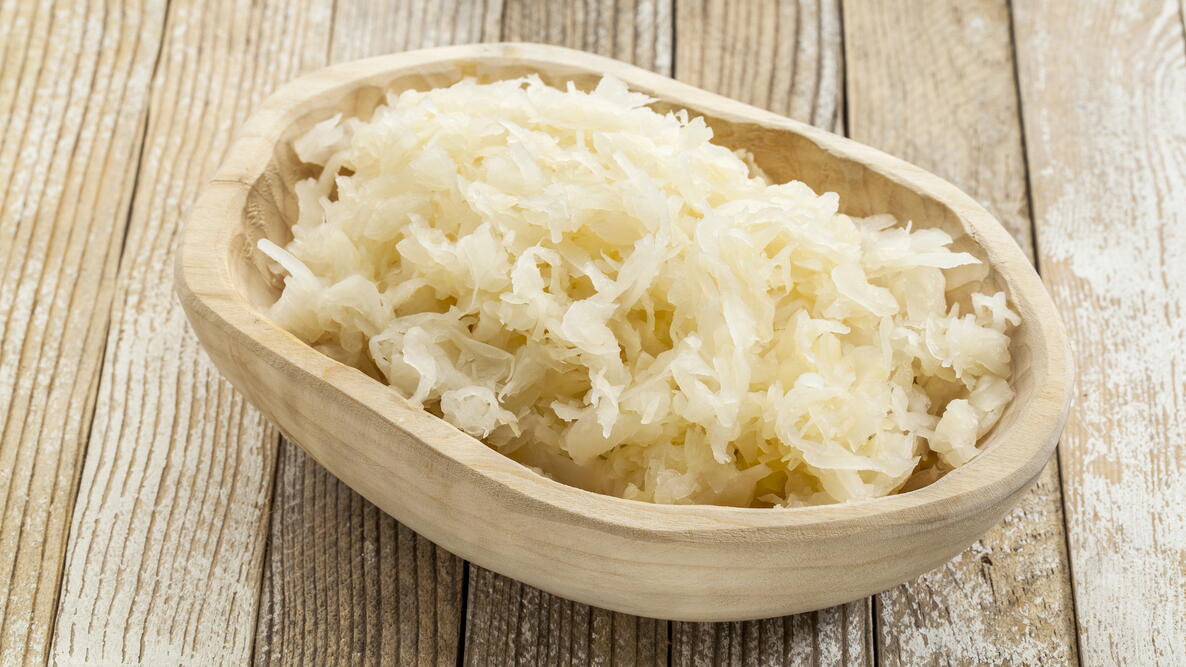
Caption
Learn how to make a delicicous bowl of sauerkraut from fresh cabbage.
Image Credit:
Crestock


Introduction to Preserving
Freezing
Making Quick Pickles
Making Quick Jams: Refrigerator or Freezer Jam
Vinegars
Water-Bath Canning
How to Can Tomatoes
How to Can Pickles
How to Can Jam and Jelly
Drying
Salting and Brining
Fermenting




I have used a method with some leftover cabbage leaf's shoved on top to hold the kraut under the brine. When I store the kraut in the refrigerator, do I remove that cabbage leaf from top? Or does the kraut have to stay submerged under brine even in the fridge? Thanks!

Yes, when the sauerkraut is done and you store it in the fridge, the cabbage leaf should be removed.
Thank you for your answer...please understand I am not familiar with this process but I want to learn so I checked out other sites...naturally not everyone says the same things and it can be confusing. Some others use their hands to rub the salt into the cabbage....I am assuming there might be a good reason you say to keep hands of the crock...so as not to transfer bacteria that may be under your nails? Also I need to discuss a previous question regarding heating the sauerkraut in the caner...I read that heat will destroy the lactic acid which is what makes the kraut a specially good food....but your answer is different...do you mean it will not affect the other nutritional value, or the lactic acid as well? (beneficial lactobacillus)...thank you......Gisele
The Sauerkraut recipe says to store in a cool basement...why not in the fridge? Also won't the simmering and processing in the caner kill the desirable fermenting elements which make Sauerkraut a special good food....and why not place the product in smaller individual glass jars after it is done rather than to leave it in the crock...wouldn't it be more sanitary? and how long will it last at correct storage temperature if not processed (simmered and canned).........also it says to use a potato masher but that is metal and it had just said not to use metal........any sensible answers to my many questions please?......Gisele
You can store the fermented sauerkraut in the refrigerator using smaller containers than the crock. It will be good for 6 months to 1 year. The hot water canning process is not going to hurt the taste or nutrition value of the sauerkraut. We do say in the introduction to only use wooden spoons or mashers. Do not use your metal masher.
My first attempt at make this Involved 50# of Cabbage. we slice it on a meat slicer into shreds. I went to the wine making section at the hardware store bought a 6# gal bucket w/ lid (food grade) and a wine fermenting water check. I also bought a Nylon bag. I salted and packed my cabbage into this bag in the bucket. this bucket and bag allowed me to twist the bag down tight, The brine just covered the bag. The whole bag wanted to float so I used a old glazed stone plate up side down and a Large zip lock bag filled clear sterile brine. to hold everything down. Snapped the lid on, filled my water check, and placed the hole mess on the entry landing. After about 2 months we opened it up No Mold present and the fermenting process was done. but we had over salted the cabbage. so we took out some and rinsed it with cold water and used it as normal what a great taste crunchy and tart. That bucket sat on the landing for 3yrs we would take out what we needed and close it back up. now about the third year it was getting a bit strong in taste so we opted to toss the remainder to the chickens who thought they was in heaven.
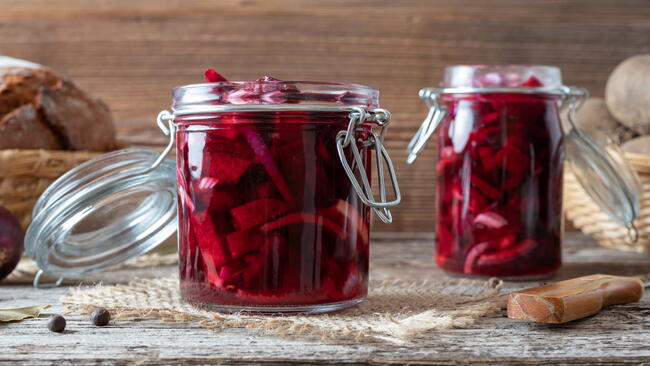
Now this brings us to this year, I used the same process. I have used less salt, today is 12/31/2015, we have just opened it up from its sleep on the landing. This is the finest batch so far great taste and not salty. I feel blessed. now this year we used the last pick of the garden and there was several heads of purple cabbage the color of the brine is purple and the Kraut is a light pink purple. now that's exciting that the color came out that way. expected some but not all of this. So people stay strong don't give up and don't be afraid to try different things. Happy New Year! Enjoy!
My first time making sauerkraut. I don't have a big jar so I decided to cut out the brine part. What I did was to marinade the chopped cabbage for half an hour with lots of salt, then wash it off completely. The cabbage tastes slightly salty and looked a bit limp but still holds its shape. I packed the lot tightly into an air-tight "Glasslock" without adding any liquid. No towel or plate needed. I could see cabbage liquid coming up half way the glasslock. Left it untouched for 3 days. The kraut came out nice colour, crip and suitably sour. No scum. I guess as long as the cabbage is initially made salty, there is no need to use brine or weight for the fermentation to take place? Is this true?
I know there are several different kinds of cabbage, but which is best for making sauerkraut?? Does one type give it a more sour taste than other types??
Most mid to late-season cabbages that produce big heads without splitting are excellent for saurekraut. As long as the heads are firm and fresh. One variety, Kaitlin, is superior for sauerkraut and is bred for that purpose.
I just found an old jar of sauerkraut in my cellar. It was made by PEK in Poland, and the lid said Best Before February 1998. The kraut was a little darker than normal, but it was the best I've ever, ever, ever tasted!
- « Previous
- 1
- 2
- …
- 10
- Next »
📣The Gardening Club Just Got Better! 3 Deliveries, 10% Store Discount, and more!

Comments