Planting
Lettuce prefers a location with 5 to 6 hours of sun but can benefit from afternoon shade when temperatures soar. Soil should be loose, well-draining, and moist but not soggy. In the weeks prior to planting, amend with plenty of compost for added fertility.
Or grow lettuces in pots or tubs of potting soil. Lettuce prefers a bright, open position with good air circulation to promote strong, disease-free growth.
Lettuce is a cool-season crop, so in hot climates, you may get better results growing it in a cooler, shadier spot, especially as the young plants start out. Either way, lettuces don’t take long to reach maturity, which makes them an excellent choice for growing in between slower-to-establish crops such as corn or leeks.
When to Plant Lettuce
Direct sowing is recommended for this cool-season crop, whether planted in spring or fall. See our Planting Calendar for planting dates.
Spring Crop:
- Direct-seed outdoors: 2 to 4 weeks before the last spring frost date. Soil temperatures between 45° and 65°F (7° and 18°C) are ideal. Make sure you stagger planting by a couple weeks if you don’t want to eat all that lettuce at once!
- Start seeds indoors: 6 to 8 weeks before the last frost.
- Transplant seedlings: 3 to 4 weeks before the last spring frost. Transplants can go out even earlier than direct seeding, especially if they’ve been hardened off properly for about 3 days.
Fall Crop:
- Direct-seed outdoors: 6 to 8 weeks before the first fall frost. Lettuce grows best in cooler temperatures; some varieties can tolerate light frost. Fall crops often taste sweeter due to the cooler nights.
How to Plant Lettuce
- Sowings may be made directly into prepared soil or into module trays of multipurpose potting mix. To sow directly, remove any weeds, then rake the soil level to a fine, crumbly texture. Mark out shallow drills 8 to 12 inches (20 to 30 cm) apart, using a string line as a guide if this helps. Then, sow the tiny seeds in clusters—a pinch of seeds every 4 inches (10 cm). Backfill the seed drills, label with the variety, and water.
- Since the seed is so small, a well-tilled seedbed is essential. Stones and large clods of dirt will inhibit germination.
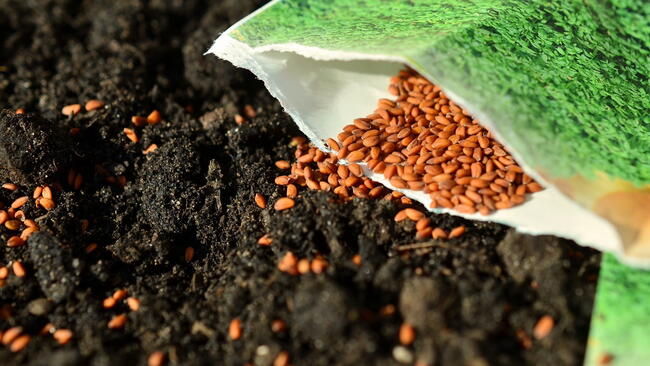
- Plant seeds 1/8 to 1/4 inch deep. Lettuce seeds need light to germinate, so don’t sow them too deep.
- Seeds may be sown in single rows or broadcast for wide-row planting (loose-leaf varieties are best for this). When broadcasting, thin 1- to 2-inch-tall seedlings for the proper spacing.
- Spacing between plants depends on the variety:
- Loose-leaf lettuce: Plant or thin to 4 inches apart.
- Romaine (cos) and butterhead (loose-head, Bibb, Boston) lettuce: Plant or thin to 8 inches apart.
- Crisphead (iceberg) lettuce: Plant or thin to 16 inches apart.
- Set rows of lettuce 12 to 15 inches apart.
- Sow additional seeds every 2 weeks for a continuous harvest.
- Consider planting rows of chives or garlic between your lettuce to control aphids. They act as “barrier plants” for the lettuce.
- Water thoroughly with a mist nozzle at the time of transplanting or seeding.
For a fall crop, cool the soil in August by moistening it and covering it with a bale of straw. One week later, the soil under the bale should be a few degrees cooler than the rest of the garden and ready to be sown with a 2-foot row of lettuce. Repeat the process every couple of weeks by rotating the straw bale around the garden. As autumn temperatures decline, seed as usual for a fall harvest.
Growing
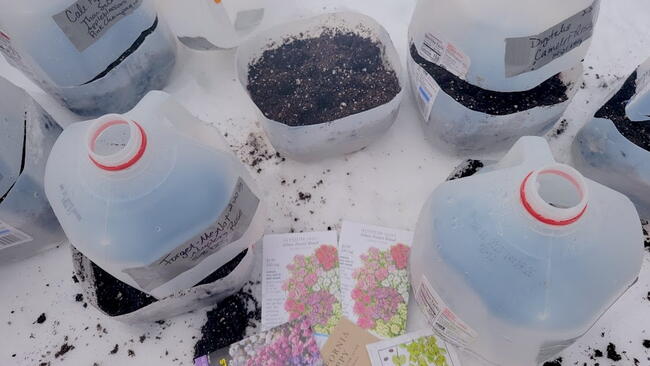
You can help transplants along at the start of the season by covering them with a temporary cloche made from bottomless milk cartons or plastic bottles. These will keep the chill off your seedlings just enough to help them acclimatize. Newly planted lettuces may also be helped with a simple row cover or fleece.
- Fertilize 3 weeks after transplanting with organic alfalfa meal or another slow-release fertilizer to provide a steady stream of nitrogen.
- Make sure the soil remains moist but not overly wet. It should drain well. Overwatering leads to disease or soft growth.
- Lettuce will tell you when it needs water. Just look at it. If the leaves are wilting, sprinkle them anytime, even in the heat of the day, to cool them off and slow down the transpiration rate. Using row covers can also help to keep lettuce from drying out in the sun.
- An organic mulch will help conserve moisture, suppress weeds, and keep soil temperatures cool throughout the warmer months.
- Weed by hand if necessary, but be careful of damaging your lettuce plants’ shallow roots.
Growing Lettuce in Containers
When you grow salad greens in containers, it can be different every day, as there are dozens of lettuce varieties along with other leafy edibles. What’s more, greens can grow in as little as 6 inches of soil! Some greens can be harvested in as little as a month’s time, and cut-and-come-again plants keep producing, often for weeks! In fact, the hardest part of “salad bowl gardening” may be deciding what to grow.
Choose a container that is 6 to 12 inches deep; a diameter of 18 inches is recommended. (Greater depth allows more room for roots and keeps the soil from drying out.) Moisten (do not soak) a portion of good-quality potting mix that is enough to fill your container to within an inch of the top. Direct-sow seeds densely—about 1⁄2 inch apart—on the prepared mix. Then cover with about 1⁄4 inch of dry potting mix, sprinkling it around. Tamp, or press, the seeds gently (a flat surface is recommended) so that they make contact with the soil, which will keep them from blowing away. Water gently (a handheld pump container is advised instead of a hose, whose water force can displace the cover soil and seeds). Keep the seedbed moist. (You can assess the wetness of the container by lifting it, as it will be lighter when dry.)
When seedlings are 4 to 6 inches tall, apply a balanced fertilizer at half strength. Continue watering as needed. Apply diluted fertilizer every 2 weeks, or per package directions. Protect greens from afternoon sun, if necessary and especially in summer, with shade cloth or row cover or by moving containers into a shady area. Plant more seeds in other containers every 2 to 4 weeks to maintain a fresh crop.
How to Delay Bolting
- Bolting is a common problem caused by warm temperatures (over 70°F/20°C) or changes in day length. When a lettuce plant bolts, it starts to produce a central stem and seed stalk, and leaves take on a bitter flavor.
- To delay bolting, cover plants with a shade cloth so that they get filtered light. Be sure to maintain watering throughout the warmest parts of the growing season, too.
- Planning your garden so that lettuce will be in the shade of taller plants, such as tomatoes or sweet corn, may reduce bolting in the heat of the summer.
Types
Some of our favorite varieties include:
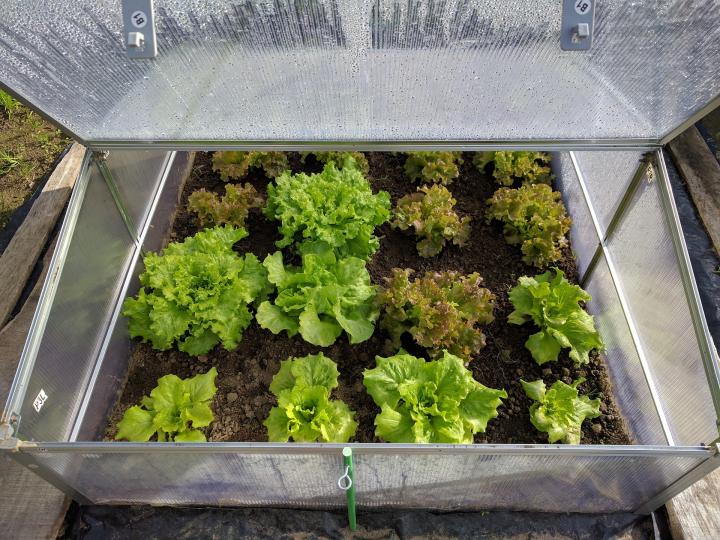
- Crisphead: ‘Great Lakes’, ‘Ithaca’, ‘King Crown’, ‘Mission’, ‘Summertime’
- Romaine (Cos)/Butterhead: ‘Burpee Bibb’, ‘Cosmo Savoy’, ‘Green Towers’, ‘Little Gem’, ‘Paris White Cos’, ‘Parris Island’, ‘Valmaine’
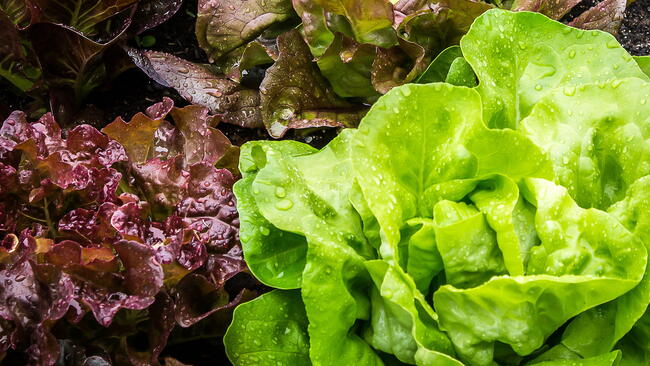
- Loose-Leaf: ‘Black Seeded Simpson’, ‘Green Ice’, ‘Ibis’, ‘Lollo Rossa’, ‘Oak Leaf’, ‘Prizehead’, ‘Salad Bowl’, ‘Slobolt’
- Red Leaf: ‘New Red Fire’, ‘Red Sails’, ‘Ruby Red’ (Not recommended for hot weather areas; the red pigment absorbs more heat.)
…But there are so many more types of lettuce to explore! What are your favorites?


More Like This

Although splitting tomatoes can sometimes be caused by fluctuating temperatures, they are more often caused by uneven watering (including drought/heavy rain), especially during the late stages of ripening. Some varieties are more susceptible than others. Try to be consistent in your watering and water deeply; adjust during dry periods and with heavy rain. Provide mulch to conserve moisture. If you had a dry spell and heavy rain is predicted, you might harvest your almost-mature tomatoes to catch them before they split; they'll complete their ripening on a windowsill. Harvest split tomatoes as soon as possible; those left on the vine may be subject to insects and diseases.
As for the lettuce, it sounds like they might have been attacked by slugs or snails. These pests come out at night to chew vegetation, leaving slime trails and large ragged holes in leaves. Remove any mulch around your plants where these pests like to hide. Pour beer in a small plastic container and sink it in the soil near your plants so that about 1/4 inch of the rim is above the soil. The slugs/snails will drown in the beer. You can also place boards around, where the pests will congregate, and you can then dispose of the pests the next day. For more information, see:
http://www.almanac.com/content/slugs
Lettuce is bolting when it starts to form a long flower stalk, usually in the center of the plant. The leaves on the stalk will be smaller and more elongated, and eventually, the stalk will form a flower spike. Leaf flavor becomes bitter. Bolting is caused by increasing day length as well as increasing temperatures.
For Illinois, you might want to stop the succession planting until late summer (about mid August or so), when you can sow for fall crops. If you do want to give summer growing a try, provide filtered shade all day for your plants, or complete shade in the mid afternoon onward, to protect them from the heat. Be diligent about watering.
Sometimes leggy seedlings are caused by too rich a soil (too much nitrogen), or too warm a soil (seedlings like it cooler than seeds). But more often, it is not enough light. If you are using sunlight, choose a south-facing window, and rotate the seedlings every so often so that they do not grow toward the window but keep upright; if the light is still not enough, supplement it with artificial light (fluorescent bulbs or grow-lights). If you are using artificial light, adjust the height of the bulbs so that they are a bit closer to your seedings (the distance will depend on the bulbs you use, but usually they are positioned about 2 to 6 inches above the plants). In general, try to provide about 12 to 16 hours of artificial light.
In addition, you can have an oscillating table fan on the gentlest setting blow air on the seedlings for a few hours each day, which will help them to grow sturdy stems (make sure the air is not too strong for them).
- « Previous
- 1
- 2
- …
- 10
- Next »

Comments