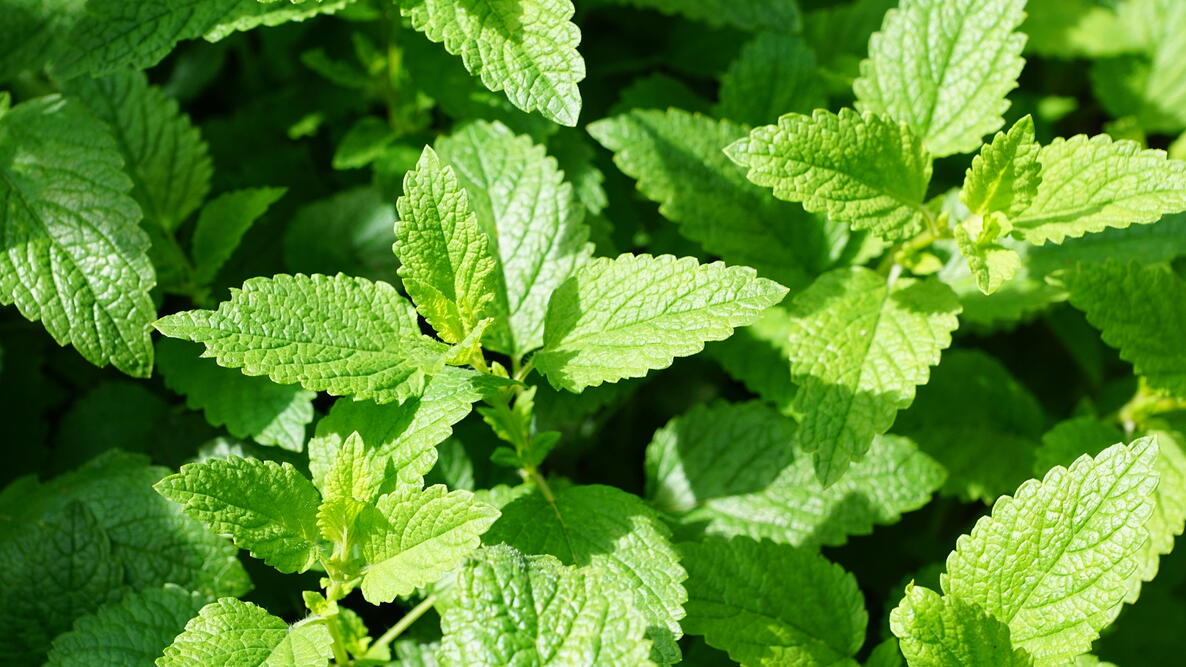
Caption
Mint is an easy herb to grow in your garden and can add flavor to every meal.
Growing
- Minimal care is needed for mint. For outdoor plants, use a light mulch. This will help keep the soil moist and keep the leaves clean.
- Indoor plants should be watered regularly to keep the soil evenly moist.
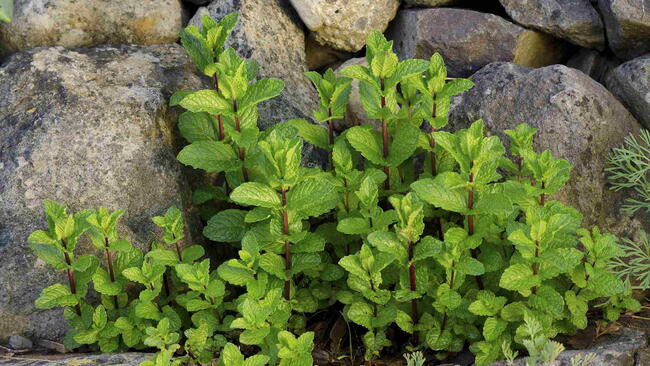
- At first, mints develop into well-behaved-looking, bushy, upright clumps, but they soon set out to conquer new territory with horizontal runners and underground rhizomes. Unless you block the advance, a peppermint plant can become a sprawling 4-foot giant in just 1 year. It’s not the stuff of horror movies, however. Mints benefit from picking and pruning. They are shallow-rooted and easy to pull out, so there’s no reason to worry as long as you provide physical barriers such as walls, walkways, or containers.
Harvesting
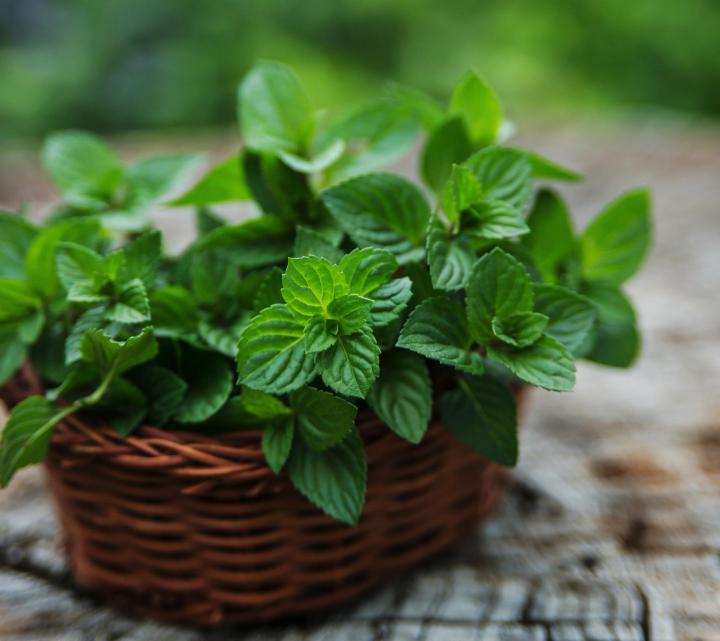
- Frequent harvesting is the key to keeping mint plants at their best. Young leaves have more flavor than old ones, and mint can be harvested as soon as it comes up in spring. Although fresh is best, and sprigs should be kept in water for a few days, mint leaves can be frozen or air-dried in bunches.
- Right before flowering, cut the stems 1 inch from the ground. You can harvest one mint plant two or three times in one growing season.
- You can also pick the leaves as you need them.
- You can grow the plants indoors for fresh leaves throughout the winter. If you want to dry them, it’s best to cut the leaves right before flowering. Store the dried leaves in an airtight container.
Propagating Mint
The best way to propagate mints is by taking cuttings from those that you like best. It’s easy—take 6-inch cuttings of rooted stems and plant them horizontally in the soil. Mint stems will also root in a glass of water. Start with a small cutting from an established plant. Any gardening friend will give you a cutting of a favorite mint.

Pests and Problems
- Powdery mildew
- Rust
- Leaf spot
- Anthracnose
- Stem canker
- Mice dislike the smell of peppermint. Spread it liberally where you suspect the critters. Mint is also considered a deer-resistant plant.
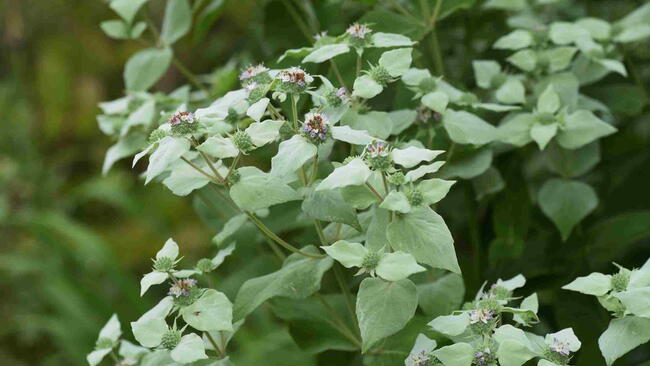
Types
- Apple/Pineapple Mint: Mentha suaveolens
- Corsican Mint: Mentha requienii
- Pennyroyal: Mentha pulegium
- Peppermint: Mentha x piperita
- Citrus Mint: Mentha x piperita var. citrata
- Spearmint: Mentha spicata

More Like This


Comments

Mint's main feature is its potent smell, which is said to deter common pests such as cabbageworms and cabbage moths, ants, aphids, and flea beetles. Generally, mint can be planted in pots alongside any veggies that are affected by these pests, like peppers, broccoli and cauliflower, and other leafy greens.
For more about companion planting, see our articles on the topic:
Creating a fruit tree guild is a wonderful way to promote biodiversity in a small space and to work permaculture into your garden. Generally, it's recommended to allow nature to take its course and let the perennials die back themselves, as they will eventually break down and feed the surrounding soil. However, if the garden is planted very tightly together, you may want to cut and remove some of the larger perennials as they die back (like yarrow, for example) so that they do not end up suffocating out the others.
You should also keep an eye out for any signs of pests or disease—fungal or bacterial spots, mildew, pests, and so on—and remove infected material from the garden. This helps to prevent it from building up in one location and perpetuating the disease in the following growing season.
Stem cankers are patches of dead tissue that appear on a plant's stem. The canker may be caused by an infection of bacteria, viruses, or fungi, and they generally expand slowly over time. Depending on the plant and the cause, stem cankers may be lethal to the plant.
- « Previous
- 1
- 2
- …
- 10
- Next »

Sow the seeds just 1/8 inch deep, barely covering with fine soil, and keep moist. Seeds will germinate in 10 to 20 days. Mints are slow to develop during the first year, but be ready to fight them back the second year. If you're worried about their growth, plant in their own bed!