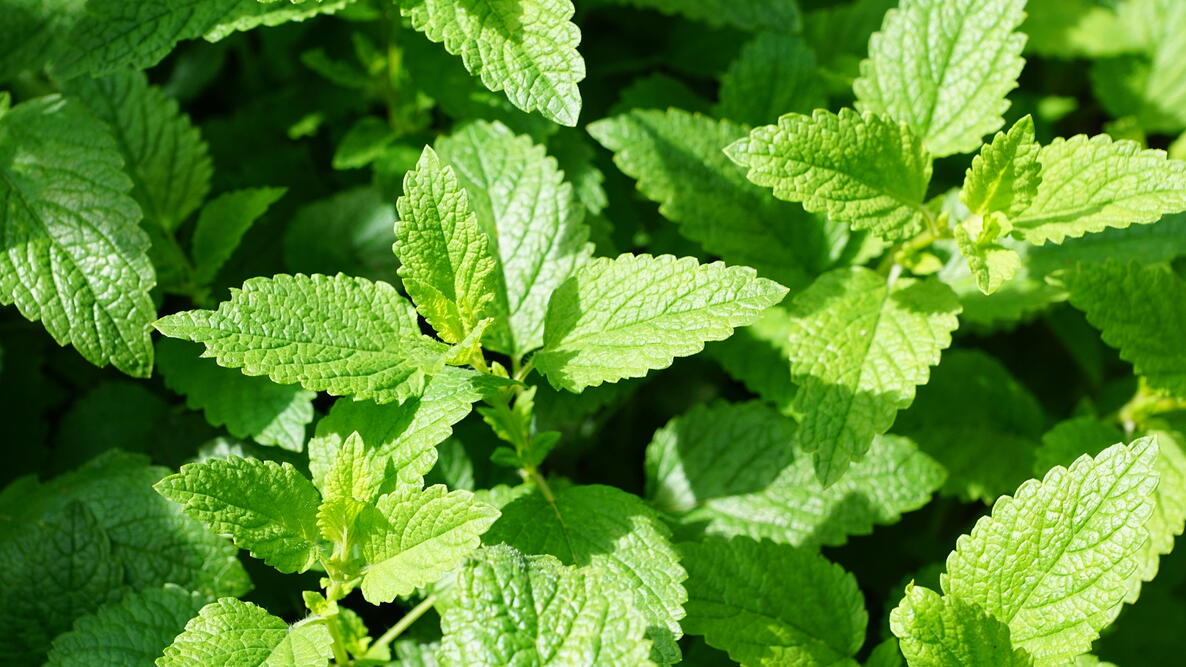
Caption
Mint is an easy herb to grow in your garden and can add flavor to every meal.
Botanical Name
Mentha
Grown as
Toxicity
Sun Exposure
Water Needs
Height
Spread
Soil pH
Bloom Time
Resilience
Plant Type
Growing
- Minimal care is needed for mint. For outdoor plants, use a light mulch. This will help keep the soil moist and keep the leaves clean.
- Indoor plants should be watered regularly to keep the soil evenly moist.
- At first, mints develop into well-behaved-looking, bushy, upright clumps, but they soon set out to conquer new territory with horizontal runners and underground rhizomes. Unless you block the advance, a peppermint plant can become a sprawling 4-foot giant in just 1 year. It’s not the stuff of horror movies, however. Mints benefit from picking and pruning. They are shallow-rooted and easy to pull out, so there’s no reason to worry as long as you provide physical barriers such as walls, walkways, or containers.
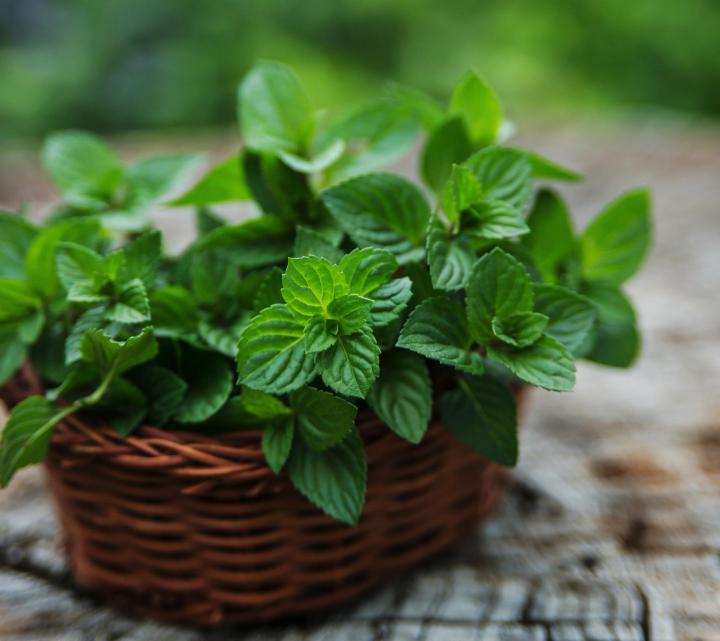
Harvesting
- Frequent harvesting is the key to keeping mint plants at their best. Young leaves have more flavor than old ones, and mint can be harvested as soon as it comes up in spring. Although fresh is best, and sprigs should be kept in water for a few days, mint leaves can be frozen or air-dried in bunches.
- Right before flowering, cut the stems 1 inch from the ground. You can harvest one mint plant two or three times in one growing season.
- You can also pick the leaves as you need them.
- You can grow the plants indoors for fresh leaves throughout the winter. If you want to dry them, it’s best to cut the leaves right before flowering. Store the dried leaves in an airtight container.
Propagating Mint
The best way to propagate mints is by taking cuttings from those that you like best. It’s easy—take 6-inch cuttings of rooted stems and plant them horizontally in the soil. Mint stems will also root in a glass of water. Start with a small cutting from an established plant. Any gardening friend will give you a cutting of a favorite mint.

Pests and Problems
- Powdery mildew
- Rust
- Leaf spot
- Anthracnose
- Stem canker
- Mice dislike the smell of peppermint. Spread it liberally where you suspect the critters. Mint is also considered a deer-resistant plant.
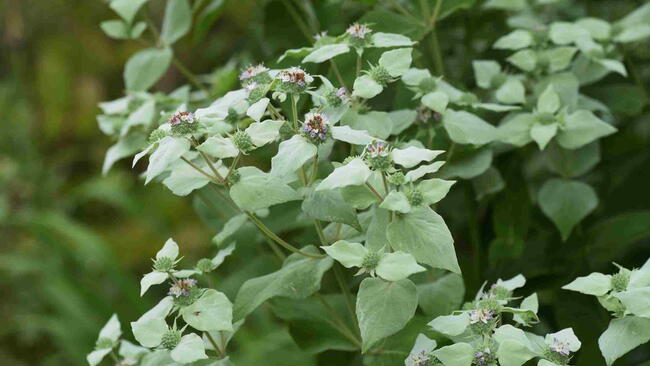
Types
- Apple/Pineapple Mint: Mentha suaveolens
- Corsican Mint: Mentha requienii
- Pennyroyal: Mentha pulegium
- Peppermint: Mentha x piperita
- Citrus Mint: Mentha x piperita var. citrata
- Spearmint: Mentha spicata

More Like This


Comments
Every Spring, we get ants in our bathroom. Everyone tells me that ants don't like mint, but the funny part is, they have to make their way through a huge mint bed to get to the bathroom. Upon closer inspection, they not only made their way across the mint bed, but were living in it--it had several tiny ant hills throughout the patch. I used diatomaceous earth to get rid of the ants and have completely dug up the mint bed.
A warning to those who plant mint in pots and bury the pots to contain the roots: Make absolutely sure there is no drainage hole in the pot--root runners will find their way into the surrounding soil if there is. And, do not allow the plant to go to seed--mint seeds are very tiny and hard to catch, and will reseed in your garden the following year.
For ants try a mixture of cinnamon and cayenne, you can just sprinkle it on, or make a solution and spray it around the area they like to visit.
You can try food grade diatomaceous earth. Insects do not like it because it dries them out. It is all natural, cheap, and even humans can ingest it for various purposes. This is often put in farm animal grains to kill intestinal worms AND to kill insects that may try to live in their foods. Works wonders, I hear from the local pet shelter, in controlling fleas if sprinkled on fur and in beddings (this shelter gives some orally to animals to rid them of parasites). Sprinkled on and around plants, helps control insects without harming humans or pets! Make sure it is food grade. Non-food grade is not the same and is deadly to people and animals!
I'm new to growing mint and I've researched how to take care of it, but none really go into detail of what I want to know. I first put my mint plant inside and it seemed to attract spiders and I don't know if that's a good thing, or if they are gonna ruin my plant. What do I do with the bad leaves? How many sprigs should I take out to keep it from growing but not falling on top of each other?

For spider mites: The trick is to catch the mites very early. Douse the plant in water daily. If you see the mites, spray with insecticidal soap as directed. If the mites are too prolific, there's not a lot you can do. Trim down the central stem to encourage bushy growth. You want the mint to say compact and fill the pot. Pinch off bad leaves. You can truly harvest the mint any time; it grows so aggressively that you won't slow it down. Pick leaves from the top to encourage bushiness. Do not pick more than a third of the plant at a time.
how do I get rid of it without killing other plants in the same area?
The short answer is carefully. In spring, start by uprooting the mint plants, while causing minimal disturbance to their neighbors. Do this as soon as you see the mint emerging, certainly before the mints produce flowers. Continue uprooting mint every time you see it. (If the plant's root can not produce leaves, it can not grow.) This might take a season or two, but eventually it should cease to appear.
If you want to keep a plant or two, contain the plant above ground or in a container below ground. It's worth having some around; it is a good ingredient in salads and other dishes.
We hope this helps!
I heard that the mint plant itself will repel ants. is this true? I'm pretty new to gardening/small farming and ants almost destroyed my garden earlier this year. The small reddish ones
I just found out an even more natural way to kill ants, though be careful around plants. Boil water and pour it on the ant hill soon it will be the ant apocalypse. Found it on youtube .
- « Previous
- 1
- 2
- …
- 10
- Next »
📣The Gardening Club Just Got Better! 3 Deliveries, 10% Store Discount, and more!

Unfortunately, there are a variety of pests that enjoy eating mint. Neem oil is a great insecticide that is safe to use on any plant of any kind. It helps reduce disease issues, too. For more information, here is a helpful herb guide:
http://www.hort.uconn.edu/ipm/greenhs/htms/herbmanl.pdf