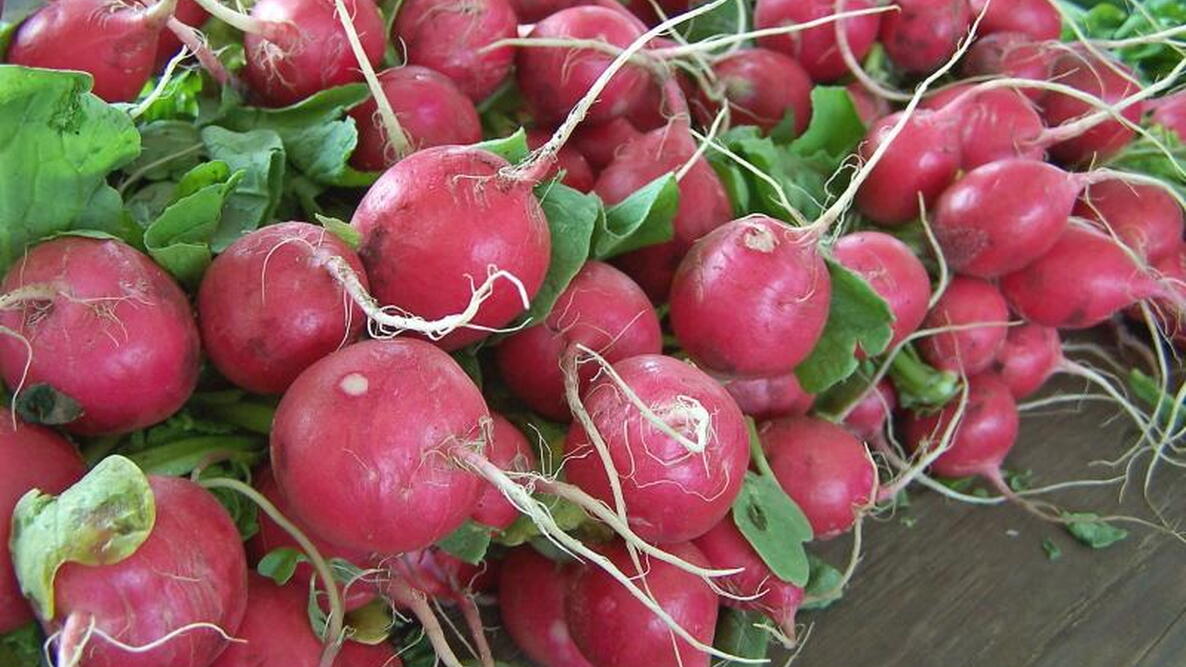
Who knew something so small could be so mighty? Radishes are the garden’s speedsters—ready to harvest in just weeks! Whether you’re sneaking them between rows of your bigger veggies, growing them in pots, or even sowing for a winter crop, radishes are the versatile root vegetable you’ve been waiting for. With their crisp, peppery bite, they’ll add a refreshing crunch to salads and main dishes. Learn how easy it is to grow radishes.
Speedy radishes can be grown almost anywhere: between larger vegetables, around soon-to-finish crops, or in pots—and will grow peppery roots both early and late in the season. Try some for yourself, including delicious winter radishes to sow from late summer. In this short video, we’ll tell you all you need to grow them successfully.
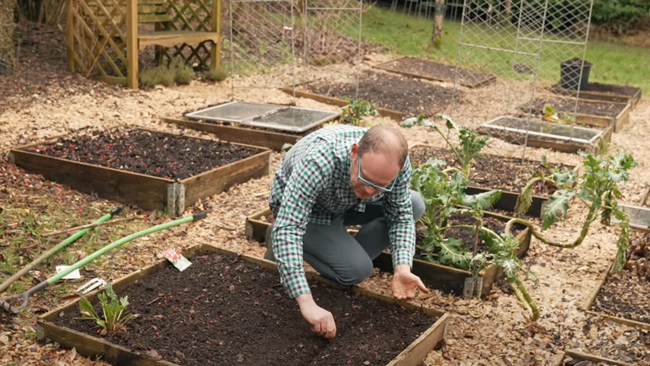
What’s the most opportunistic crop you could possibly grow? For me, it’s the humble, lowly radish—or rather, the rousing, ravishing radish! Squeeze a sneaky row or two between larger vegetables. Sow radishes around crops that are about to finish. Grow them in pots, or squeeze in an extravagantly early or late harvest of these peppery roots. They’re super fast, super flexible—oh, and super yummy! So let’s crack on and sow some!
About Radishes
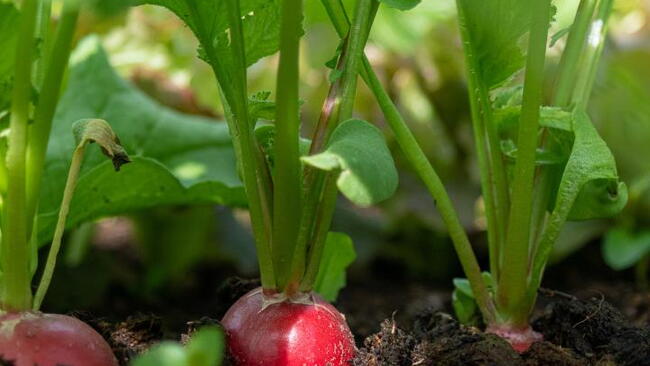
Radishes are an annual root vegetable and a member of the Brassicaceae or cabbage family, which also includes broccoli, cabbage, cauliflower, collards, horseradish, and kale. The entire radish plant is edible—from root to leaves—and can be enjoyed raw or cooked. (See cooking notes below.)
Seeds can be planted in both the spring and the fall, but sowing should be suspended when warm temperatures arrive (70°F or higher); heat causes radishes to bolt, making them essentially useless. Otherwise, radishes are one of the easiest vegetables to grow.
Because radishes mature so quickly, you can sow them anywhere there is an empty space or sow in between rows of other vegetables such as beets or carrots. Radishes also happen to make excellent companion plants to help deter pests from other vegetables.
Planting
Because of their size and speed, radishes may be grown just about anywhere. They are ready to enjoy in as little as 4 weeks and take up minimal space, but perhaps their best use is as a fill-in crop, either between or within rows of slow-to-germinate vegetables such as parsnip, or as a quick, in-and-out crop right at the start or end of the growing season.
Radishes prefer full sun but grow well in partial shade too. In hot climates, they will prefer full shade in the height of summer. Choose a sunny spot that gets at least 6 hours of sun a day. If radishes are planted in too much shade, or where neighboring vegetable plants shade them, they will put all their energy into producing larger leaves.
Keep the soil moist, and you’ll be rewarded with clusters of mildly peppery roots in next to no time.
Till the soil (roots do not grow well in compacted soil) and remove any rocks. If the soil is clay, mix in some organic matter to loosen and improve drainage. If you’re planting longer varieties (such as ‘White Icicle’), till to a depth of 8 inches.
When to Plant Radishes
For a spring planting, sow seeds 4 to 6 weeks before the last spring frost.
For a fall crop, sow seeds 4 to 6 weeks before the first fall frost.
Begin sowing under cover from late winter, either directly into containers of potting soil, into greenhouse borders, or into plug trays of general-purpose potting mix.
Fill plug trays with potting mix, firm down, then sow a pinch of three to five seeds per module. Cover with a little more of the potting mix, then water. If it’s especially cold, you’ll need to germinate them indoors and then move them back into a greenhouse or cold frame as soon as the seedlings appear. After a couple of weeks of sheltered growth, and once the seedlings have filled out their modules, they’ll be ready to plant out under row covers or hoop houses.
Plant into soil earlier enriched with well-rotted compost or manure and raked to a fine tilth. Remove the clusters of seedlings from their modules, then dibble a hole for each plug. Drop in the plug and firm it into position so each cluster is about 6 inches or 15 centimeters apart in both directions. Cover the seedlings with row cover or horticultural fleece, properly held down at the edges, until the weather warms up.
How to Plant Radishes
Of course, sowing radishes directly where they are to grow is the easiest way to start them off. As cool-season crops, some radishes can germinate at temperatures as low as 41°F or 5°C. Sow from very early spring, initially under row covers or hoop houses, spacing rows about 8 inches or 20 centimeters apart. Sow thinly along the row—ideally, so seeds end up spaced around half an inch or one centimeter apart. Water if it’s dry and then, about a week after germination, thin the seedlings to leave them 1 inch or 2 centimeters apart within the row.
Add organic matter before sowing, but also avoid fresh manure or fertilizers high in nitrogen; overly rich soil will encourage lush foliage at the expense of radish roots.
Radish seeds have a fairly long shelf life. Don’t be afraid to plant radish seeds that are up to 5 years old. They may not all germinate, but you’ll have plenty that will.
Direct-sow seeds outdoors about 1/2 inch deep and cover loosely with soil. Space 1 inch apart in rows 12 inches apart. Water seeds thoroughly, down to 6 inches deep.
Sow another round of seeds every 10 days or so while the weather is still cool for a continuous harvest of radishes in the late spring and early summer.
Grow Some Radishes for Winter
Many hardy radishes can be sown toward the end of summer to give an autumn or early winter harvest of roots. Sowing regular red, round, or white-tipped radishes into containers is a great way to extend the season—by simply bringing pots under cover when the weather turns cold.
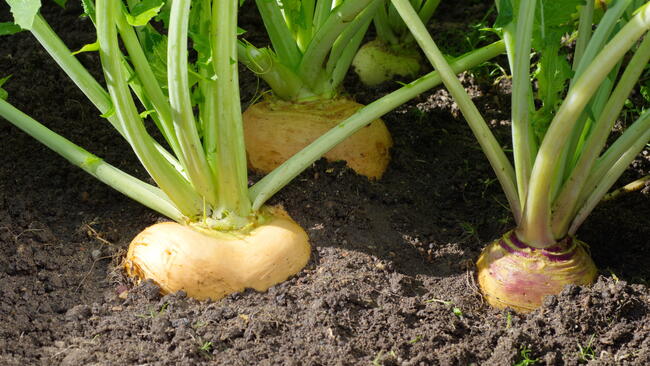
Another option is to grow bigger winter or Asian varieties of radish, which naturally prefer cooler temperatures. The most popular is the daikon or Japanese mooli radish. Look out for Chinese and Korean varieties too—with a mild flavor that is ideal for salads but also great in soups and stews. Then there’s the stunning watermelon radish or the chunky, spicy Spanish black radish, whose peppery tang holds up well in stir-fries.
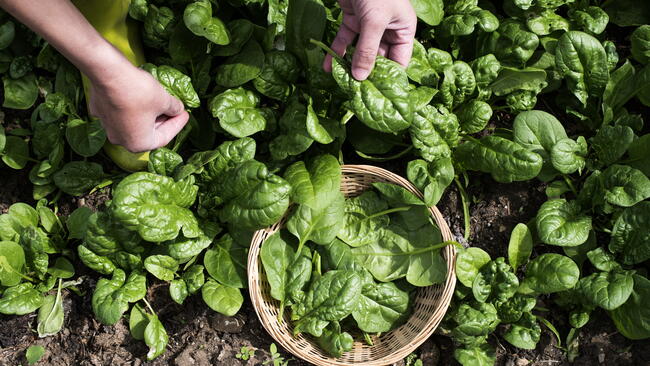
Winter radishes are leafier than their summer cousins. The spicy leaves may be used like spinach, wilted into hot dishes, or even whizzed up in a pesto.
Sow winter radishes a little farther apart, so rows are at least 1 foot or 30 centimeters distant, then thin the seedlings to leave at least a couple of inches or 5 centimeters between each plant.
Check out this video to learn how to plant radishes:
Growing
Thinning Radishes
Thinning is probably the most important step in growing radishes. Once the seedlings are 2 inches tall or about a week old, it’s important to thin radishes to 2- to 3-inch spacings. Crowded radishes do not grow well, and you’ll end up getting small, shriveled, inedible roots.
To thin, just snip the greens at the soil line. The thinnings are edible, so add them to a salad! Or, if thinnings have been carefully extracted with roots, leaves, and stem intact, replant them. Transplants might be a bit stressed, but they should recover.
Photo credit: Larisa Lofitskaya/Shutterstock
Watering Radishes
Consistent, even moisture is key. Don’t let the plants dry out, or you’ll get pithy, pungent roots, but don’t let them get waterlogged, or the roots will rot. A drip irrigation system is a great way to achieve a good balance.
Mulch the radishes with compost enriched with wood ashes to help retain moisture in dry conditions and keep root maggots at bay.
Weed often; weeds will quickly crowd out radishes.
Harvesting
The biggest mistake gardeners make with spring radishes is leaving them in the ground past their maturity; then, they will get tough and taste starchy. Winter radishes, on the other hand, can be kept in the ground for a few weeks after they mature, if the weather is cool. Finish the harvest before frost.
To harvest, check your seed packet. Different types of radishes have different growth times. Some varieties are pulled as soon as 3 weeks after planting, when roots are approximately 1 inch in diameter. Pull one out as a test.
Harvest roots as soon as they have reached their final size. Don’t delay, as they can go from crisp and crunchy to woody and excessively spicy within a matter of days. Lift the biggest roots each time you harvest, so the remainder can continue to swell.
Another good sign that your radish root is doing well is that the green growth above the soil is 6 to 8 inches tall.
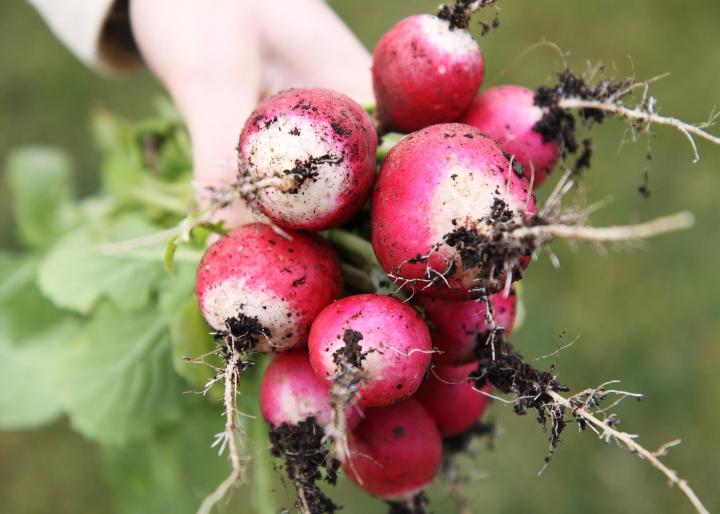
Finally, you should see or feel the “shoulder” or top part of the radish pushing up against the topsoil.
If some radishes bolt before you have a chance to harvest them, leave a few to develop seedpods. The seedpods, which look like tiny bean or pea pods, are quite tasty in a salad.
How to Store Radishes
Cut off the tops and the thin root tails, wash the radishes, and dry them thoroughly. Store in produce or zip-top bags in the crisper drawer of the refrigerator.
Radish greens can be stored separately for up to 3 days. Put them in a produce bag with a dry paper towel.
Use row covers; mulch heavily; add native plants to invite beneficial insects
White rust
Fungus
Chalk-white blisters mainly on leaf undersides; small, yellow-green spots or blisters, sometimes in circular arrangement, on upper leaf surfaces; possible distortion or galls; stems may also be infected
There are both “spring” and “winter” radishes. Note: The small, round varieties do not tolerate heat as well as the longer types, so plant the small types first in early spring. In general, we find that smaller radishes are milder in flavor and the larger varieties are spicier.
‘Burpee White’: spring variety; small type; heirloom radish with white crisp flesh; mild flavor
‘Champion’: spring variety; small type; bright scarlet with firm, crisp white flesh; mild flavor
‘Cherry Belle’: small type; round, red with white flesh; heirloom radish; crisp, light flavor
‘Daikon’: winter radish; grows to 14 inches long; best grown in cooler climates or during the cooler ends of the growing season; crisp and snappy taste
‘French Breakfast’: spring, late-maturing type can tolerate moderate heat; heirloom radish with 3-inch red roots, oblong shape, mild flavor
‘German Giant’: spring variety, red baseball-size; never gets too hot; sweet and mild
‘Spanish Black’: winter radish; large 3- to 4-inch turnip-shaped globes have crisp, pungent, spicy, pure-white flesh; great for storage
‘Watermelon’: winter radish; an heirloom Daikon radish variety with striking white skin and bright red insides; mild flavor with a light peppery tang.
‘White Icicle’: late spring, cylindrical white roots up to 5 inches long; can tolerate moderate heat; heirloom; mild-flavored with hints of peppery taste

Wit and Wisdom
For hoarseness, swallow slowly the juice of radishes. –18th-century remedy.
Got a mosquito bite? Apply radish juice to take away the sting and itching.
Catherine Boeckmann is the Executive Digital Editor of Almanac.com, the digital home of The Old Farmer’s Almanac. She leads digital editorial strategy and publishing across a wide range of Almanac sub...
I planted radish seeds for the first time this past Fall. Nothing much happened until we had some freezing Winter temps and then - bamm! - they popped up real fast, and now some are quite tall and getting flowers! I read all the posts here and have a better understanding now of how to grow them "correctly" - but I still don't know how to tell when they are ready to harvest! Do the radishes show above the dirt? Or do I have to pick one willy-nilly to see if a radish is there? How do I know when it's time??
Reply to comment
<a title="View user profile." href="/author/editors">The Editors</a>Mon, 03/14/2016 - 16:28
Some radishes may show a little above the soil but others might be hidden. You can dig gently around the root and check how large it is. In general, radishes should be about 1 inch in diameter, but it will depend on the variety--the seed packet will also tell you how many days to harvest for that particular variety, so that you will have a guideline. If a radish is left in the ground too long, it will become pithy and the flavor will become hot.
Reply to comment
<span>Anonymous</span>Fri, 10/23/2015 - 19:45
How often do I water my radishes?
Reply to comment
<a title="View user profile." href="/author/editors">The Editors</a>Tue, 10/27/2015 - 08:37
When you water radishes depends on your soil and the weather. In general, the soil needs to stay consistently moist. Otherwise, the radishes will get too spicy. Put your finger in the soil to your knuckle and make sure it's moist at that level. Radishes need to be watered every week in dry spells.
Reply to comment
<span>Manoj</span>Fri, 07/17/2015 - 08:12
I have white patches on radish leaf. Hw to solve this problem
Reply to comment
<span>Kalileahmp</span>Tue, 07/14/2015 - 09:45
I have quite the opposite problem. The previous owners planted radishes around tomatoes to keep the bugs away. Now, the radishes have taken over the whole gardening bed. I still have my other vegetables growing but I am nervous that these green leafy radishes will try to root around my other vegetables and steal nutrients. They keep coming back every year now. Any ideas?
Reply to comment
<a title="View user profile." href="/author/editors">The Editors</a>Tue, 07/14/2015 - 10:45
Radishes do self-seed. You need to pull them out as soon as you see them. Do NOT wait until they form flowers and seed again. "Weed" them ruthlessly until they are eliminated.
Reply to comment
<span>Kalileahmp</span>Fri, 07/17/2015 - 17:27
It's tough when they are small. They are starting to get to the point where I can easily pull them out now. I'm guess I will have to do this again next year after we till the soil?
Reply to comment
<span>Chris 757</span>Wed, 05/27/2015 - 10:12
We have radishes that are about to be ready for picking, One of them is green. Why would one out of 50 be green?
Reply to comment
<span>Hyuk Ro</span>Sat, 05/23/2015 - 18:45
I live in Wa. state this reason is my first try at growing veggies. i have good soil in my garden when i planted my radishes i put a inch deep thumb print about 2 inches apart and randomly put several seeds in each hole and covered them. they are now sprouting into tiny clusters or bouquets of radish greens. they are about ahalf inch tall. What do i do now. i dont understand what thinning is in fact ireally dont know anything
Comments